





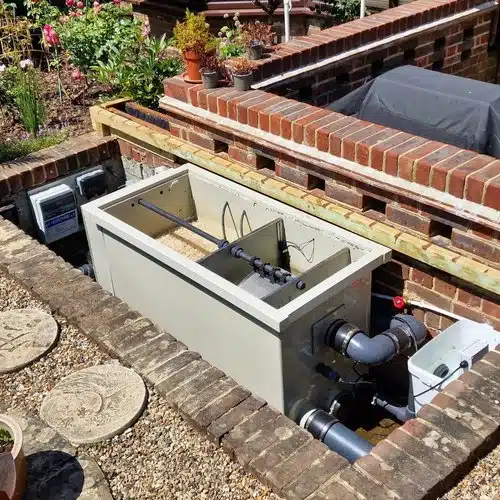
An In-Depth Guide to Drum Filters for Koi Ponds
Drum filters for koi ponds
Choosing the right system, planning the installation and understanding the running costs
A drum filter removes solid waste from circulating pond water and rinses its screen automatically. For a koi pond where cleaning filter sponges has become a regular chore, that can make a substantial difference. It does not, however, replace biological filtration, aeration or water testing.
The right choice depends on more than the litres in your pond. The amount you feed, the flow your pipework can deliver, the position of the filter and the equipment included in the price all matter. This guide explains those decisions so you can compare systems on a useful basis, rather than buying the largest flow figure on the box.
What is a Rotary Drum Filter?
A rotary drum filter catches suspended solid waste on a fine screen as water passes from the dirty side to the clean side. Screen size varies by model. A 60 micron screen, for example, has nominal openings of 0.06 mm. It is a mechanical filter, not a device for removing dissolved ammonia or every organism in the water.
As waste restricts the screen, a level sensor or the controller starts a rinse. The drum rotates and spray nozzles wash trapped debris into a waste trough. That waste leaves the filtration circuit instead of remaining in a sponge until its next manual clean. The trigger method, rinse duration and water supply depend on the filter, so follow its controller settings and installation instructions.
Many advanced drum filters integrate biological filtration chambers alongside the mechanical drum. These chambers house bio media, such as moving bed or static bed media, which provide an environment for beneficial bacteria to colonise. These bacteria play a crucial role in breaking down harmful substances like ammonia and nitrites, turning them into less toxic nitrates. This dual filtration setup, mechanical and biological, creates a comprehensive system for maintaining water quality.
Drum filters are invaluable for maintaining excellent water quality, a cornerstone of koi health. Poor water quality can lead to stress, disease, and reduced vitality in koi. For more information on how to enhance water quality for koi, refer to our guide on Elevating Koi Well Being.
What the screen removes, and what it does not
The nominal screen opening is a useful comparison, but it is not a promise of sterile or perfectly clear water. Smaller particles can pass through, and a drum should not be sold as a treatment for parasites or as a replacement for a UV clarifier. A correctly sized UV can help with suspended algae that cause green water. Biological filtration deals with dissolved waste, while water changes and water testing remain part of keeping koi.
Some models in the Oase ProfiClear range use a 60 micron screen. Check the exact model rather than assuming every drum uses the same mesh. Finer is not automatically better for every installation: screen area, dirt loading, rinse frequency and available flow must also be considered.
Drum filters are available for gravity and pump supplied installations, but the versions are not automatically interchangeable. Choose the layout before ordering and check the operating water level on the model drawing. A filter that physically fits a bay can still be unsuitable if its connections or water level do not match the pond.

How a Drum Filter Operates in a Koi Pond
How does a drum filter work?
Drum filters operate as either gravity fed or pump fed systems, offering exceptional versatility and performance. Here’s a closer look at how these systems function:
Water entry and pump position
In a gravity system, bottom drains and suitable skimmer lines supply the dirty side of the filter. The circulation pump is after the filtration stage and draws cleaned water onwards, allowing pond water to replenish it. The pond and filter operating levels must be set as the manufacturer specifies. Gravity does not remove the need for a circulation pump.
In a system supplied by a pump, the pump moves pond water into the filter first. Filtered water then needs an adequately sized gravity return, normally with the filter positioned above the receiving water level. The pump can be submerged or externally installed where the model permits. Do not assume all pumps are suitable for both positions.
Filtration
Water passes through the screen while larger suspended solids are retained on its dirty side. The clean side feeds the next stage of the system, which may be a separate biological chamber, a chamber within a Combi filter, or another suitable biological filter. Our filter and pump upgrade service can help assess how that fits an existing pond.
Automatic Cleaning
The controller starts cleaning when the relevant level sensor or timer calls for it. The precise arrangement differs between models and installation types. Check the instructions for the Burtons drum filter or other model you choose rather than adjusting sensor positions by guesswork. A rinse clears the screen; it does not mean the waste chute, nozzles and sensors never need attention.
Return to Pond
In a gravity installation, the circulation pump after filtration sends water back towards the pond or on to another stage such as a shower. In a system supplied by a pump, water normally returns from the filter by gravity. Return pipe capacity, available fall and any downstream equipment need to suit that layout. Reversing these arrangements can cause poor flow or overflowing.
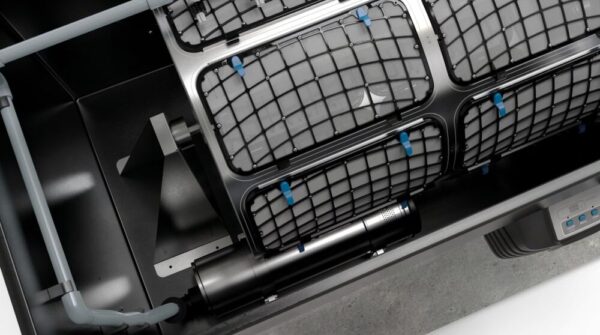
Stainless Steel Mesh in Drum Filters
Advanced Features of Drum Filters for Koi Ponds
The following features are worth comparing between exact models. They are not all standard, and their usefulness depends on the way your pond is plumbed.
Multiple Inlets
Separate inlets can accommodate bottom drains and surface skimmer lines. Each branch still needs suitable pipework and flow; adding connections alone does not increase turnover. Plan isolation valves and access for clearing a blocked line. For larger water bodies, our lake skimmer range shows how surface collection can form a separate part of the system.
Biological Filtration Integration
Beyond mechanical filtration, many drum filters feature built in biological chambers designed to enhance water quality further. These chambers are often filled with bio media such as K1 media or moving bed filters, which provide a surface area for beneficial bacteria to colonise. These bacteria play an essential role in converting harmful ammonia and nitrites, byproducts of fish waste, into less toxic nitrates. This dual filtration approach (mechanical and biological) creates a balanced and healthy pond environment. Integrated biological chambers save space and simplify pond management, making them an all in one solution for koi keepers.
Customisable Configurations
Some drums accept an internal UV unit; others need a separate UV on the circulation circuit. A UV clarifier helps control suspended algae when sized and installed correctly, but it does not make pond water sterile or replace diagnosis and treatment of fish disease. Check which UV, lamp and electrical equipment are included. A separate shower or biological chamber may also be added where the system layout and flow allow.
Energy Efficiency
The drum motor and rinse pump generally operate intermittently, while circulation, aeration and some UV equipment may run continuously. Compare the power and operating hours of the whole installation, not just the drum controller. A low controller wattage does not describe the running cost of a complete pond system.
Compact Design and Space Optimization
A Combi can bring mechanical and biological stages into one housing, but allow space around it as well as beneath its footprint. You need room to remove the lid, service the screen and spray bar, reach the motor and disconnect pipework. The connection drawing and service clearances are more useful than an outside length alone.
User Friendly Control Systems
Advanced drum filters often feature digital control panels that allow pond owners to monitor and adjust their system with ease. Some models even include Wi Fi connectivity, enabling remote operation and diagnostics. These smart features add a layer of convenience and peace of mind, especially for koi enthusiasts who travel frequently.
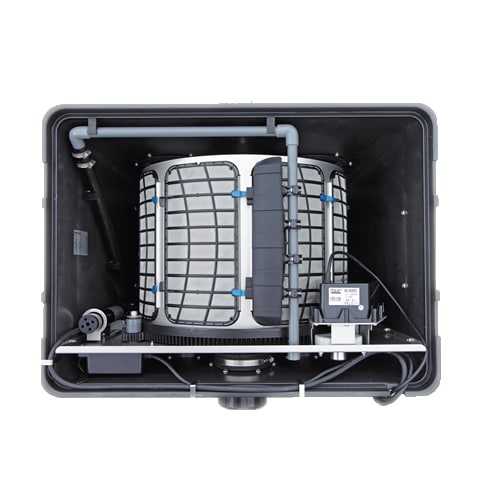
Automatic Cleaning Cycle in a Drum Filter
Benefits of Drum Filters for Koi Ponds
Drum filters offer numerous advantages, making them a preferred choice for many koi keepers. Here is a detailed exploration of their benefits:
Automatic Cleaning
Automatic screen washing removes much of the repeated manual cleaning associated with sponges. You still need to check that cleaning cycles finish properly and waste leaves the system. It is less daily handling, not a promise that the filter can be left unchecked. For a pond that needs broader attention, see our pond cleaning services.
High Flow Rates
A correctly sized drum can accept flow from more than one collection point while screening the combined supply. Match its working flow to the rest of the system. Increasing pump speed cannot compensate for a restricted inlet or a biological stage that is too small for the feeding load.
Improved water quality
Drum filtration removes captured solids from the water circuit. This can reduce the organic load left to break down in the system, but fish also release dissolved waste. A mature biological stage and regular tests are still needed. Our ammonia and nitrite guide explains why clear water alone is not proof of safe water.
Compact Design
Despite their robust performance, drum filters are designed with space efficiency in mind. Their compact footprint makes them suitable for ponds with limited filtration space. They can be easily installed in filter bays or confined areas, making them ideal for koi enthusiasts looking to maximize pond space while maintaining high quality filtration.
Flexibility in Installation
With multiple inlet configurations, drum filters are highly adaptable to various pond layouts. Whether your pond relies on bottom drains, skimmers, or a combination of both, a drum filter can accommodate these setups seamlessly. This flexibility ensures comprehensive debris removal and reduces the likelihood of dead zones in the pond, where waste can accumulate. Explore the complementary role of skimmers in our Lake Skimmers Guide.
Energy Efficiency
Automatic rinsing runs only when called for, but the power used by the rest of the filtration circuit still matters. Use actual pump settings and operating hours when comparing alternatives. The running cost example below shows how to make that comparison.
Reduced Maintenance
If cleaning pads or sponges is the main problem with your current filtration, automatic removal of solids can be a worthwhile upgrade. Keep the rest of the system in the comparison: a poorly sized biological stage, restrictive pipework or inadequate aeration will not be solved simply by fitting a drum.

Biological Filtration Chamber in a Drum Filter
How to Choose the Right Drum Filters for Koi Ponds
When selecting a drum filter, it’s crucial to evaluate your pond’s specific requirements and the available features of the filter systems. Here are the essential factors to consider:
Mechanical vs. Combi Drum Filters
Standalone drum filters focus exclusively on mechanical filtration by removing solid waste from the water. In contrast, Combi Drum Filters combine mechanical and biological filtration in a single unit. This integration makes Combi Drum Filters particularly advantageous for heavily stocked ponds, as they simplify maintenance and enhance overall filtration efficiency. If your pond has a high fish load or limited space for additional equipment, a Combi Drum Filter may be the ideal choice.
Capacity
Choose a drum filter with a capacity that matches your pond size and fish stock. Overestimating slightly ensures the system can handle peak loads, such as during feeding times or seasonal changes when fish activity increases. Consider the flow rate of your pond’s pumps and bottom drains to ensure compatibility with the filter’s specifications. For larger ponds, a filter with multiple inlets provides flexibility and supports efficient turnover rates.
Build Quality and Brand Reputation
Invest in a drum filter from a reputable brand known for durability and reliability. Look for models constructed from high quality materials like stainless steel, which resist corrosion and wear over time. Additionally, consider the availability of spare parts and customer support, as regular maintenance or occasional repairs may be required. Explore the range of drum filters in our Shop to find reliable options.
Additional Features
Many drum filters offer advanced features that enhance performance and convenience. Some include UV C units to control algae and pathogens, ensuring crystal clear water. Digital control panels and Wi Fi connectivity are also available in modern models, enabling real time monitoring and remote operation. Assess which features align with your specific needs and budget, as these enhancements can significantly improve your filtration system’s efficiency and user experience.
Budget
Compare complete installed costs. Include the circulation pump, any separate wash pump, biological media, air pump, UV, valves, couplings, waste pipe and electrical work. Automatic cleaning can save hands on maintenance time, but there is no guaranteed financial payback and it does not eliminate the need for treatments or routine pond care.
Choosing the right drum filter is an investment in the health and clarity of your pond. By carefully evaluating your needs and the available options, you can select a filter that delivers exceptional performance and ensures a thriving environment for your koi. For expert advice on selecting and installing drum filters, visit our Drum Filter Selection Guide.

Excellent Combi Drum 80/100 XXL Pump
What to check before ordering a drum filter
Size the water circuit and biological stage separately
A maximum flow rate describes how much water the filter can handle under its specified conditions. It is not a universal koi pond capacity. Stocking, feeding and biological media affect the waste load, while pipe length, bends, height and fittings affect the flow you actually achieve.
For example, circulating a 20,000 litre pond once an hour means delivering 20,000 litres per hour through the completed circuit. That is a calculation, not a recommendation for every pond. A pump labelled 20,000 litres per hour will normally deliver less once head and pipe resistance are included. Use its performance curve, check the filter limits and allow for the dirty screen condition rather than designing everything at its absolute maximum.
Do not fill a biological chamber to its physical brim because it appears to have room. Moving media needs the specified air supply and free space to circulate. Follow the permitted media type and working volume. A Combi with no media supplied needs that cost in the quote; a standalone drum needs a suitable separate biological stage.
Confirm the equipment included in the UK package
The circulation pump moves water around the pond system. The wash pump provides water pressure for screen cleaning. The drum motor turns the screen. These are different components, and the presence of one does not mean the others are supplied.
- Wash equipment: check whether the wash pump is internal, supplied separately, optional, or replaced by a specified pressurised water supply.
- Biological media: confirm the supplied quantity and type. An empty chamber is not a complete biological filter.
- Aeration: check whether the air pump, diffusers and connecting airline are included.
- UV equipment: check the unit, lamp wattage, ballast and any installation kit against the exact listing.
- Connections and controls: allow for valves, blanking caps, flexible couplings, a waste connection and any separately sold controller or network accessory.
Photographs often show a fully equipped installation. Use the written contents for the exact model and ask us if something is unclear before ordering. The Filtreau range guide is a useful starting point for comparing its different filter layouts and biological options.
Check access, water level and waste disposal
Measure the installation route as well as the filter bay. Include doorways, corners and lifting access, then allow room to remove the lid and service the screen, seals, motor and nozzles. A low filter body can help with a restricted site, but it does not remove the need to follow its operating water level.
Plan where rinse water and debris will go before installing the filter. The waste route needs to drain as specified without backing up into the trough. If the rinse uses pond water, make allowance for replacing that water safely. An automatic top up needs appropriate water treatment, backflow protection and installation for the supply being used.
Electrical supplies, weather protection and safety provisions must follow the equipment instructions and be assessed by a competent installer. A filter bay that floods can damage equipment even when its normal position is beside an outdoor pond.
Work out running costs using actual operating time
Use this calculation for each item: power in kilowatts multiplied by hours running, multiplied by your electricity price per kilowatt hour. A 100 watt item running continuously uses 2.4 kilowatt hours a day. At an illustrative 25p per kilowatt hour, that is 60p a day. Your tariff and equipment will differ.
Calculate an intermittent wash pump from its total daily run time, not as though it runs for 24 hours. Add circulation, aeration, UV use and rinse water to understand the system cost. Ask about spare screen sections, seals and nozzles too, since these affect ownership costs even when they are not everyday consumables.
Drum filters compared with other filter types
A drum is not automatically the right answer for every pond. The benefit is automatic separation and removal of solids. Whether that justifies the space, installation work and cost depends on the pond and the workload of its existing filter.
Black Box Filters
A correctly sized box filter can suit a smaller pond and usually has a lower purchase cost. Its pads or sponges need cleaning, and performance depends on the media, flow and biological capacity. A drum becomes more attractive where the solids load and cleaning frequency justify automatic waste removal. It may also be possible to retain a suitable existing biological filter after adding a drum.
Pressure Filters
A suitable pressure filter can be practical where a closed return circuit or a raised waterfall is important. A drum normally needs a different water level and return arrangement, so it is not always a direct replacement. Compare the actual koi rating, cleaning work and complete system requirements. Our pressure filter guide explains that alternative.
Automation and Reliability
Automatic washing reduces routine handling of trapped dirt, but adds a motor, sensor, controller and sometimes a wash pump to maintain. Think about access to spares, fault indications and the safe behaviour of the system if a component stops. No filter should be treated as failure proof.
Compact Design and Efficiency
Compare the space occupied by the complete installation, including any separate biological stage, UV, pump and waste route. A small standalone drum may need more total space than expected once those components and service access are allowed for.
Overall Advantage
Choose a drum for the job it does well: automatic separation and removal of solid waste. Keep a sound existing system if it already meets the pond’s needs, or plan an upgrade around the specific problem you want to solve. A more expensive filter is not a substitute for suitable biological capacity, sensible feeding and regular water checks.
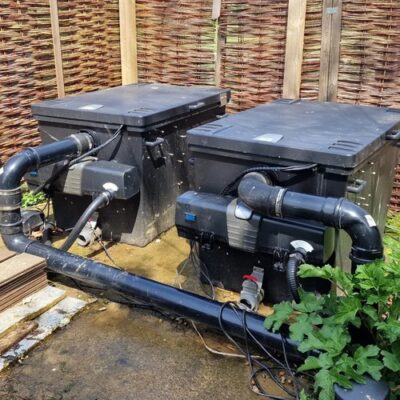
Title: Comparison of Drum Filters and Black Box Filters
Maintenance and Longevity
Although drum filters are largely automated, routine maintenance is essential to ensure they operate at peak efficiency for years to come. Regularly inspecting and maintaining key components will not only prolong the system’s lifespan but also prevent unexpected malfunctions that could disrupt your pond’s ecosystem.
Regular Inspections
Key components like sensors, spray bars, and the drum motor should be checked periodically to ensure they are functioning correctly. Sensors, which trigger the cleaning cycles, can become less responsive over time if debris or biofilm accumulates. Cleaning these sensors ensures they maintain their sensitivity, enabling the automated cleaning system to operate effectively. Spray bars, which use high pressure jets to clean the drum mesh, should also be inspected to ensure the nozzles are not clogged or damaged.
Cleaning the Waste Chute
The waste chute plays a crucial role in directing debris away from the pond system. Over time, waste buildup in the chute can lead to blockages, reducing the efficiency of the cleaning cycle. Regularly flushing or manually cleaning the chute prevents such issues and ensures smooth operation.
Checking for Blockages
Even with automated cleaning, occasional blockages can occur in the filter drum or connected pipes. These blockages can impede water flow and compromise filtration performance. A quick inspection during routine maintenance can help identify and resolve any potential obstructions.
Material Durability
Modern drum filters are constructed with corrosion resistant materials, such as stainless steel, ensuring they withstand exposure to water and waste over long periods. However, wear and tear on moving parts, like the drum motor, should be monitored. Replacing worn components promptly helps maintain the filter’s overall reliability.
Longevity with Proper Care
Service life depends on the model, installation, water conditions and care. Before buying, check the warranty and availability of replacement screens, seals, sensors, motors and controller parts. Keep the manual and model reference accessible so the correct part can be identified if a repair is needed.
For more tips on long term care and professional pond maintenance services, visit our Pond Maintenance Page. Proper attention to maintenance ensures your drum filter remains a dependable and efficient component of your pond system for years to come.

User Friendly Digital Control Panel on a Drum Filter
Conclusion
A drum is worth considering when your koi pond needs reliable solids removal and you want to reduce routine screen or sponge cleaning. Choose it as part of a complete system, with the correct flow, biological capacity and installation level. Browse our drum filters, or send us your pond volume, feeding level, pump details and a photograph or sketch of the filter area so we can help narrow the choice.
If you’re looking to elevate your pond system further, consider integrating additional features like pond heating systems or advanced aeration setups. Together, these enhancements can create an optimal environment for your koi to thrive, ensuring a lifetime of enjoyment.
We proudly work across Kent, London, Essex, Surrey, Sussex, Berkshire, and Hampshire, delivering professional pond cleaning, maintenance, and building services tailored to each pond’s individual needs, from small garden ponds through to large natural lakes. These services form part of our pond care services, covering everything from routine maintenance through to specialist pond construction. Get in touch today for a free quote and let That Pond Guy look after all aspects of your pond with experienced workmanship and honest advice.
Matthew Adlington
