





Filter Pond Plants
Choosing Water Lilies: Planting Depth, Mature Spread and Flower Colour
Choose by planting depth and mature spread first, then enjoy comparing flower colours. A small delivery pot does not mean a lily will stay small, and the deepest part of the pond is not automatically the right position.
Check the individual variety and selected supplied size. Our water lily care guide explains planting, feeding and division; aquatic baskets and planting supplies are available where repotting is needed.
Price range: £95.00 through £155.00 (inc VAT)
✔️ In stock - ready for dispatchPrice range: £24.50 through £148.50 (inc VAT)
✔️ In stock - ready for dispatchPrice range: £42.00 through £148.50 (inc VAT)
✔️ In stock - ready for dispatchPrice range: £31.00 through £36.00 (inc VAT)
❄️ Out of season - available next yearPrice range: £31.00 through £36.00 (inc VAT)
✔️ In stock - ready for dispatchPrice range: £24.50 through £148.50 (inc VAT)
✔️ In stock - ready for dispatchPrice range: £24.50 through £148.50 (inc VAT)
✔️ In stock - ready for dispatch£36.50 (inc VAT)
✔️ In stock - ready for dispatch£36.50 (inc VAT)
✔️ In stock - ready for dispatchPrice range: £36.50 through £148.50 (inc VAT)
✔️ In stock - ready for dispatchPrice range: £24.50 through £148.50 (inc VAT)
✔️ In stock - ready for dispatchPrice range: £24.50 through £148.50 (inc VAT)
✔️ In stock - ready for dispatchPrice range: £24.50 through £148.50 (inc VAT)
✔️ In stock - ready for dispatchPrice range: £42.00 through £148.50 (inc VAT)
✔️ In stock - ready for dispatchPrice range: £31.00 through £36.00 (inc VAT)
❄️ Out of season - available next yearPrice range: £31.00 through £36.00 (inc VAT)
✔️ In stock - ready for dispatchPrice range: £24.50 through £148.50 (inc VAT)
✔️ In stock - ready for dispatch£48.50 (inc VAT)
❄️ Out of season - available next year£36.50 (inc VAT)
✔️ In stock - ready for dispatch£36.50 (inc VAT)
✔️ In stock - ready for dispatch£36.50 (inc VAT)
✔️ In stock - ready for dispatchPrice range: £36.50 through £148.50 (inc VAT)
✔️ In stock - ready for dispatch


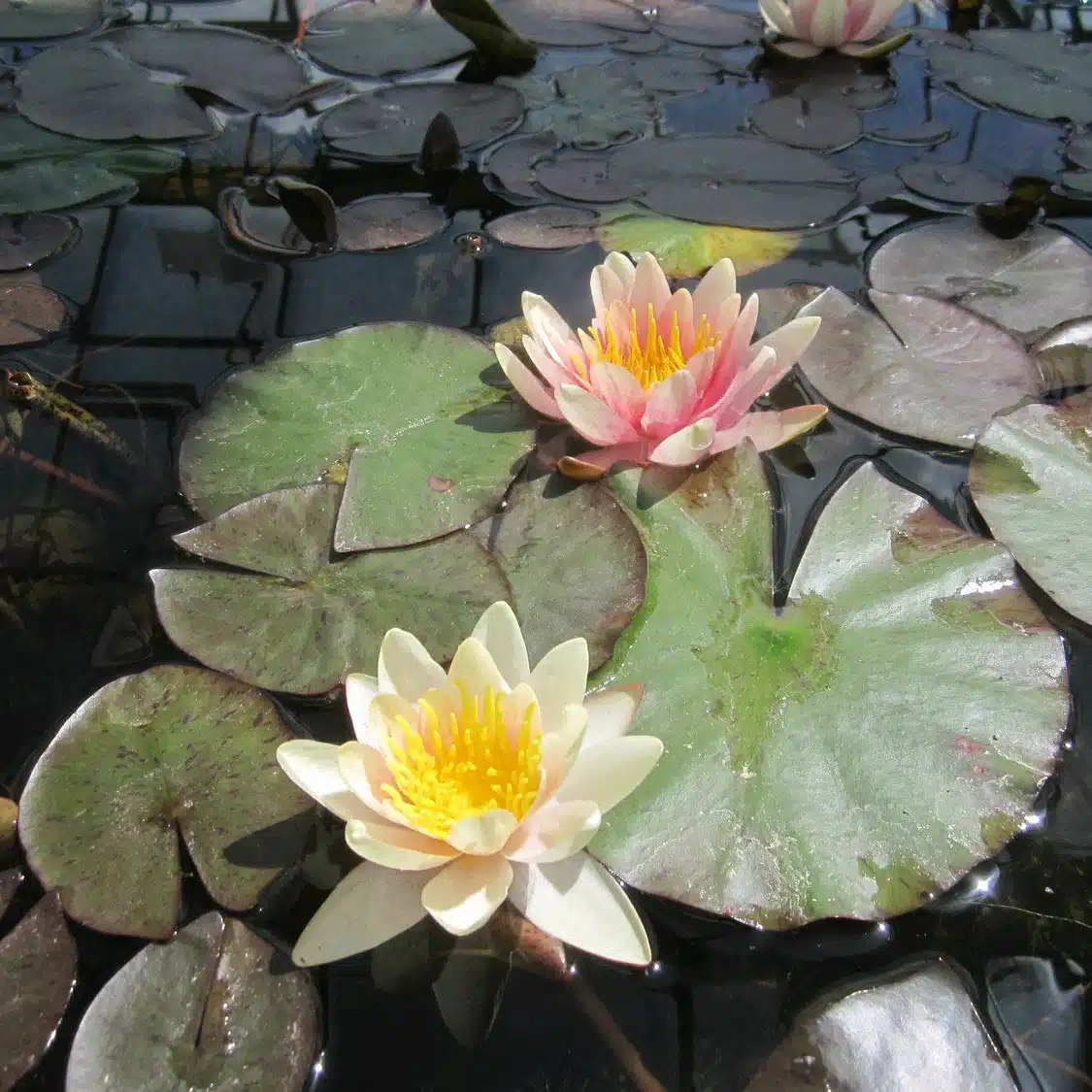


Choosing and caring for water lilies
Water lilies in contrasting colours and growth habits
Start with spread and planting depth, then choose flower colour. These hardy lilies show a useful range of sizes and shades for different UK ponds.
Planting at the correct depth
Follow the depth and reference point stated for the selected water lily and supplied format. Measure its recommended water cover above that point, allowing for the basket and any support; do not substitute the pond-floor depth.
A newly supplied water lily should usually be positioned so its existing leaves can reach or sit close to the surface. Young plants may struggle if they are placed immediately at the maximum recommended depth.
As stronger stems and new leaves develop, the basket can be lowered gradually until it reaches the final depth recommended for that variety.
If a pond shelf is too deep, the basket can be raised using stable bricks, blocks or an upturned aquatic basket. Any supports should be secure and free from sharp edges that could damage the pond liner.
Choose a sunny, calm position
Water lilies generally flower best in a sunny position. Most varieties benefit from several hours of direct sunlight each day, although exact requirements vary.
They also prefer still or gently moving water. Avoid placing water lilies directly beneath waterfalls, fountains, air stones or powerful return pipes. Constant splashing and turbulence can damage the leaves, prevent them from resting naturally on the surface and reduce flowering performance.
Keep baskets and trailing growth away from pumps, skimmers and filter inlets.
Allow for mature leaf cover
For a typical garden pond, leafy cover over roughly half the surface is a useful summer starting point rather than a fixed target for every pond. Choose lilies by their mature spread and leave open water and maintenance access.
This provides useful shade while leaving open water for circulation, gas exchange and viewing fish.
The ideal coverage will depend on the pond size, fish stocking, filtration and the amount of sunlight it receives. Water lilies should be divided or thinned if their leaves begin crowding the entire surface or overlapping heavily with other plants.
Routine care and repotting
Water lilies are generally straightforward to care for once established at the correct depth.
Remove yellowing leaves and faded flowers throughout the growing season. This keeps the plant tidy and reduces the amount of decaying organic material entering the pond.
Established water lilies may eventually become crowded within their baskets. Reduced flowering, small leaves or growth pushing beyond the basket can indicate that the plant needs dividing and repotting.
When repotting, use specialist aquatic compost rather than ordinary garden compost. A layer of washed aquatic gravel can help keep the growing medium contained and reduce disturbance from fish.
Our guide to planting pond plants in baskets shows the potting method, from choosing the container and medium to positioning a newly planted basket.
Water lilies in fish and koi ponds
Water lilies can provide valuable shade and shelter in ponds containing goldfish and other ornamental fish.
Large koi may disturb the baskets, remove aquatic compost or damage young leaves and shoots. In koi ponds, water lilies may require heavier baskets, protective gravel or planting areas that the fish cannot easily access.
Water lilies can contribute to a balanced pond, but they should not be relied upon to process all the waste produced in a heavily stocked fish pond. Suitable filtration and regular maintenance will still be required.
Check the supplied size and preparation
Check the selected size and supplied label before positioning your water lily. The supplier’s guidance distinguishes 1 litre miniature Pygmaea lilies and Snow Princess, which can stay in their basket, from other 1 litre lilies, which should be moved into a 3 litre or larger aquatic basket. A supplied 3 litre lily can remain in its basket but may benefit from more room; 10 and 30 litre lilies normally need no immediate repotting. Keep pre-planted mesh baskets in place unless repotting is required, and lower a new hardy lily gradually as its leaves reach the surface.
Water lilies are naturally seasonal. Plants ordered early in the growing season may arrive with fewer or smaller leaves than plants supplied during summer, and they are not guaranteed to arrive in flower.
Check seasonal availability and the delivery information for the plant and supplied size you choose. Once delivered, unpack the plant promptly and place it into the pond as soon as practical.
Help choosing a water lily
Send the pond dimensions, planting depth and a photograph showing its position in the garden. Tell us about the sunlight and any fountain or waterfall, so we can compare varieties around the growing space.
Which water lily will fit a smaller pond?
Choose by mature spread and recommended planting depth before flower colour. A large, vigorous lily can fill the available surface and become difficult to lift from a small pond. Compare the named variety’s growth habit, and allow space for access and any other planting rather than choosing from the size of the delivery pot alone.
Can I use ordinary garden compost?
Choose a planting medium intended for the aquatic plant and follow its potting instructions. Loose, rich compost can escape into the pond and make a mess. Use a suitable basket and liner where needed, keep the growing point correctly positioned and avoid burying it under a heavy layer of gravel.
Why is my lily not flowering?
Look at the variety, light, planting depth, available space and the condition of the plant. A recently divided or newly planted lily may be establishing. Crowded growth, shade and an unsuitable position are worth checking before adding feed. Tell us the variety and send a photograph of the whole pond and the growing point if you need help.
How do I care for it through the year?
Remove decaying foliage carefully and check for overcrowding when growth and the plant’s instructions make it appropriate. Winter care depends on whether the selected lily is hardy and on its position in the pond. Keep the label, and use our water-lily guide for the more detailed potting, division and seasonal advice.
More detailed planting and feeding help
Our water lily care guide covers selecting a basket, establishing a new plant, feeding, flowering and division. Use suitable aquatic baskets and planting materials when repotting and follow the label of any aquatic fertiliser rather than adding feed indiscriminately to the water.
For other planting zones, compare marginal plants and oxygenating plants. Leave enough light and space for each part of the planting.
