







Oxygenation and Aeration for Koi Ponds: A Complete Guide
Koi ponds are more than just a visual centerpiece—they are a living ecosystem that requires careful balance to keep your koi healthy and thriving. One of the most crucial factors in maintaining that balance is ensuring proper oxygen levels in the water. Without sufficient oxygen, koi can become stressed, leading to health issues and even fatalities. That’s why oxygenation and aeration for koi ponds is essential to their long-term well-being.
In this guide, we’ll explore the importance of oxygenation, how to monitor oxygen levels, and the best aeration methods to keep your pond oxygen-rich and healthy.
Why Oxygenation is Crucial for Koi Ponds
Oxygen is vital for all aquatic life, including koi. Koi rely on dissolved oxygen in the water to breathe, and their overall health depends on consistent oxygen levels. When oxygen levels drop too low, koi can become stressed, exhibit signs of distress, and even suffocate. Low oxygen can also lead to other issues, such as the buildup of harmful gases like ammonia and nitrite, which further stress your fish and affect water quality.
The ideal dissolved oxygen (DO) level for koi is between 6-8 mg/L, with a minimum requirement of 5 mg/L. Oxygen levels below this threshold can cause your fish to gasp for air at the surface, reduce their immune response, and lead to long-term health complications.
Key Benefits of Proper Oxygenation:
- Respiratory Health: Sufficient oxygen levels allow koi to breathe properly and maintain their metabolic functions.
- Water Clarity: Higher oxygen levels support beneficial bacteria that help break down waste and improve water clarity.
- Reduced Stress: Proper oxygen levels reduce stress in koi, enhancing their immune system and making them more resilient to diseases.
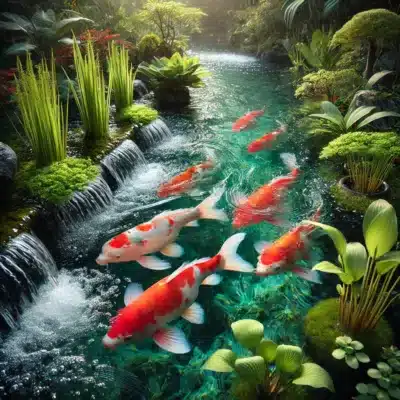
Koi Fish Swimming in a Well-Aerated Pond
How to Monitor Oxygen Levels in Your Pond
Monitoring oxygen levels is a critical part of maintaining a healthy koi pond. Regularly checking dissolved oxygen (DO) levels allows you to catch any potential issues early and adjust your aeration methods accordingly.
Oxygen Test Kits and Meters
There are several tools available for measuring dissolved oxygen levels in your pond:
- Dissolved Oxygen Test Kits: These kits allow you to take water samples and measure the oxygen levels manually. They are affordable and provide accurate readings, though they can be time-consuming.
- Digital Oxygen Meters: A digital meter provides a faster and more accurate way to measure dissolved oxygen levels. These meters are often used by professional pond managers and serious koi enthusiasts to ensure their oxygen levels remain within the optimal range.
When measuring dissolved oxygen, aim to test the water in different parts of the pond, especially in shaded areas or near plant growth, where oxygen levels might be lower.
Discover more tools to maintain water quality in your pond with our water quality monitoring guide.
Factors That Affect Oxygen Levels in Koi Ponds
Understanding the factors that influence oxygen levels can help you manage your pond effectively and prevent dangerous drops in dissolved oxygen.
- Water Temperature: Warmer water holds less oxygen than cooler water, so oxygen levels tend to drop in the summer months. If the water temperature rises above 80°F (27°C), it’s crucial to increase aeration to maintain adequate oxygen levels.
- Organic Matter: Decaying plants, fish waste, and uneaten food all consume oxygen as they decompose. An excess of organic debris can lead to oxygen depletion, particularly at the pond’s bottom.
- Algae Blooms: During the day, algae produce oxygen through photosynthesis. However, at night, algae consume oxygen, which can lead to significant drops in oxygen levels, especially if the algae population is too large.
- Stocking Density: Overcrowding your pond with too many koi can deplete oxygen levels. More fish means more oxygen consumption, so it’s important to maintain a balanced stocking density.
Learn more about the impact of water temperature on koi ponds at Koi Organisation International (KOI).
Methods for Aeration: Enhancing Oxygenation in Your Pond
When it comes to oxygenation and aeration for koi ponds, there are several effective methods to increase water movement and promote oxygen exchange. The best aeration systems depend on the size and layout of your pond, as well as your local climate.
1. Waterfalls and Fountains
Waterfalls and fountains are both aesthetically pleasing and highly effective at increasing oxygen levels. By disturbing the water’s surface, they create air bubbles that dissolve into the water, boosting oxygen levels throughout the pond.
- Waterfalls: Waterfalls are a popular choice for larger ponds, where they can circulate and oxygenate large volumes of water. They also help with water circulation, preventing stagnation in deeper areas.
- Fountains: A fountain not only adds beauty to your pond but also helps with aeration by spraying water into the air. As the water droplets fall back into the pond, they increase surface agitation and oxygen exchange.
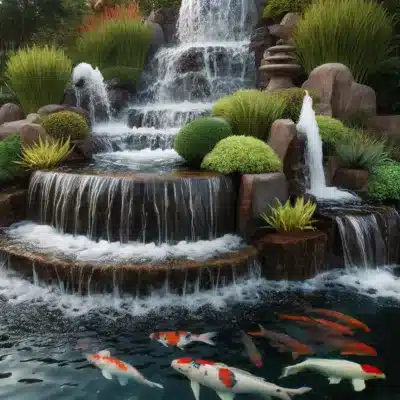
Koi Pond with Waterfall and Fountain
2. Air Pumps and Aerators
These are an excellent way to introduce oxygen into your pond, especially in deep or densely stocked ponds where surface agitation alone may not be enough.
- Air Stones: Connected to an air pump, air stones release fine bubbles into the water. These bubbles provide oxygen and help move water from the bottom of the pond to the surface, reducing the risk of stagnant water.
- Diffusers: Diffusers are placed at the bottom of the pond and connected to an air pump. They create larger bubbles, ideal for ponds with deeper areas that need more robust aeration.
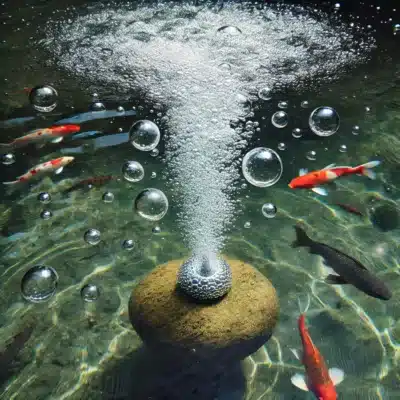
Air Stone in Koi Pond
3. Aquatic Plants
Aquatic plants play a natural role in oxygenating your pond. During daylight hours, they release oxygen as a byproduct of photosynthesis. Adding a variety of oxygenating plants to your pond helps maintain oxygen levels, particularly in shallow areas.
- Hornwort and Waterweed: These submerged plants are known for their ability to produce oxygen throughout the day, contributing to a healthy pond ecosystem.
- Floating Plants: Water lilies and water hyacinths provide shade, which can help regulate temperature and reduce algae growth, indirectly supporting oxygenation.
For more information on aquatic plants, check out our guide to the best plants for koi ponds.
4. Solar Aerators
For eco-conscious pond owners, solar aerators provide a sustainable way to increase oxygen levels without relying on electricity. Solar aerators use energy from the sun to power an air pump, making them ideal for locations that get ample sunlight.
While they may not be as powerful as electric aerators, solar aerators are a great option for smaller ponds or for providing supplemental oxygenation during the day.
The Role of Aeration in Maintaining a Balanced Ecosystem
Aeration plays a crucial role in maintaining the overall balance of a koi pond ecosystem. It doesn’t just increase oxygen levels but supports numerous other processes that contribute to the health of your pond. The constant movement of water through aeration prevents stagnation, which can lead to a host of problems, including poor water quality, algae blooms, and even dangerous buildups of harmful gases like ammonia and hydrogen sulfide.
1. Promoting Beneficial Bacteria Growth
Aeration is vital for supporting the growth of beneficial bacteria that live in the biological filtration system of your pond. These bacteria play a key role in breaking down organic waste, fish waste, and uneaten food into less harmful substances. By converting toxic ammonia into nitrites and then into less toxic nitrates, beneficial bacteria help maintain water quality.
Without sufficient oxygen, these bacteria cannot thrive, leading to higher levels of harmful substances in the water, which can stress or even kill your koi. Proper aeration ensures that oxygen-rich water reaches all areas of the pond, including the filter media, where these bacteria reside.
2. Reducing Toxic Gas Buildup
In ponds with poor water circulation or insufficient oxygenation, harmful gases can accumulate at the bottom of the pond. This is particularly common in deeper ponds where oxygen levels may be lower. Without adequate aeration, gases like ammonia, carbon dioxide, and hydrogen sulfide can build up, posing a serious risk to your koi.
Aeration helps prevent these gases from accumulating by promoting gas exchange at the water’s surface. As air is introduced into the water, carbon dioxide and other harmful gases are released into the atmosphere, while fresh oxygen is dissolved into the pond.
3. Preventing Algae Blooms
Algae thrive in stagnant water with high nutrient levels and low oxygen. When there is insufficient aeration, algae can grow out of control, turning the water green and reducing the amount of dissolved oxygen available for your koi. This can lead to oxygen depletion, especially at night, when algae and other plants consume oxygen.
By improving water circulation and oxygenation, aeration discourages the conditions that lead to algae blooms. Aeration ensures that nutrients are evenly distributed throughout the pond, preventing them from accumulating in one area and fueling excessive algae growth.
4. Enhancing Water Circulation
Aeration helps move water throughout the pond, preventing areas of stagnation where debris and organic matter can settle. In ponds without adequate water movement, pockets of stagnant water can develop, particularly in deeper or shaded areas. These stagnant zones are prone to poor oxygenation, leading to the accumulation of waste and harmful bacteria.
By keeping the water moving, aeration ensures that oxygen is distributed evenly throughout the pond. It also helps move debris toward the filtration system, where it can be removed, keeping the pond clean and clear.
5. Supporting Plant Health
Aquatic plants are an important part of a healthy koi pond ecosystem. They help provide shade, reduce algae growth, and produce oxygen during the day. However, plants also consume oxygen at night. Without sufficient aeration, oxygen levels can drop overnight, leading to stress for both plants and fish.
By maintaining consistent oxygen levels, aeration supports the health of aquatic plants and ensures that they can continue to contribute to the overall balance of the pond. Healthy plants, in turn, help improve water quality by absorbing excess nutrients and providing habitat for beneficial organisms.
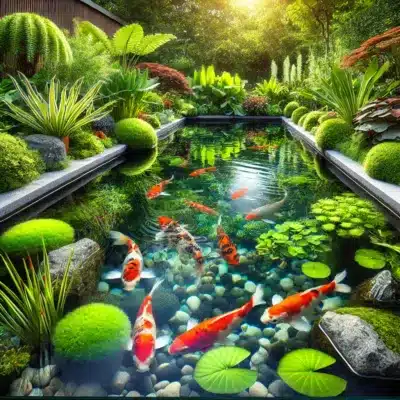
Well-Aerated Koi Pond Ecosystem
Signs Your Pond Needs Better Aeration
Even with regular monitoring, there are several telltale signs that your pond may need better aeration. Recognizing these signs early allows you to take immediate action before your koi experience stress or health complications. Below are common indicators that your pond may lack sufficient oxygen and water movement:
1. Koi Gasping for Air at the Surface
One of the most obvious signs that your pond needs better aeration is when koi frequently come to the surface to gasp for air. This behavior is often a result of low dissolved oxygen levels in the water. When the oxygen concentration is insufficient at deeper levels, koi will seek out the thin layer of oxygen-rich water at the surface. If this happens regularly, it’s a clear sign that the pond isn’t well-aerated.
- What to Do: Increase aeration immediately by adding an air pump or adjusting your current aeration system to improve oxygen levels, especially in deeper areas. You may also want to check for other issues like overstocking, poor water circulation, or debris buildup that could be contributing to oxygen depletion.
2. Unpleasant Odors from the Water
A well-maintained pond should have a fresh, earthy smell. However, if your pond develops a foul odor, it’s often a sign of poor aeration. Bad smells usually indicate the buildup of organic waste, such as decaying plants, fish waste, and uneaten food, which decompose anaerobically (without oxygen). This decomposition process can produce harmful gases like hydrogen sulfide, which has a rotten egg smell and is toxic to both fish and humans.
- What to Do: Check the bottom of the pond for sludge or debris and remove it if necessary. Adding or increasing aeration will promote oxygenation throughout the pond and help prevent anaerobic conditions that cause these unpleasant odors.
3. Cloudy or Murky Water
Cloudy or murky water is another sign that your pond may need better aeration. Without sufficient oxygen and water movement, organic particles, fish waste, and algae can build up in the water, reducing clarity. Poor water clarity can affect the aesthetic appeal of your pond and also lead to problems with algae blooms and fish health.
- What to Do: Increase water movement and oxygen levels by installing a fountain, waterfall, or additional air pumps. You can also use mechanical filtration systems to remove suspended particles and restore water clarity.
4. Excessive Algae Growth
Excessive algae growth is often a sign of poor aeration, as stagnant water and nutrient buildup create ideal conditions for algae to thrive. Algae blooms can quickly consume available oxygen, leading to oxygen depletion, particularly at night when algae and plants respire and use up dissolved oxygen.
- What to Do: If your pond is experiencing frequent algae blooms, it’s a sign that water circulation and aeration need to be improved. Installing aeration devices like air stones, diffusers, or fountains can help distribute oxygen more effectively and reduce the chances of algae overgrowth. Additionally, reducing nutrient levels by cleaning the pond and limiting excess food can help control algae.
5. Fish Lethargy or Unusual Behavior
Koi are typically active and curious fish. If you notice that your koi are becoming sluggish, spending excessive time at the bottom of the pond, or acting unusually, it could be due to a lack of oxygen. Fish lethargy is often a precursor to more serious health issues, including weakened immune systems, increased susceptibility to disease, and in extreme cases, death.
- What to Do: If your koi are showing signs of lethargy, it’s important to test your water’s dissolved oxygen levels immediately. If oxygen levels are low, consider adding air pumps, adjusting water circulation, or removing organic debris that could be depleting oxygen levels. Quick intervention can prevent long-term damage to your koi’s health.
6. Accumulation of Debris or Sediment at the Bottom
If you notice that debris, fish waste, or plant matter is accumulating at the bottom of your pond, it could indicate insufficient water circulation. Without adequate movement, organic matter tends to settle at the bottom, where it can begin to decompose anaerobically. This can lead to the release of harmful gases, reduced water clarity, and low oxygen levels in the lower sections of the pond.
- What to Do: Improve water circulation with the help of aerators or water features like waterfalls or fountains. These devices will help keep water moving throughout the pond, preventing debris from settling and improving overall oxygenation. Regular pond cleaning and the use of sludge removers can also help reduce buildup at the bottom.
7. Hot Spots in the Pond
In summer, some areas of the pond may become warmer than others, particularly if there is insufficient water circulation. These “hot spots” can have lower oxygen levels, which can cause stress to your koi, especially if they don’t have access to cooler, oxygen-rich areas. Warm water holds less oxygen, so it’s crucial to ensure that your pond has consistent aeration to prevent these temperature fluctuations.
- What to Do: Increase aeration with air pumps, waterfalls, or fountains to ensure that oxygen is distributed evenly across the pond. Shade features like aquatic plants can also help cool down hot areas and reduce temperature fluctuations.
Conclusion: Mastering Oxygenation and Aeration for a Healthy Koi Pond
Ensuring proper oxygenation and aeration for koi ponds is vital for maintaining a healthy, thriving environment for your fish. Whether through waterfalls, fountains, air pumps, or natural methods like aquatic plants, there are plenty of ways to keep your pond well-aerated and oxygen-rich.
Regular monitoring, coupled with the right aeration equipment, ensures that your koi stay healthy and your pond remains clear and balanced. By being proactive about oxygen levels, you can prevent health issues, improve water quality, and create a more enjoyable pond environment.
Matthew Adlington
