





Pond Heating Explained: Extend the Season or Heat Your Koi Pond All Winter?
Choosing pond heating for a longer season or a warmer winter
Before choosing a pond heater, we would ask one question: what do you want it to do? Keeping a small opening in the ice, bringing a koi pond into its feeding season earlier and holding a steady temperature through January are very different jobs. They need different equipment, and the running costs can be very different too.
We build and maintain ponds, install equipment and keep koi ourselves. Heating is one part of looking after the whole pond. It can give you more control over temperature, but the fish still need suitable food, good water quality, oxygen and filtration that can cope with what you feed.
What we recommend
For a koi pond you want to heat regularly, we recommend a suitable air source heat pump. The main reason is value for money over time: it can deliver considerably more heat for each unit of electricity than a direct electric heater. When you are keeping thousands of litres warm for weeks or months, that difference matters.
We would put just as much thought into the pond cover and insulation. Paying for an efficient heater while letting the heat escape is an expensive way to run a pond. The right combination is a properly sized heat pump, a pond that holds its heat and a realistic temperature target.
This guide explains the choices before you spend money: seasonal warming, winter temperature targets, heater types, electricity use and ways to keep running costs down. We also cover the practical work needed to make a heated pond run properly.
Already comparing equipment? Explore our pond heating range, then use the advice below to narrow down what suits your pond.

Seasonal heating or heating throughout winter?
Extend spring and autumn without committing to a warm winter
Seasonal heating means adding warmth during the months when you want a more active pond. In spring, it can bring the water towards your chosen feeding temperature earlier. In late summer and autumn, it can slow the seasonal drop and give you a longer period to enjoy feeding and watching the koi.
This is an option for someone who wants a longer growing season but does not want to pay to hold the same temperature through the coldest weather. Decide when the heater will run, the temperature you want and how the pond will transition into winter. Avoid repeatedly turning the target up and down in response to each day’s weather.
A seasonal heat pump may suit this job well, provided its operating range covers the conditions you expect. If you later decide to keep it running through winter, first check that it can cope with colder air and still supply enough heat.
Maintain a chosen winter temperature
Winter heating is a longer commitment. The heater must replace the heat the pond loses day and night, including during cold spells. A covered, insulated pond in a sheltered position is a different proposition from an exposed pond with a large surface and uncovered filter bays.
The benefit is greater control over the environment. You can reduce prolonged cold periods and manage a steadier temperature, provided the equipment is sized correctly and maintained. You also need a plan for faults or power interruptions, especially if the fish have been kept considerably warmer than the surrounding weather.
| Aim | What heating does | Main consideration |
|---|---|---|
| Longer feeding season | Supports chosen temperatures earlier in spring and later in autumn. | Seasonal operating range and a planned transition into winter. |
| Winter temperature control | Offsets heat loss to maintain a selected temperature. | Cold weather output, covers, insulation and ongoing cost. |
| Local ice prevention | Keeps a small area of the surface open. | Suitable installation and pond depth; not whole pond warming. |
Why temperature matters to koi
Koi are cold blooded: their body temperature follows the water around them. As water cools, their activity, appetite and digestion generally slow. As it warms, feeding opportunities increase, but so does the need to manage the extra waste and oxygen demand.
A thermometer therefore helps you decide how to feed; it does not make the decision on its own. Watch the fish, follow the temperature guidance for their food and check the water. A warm pond with rising ammonia or nitrite needs attention to feeding and filtration, rather than another increase in temperature.
Is the immune system switched off below 12°C?
No. That familiar claim makes a complicated process sound like a thermostat. Different parts of the immune response react differently to temperature. In carp research on spring viraemia virus, fish developed neutralising antibodies at temperatures between 10°C and 20°C, with responses taking weeks. Cold water can delay responses; it does not create one universal on/off threshold.
A separate study of koi herpesvirus and immune responses also found that temperature affected infection and antibody development. These are controlled disease studies, not instructions for using a garden pond heater to prevent or treat infection.
What about the spring “danger window”?
Fish emerging from winter can be vulnerable, and infections do not all follow the same temperature pattern as the fish’s defences. For example, a scientific review of spring viraemia of carp describes serious disease in cool spring water. It does not establish a safe temperature for every other disease.
Heating can help manage environmental conditions, but it does not remove pathogens or replace quarantine, observation and water testing. If fish show sores, unusual breathing, persistent rubbing or a sudden loss of appetite, investigate the cause and seek qualified fish health advice. Turning the heater up is not a treatment plan for an unidentified problem.
Stability helps, but temperature is only one part of care
Keep a record of temperature, feeding and water tests as conditions change. Gradual adjustments and consistent observation are more useful than chasing a supposedly perfect number while overlooking the fish.
Why consider 12°C in winter and 15°C or above for feeding?
12°C as a moderate winter planning target
For this guide, 12°C gives us a useful example of a moderate winter target. It keeps the pond warmer than it would be in a cold spell without asking the heater to maintain summer temperatures. Whether it suits your fish and pond is something to discuss before settling on a winter routine.
At that target, feed according to appetite, food guidance and filtration capacity. Do not assume that reaching 12°C means the fish should receive their summer ration, or that their immune system is fully active and disease can no longer occur.
15°C and above for a longer active season
Around 15°C is a useful reference when thinking about extending the feeding season. Compared with cold winter water, it offers conditions for more activity and feeding. Maintaining suitable warmth for longer can increase the time available for growth, but growth also depends on genetics, age, diet, stocking and water quality.
It is not the optimum for maximum growth. The FAO’s common carp profile places best growth in substantially warmer conditions, around 23–30°C. That is aquaculture information, not a recommendation to turn a domestic koi pond up to 30°C.
Higher temperatures bring further responsibilities. Warm water holds less dissolved oxygen, while active fish and biological filtration need oxygen. Increase feeding cautiously and make sure aeration and filtration keep pace.
Make sure the thermostat lets you choose the temperature you want. Some heating modes start at 15°C, which is no use if your plan is to hold 12°C. Ask about this before ordering, including how any automatic heating and cooling mode works.
Which type of pond heater does which job?
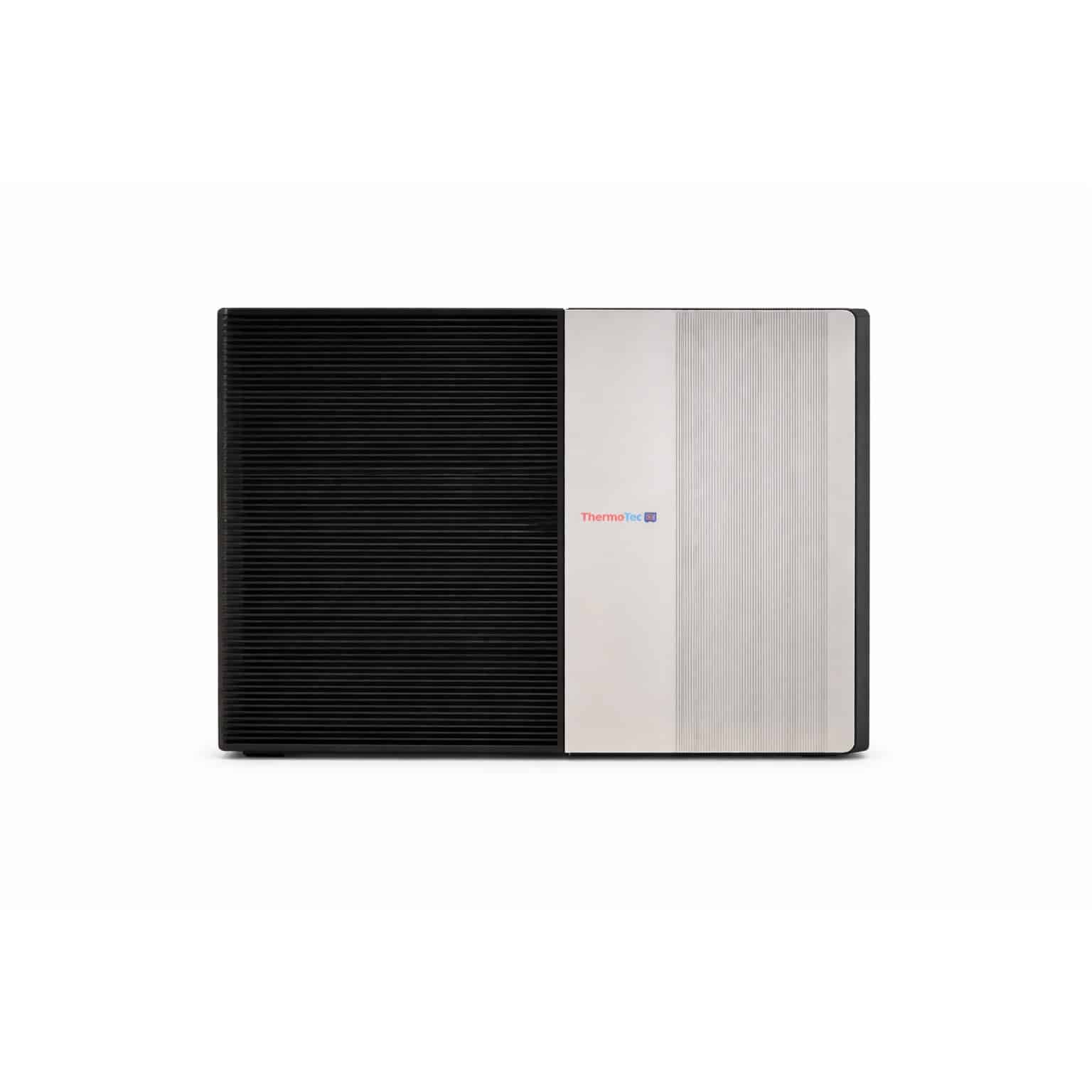
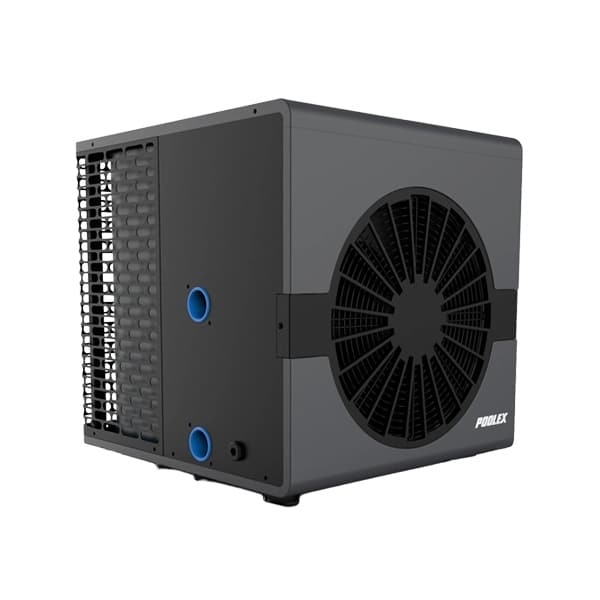
Air source heat pumps
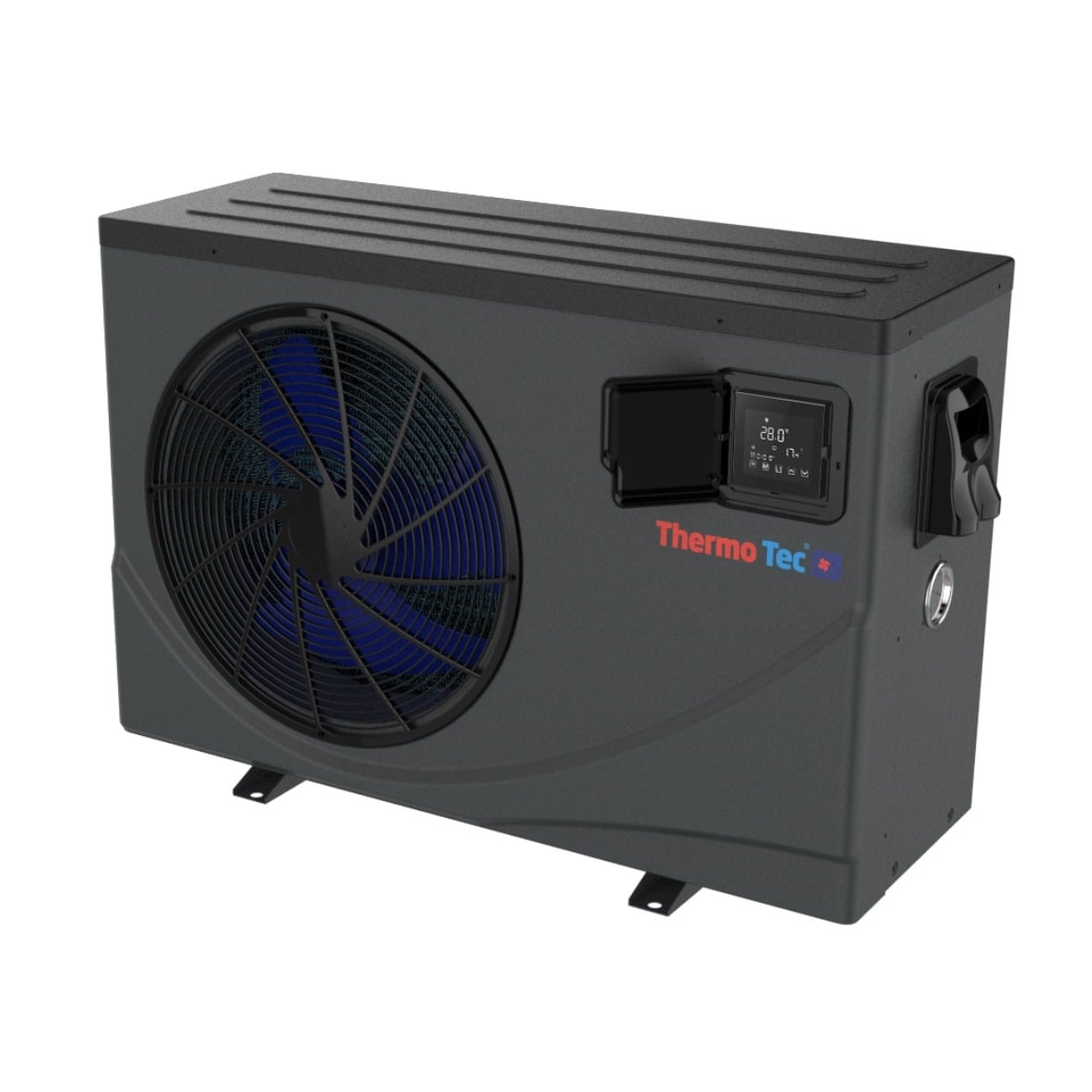
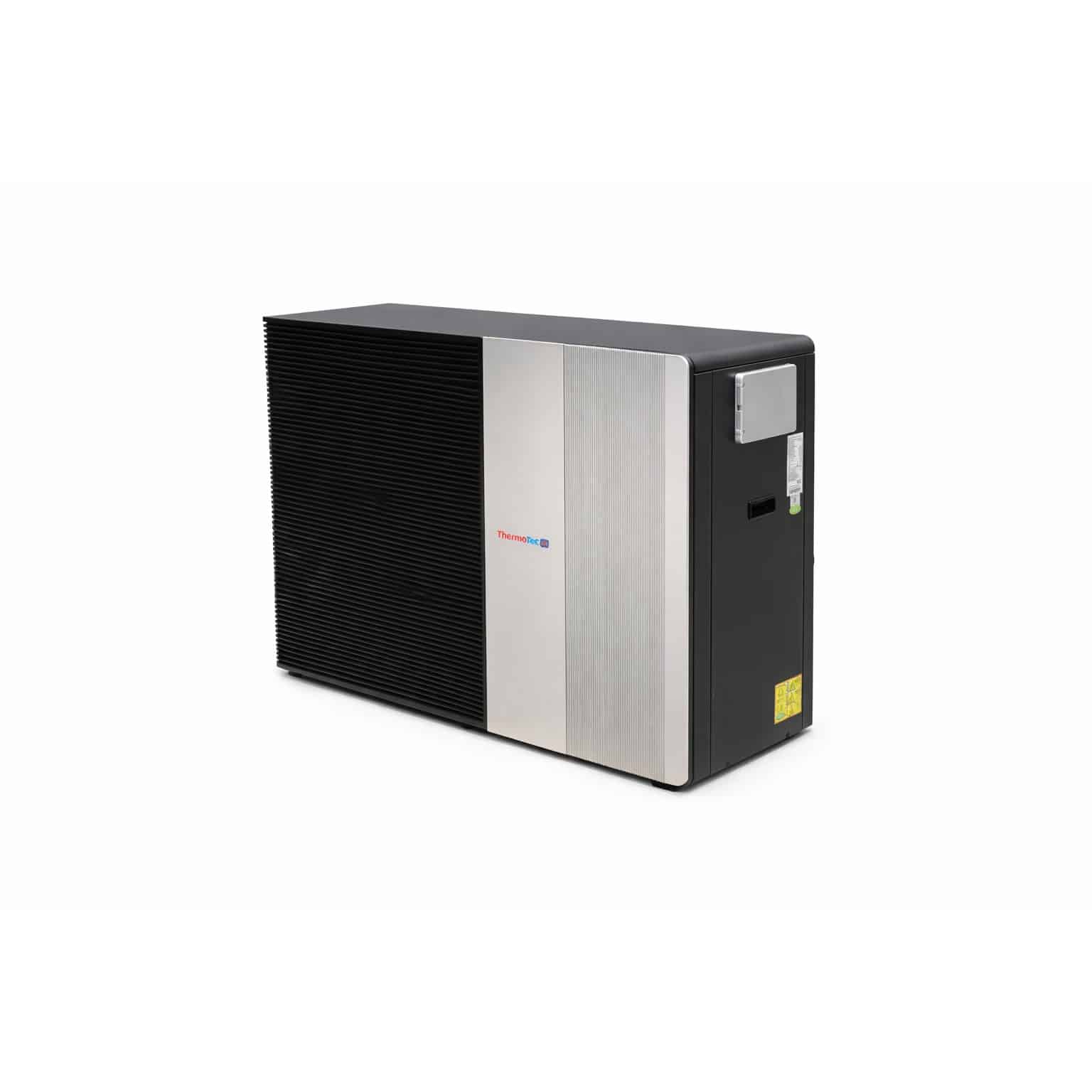
An air source heat pump moves heat from outdoor air into the water circuit. It uses electricity to run its compressor, fan and controls, but its delivered heat can exceed that electrical input. That is why they are our first choice to consider for regular pond heating.
As the air gets colder, a heat pump will generally deliver less heat per unit of electricity. The water temperature you want and time spent defrosting also affect its performance. Inverter models adjust their output as demand changes; you still need one with enough heating capacity for the coldest conditions you plan to use it in.
Browse our air source heat pumps once you know whether you want seasonal or winter heating. We can help you compare how much heat they deliver in cold weather, how low their thermostat goes and whether your pond pump provides enough flow.
Inline electric pond heaters
An inline electric heater warms water passing through its heating chamber. It can provide straightforward temperature control and does not depend on extracting heat from the outdoor air. Its electrical demand is much closer to the heat it delivers, so running costs need careful attention.
An electric heater can be a straightforward choice where there is enough power available, or a backup to another heating system. For winter use, it still needs enough output to keep up with the heat your pond loses.
The Elecro Optima Compact, for example, uses a titanium heating assembly with flow and temperature protection. The range comes in different power ratings, so include the electrical installation cost when comparing the options.

Floating ice preventers
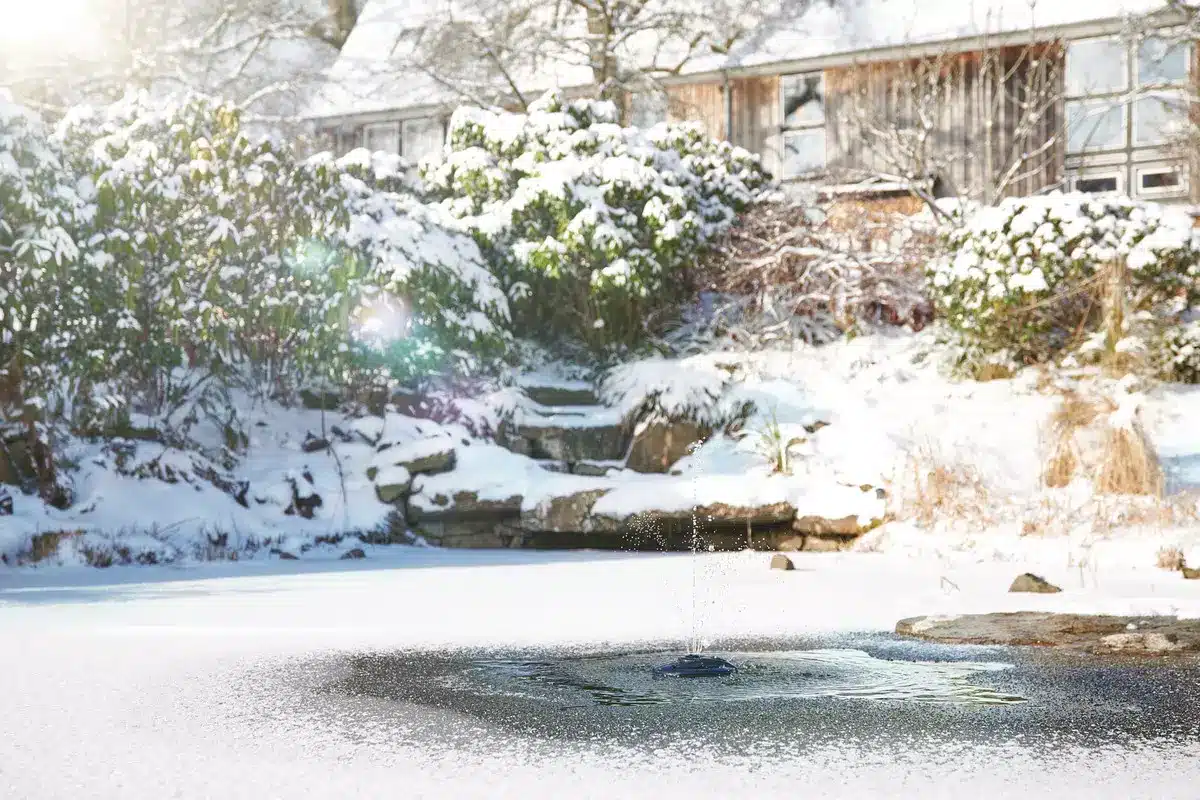
These serve a much smaller purpose: maintaining a local opening in the surface. The Oase IceFree4Seasons uses a 5W circulation pump, not a heating element. Oase specifies at least 80cm water depth for its operating principle.
The Oase IceFree Thermo 200 instead has a 200W heating element. It does not have the automatic frost monitor of the Thermo 330. Neither device is a substitute for a heater designed to maintain the whole pond at 12°C or 15°C.

| Type | Useful for | Check carefully |
|---|---|---|
| Air source heat pump | Extending the feeding season or maintaining warmth through winter. | Cold weather performance, airflow, defrost, controls and water flow. |
| Inline electric heater | Heating water directly with a thermostatically controlled element. | Electrical supply, consumption, flow protection and materials. |
| Local ice preventer | Maintaining a small surface opening. | Required pond depth and positioning. |
Start with covers and insulation
Before paying to put more heat into the pond, look at where it escapes. The exposed water surface, wind, raised walls, waterfalls, filters and pipework all deserve attention. Before spending more on a bigger heater, we would tackle any avoidable heat loss.
A suitable cover can reduce evaporation and exposure, but it needs to be practical. You must still be able to inspect the fish, feed appropriately and reach equipment. Allow for gas exchange and aeration; do not seal the pond into an airtight box. Covers also need suitable support and fixing for the weather, and should never be assumed safe to stand on.
Insulate accessible pipe runs and consider the filter area as well as the pond walls. If you are planning a new pond, these details are much easier to address before construction finishes. For an existing pond, photographs of the complete route help identify where improvements may be worthwhile.
How big does a pond heater need to be?
Pond volume matters, but it cannot provide the answer by itself. We also need the surface area, target temperature, winter exposure, cover arrangement and connected equipment. Two ponds with the same volume can lose heat at very different rates.
There are two demands to consider: raising the water temperature initially and replacing ongoing heat loss. A system that warms the pond during mild weather may still be unable to hold its target on a freezing night.
Nominal kW is not winter output
Read the test conditions beside a heat pump’s capacity. A headline rating measured in warm air with warm inlet water is not a promise of the same output in a British winter. A model may be able to run in freezing air and still struggle to keep your particular pond warm. Check how much heat it delivers at those temperatures.
Ask how much heat the model delivers, and how much electricity it uses, at the air and water temperatures you expect. Allow for time spent defrosting too. A swimming pool volume rating on its own will not tell you whether it can keep your koi pond warm in January. If you cannot find the figures, ask us before buying.
A useful heat calculation
Ignoring losses, raising 10,000 litres of water by 1°C takes approximately 11.6kWh of heat. A heater delivering a constant 3kW would take about 3.9 hours to supply that energy. Real heating takes longer because the pond is losing heat while you warm it.
This illustrates the scale of the task. It is not a recommended temperature change rate or a winter sizing formula. Plan changes around the fish and the installation, rather than warming as quickly as the equipment allows.
Pond heating energy use and running costs
Running costs deserve as much attention as the price of the heater. We would rather work through them before you commit to heating all winter than leave you wondering why the electricity bill has jumped in January. Start with the temperature you want, the months you intend to heat and how well the pond keeps that heat.
What is the most energy efficient way to heat a koi pond?
For regular whole pond heating, a suitable air source heat pump combined with a well covered, insulated pond will generally use less electricity than direct electric resistance heating. The saving depends on how efficiently the heat pump works in your conditions. For winter heating, look at cold weather figures rather than the highest efficiency advertised.
The US Department of Energy’s water heating guidance identifies heat pump pool heaters as an efficient option. A koi pond still needs its own assessment: the water temperature, winter exposure and fish care requirements are different from a seasonal swimming pool.
A heat pump is not automatically the cheapest overall purchase for occasional use. Installation, maintenance and how often you need heating affect whether the lower electricity use justifies the initial cost. Equally, a low wattage ice preventer is not a cheaper equivalent: it is doing a different job, not holding the whole pond at your chosen temperature.
Our starting point: keep the heat you have paid for
Before upgrading the heater, check the cover, exposed pipework and filter area. An efficient heater can still use a lot of electricity if the pond loses heat quickly. Improving both the pond and the heating system gives you a better chance of keeping costs manageable.
kW, kWh and COP: which number affects your bill?
kW describes power; kWh measures energy used over time. A 3kW electric resistance heater actively heating for one hour uses about 3kWh of electricity. Six hours at that power uses 18kWh. Being switched on for six hours does not necessarily mean heating continuously for six hours: the thermostat may stop and start it.
Heat pump output and electrical input are different figures. A unit delivering 6kW of heat at COP 3 would need approximately 2kW of electrical input at those conditions. Do not use the thermal output rating as though it were the electricity consumption.
COP, or coefficient of performance, divides useful heat output by electrical input. The Energy Saving Trust explains how operating temperatures affect COP and available output. For your pond, use the performance figures for the heat pump you are considering at the air and water temperatures you expect.
Heat pump versus electric pond heater: a running cost example
Here is why we favour heat pumps for regular use. At a COP of 3, each 1kWh of electricity supplies 3kWh of heat. A direct electric heater supplies roughly 1kWh of heat for the same electricity. In that example, the heat pump uses about a third as much electricity to deliver the same heat. It is an illustration, not a promised saving: cold weather and your chosen water temperature change the result.
The table compares the electricity needed to supply the same amount of heat. We have chosen 24kWh of heat per day simply to make the calculation clear. It is not an estimate of what your pond needs.
| Assumed performance | Electricity per day | Daily cost | 30 identical days |
|---|---|---|---|
| Resistance heating, approximately 1:1 | 24kWh | £6.00 | £180 |
| Heat pump at COP 2 | 12kWh | £3.00 | £90 |
| Heat pump at COP 3 | 8kWh | £2.00 | £60 |
| Heat pump at COP 4 | 6kWh | £1.50 | £45 |
These figures exclude circulation pumps, other pond equipment and standing charges. The tariff is illustrative, not a current price quotation. Real days are not identical: heat demand and heat pump performance change with weather and operating conditions. Use your own unit rate and realistic performance data before making a budget.
Why can pond heating cost more in winter?
In cold weather, the pond can need more heat while an air source heat pump has less favourable conditions to work in. Defrost operation also needs to be accounted for in its performance. A low minimum operating temperature does not tell you how cheaply the unit will maintain your pond at that temperature.
For a simple comparison, supplying 24kWh of heat at COP 3 takes 8kWh of electricity. At COP 2 it takes 12kWh: 50% more electricity for the same heat. If the pond’s heat demand also rises, consumption increases further. Those COP values illustrate the arithmetic; they are not a forecast for a particular heater.
Nor can you calculate the saving from a lower water target as a simple percentage of the thermostat setting. Maintaining 12°C instead of 15°C is not automatically 20% cheaper. Outdoor conditions, exposed surface area, covers and equipment performance all matter. Decide what temperature suits your fish and how you want to keep them through winter, then work out the likely cost.
How to reduce the energy used to heat a pond
Reduce evaporation and exposure. The US Environmental Protection Agency explains how covers reduce evaporation and retain heat in pools. A pond loses heat through evaporation too. How much a cover saves will depend on your pond and how you use it. Use a suitable cover that allows inspection, aeration and gas exchange, as discussed in the covers and insulation section.
Look beyond the water surface. Exposed pipes and filter housings deserve attention too. If you are considering bypassing a waterfall or changing winter circulation, check the complete filtration and oxygen supply first. Saving heat must not leave the fish without essential support.
Give the heater the conditions it needs. Keep heat pump airflow clear, maintain the specified water flow and follow its cleaning and servicing instructions. Restricting flow below the minimum or enclosing the unit tightly is not an energy saving measure. Choose capacity using the cold weather sizing checks, rather than assuming the largest nominal rating must be best.
Heat for the purpose you actually want. If you only want a longer spring and autumn feeding season, price that option separately from maintaining a warm pond throughout winter. Make temperature changes gradually as part of the care plan; do not chase small daily savings with large swings in water temperature.
Measure your pond’s consumption
Ask your installer about suitable energy metering for the heater circuit. Record electricity used, pond temperature, weather and whether the cover was in place. Compare mild and cold periods, not just one afternoon after installation.
For example, a measured 90kWh over seven days costs £22.50 at 25p/kWh, averaging about £3.21 a day. Keep recording through colder weather before using that figure to plan a winter budget.
Is it cheaper to run a pond heat pump at night?
Only your tariff and the actual operating conditions can answer that. A cheaper night rate can reduce the bill per kWh, but colder air may mean the heat pump needs more electricity to deliver the same heat. Lower cost and lower energy consumption are not always the same thing.
Do not assume a timer will save money while still maintaining the temperature you need. Check the effect on the pond, controller and available heating capacity. Keep essential filtration and aeration running according to the pond’s requirements, independently of any heater schedule.
Remember the rest of the pond’s electricity use
The heater is only part of the total. A pump drawing a constant 100W uses 2.4kWh over 24 hours, or 60p at the example 25p tariff. Include any additional circulation needed by the heating circuit when comparing options, as well as aeration and other equipment. Compare complete installations doing the same job, not one heater’s headline number against another system’s total bill.
Before ordering, we would want to know the likely demand in cold conditions, whether the heater can meet it and what assumptions sit behind the estimated cost. A quote that gives a daily price without mentioning the cover, target temperature or weather leaves too much unanswered.
One of our pond renovations
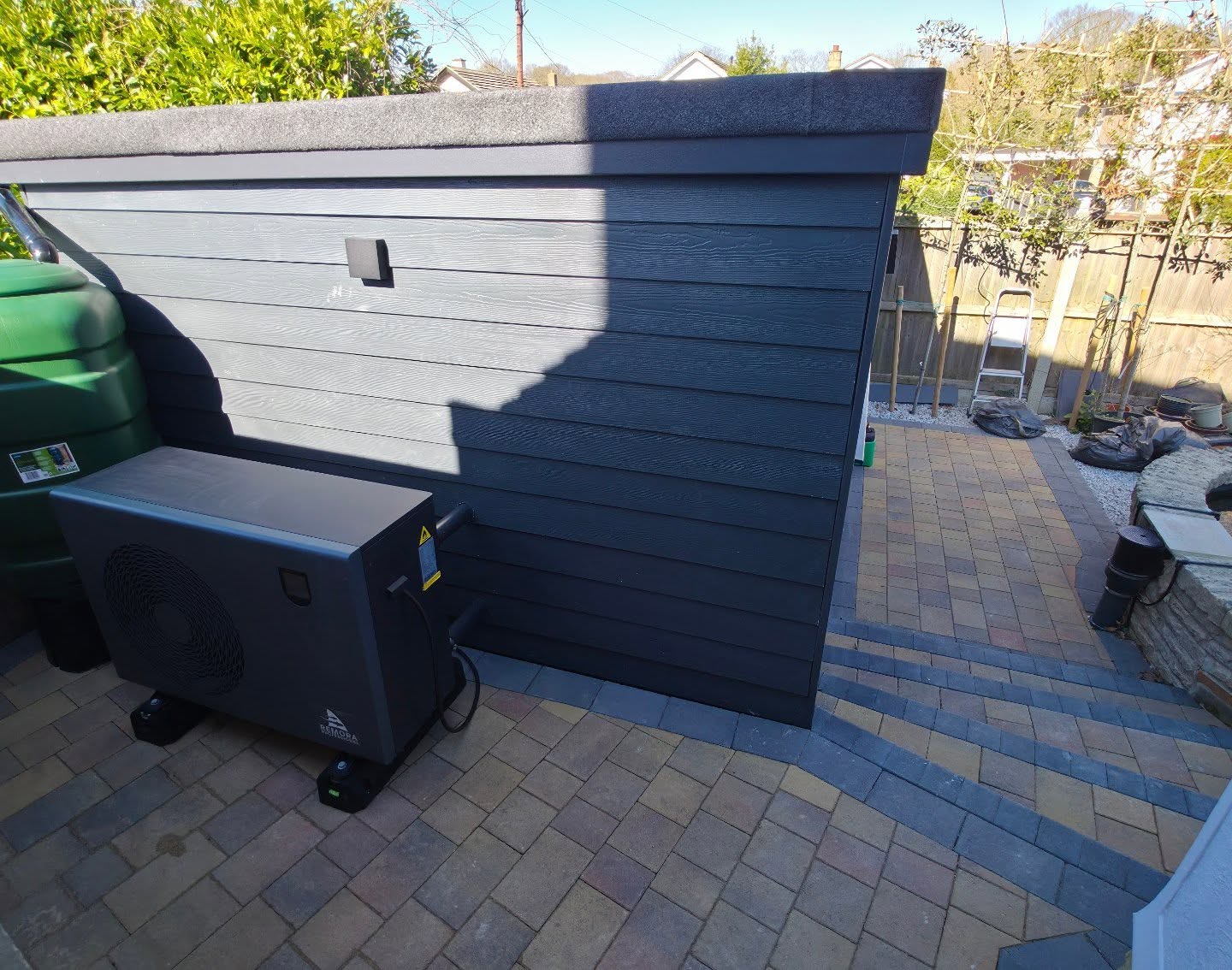
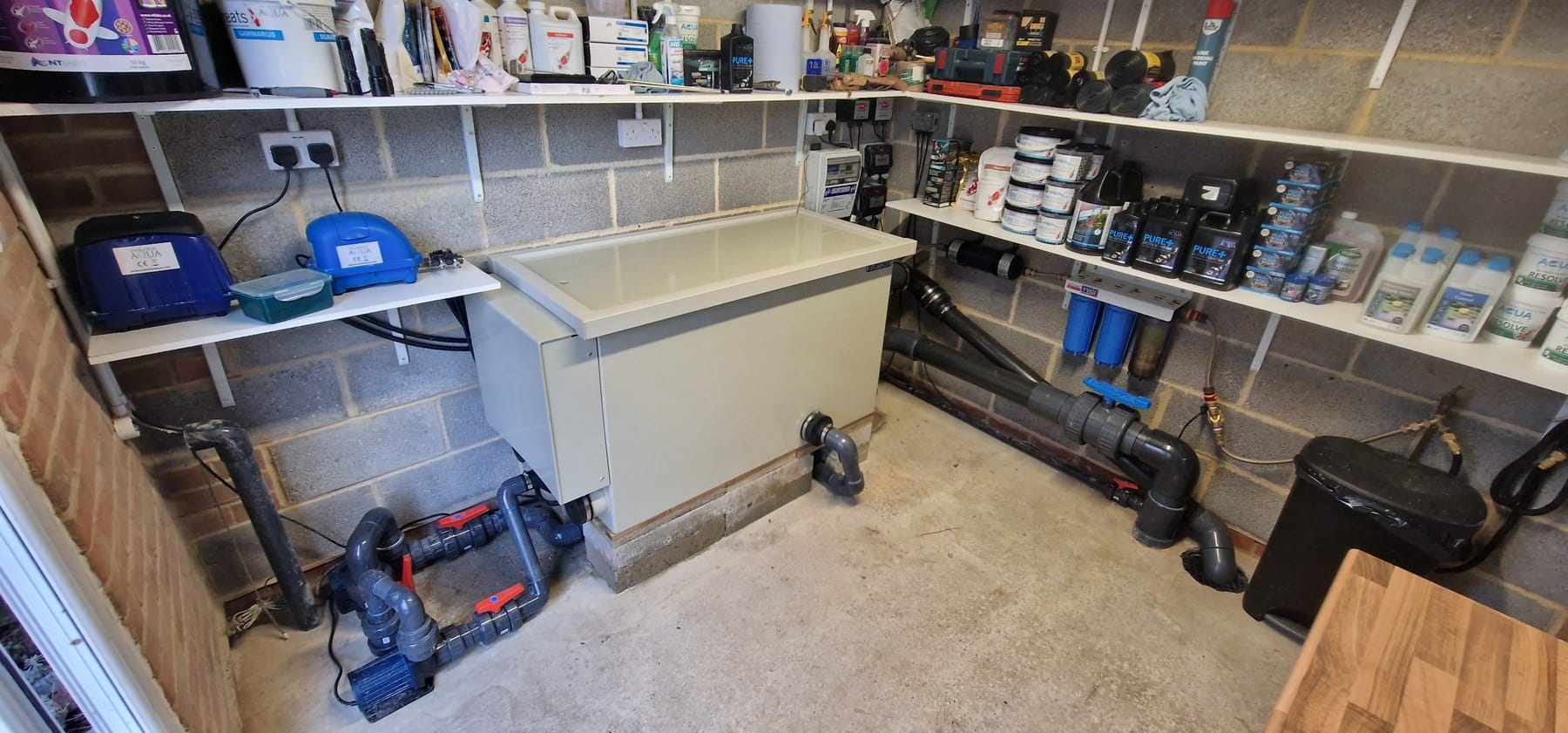
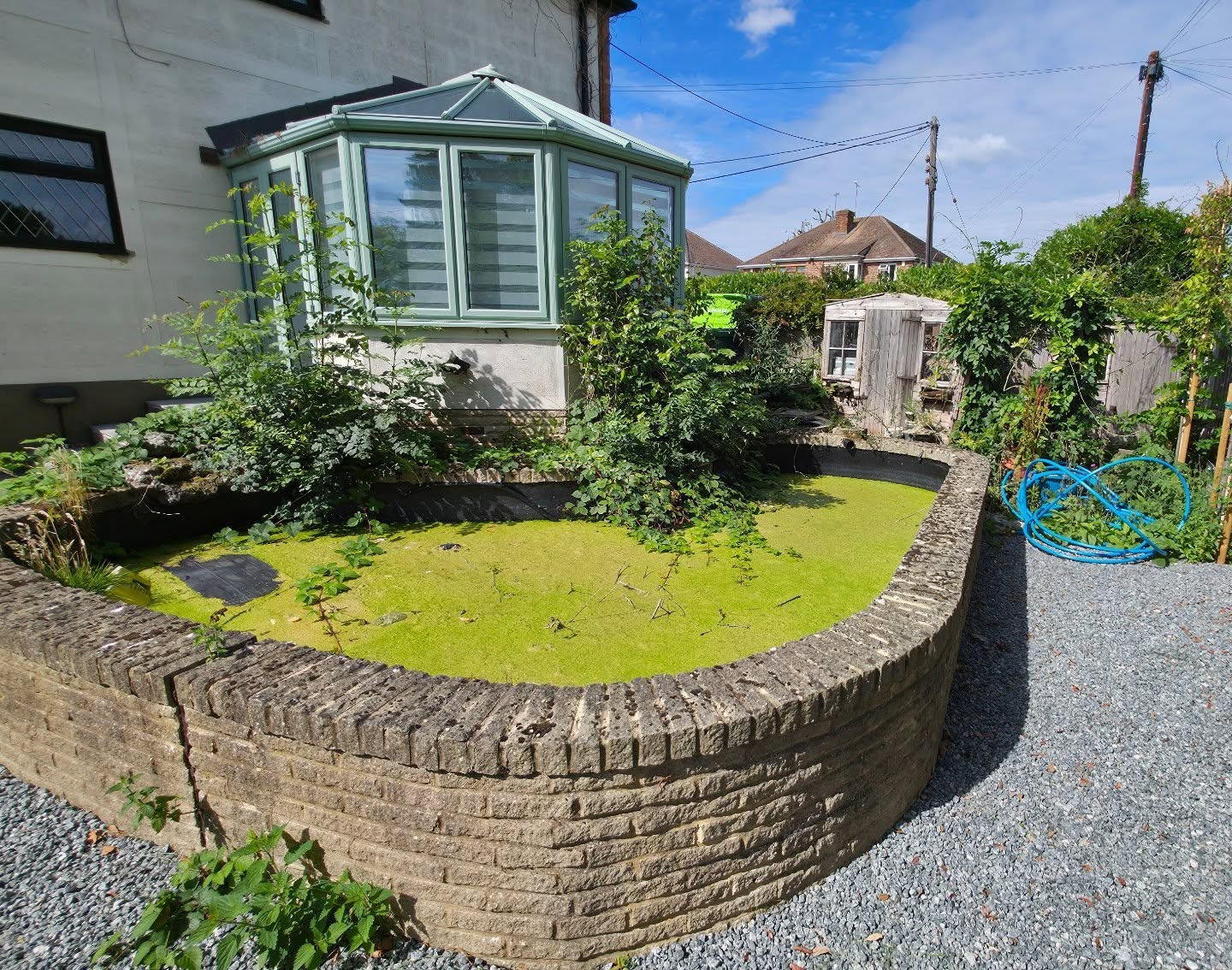
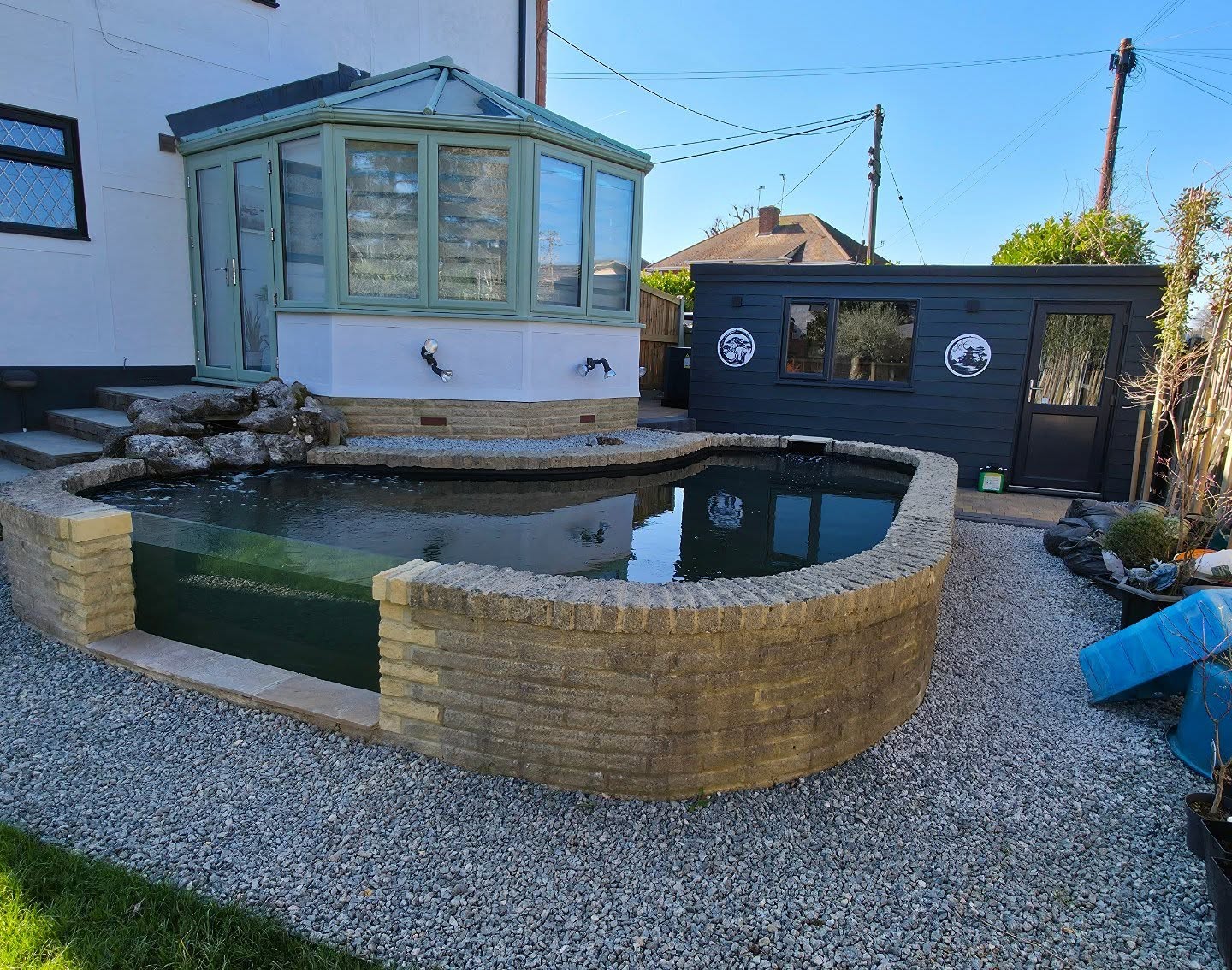
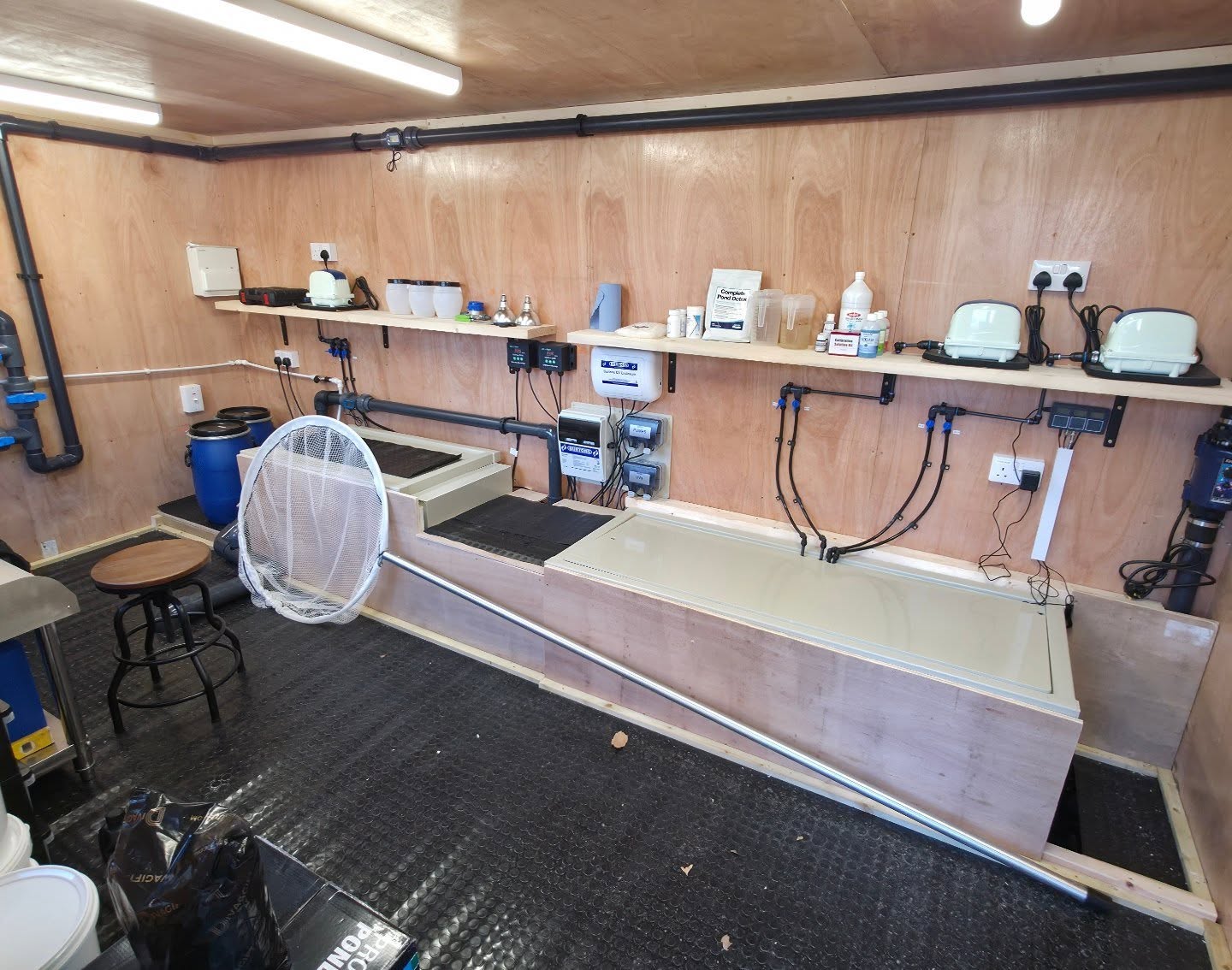
We renovated the pond shown below, built the filter house and installed Burtons drum filtration, with a Remora Professional heat pump outside. These photographs show the pond before and after the work, followed by the equipment inside the filter house.
How do you power a pond heat pump?
Some heat pumps can run from a normal UK 13 amp socket. Others need a dedicated electrical circuit installed by an electrician. It is worth sorting this out before buying: the cable route from the house to the pond can be a significant part of the installation.
Heat pumps that use a 13 amp plug
For a model designed for a UK 13 amp connection, a suitable outdoor socket can make installation simpler. You still need the correct plug and cable arrangement, a socket protected from the weather and RCD protection. An RCD cuts the supply when it detects current leaking away from its intended path. Electrical Safety First recommends RCD protection for outdoor electrical equipment.
“Plug and play” does not necessarily mean every UK model arrives with a fitted plug. Check what is supplied and what the installation instructions require. Have an electrician check an existing pond supply if you do not know what else it powers or whether it can support the added load. Do not plan a permanent heating installation around an extension reel from the house.
When do you need a dedicated circuit?
Many larger heat pumps need their own circuit and a fixed connection or suitable industrial socket. An electrician will assess the load, cable distance, protection and means of safely isolating the heater for maintenance. Some larger models require a three phase supply, which is different from the single phase supply found in most homes.
The headline heating output is not the electrical load. A 10kW heat pump does not necessarily draw 10kW from the mains. Equally, a running current below 13 amps is not enough on its own to approve a plug connection: the manufacturer’s installation instructions and your supply both matter.
Check the power supply before choosing the heater
Send us the model you are considering and tell us whether you already have power near the pond. We can help establish what the heater needs, then your electrician can confirm whether the existing supply is suitable and price any work required. That gives you an installation cost to compare alongside the price of the heat pump.
Positioning and connecting the heater
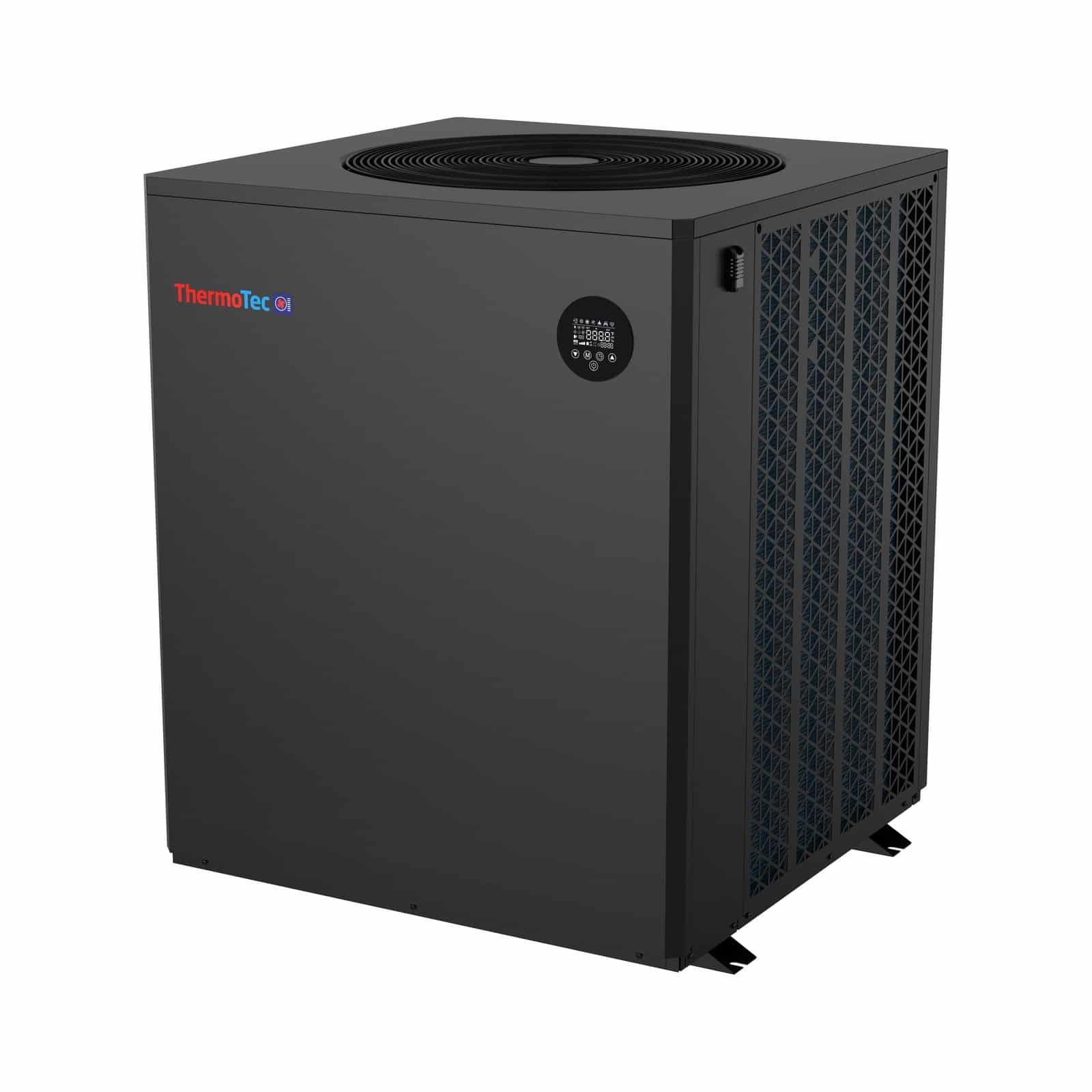
A heat pump also needs its specified outdoor clearances and a clear path for discharged air. Hiding it in a tight shed or behind solid screening can compromise airflow. Allow for service access, condensate drainage, vibration and the effect of its position on neighbours.
Your installer should check that the water flow and pipework suit the heater, including whether it needs a bypass. Keep its flow protection working, check for leaks during commissioning and compare the controller reading with a separate pond thermometer. Wi-Fi access is convenient, but someone still needs to look at the pond.
If you stop heating for winter
Plan the transition before frost arrives. Follow the exact manual for isolating, draining or storing the heater and protecting any trapped water. Simply switching off electricity may leave water inside equipment where it can freeze.
Stopping heating does not mean stopping essential filtration or aeration. The winter water circuit must continue to support the fish. If a heater bypass is used, confirm that the remaining circuit still works correctly and that the isolated section is protected as required.
Compare pond heaters with the whole installation in mind
Our pond heating range brings together the options. Start with air source heat pumps if you are comparing regular heating costs, or look at Elecro inline electric heaters for direct electric heating. Include the cover, water connections and electrical work in your budget.
Pond heating questions
Do all koi ponds need heating?
No. Heating is a management choice. Whether it suits your pond depends on the fish, pond design, local conditions and what you want to achieve. Good winter care remains important in an unheated pond.
How long does it take to heat a koi pond?
It depends on the volume, the temperature rise and how much heat the heater delivers after allowing for losses. As a starting calculation, 10,000 litres needs about 11.6kWh of heat for each 1°C rise. At a constant 3kW of heat output, that is roughly four hours before losses. Cold weather can make it take longer. A heater just keeping up with heat loss will hold the temperature rather than raise it. Plan gradual changes for the fish; this calculation is not a target heating speed.
Why is there water underneath my pond heat pump?
Heat pumps can produce condensation as they take heat from the air. Water underneath the unit does not automatically mean the pond pipework is leaking. The Poolex installation manual explains condensate drainage; use your own model’s instructions for its drainage arrangement. If the pond level is falling or you can see water escaping from a joint, investigate it rather than assuming it is condensation.
Will heating make my koi grow faster?
Extending suitable feeding conditions can give more opportunity for growth. It does not guarantee a result, and warmth cannot make up for unsuitable feeding, poor water quality or inadequate space.
Can I use a swimming pool heat pump?
Some models are suitable for pond applications. Check the exact model’s materials, control range, cold weather performance, water flow and manufacturer guidance. If you have a model in mind, send us its details and the temperature you want to maintain.
Should I turn heating off every night?
If you want to hold a steady temperature, letting the thermostat control the heater is a better starting point than switching it off every night. Any timed schedule needs to allow for how much the pond cools and whether the heater can recover gently. Keep essential filtration and aeration running independently of the heating schedule.
Is an ice preventer enough for a heated koi pond?
Not if your aim is a chosen whole pond temperature. An ice preventer keeps a small area open. To hold the whole pond at a chosen temperature, you need a heater that can replace the heat it loses.
Further reading and heater information
If you want to look more closely at the technical side, these sources explain the points behind the advice:
- Energy Saving Trust: understanding heat pump performance — useful background on COP and temperature, with examples for buildings rather than pond specifications.
- EPA: evaporation, covers and retaining heat — explains why covering water can reduce losses.
- Electrical Safety First: garden electrics — advice on outdoor electrical equipment and RCD protection.
- Poolex product manuals — find the instructions for your model before planning installation or winter storage.
Need help choosing a pond heater?
Send us the pond dimensions, photographs, cover details, current filtration and your intended heating season and temperature. Include what you know about the available electrical supply. We can then help you compare suitable options in our pond heating range and talk through the installation. Get in touch.
Guide updated 10 October 2026.
