





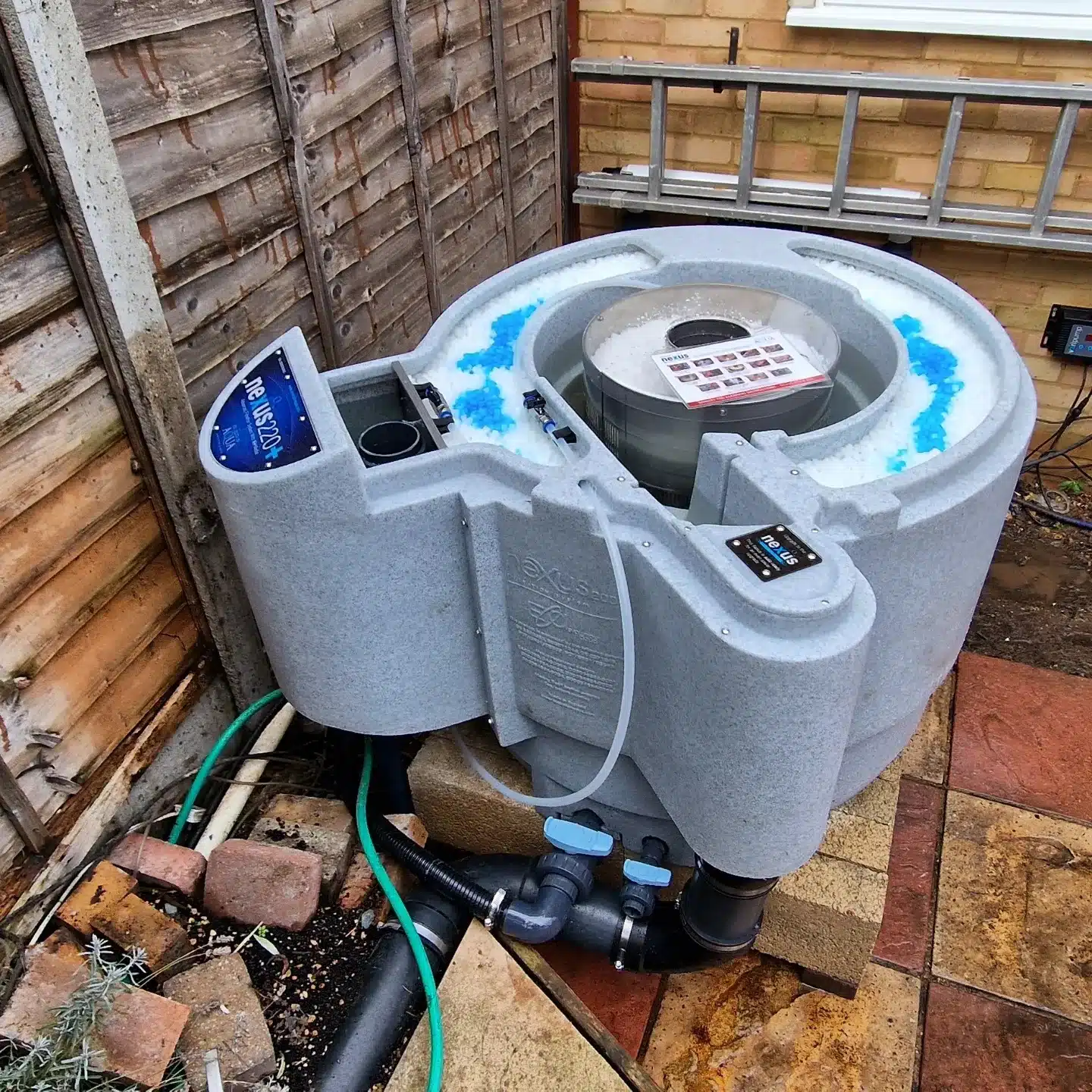
Choosing the Right Koi Pond Equipment
The right koi pond equipment is not the longest shopping list or the largest number printed on a box. It is a complete hydraulic and biological system sized around the pond’s true volume, fish load, pipework and the way the owner will maintain it. This guide explains the decisions we make when specifying real UK koi ponds.
Start with the pond, not the equipment catalogue
Before comparing brands, record the pond dimensions, average depth, construction, pipe runs, lift to returns, expected fish number and adult size, feeding rate, sunlight, leaf load and available drainage. A 20,000-litre wildlife pond and a 20,000-litre koi pond do not create the same demand.
Irregular shapes should be calculated in sections and verified with a water meter during filling where possible. Exact volume matters for treatment, dechlorination, turnover and heat-loss calculations. Use our pond volume calculator guide before buying equipment.
Think of the pond as one connected system
Water must leave the pond, carry waste to mechanical filtration, pass through biological treatment and return with enough flow and oxygen. A restriction anywhere changes every component after it. Undersized pipe, excessive bends, a dirty pre-filter or too much lift can turn a correctly sized pump into an underperforming installation.
The system also needs a safe failure mode. Ask what happens during a power cut, if a screen blocks, if a valve is left closed or if a water top-up sticks on. Good design prevents the pond draining, gives equipment somewhere safe to overflow and allows the owner to isolate a component without dismantling half the plant room.
Mechanical and biological filtration
Mechanical filtration removes solids
Mechanical stages capture fish waste, uneaten food, algae and debris before they dissolve. Settlement chambers, sieves, static media, bead filters, screen filters and drum filters do this in different ways. The best choice depends on budget, gravity or pump-fed layout, cleaning frequency, water use, access and the size of particles you want to remove.
A drum filter provides excellent automatic solids removal but needs suitable water supply, drainage and maintenance access. A pressure filter is compact and simple, but the nominal pond rating must be reduced for koi and heavy feeding. A traditional multi-bay or Nexus-style system needs floor space but can be dependable and easy to understand. Compare the options in our koi filtration guide, drum-filter guide, pressure-filter guide and Evolution Aqua Nexus guide.
Biological filtration processes dissolved waste
Biological media provides surface area for oxygen-dependent microorganisms that convert ammonia to nitrite and then nitrate. Media volume is only part of the story: water distribution, oxygen, alkalinity, temperature and contact with the waste stream determine performance.
Moving bed media needs the correct air input and enough room to circulate. Shower media needs even distribution and adequate flow. Static media must not become a stagnant sludge store. Select a filter for the real stocking and feeding plan, not the optimistic “up to” pond size on a lightly stocked ornamental-pond test.
Browse our selected pond filters, but allow space and isolation for maintenance before placing an order.
Gravity-fed or pump-fed?
In a gravity-fed koi pond, bottom drains and skimmers feed a filter whose operating water level is close to the pond surface. The clean-water pump then returns water to the pond. Waste reaches the mechanical stage before being chopped by a pump, the pump is accessible and bottom drainage can be very effective. The trade-off is more involved construction and the need for accurate filter levels.
In a pump-fed layout, a submersible pump sends water to a filter above pond level. Installation can be simpler for an existing pond, but the pump macerates waste and sits in the dirty side of the system. A good pump-fed filter needs safe overflow and a return that cannot siphon the pond. Neither arrangement is universally best; the right one depends on whether the pond is being built from scratch.
Choosing a pond pump using the real duty point
A pump’s maximum flow is measured at little or no head. Once water is lifted and pushed through pipe, bends, valves, filters, UVs and heat exchangers, delivered flow falls. Total dynamic head combines vertical lift and friction losses. Compare the manufacturer’s full performance curve at that duty point.
- Decide the required delivered circulation after filtration.
- Measure vertical lift between operating water levels, not simply pond depth.
- Allow for pipe length, bore, fittings and equipment pressure loss.
- Choose the largest practical pipe bore and use swept bends.
- Check wattage at the intended operating point because pumps run continuously.
- Provide valves and unions so the pump can be removed without draining the pond.
A variable-flow pump allows seasonal adjustment and makes commissioning easier, but reducing speed also changes filter turnover, UV flow and skimmer performance. Browse pond pumps by maximum flow, head, wattage, pump type and control options. Our pump categories are organised to help comparison, but a filtered product count is not a substitute for the curve.
Bottom drains, skimmers and pond returns
A bottom drain should draw settled waste from the floor without creating dangerous suction or inaccessible traps. Pipework must be laid to avoid high spots and should include purge and isolation arrangements appropriate to the system. Aerated drains can improve circulation and oxygen transfer, although diffuser bubbles may affect the view through a pond window.
A surface skimmer removes leaves, pollen, dust and protein films before they sink. It must be balanced with bottom-drain flow and protected from running dry as water level changes. Return positions should create a slow, coherent circulation pattern that carries solids towards collection points rather than trapping them in corners.
UV clarifiers: useful, but not a complete treatment system
A correctly sized UV clarifier exposes water passing through the chamber to ultraviolet light, helping control single-celled green-water algae. It can improve clarity, but it does not sterilise the whole pond and is not a substitute for mechanical or biological filtration. It cannot treat a parasite on a koi that never passes through the unit.
Match UV wattage and permitted flow to pond volume, sun exposure and the manufacturer’s data. Install it with correct orientation and isolation, replace lamps at the recommended interval, clean the quartz sleeve and never look at an operating exposed lamp.
Aeration needs its own design
Air supports fish, moving-bed media and the wider biological system. Size an air pump by delivered output at the operating pressure created by water depth, pipe losses and diffuser resistance. Divide the output intelligently: a filter and a deep bottom-drain diffuser may not share air evenly without valves.
Provide a weather-protected position above water level or use reliable non-return protection, keep intake filters clean and carry spare diaphragms or service kits for critical systems. Explore pond air pumps and read the koi aeration guide.
Water testing, dechlorination and automatic top-up
Every koi keeper needs in-date tests for ammonia, nitrite, nitrate and pH, with KH included in the routine. Clear water is not evidence of safe chemistry. Our water-quality guide explains the target ranges and testing method.
Any mains-water addition must be made safe from chlorine or chloramine. Inline purifiers need appropriate contact time and cartridge changes; liquid dechlorinator needs correct dosing. Automatic top-up is convenient but should not conceal a leak. Fit it with sensible isolation, overflow and water-use monitoring. Browse water testing and purifiers and automatic water top-up equipment.
Electrical equipment and safety
Pond electrics operate in a wet outdoor environment. UK guidance strongly supports 30 mA RCD protection for outdoor equipment, appropriate weatherproof enclosures and installation by a competent electrician. Do not bury ordinary extension connections, leave plugs on the ground or rely on a shed full of domestic adaptors.
Provide labelled isolation for pumps, air, UV, heating and automatic equipment. Route cables where they cannot be damaged by tools, animals or water. The detailed pond safety guide covers child, electrical and hygiene risks.
Is pond heating necessary?
Heating is optional for many garden koi ponds, but it can reduce rapid fluctuation, extend stable feeding or protect valuable fish during treatment. It also adds running cost, electrical demand and the need for insulation and control. Size heaters from water volume, exposed surface, temperature target and heat loss—not a simple litres-per-kilowatt slogan. Read our pond heating guide before deciding.
Make maintenance easy enough to happen
The best equipment fails if cleaning is unpleasant or requires tools the owner cannot use. Leave room to open lids, remove media, pull pumps and reach UV sleeves. Put waste outlets where they can discharge safely. Label valves, add unions and make the normal cleaning sequence obvious.
Plan spare capacity and critical spares: an air-pump service kit, replacement UV lamp, pump or bypass for a high-value pond, test reagents and dechlorinator. Our koi pond maintenance guide shows the routine the system must support.
Three example equipment approaches
Small, lightly stocked koi pond
A conservative filter rating, accessible solids capture, efficient variable pump, separate air pump, UV clarifier and complete water testing can provide a sound system. Do not compromise safe depth, water volume or adult stocking merely because equipment is compact.
Medium dedicated koi pond
Gravity-fed bottom drain and skimmer lines, a proven mechanical and biological filter, large-bore returns, dedicated aeration and controlled top-up usually offer better waste removal and serviceability.
Large or heavily stocked koi pond
Automatic mechanical filtration, substantial biological capacity, redundant pumps or air, monitored water replacement and a properly designed plant room become increasingly valuable. Professional hydraulic design can cost less than replacing mismatched equipment.
Buying checklist
- Verified water volume and proposed adult fish load.
- Required flow at total dynamic head.
- Mechanical and biological capacity for realistic feeding.
- Gravity or pump-fed construction plan.
- Correct pipe bore, valves, unions, drains and overflow.
- Aeration at the actual operating pressure.
- UV permitted flow and lamp access.
- RCD-protected electrical supply and safe isolation.
- Dechlorination, test kit and water-change plan.
- Enough space to clean every component.
Frequently asked questions
What equipment is essential for a koi pond?
Reliable mechanical and biological filtration, a correctly selected circulation pump, aeration, dechlorination and water testing are the core. Construction may also require drains, skimmers, UV, valves and safe electrics.
How often should a koi pond turn over?
There is no universal hourly rule. Stocking, feeding, filter type, oxygen, pipework and the required contact time matter. Confirm the filter and UV operating flow, then design the pump at real head.
Should I buy the biggest filter possible?
Useful capacity is welcome, but footprint, flow range, cleaning, water use and hydraulic compatibility matter. Oversized equipment that cannot be installed or maintained properly is not a good system.
Do I need both a pump and an air pump?
Yes in most koi systems. Water circulation and dedicated aeration do different jobs, even though returns and waterfalls add some gas exchange.
Can a UV kill koi parasites?
A standard pond UV clarifier should not be treated as parasite medication. It affects only organisms passing through the chamber and is normally specified for water clarity.
Are variable pumps worth it?
They can save energy and simplify seasonal adjustment, provided the reduced flow still meets filter, skimmer and UV requirements.
What pipe size should I use?
Use the largest practical bore supported by the equipment and hydraulic design. Narrow pipe creates friction, reduces delivered flow and wastes electricity.
Can I install pond electrics myself?
Fixed outdoor electrical work should be designed and installed by a competent electrician to current UK requirements. Plug-in equipment still needs RCD protection and safe weatherproof connections.
Do koi ponds need a bottom drain?
A purpose-built koi pond benefits greatly from effective bottom drainage, although retrofitted pump-fed systems can operate with alternative collection. Design before construction because adding a drain later is difficult.
How do I know whether equipment will work together?
Draw the full circuit, mark flow direction, operating water levels, pipe sizes, pressure losses and safe overflows. Match every component’s permitted flow and installation requirements.
Get the system specified once
That Pond Guy is an independent pond specialist, not a box-moving comparison site. If you send us the pond volume, dimensions, pipework sketch, lift, fish plans and photographs, we can help identify whether a component genuinely fits the system. Browse our pond-building equipment or contact us before committing to an expensive mismatch.
