





Adjust the flow to suit your pond system
A variable-flow pond pump lets you adjust the output instead of changing the pump every time the required flow changes. The useful question is how much water your filter, pond return or feature needs after the lift and pipework are allowed for.
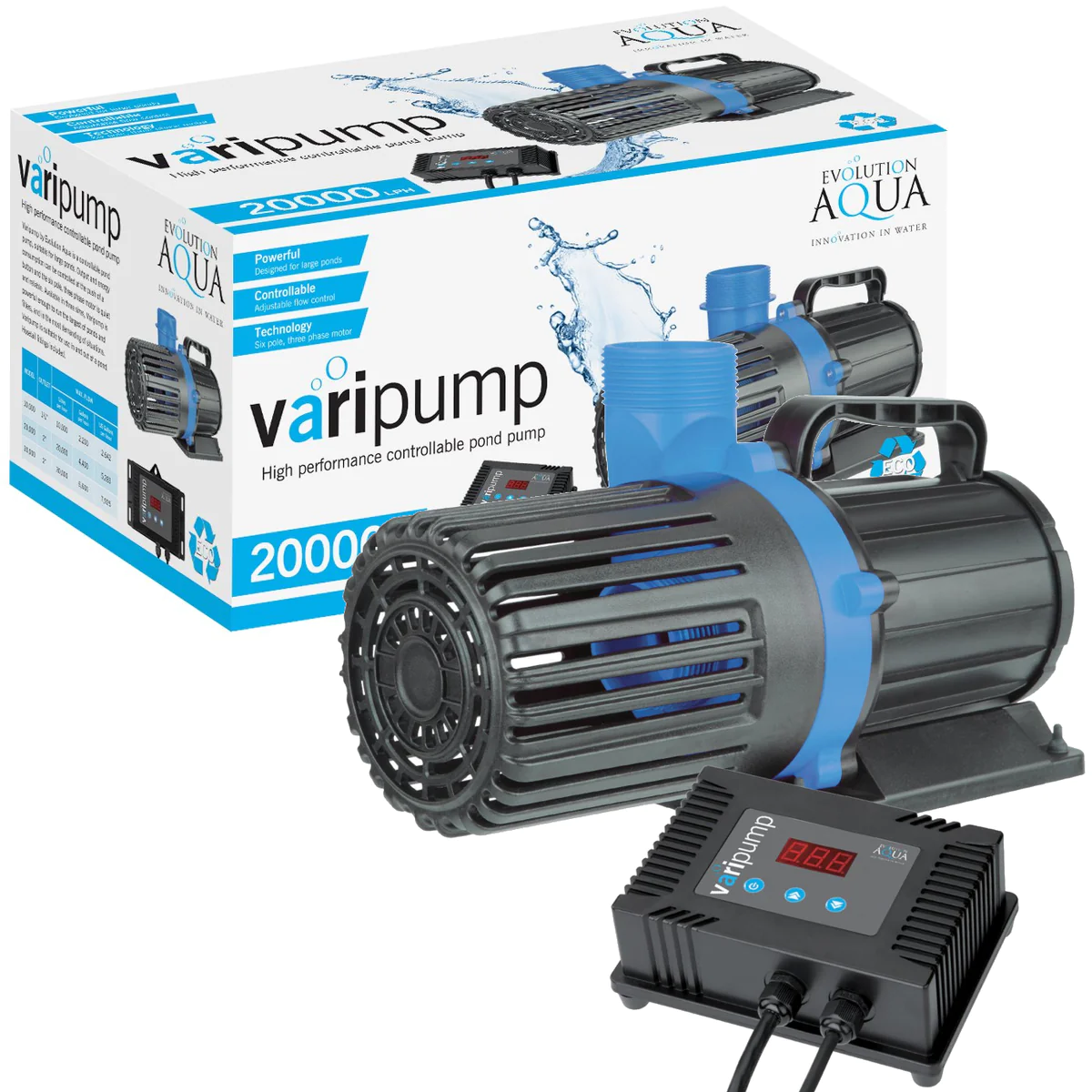
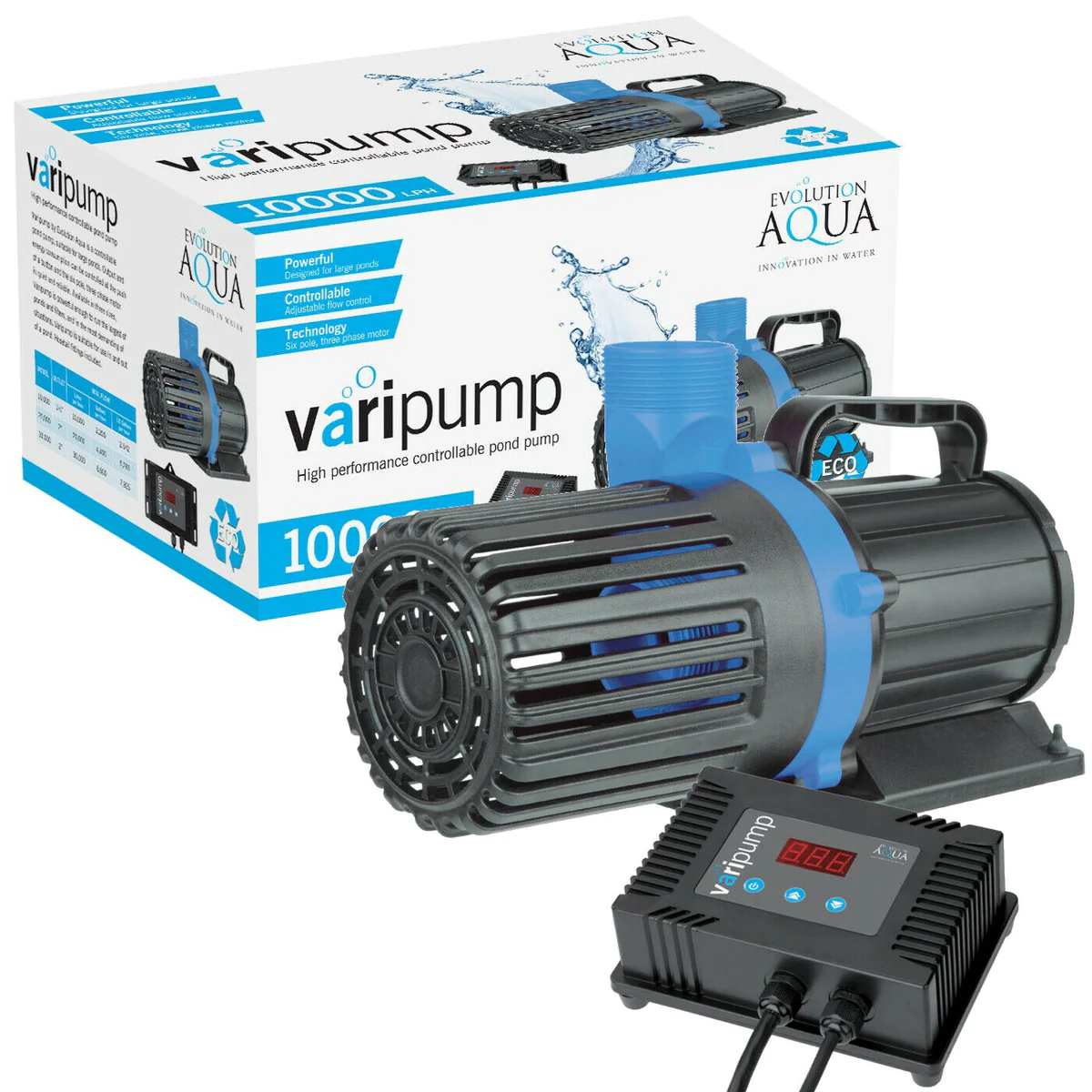
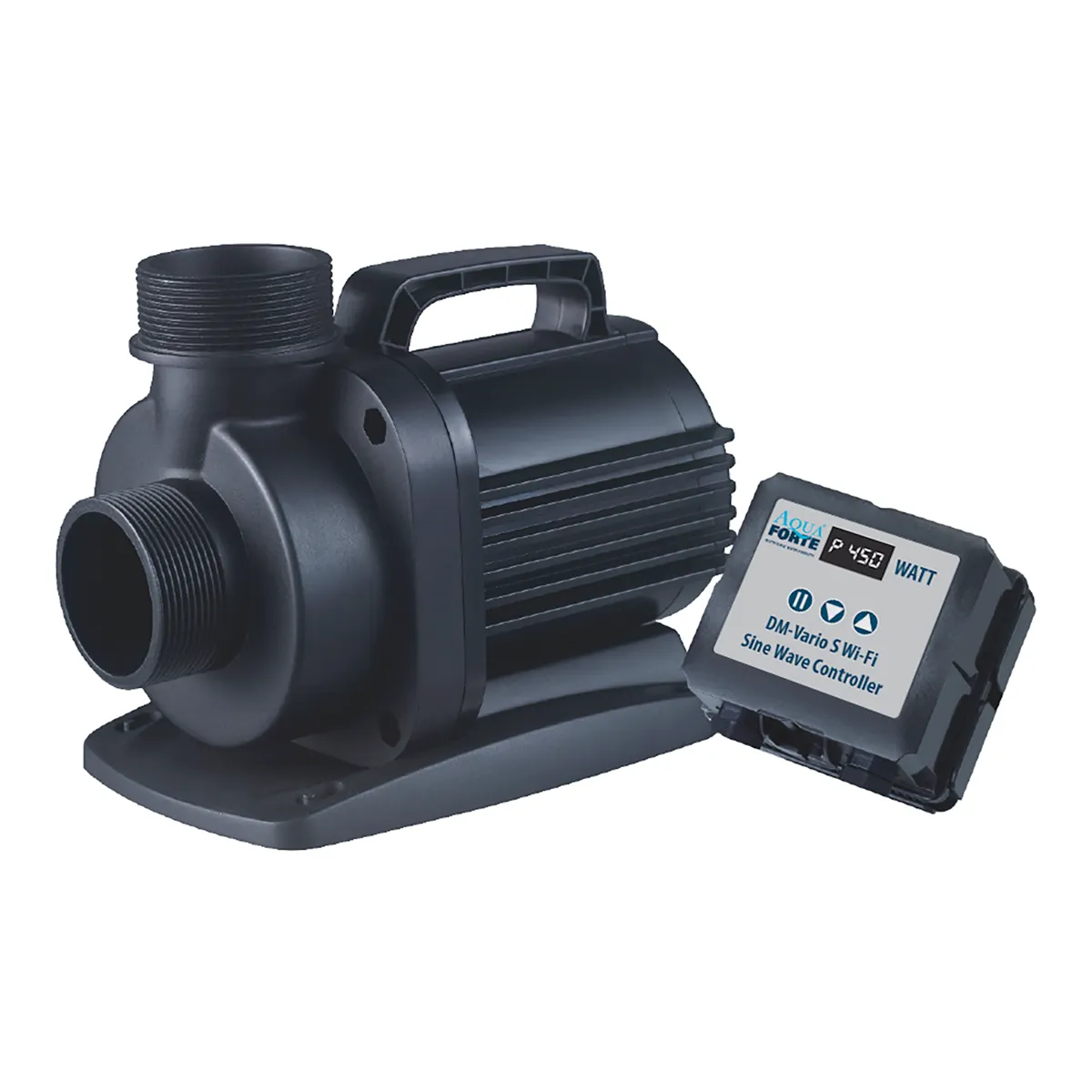
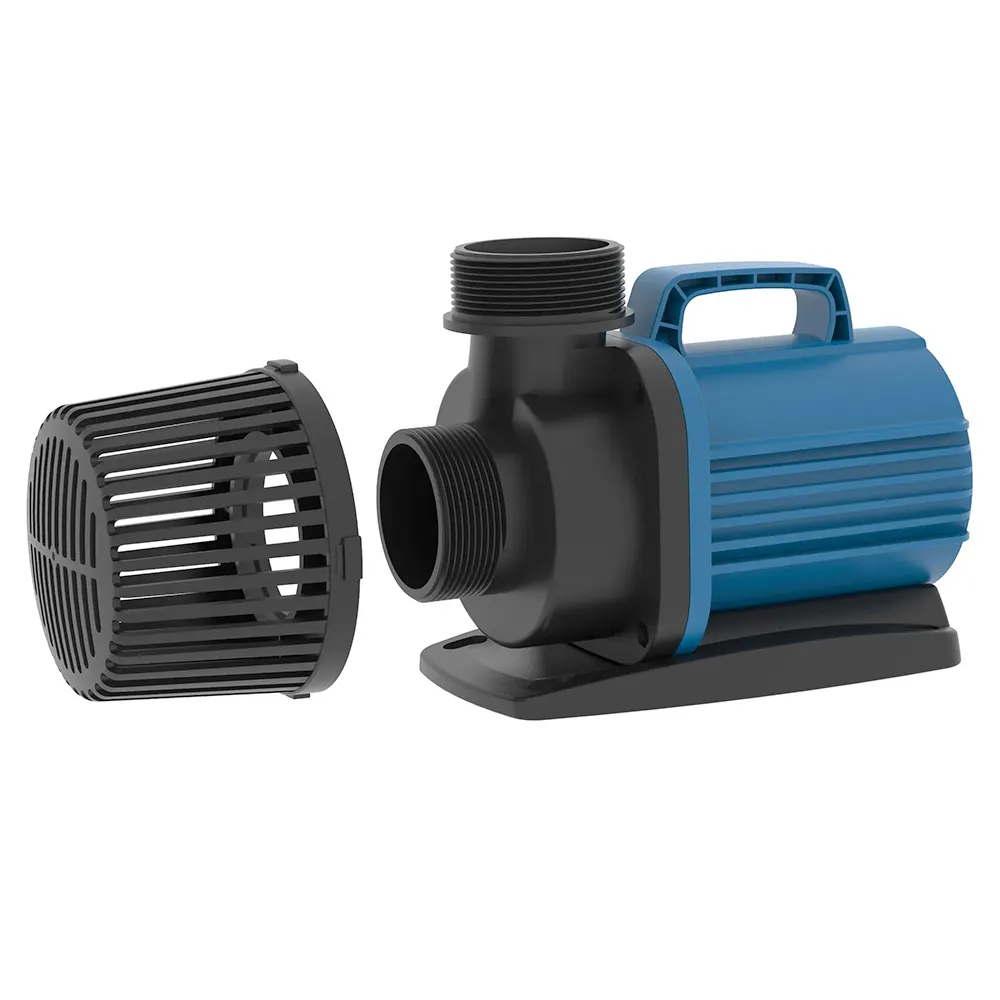
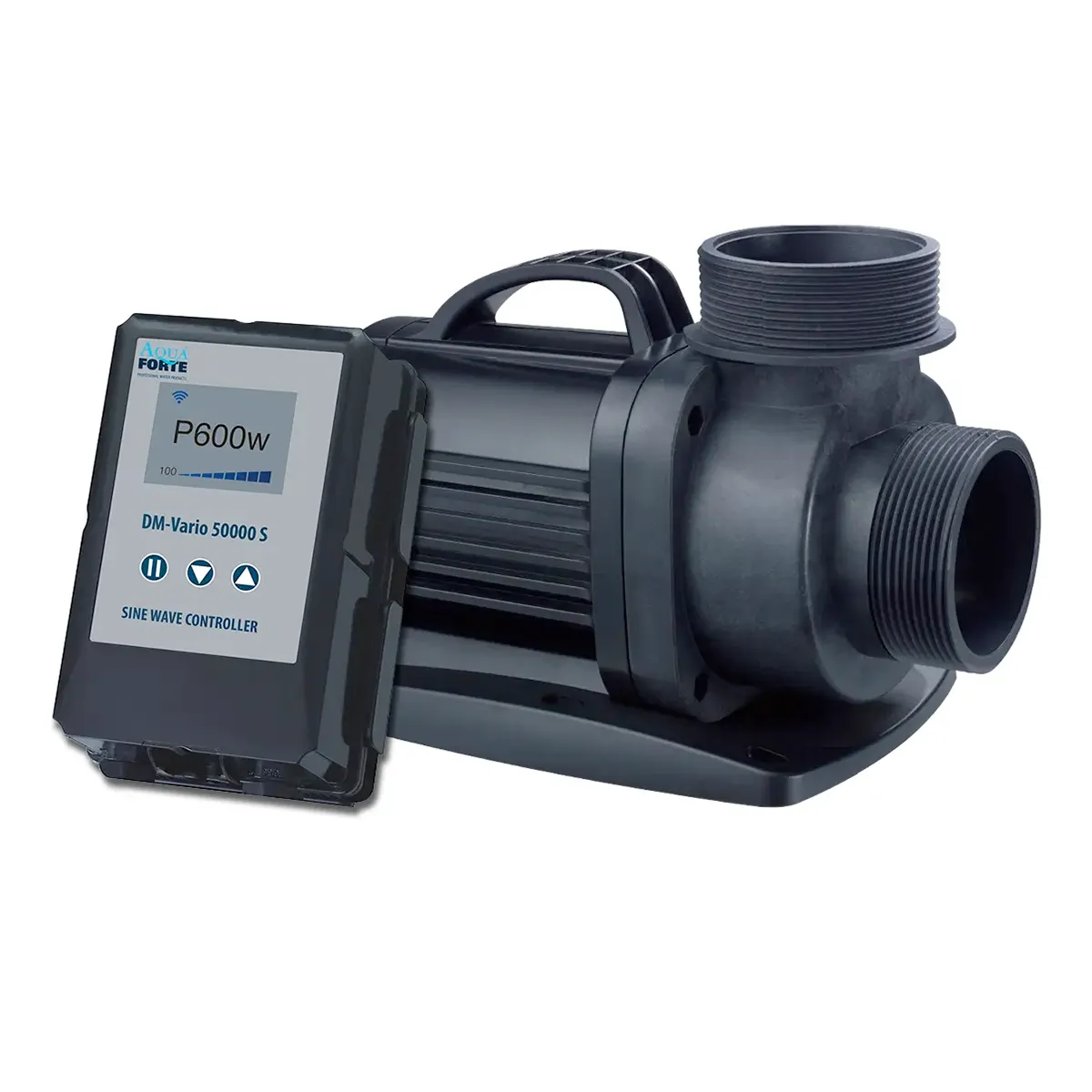
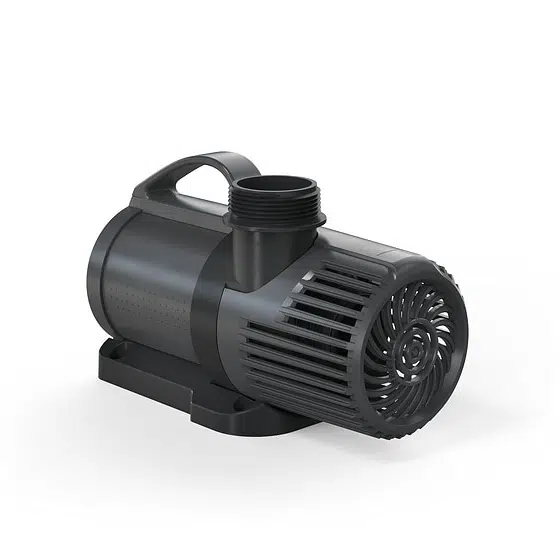
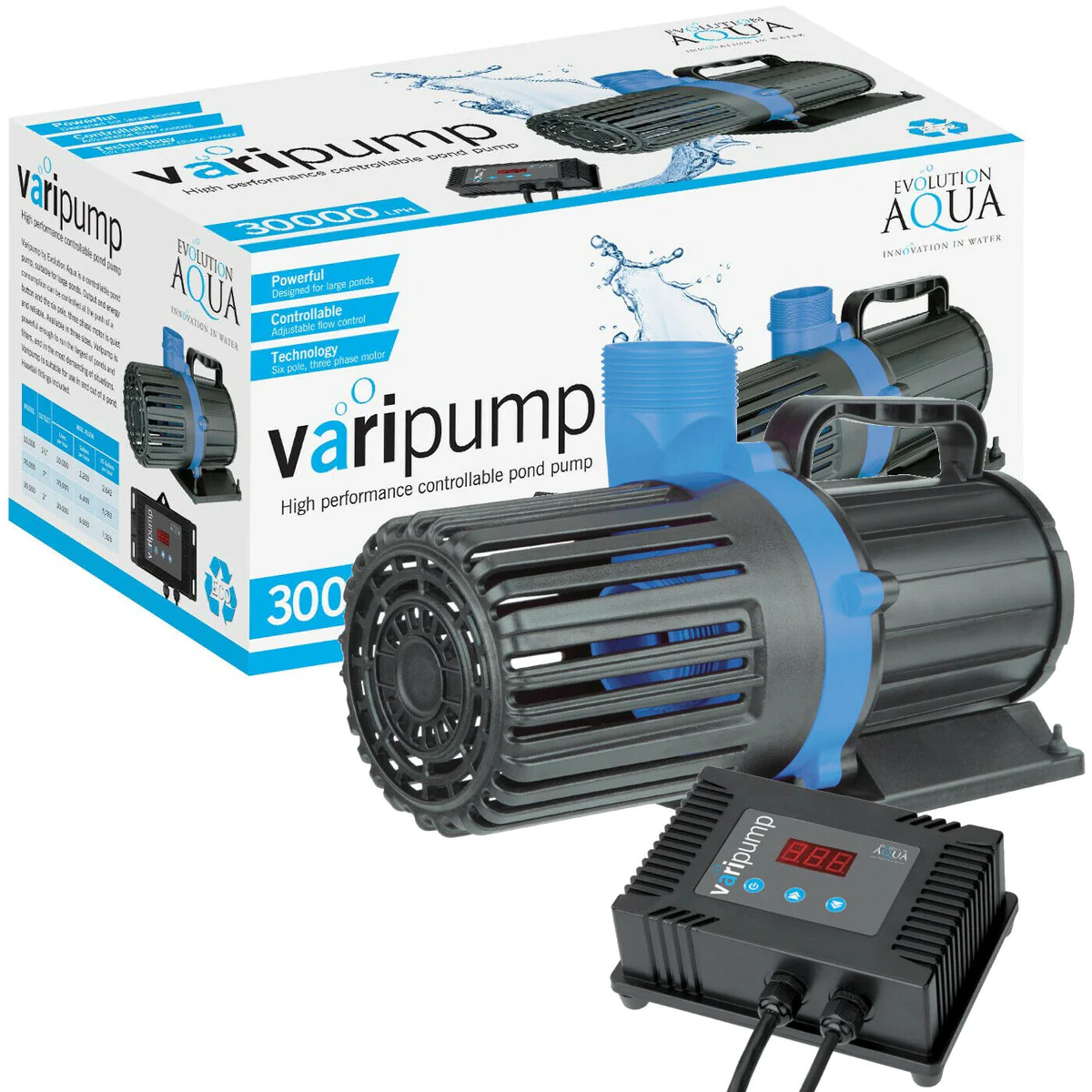
Compare Evolution Aqua Varipump, AquaForte DM Vario S and SuperFish Pond ECO Next RC, or browse the other ranges below. Check whether the exact model includes a controller, what adjustment it offers and how it can be installed. Wi-Fi, remote control and a wired controller are different arrangements.





Choose the pump around the whole circuit
Start with the pond volume and stocking, the filter model and the circulation the pond needs. Then look at the actual route: working water levels, pipe length and bore, bends, valves and any UVC or heater in the line. A pump’s maximum litres-per-hour figure is not the amount that will necessarily reach the return.
| What you need to decide | What to check | Why it matters |
|---|---|---|
| Flow through filtration | The filter’s permitted flow and the flow delivered by the pump at the installed head | A speed setting is useful only if the complete circuit still works within its limits. |
| Wired, remote or app control | The exact supplied controller, cable arrangement, adjustment range and connection method | A Wi-Fi model may use a local connection; do not assume every app gives access from outside the home. |
| Submerged or dry mounting | The model’s approved installation, inlet arrangement and position of the controller | Dry mounting does not mean dry running, and a wet-rated pump does not make its controller submersible. |
| Debris and intake protection | The pump’s intended duty, strainer and any protection needed for the pond’s animals | Adjustable speed alone does not establish solids handling or protection for fry and wildlife. |
| Running cost | Electrical input at the flow you need and your electricity unit price | Compare watts at a useful operating point rather than the model name or controller percentage. |
Read the pump curve at the flow you need
Suppose a system has been specified to need 8,000 litres per hour at its return. A pump labelled 10,000 l/h is not automatically enough: find the delivery curve and check the flow remaining at the lift and resistance of that circuit. This is an example of the method, not a recommendation that every pond needs 8,000 l/h.
Maximum head and maximum flow are separate points on a pump curve. The maximum head is not a useful operating flow. Measure static lift from the relevant working water level rather than simply from the depth of the pump, and include friction losses. Gravity-fed and pump-fed arrangements also need their own layout and level checks.
Allow an appropriate adjustment margin where the design calls for one, but do not buy a much larger pump just because it can be turned down. Check its controllable range and performance at the duty you actually need. A well-matched smaller pump may be the better choice.
Keep the filter, UVC and heater within their limits
Use the filter manufacturer’s flow guidance, together with the requirements of any UVC or heater. More flow is not always better, and slower flow does not automatically improve biological filtration. Water still needs to circulate through the system at an appropriate rate, with the oxygen and maintenance that the pond requires.
If a filter is overflowing, check for blocked or undersized outlets, dirty media, incorrect levels and a pump duty beyond the filter’s capacity. Reducing speed may help bring the circuit within its designed flow, but it is not a substitute for finding a fault. When one pump supplies several branches, changing one valve can affect the other branches too.
What the different controls offer
A wired controller gives you adjustment beside the equipment. A remote or app can be useful when the equipment is awkward to reach, but check how the connection works and what remains available if the connection is lost. AquaForte’s current DM Vario WiFi information describes a pump-generated Wi-Fi signal; that is not the same as assuming every Wi-Fi pump has an internet cloud connection.
Browse AquaForte DM Vario S WiFi and Prime Vario WiFi for the available app-control ranges. Compare the exact model and controller generation before ordering. A controller percentage is a setting, not a measured percentage of the headline flow delivered through your own pipework.
Other ranges to compare include AquaForte O-Plus Vario, PondXpert VariFlow, VariFlow Strainer+, Oase AquaMax Eco Classic Controllable and Pontec PondoMax Eco Controllable. Use their individual product details for fittings, power, control and installation; those features should not be assumed from the category name.
Work out the likely electricity cost
Use the actual electrical input at the required operating point. If the controller displays watts, check that figure after the system has settled. A speed change may reduce power, but the saving depends on the pump, setting and circuit; it is not a fixed percentage for every installation.
Daily energy in kWh = watts ÷ 1,000 × hours running. Multiply that energy by your electricity price per kWh. For a 24-hour circuit, the following example uses an illustrative 30p/kWh unit price, not a claim about your tariff or a particular pump.
| Assumed measured input | Energy over 24 hours | Cost at 30p/kWh |
|---|---|---|
| 100 W | 2.4 kWh | £0.72 per day |
| 150 W | 3.6 kWh | £1.08 per day |
The difference in that example is 1.2 kWh, or 36p a day, only if both arrangements deliver the flow the system needs for the same hours. Comparing an adequately supplied filter with one that has been slowed too far would not be a useful saving.
Installation, winter use and maintenance
Only dry-mount a pump that is approved for that arrangement. Evolution Aqua states that Varipump is not self-priming and needs the correct inlet position and priming arrangement. Follow the exact manual for the pump, controller and power supply. Keep electrical parts that are not rated for immersion out of the water, and isolate the supply before handling the pump.
Winter guidance varies by model. Evolution Aqua specifically advises removing and storing Varipump where freezing could restrict the flow. A different model’s frost protection must not be applied to the whole category. If a filtration pump has to be removed, plan the pond’s remaining circulation and aeration before shutdown.
If flow drops or the pump becomes noisy, check the water level, intake, pipe route and connections. Inspect and clean the pump as its manual directs, and use the displayed fault code rather than repeatedly restarting it. For an external installation, air entering the suction line can also affect performance.
Variable-flow pump questions
Will a variable pump make my water clearer?
It can help you set the flow correctly, but clear water also depends on filtration, stocking, feeding, debris, sunlight and maintenance. An adjustable pump is not a treatment for green water, blanketweed or an ammonia problem.
Do I need Wi-Fi to adjust the flow?
No. Some models use a wired controller or a separate remote. Choose the controls you will actually use, then check that the controller is included with the exact product or bundle.
Can I fit a speed controller to any existing pump?
No. Use only controls approved for that pump. A mains dimmer or an unrelated controller is not a general way to turn a fixed-speed pond pump into a variable-speed model.
Can I replace my old pump without changing the pipework?
Sometimes, but check the threads, hose connections, body dimensions, cable and controller before treating it as a direct replacement. Reusing a restrictive pipe run may prevent the new pump from delivering the flow you expected.
Can I use the same pump for a filter and a waterfall?
It may be possible after checking the combined duty and balancing the branches. Adjusting the waterfall can change what reaches the filter. Separate circuits can be easier to manage where one feature is switched off while filtration needs to continue.
Is it safe to run a lower setting around fish fry?
A lower setting alone is not an intake-protection system. Check the guard, strainer and complete arrangement for the animals in the pond. Do not assume that every adjustable pump is suitable for fry, tadpoles or a wildlife pond.
Does dry mounting mean the pump can run without water?
No. Dry mounting describes the position outside the pond with water still passing through the pump. The approved inlet and priming arrangements must be followed. Dry-run protection, where fitted, does not make intentional dry running an acceptable installation.
Should I choose a pump by pond volume alone?
No. Volume and stocking help establish the system’s needs, but the filter, lift, pipework and return arrangement determine the useful operating duty. Compare delivery at that duty, not the maximum flow on the box.
Why does the power display change at the same setting?
Electrical input can vary with operation and conditions. Evolution Aqua notes that the operating wattage on Varipump may fluctuate. Check the manual and investigate an associated loss of flow, noise or fault code rather than assuming every change means a failed motor.
What information will help you check a choice?
Send the pond volume and stocking, filter model, working levels, pipe diameter and approximate length, main fittings, any UVC or heater and the flow the equipment requires. A sketch and photographs of the current layout are useful when comparing replacements.
For the wider choice, browse pond filter pumps, pond hose and all pond pumps. We can help check the proposed pump against the rest of the setup before you order.
