Filter by Brand

Tap Water Conditioners & Dechlorinators

Liquid conditioners and inline units for safer pond filling, top-ups and water changes

Mains water is disinfected for human supply and may contain chlorine or chloramine. These substances can harm fish and filter organisms if untreated water enters a pond in sufficient quantity. A suitable conditioner neutralises the substances stated on its label, while an inline unit treats water as it passes through compatible media.

Check whether the product covers chlorine, chloramine or both, then follow its capacity, flow-rate and replacement instructions. For a liquid, calculate the amount of new tap water being added unless the label specifies a different basis. Avoid relying on standing water alone where chloramine may be present.

Choose liquid treatment or inline dechlorination

Liquid conditioners suit measured fills and water changes, while inline units can simplify frequent top-ups when flow and cartridge capacity are controlled. Test treated output where appropriate and replace media before it is exhausted.

  • Confirm whether the supply uses chlorine, chloramine or both.
  • Dose for the volume stated on the product label.
  • Respect inline flow rate and total cartridge capacity.
  • Keep replacement water close to pond temperature where practical.

Our practical view: Chlorine and chloramine can damage fish and filter bacteria, so every meaningful top-up needs a reliable protection route. We match liquid dose or in-line purifier to the incoming water and flow.

Choosing Tap Water Conditioners & Dechlorinators from a measured water result

Tap-water conditioners and dechlorinators neutralise chlorine and, where stated, chloramine or related disinfectants during filling and water changes. Liquid products are dosed to volume; in-line units treat water as it flows through carbon or specialist media. Never exceed an in-line unit’s permitted flow, and test the output periodically because media capacity is finite.

What to check before ordering

  • Confirm whether the product treats chlorine, chloramine or both.
  • Measure the replacement-water volume or control the in-line flow rate.
  • Keep a suitable chlorine test available to verify purifier performance.

Products you can compare in this section

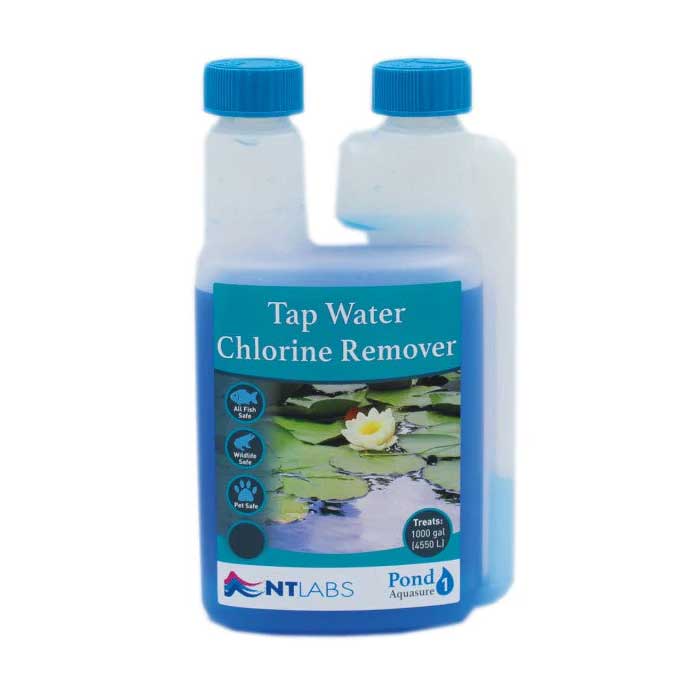
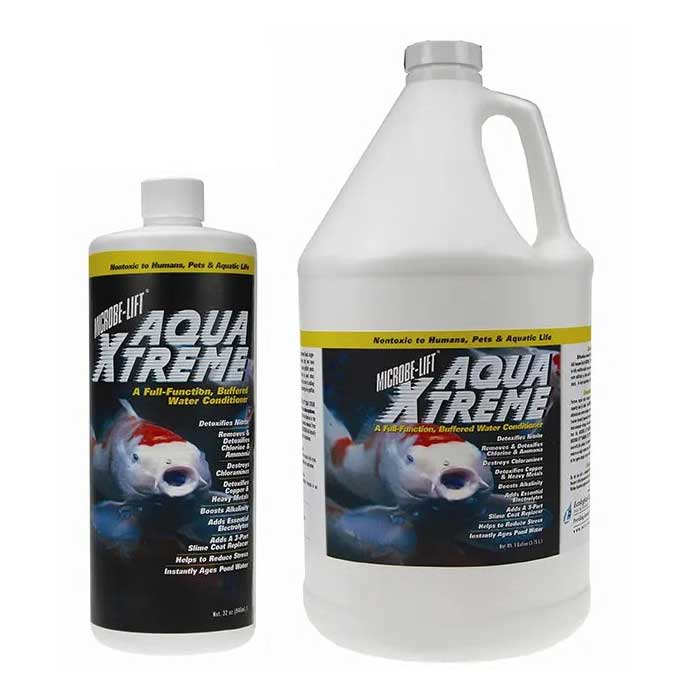
Current examples include Aqua Source Inline Dechlorinator, NT Labs Tap Water Chlorine Remover, Microbe-Lift AQUA XTREME, Oase Inline Dechlorinator and Evolution Aqua Detox Dechlorinator 12 Inch.

When using an automatic top-up, protection must be continuous rather than added after the event. A small unnoticed daily dose of chlorinated water can still undermine a filter.

Need to compare the wider range? Return to Pond Treatments for the surrounding product family.

Tap Water Conditioners & Dechlorinators Buying and Care Guide

Chlorine and chloramine are not identical

Chloramine is a combined chlorine disinfectant and can persist longer than free chlorine. Use a product that explicitly covers the disinfectant present.

Top-ups still count

Repeated small additions can expose fish and filter organisms even when the pond is not fully drained. Treat incoming mains water as directed.

Maintain inline units

Cartridges have finite capacity and performance depends on flow, water quality and correct installation. Record usage and replacement dates.

Useful pages alongside Tap Water Conditioners & Dechlorinators: All pond treatments · Water testing · General water treatments · Beneficial bacteria

Tap Water Conditioners & Dechlorinators Frequently Asked Questions

These Tap Water Conditioners & Dechlorinators answers cover recurring pond-care questions. Always follow the label supplied with the exact product.

Why does tap water need conditioning for a pond?

Mains water may contain chlorine or chloramine used for disinfection. These can affect fish and biological filtration.

What is the difference between chlorine and chloramine?

Free chlorine is highly reactive, while chloramine is chlorine combined with ammonia and is generally more persistent. Product coverage differs.

Does leaving tap water to stand remove chloramine?

Do not rely on standing alone where chloramine may be present. Use a conditioner or suitable treatment method confirmed for the supply.

Do I dose dechlorinator for the whole pond?

Follow the label. Many products are dosed for the volume of new tap water, while some instructions use total pond volume.

Can I add conditioner directly to the pond?

Only as directed by the product. Ensure it is distributed before or as untreated water enters so fish are not exposed to a concentrated stream.

How does an inline dechlorinator work?

Water passes through treatment media before reaching the pond. Performance depends on the cartridge, flow rate, total capacity and water conditions.

How do I know when an inline cartridge is exhausted?

Track volume and follow replacement guidance; testing treated output can provide additional confirmation where a suitable test is available.

Can too much dechlorinator be harmful?

Use the stated dose. Unnecessary overdosing wastes product and some reducing agents can influence oxygen or water chemistry.

How accurately must I know the pond volume for Tap Water Conditioners & Dechlorinators?

Dose Tap Water Conditioners & Dechlorinators from the most accurate practical pond volume, allowing for shelves and displacement and following the units on the exact label.

Can I combine Tap Water Conditioners & Dechlorinators with another pond product?

Combine Tap Water Conditioners & Dechlorinators with another product only when the labels or manufacturers expressly confirm compatibility; record what is already in the pond and never improvise a mixture.

Do I need extra aeration while using Tap Water Conditioners & Dechlorinators?

Follow the Tap Water Conditioners & Dechlorinators label. Extra aeration is a sensible precaution where fish, warm water, biological activity or waste breakdown may increase oxygen demand.

How should I store and dispose of Tap Water Conditioners & Dechlorinators?

Keep Tap Water Conditioners & Dechlorinators products in their original labelled containers and follow storage, expiry and disposal instructions; never release unwanted treatment into natural water or drains.