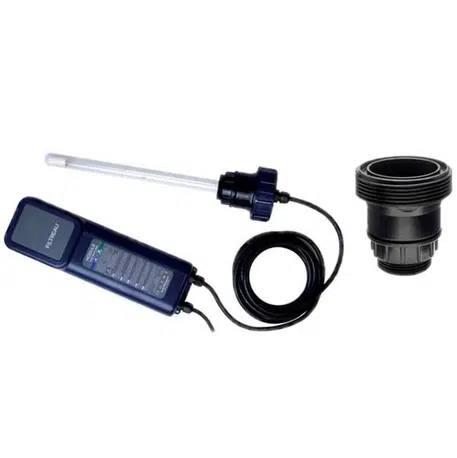





Filtreau pond filters, UV-C and spares
Practical advice for new ponds and filter upgrades
Filtreau makes automatic drum filters for koi ponds, combined mechanical and biological systems, and the equipment to maintain and extend them. Whether you are replacing a filter that needs constant cleaning or planning a new pond from the ground up, there is a choice of gravity-fed, pump-fed, low-profile and high-flow layouts.
At That Pond Guy, we build, clean and maintain ponds as well as supply the equipment. We look at a filter as part of the whole installation: how water reaches it, what happens to the waste, whether the biological media has enough air, and how you will reach the parts that need servicing. Our guide explains those choices and the differences between Filtreau models, so you can choose a system that suits your pond.
Start with Filtreau drum filters, Excellent Combi filters, Excellent drum filters, matching trickle showers or Filtreau UV-C.
Browse Filtreau products · Read the frequently asked questions
A complete system or an upgrade to your existing filter?
A drum filter separates suspended solid waste from the water. A biological filter supports bacteria that process ammonia and nitrite. UV-C helps control suspended algae. These functions complement one another; none makes the others unnecessary.
If you already have a mature biological filter, a drum-only unit can replace a labour-intensive mechanical stage while retaining useful existing equipment. A combi is a different proposition: it places the mechanical drum and biological section in one housing. That can simplify the layout of a new filter bay, but it still needs the right circulation pump, media, air supply and drainage.
Short of space? Compare the Low versions, allowing room above the lid for servicing as well as checking the body height. To extend an existing system, look at a model-matched trickle shower; for green-water control or replacement components, choose the correct UV-C technology and part reference. The examples below show where each approach fits.
Useful starting points in the range
For a compact gravity-fed combi, the Excellent 20/25 Low puts drum cleaning, biological sections and 80W high-output UV-C in a 750 mm-high body. It handles up to 25,000 litres/hour. The pump-fed version has a 20,000 litres/hour maximum, so the two versions should be compared separately.
Where you want to retain an established biological filter, the standard Filtreau gravity drum provides automatic mechanical filtration and 40W amalgam UV-C. Its pressure-cleaning pump is selected separately. That is a different package from an Excellent Combi with a built-in wash pump and biological chambers.
The Mountain Tree 30/50 Low takes a different approach to the biological stage, using a rotating arrangement and specialist Mountain Tree media. It is worth comparing when that media system suits your plans, rather than treating it as an empty conventional combi with a different badge.
Gravity fed or pump fed
In a gravity-fed system, water travels from the pond through the drain or skimmer lines into a filter set at the correct operating level. The circulation pump draws from the clean side after the filter. This layout is often a sensible starting point for a purpose-built koi pond with bottom drains.
A pump-fed system sends water from the pond pump into the filter, with the treated water returning by gravity. That can suit an existing pond where converting the drain layout is impractical. The return must be able to carry the incoming water freely; a restrictive return can limit the whole system.
Choose the intended version from the outset. Gravity-fed and pump-fed models can have different flow ratings and level-control arrangements even when their housings look similar.
Read flow and pond-size figures separately
Litres per hour describes water movement. Litres describes pond volume. A filter with a maximum flow of 25,000 litres per hour is not automatically the right filter for every 25,000-litre pond.
Pond volume, fish load, daily feed, media maturity and actual circulation all affect the choice. The higher general-pond rating is not interchangeable with the koi rating. Allow useful operating margin, and choose the circulation pump using its performance at the actual lift and pipe resistance. For background, see our drum-filter guide for koi ponds.
Know which pump you are buying
There can be three separate pump functions in a Filtreau installation:
- Circulation pump: moves pond water through the filtration system and back to the pond.
- Screen-cleaning pump: supplies pressure to the spray bar during a drum rinse.
- Air pump: aerates the biological section and, where used, keeps moving-bed media circulating.
An internal rinse pump does not mean the pond circulation pump or air pump is included. The standard FS1986 and FS1986P drums use a separate pressure-cleaning pump; the compatible T.I.P. wash pump can be added when needed. NEXT and AFTER also have distinct supplier versions with and without an internal rinse pump. Check the complete SKU, not just the family name.
Hel-X, Japanese matting and cartridge options
For an Excellent Combi supplied with empty media sections, separate Hel-X 13 and our high-quality Japanese matting offer flexibility. Hel-X belongs in the retained, aerated moving-bed section; matting belongs in its intended fixed section.
Our high-quality Japanese matting is supplied as 1.2 m × 1 m sheets. One sheet provides 1.2 m² and two provide 2.4 m² before cutting. On the Excellent 20/25 Low, for example, the listed matting option is 2 m², so two sheets are a useful starting quantity. The cuts, thickness and spacing still need to suit the chamber; the larger combis can require considerably more material.
Hel-X 13 is supplied by volume, while matting is selected by sheet area and chamber layout. Keep those quantities separate when building the package. Moving media needs room to roll freely around its chamber; additional media only helps if the air supply can keep it properly mixed.
Model-specific cartridge-and-Hel-X packs are another option when available. They replace the equivalent loose-media purchase; they should not be selected in addition by mistake. Mountain Tree filters use a different specialist-media arrangement, so don't add a generic Hel-X pack simply because the product is a combi.
Bringing a new biological filter into service
An automatic drum can begin removing solids as soon as it is installed and commissioned, but new biological media needs time to establish. During this period, match feeding to the filter's progress and test ammonia and nitrite regularly. A clear pond can still have a developing biological filter.
When replacing an established filter, plan how to retain useful mature media where the new arrangement allows it. Keep the biological stage supplied with oxygen and suitable water flow. UV-C helps with green water, but it does not shorten the task of building sufficient biological capacity for the fish load.
Plan for maintenance before the filter arrives
Measure the route into the filter bay as well as the final footprint. Check lid clearance, access to the UV-C and drive, and room to remove service parts. Confirm the working water level and connection centres before fixing the base and pipework.
The drum needs an effective waste route. Rinsing and evaporation may also need a controlled top-up arrangement, with appropriate treatment of replacement water. Electrical connections, UV-C protection and any backflow precautions must follow the installation instructions and applicable requirements.
Automatic cleaning reduces a routine task; it does not make a filter maintenance-free. Check the screen, spray pattern, level sensors and waste channel, and inspect the biological stage. Keep the model and component references with the purchase record so that replacement lamps, quartz, motors and seals can be identified correctly.
Shop Filtreau products
Price range: £87.99 through £141.99 (inc VAT)