






Pond Plants for Colour Through the Growing Season
What can I plant for colour from spring to autumn?
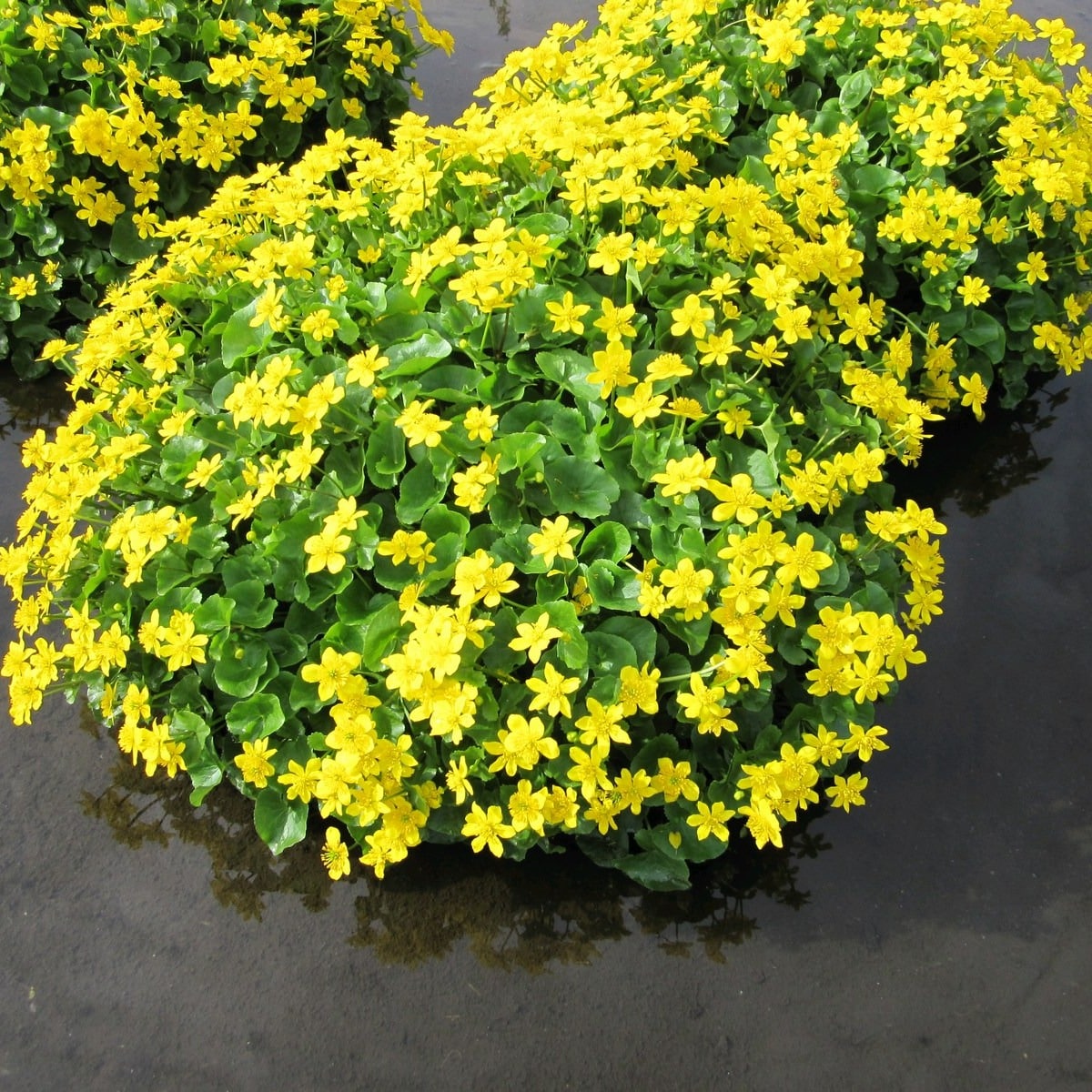
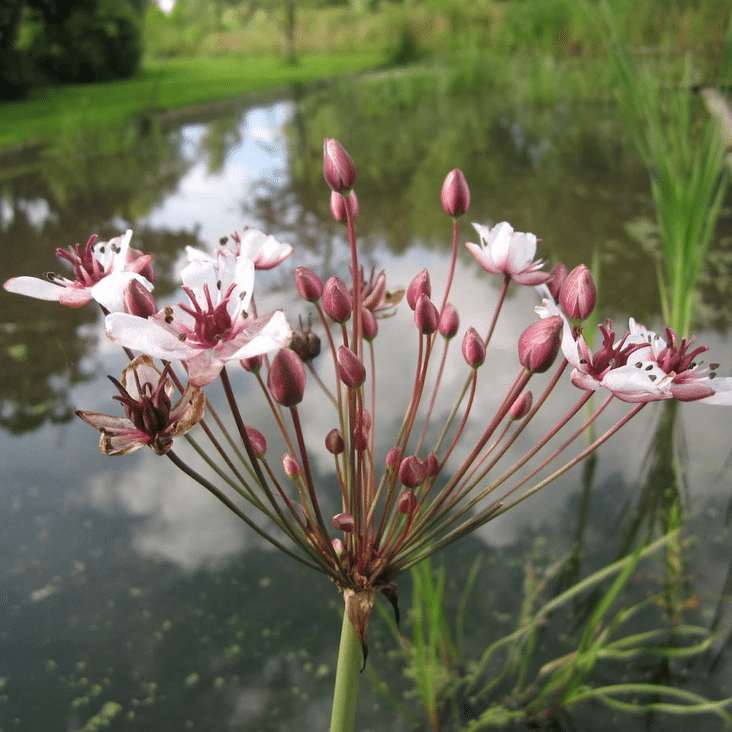
If everything round the pond flowers in June, it can look a bit bare by August. We’d start with marsh marigold for yellow flowers in spring, choose a summer-flowering iris or flowering rush for a suitable shelf, then leave room for water mint or pickerel weed to flower later. That gets you a change of colour over the season from a few well-placed baskets.
Stand where you usually look at the pond. You’ll see a low clump of marsh marigold from the path if it’s near the front. A tall iris is often better off to one side, where its leaves won’t hide the water. We build and maintain ponds, so we also think about where you’ll stand to lift the pump or clear leaves. Leave that stretch of the shelf open from the start.
For flowers on the water, look at water hawthorn in spring and a hardy lily for summer. Both need a place for their roots and space for their leaves to float. If you’re working with a small pond, sort out the edge plants first and see how much water you have left for a lily.
See the flowering calendar · Compare water lilies · See two planting plans · Find plants in the shop
Pond plant flowering calendar for the UK
Use the table to find one plant coming into flower as another finishes. A sheltered garden can be ahead of an exposed one, and a new plant may take a season to get going. If you want flowers in a particular month, two plants that overlap by a few weeks can give you a better chance.
| Month | Plants to look for | Where we’d put them |
|---|---|---|
| March | Marsh marigold (March–April) and water hawthorn (March–May). | Put the marigold on a wet edge where you’ll see it from the path. Give hawthorn a basket with room for its leaves to float. |
| April | Marsh marigold and water hawthorn can carry on flowering. Try cowslip (April–May) or golden club (late April–May). | Give cowslip damp soil that drains, above the waterline. Put golden club in a sunny basket position at the depth on its label. |
| May | Siberian flag and ragged robin can start in late spring. Bog bean can flower into June. | Give the first two moist soil on the bank. Put bog bean in its own shallow basket with room for its trailing stems. |
| June | Double yellow flag, flowering rush (often June–July) and early hardy lily flowers. | Give tall plants room on the shelf or towards the back of the pond. Put the lily where the surface stays calm. |
| July | Summer lilies, water plantain and the first pickerel weed spikes on warmer sites. | Give water plantain a gap where you can see its fine flower stems. Keep a clear view between taller plants. |
| August | Pickerel weed (July–September), water mint (August–September) and purple loosestrife while it’s still flowering. | Put pickerel weed on a sunny shelf. Keep mint in its own basket where you can trim it, and leave space around tall loosestrife on the bank. |
| September | pickerel weed, water mint and ‘Colorado’ if it’s still flowering. | Keep the late flowers where you’ll see them from the house or path. Lift out old leaves that come loose near the intake. |
Marsh marigold is a good place to start if you want a March flower. For September, we’d look at both pickerel weed and water mint. UK growers give different start dates for pickerel weed, so it’s worth pairing it with something else if you’d miss those later flowers. See the nursery records for marsh marigold, water hawthorn, pickerel weed and water mint.
What to plant for flowers in March, April and May
If the edge looks bare in March, try marsh marigold. Give it a spot that stays wet, with enough space for its rounded leaves to open up. If you’ve already got an iris on that shelf, put the marigold far enough away that the iris leaves won’t shade it as they come up.
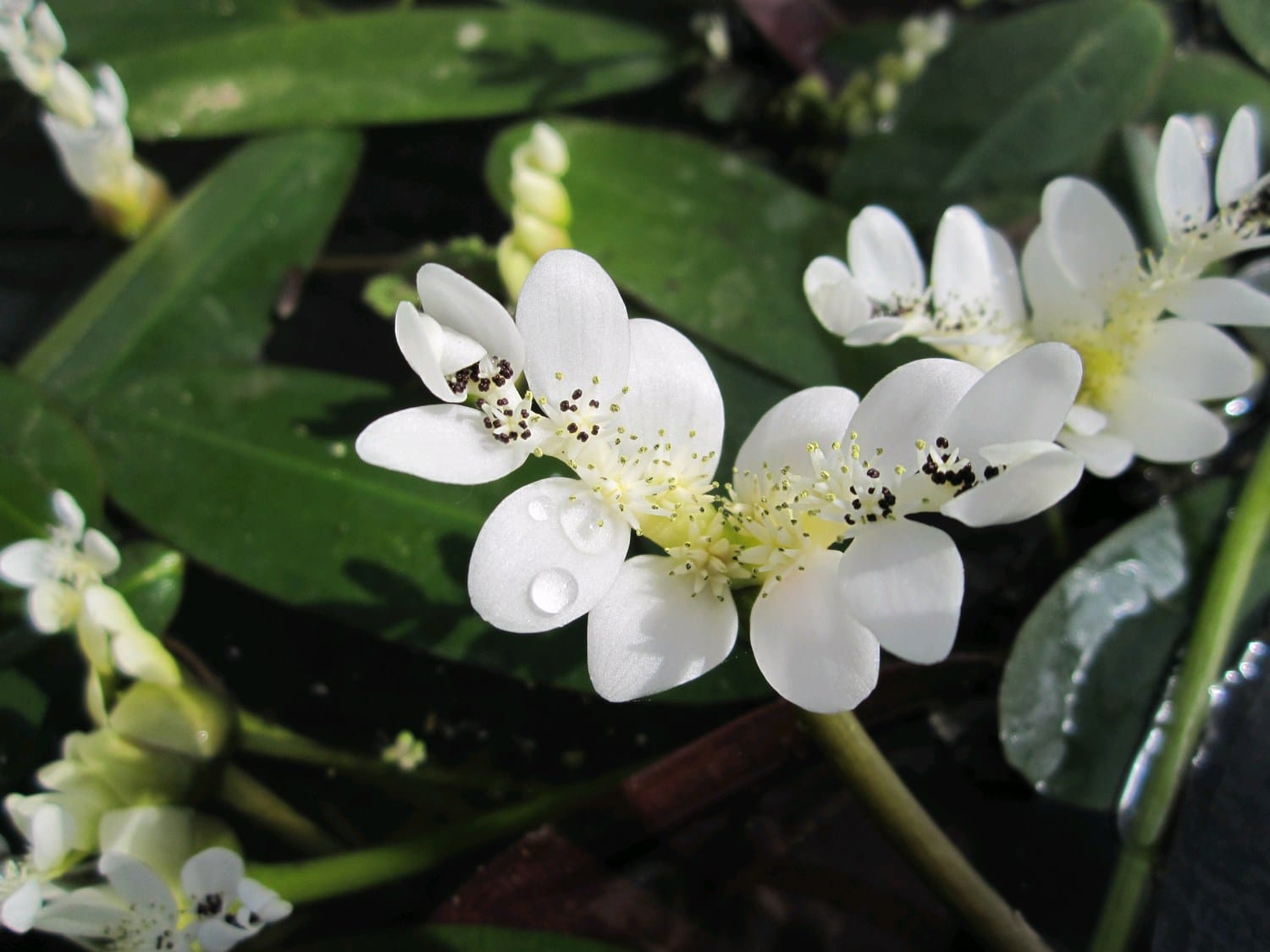
Water hawthorn gives you white flowers on the water around the same time. The leaves float, and the roots grow in a basket. Give the leaves somewhere to spread away from the skimmer. In a warm summer the leaves can disappear while the plant goes dormant. Leave the basket in the pond and keep the label in it so you can find it later. If you’ve got room for hawthorn and a lily, give them a basket each and a stretch of water of their own. Some of that space is easy to forget about once the hawthorn has died back for summer.
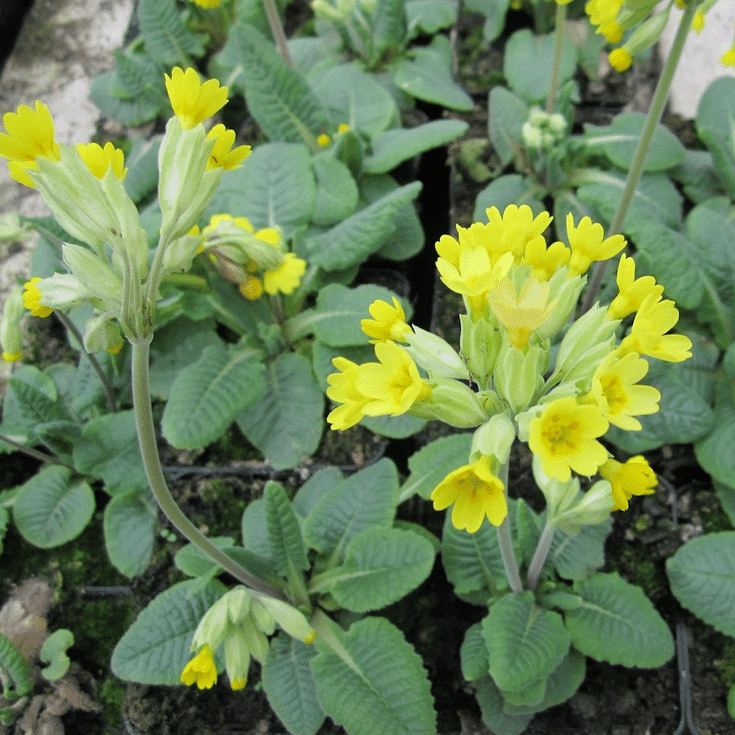
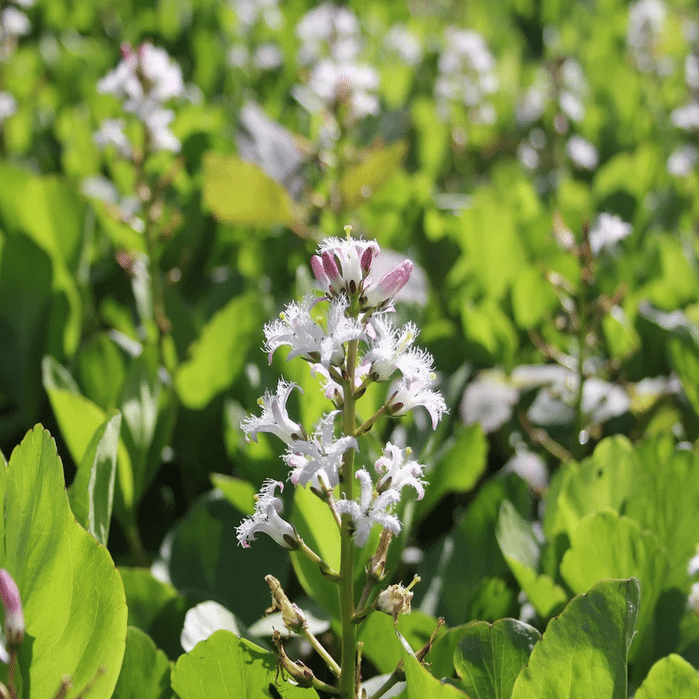
If you’ve got damp soil just outside the liner, cowslip can give you pale yellow flowers in April and May. It’s for soil that stays moist and can drain after rain. For a shallow shelf that stays under water, use bog bean if you’ve got room for its trailing stems. Its fringed white flowers can start in April or May and carry into June. Put it in its own basket so you can lift and thin it without disturbing plants next door. Bog bean flowering and growing notes.
- Right at the water’s edge. Marsh marigold for yellow flowers in March and April.
- On the water. Water hawthorn for white spring flowers, with space for the leaves.
- On damp ground above the liner. Cowslip for April and May.
- In shallow water. Bog bean if there’s room to let its stems trail.
More spring flowers for the bank and the water
If you like the look of marsh marigold but want white flowers, try white marsh marigold. Its yellow-centred flowers stand over a low clump of shiny leaves. Put it in an open, boggy spot near the front where you can see the flowers from the path. It’s a different species from the yellow marsh marigold, so use the depth and growing notes on its own listing. RHS white marsh marigold profile.
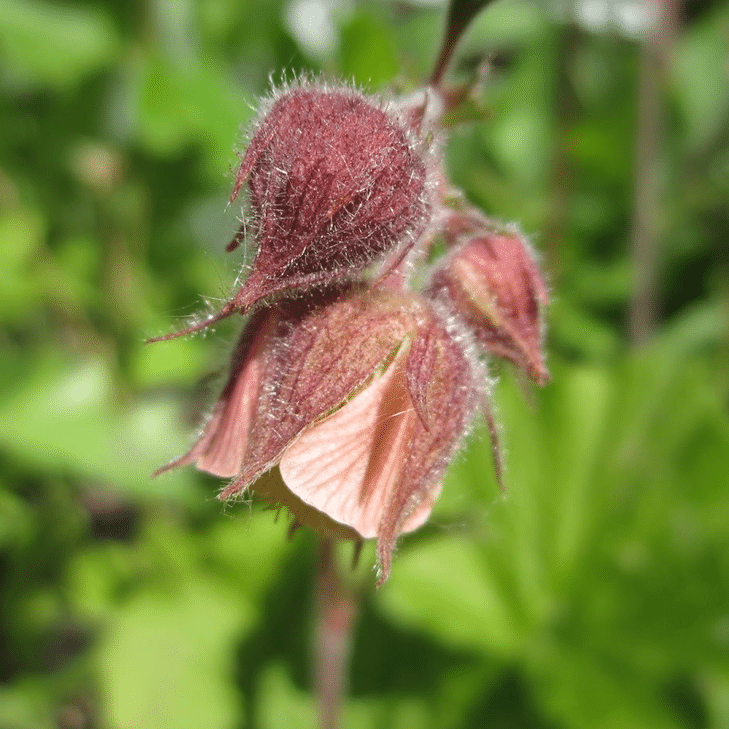
For damp soil with room above the waterline, water avens has small, nodding pink flowers. It can start in April in some gardens. Ragged robin gives you taller stems of fringed pink flowers from late spring into early summer. Both suit moist soil above standing water. Put the water avens where you can see the flowers close up and give the taller ragged robin a little space behind it. Water avens flowering record · RHS ragged robin profile.
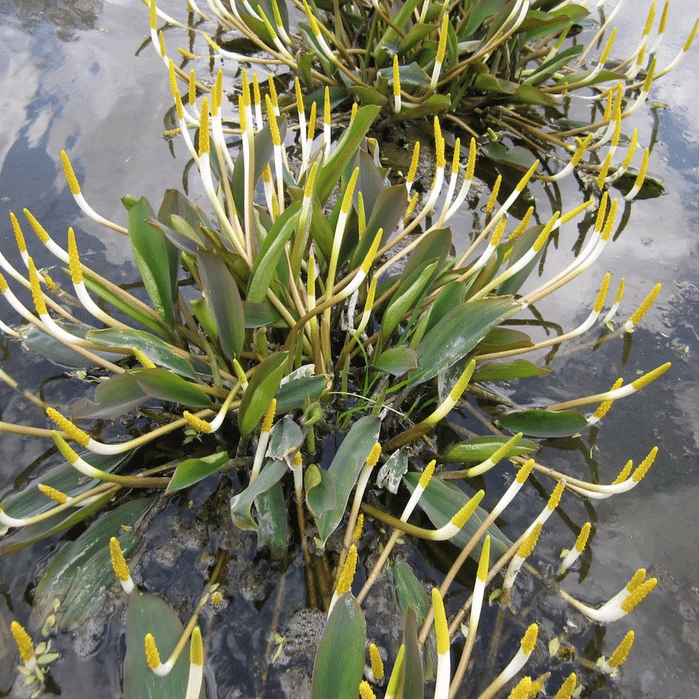
If there’s room in a sunny part of the pond, look at golden club. Its pale spikes have bright yellow tips. A UK nursery lists late April to May for the main flowers. Leave some water showing around it so the spikes can be seen. Check the product page for the starting water depth, especially for a small basket. Golden club flowering record.
Which iris will suit your pond?
Start with where the roots will go. A shallow shelf and the damp soil just above it suit different irises, even when the flowers look similar. UK growers see different irises flower from May into July in sunny positions. Picking a couple for different spots can spread the colour out. Waterside Nursery’s iris planting guide.
Yellow flags and other irises for a wet edge
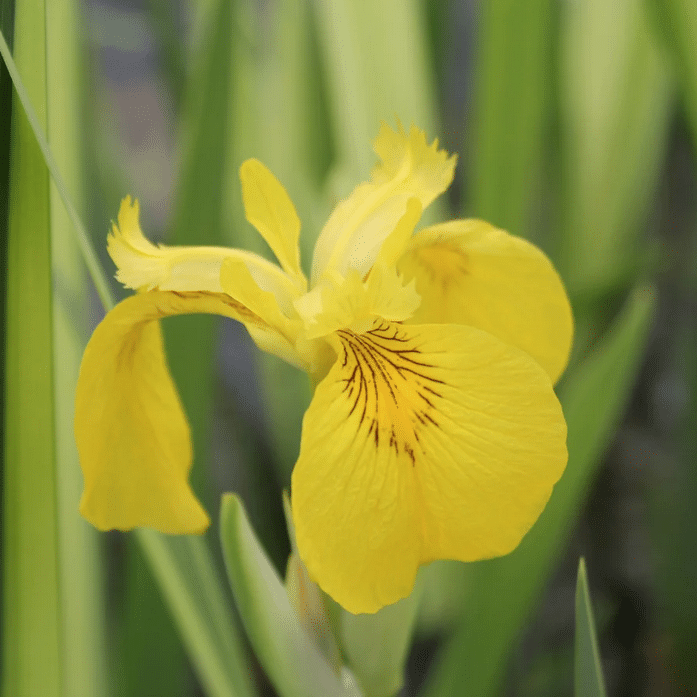
On a larger pond, yellow flag makes a good backdrop. It can reach about 1–1.5 m in height and spread, so give it room and keep it where you can get to the roots for thinning. Variegated yellow flag gives you cream stripes in the leaves as well as yellow flowers. Double yellow flag has fuller, layered flowers, while pale yellow flag is a softer yellow. In a small pond, check how much space the mature clump will take before you choose one.
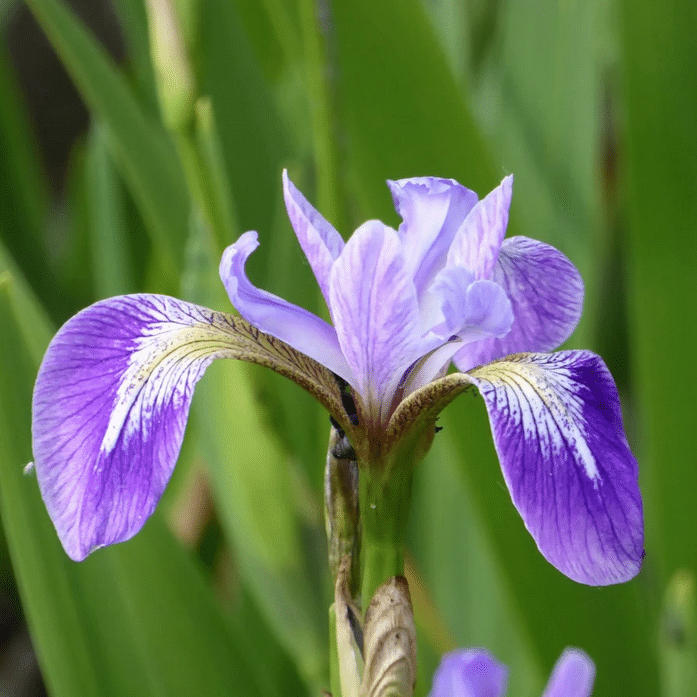
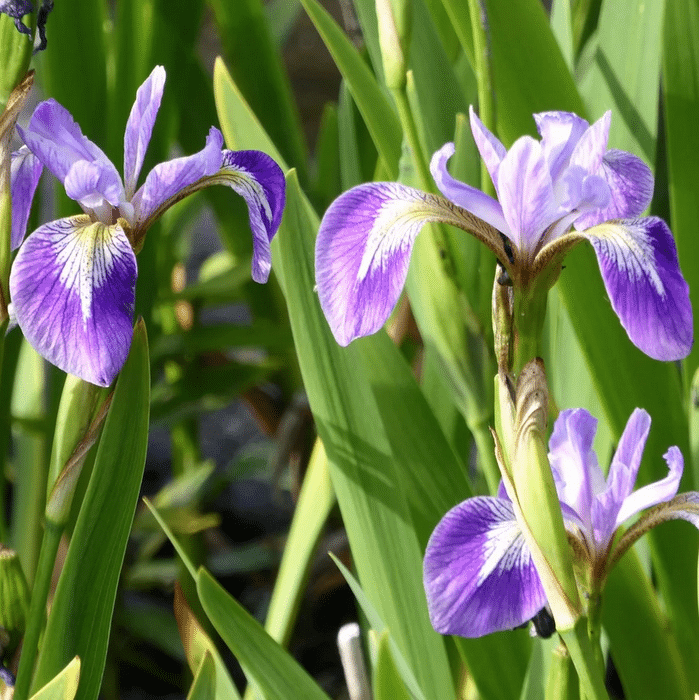
For blue-purple flowers on a shallow shelf, compare blue flag iris with variegated water iris. Variegated water iris also has cream-striped leaves and reaches about 70 cm in the RHS description. If you have room for a taller clump, ‘Gerald Darby’ has purple-tinged young leaves and stems as well as violet flowers. Check the depth on the individual listing if you’re putting any of these in a basket.
Louisiana irises for red, white and deep purple flowers
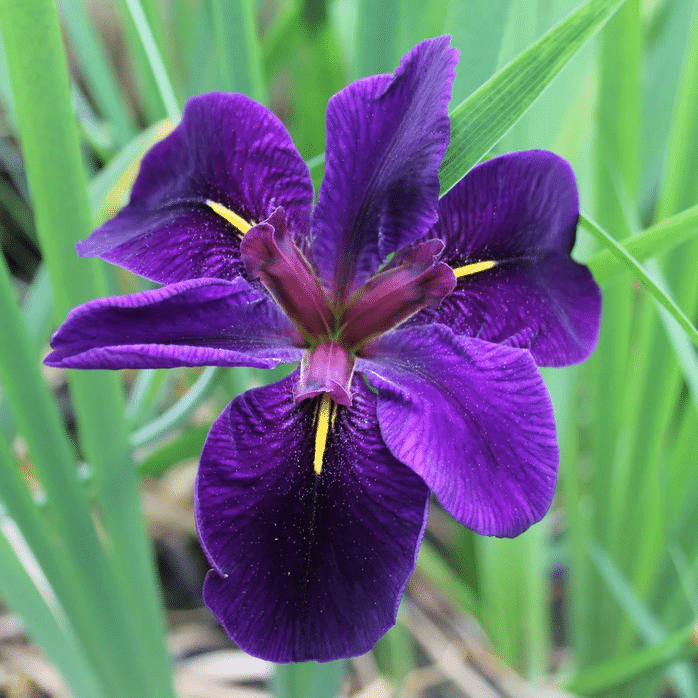
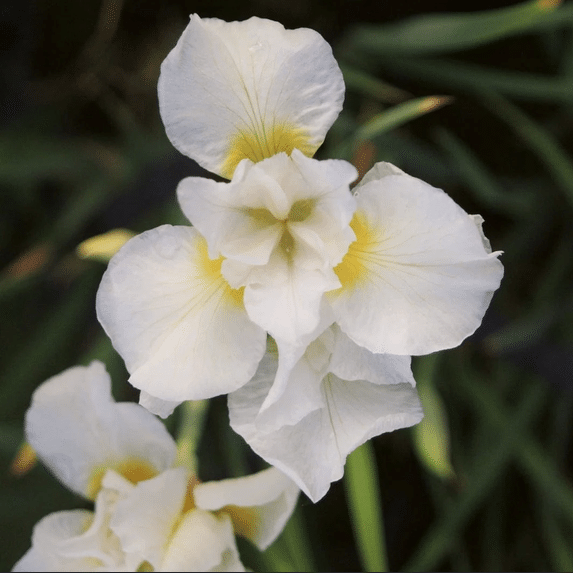
‘Black Gamecock’ has very dark purple flowers. ‘Ann Chowning’ gives you deep red with yellow at the base, and ‘Rhett’ is a warmer mahogany red. For a lighter colour, ‘Her Highness’ has white flowers with yellow markings and ‘Waihi Wedding’ has white flowers with lime-green detail.
These irises like reliably moist soil. For a position in the water, look up the depth for the variety you’ve chosen. Our ‘Black Gamecock’ page gives about 0–20 cm of water cover from UK nursery guidance. ‘Waihi Wedding’ is listed at about 10 cm. Measure from the planted crown or soil surface, using the point named on the label. Two baskets on the same shelf can have different amounts of water over them.
Irises for damp ground above the waterline
Japanese clematis iris (Iris ensata) suits moist, acidic soil with its crown above standing water. On a bank that stays moist and drains, Siberian flag gives violet-blue flowers in early summer, and ‘Snow Queen’ has white flowers with yellow throats. They can give you the shape of an iris even if the pond’s ledge is already full. Compare the planting conditions and colours on the full pond iris range. RHS guide to irises for wet and moist ground.
Put a lower flower in front
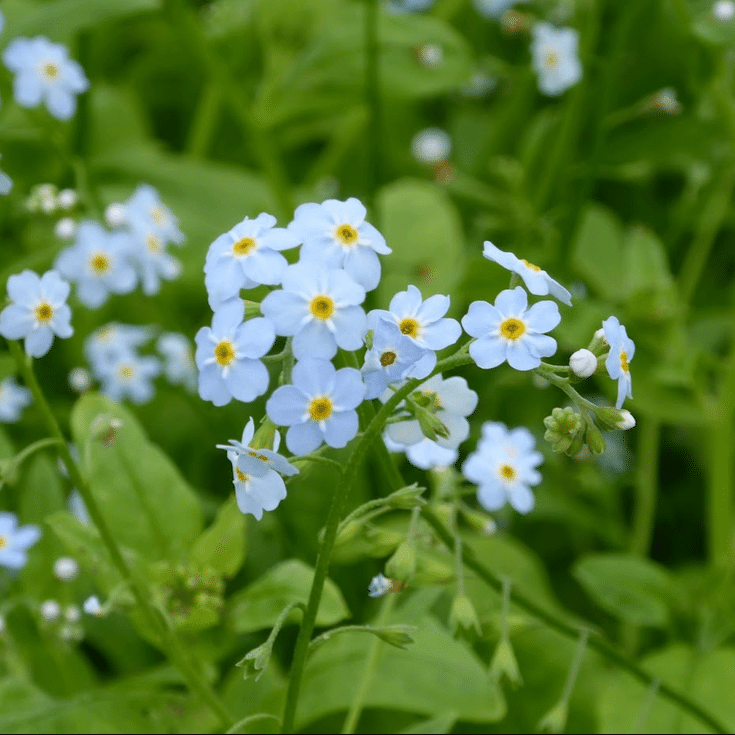
Water forget-me-not gives you smaller blue flowers that are easy to miss behind an iris. Put it near the front or a little way along a narrow shelf, with room to get a hand between the baskets. Some UK nurseries see flowers from April on established plants. May and June are a good time to look for the main display. It likes wet soil or very shallow water. The RHS gives up to 10 cm of water for the species. Check the cover on the supplied label. Nursery flowering record · RHS growing advice.
Check the depth with the plant in its basket. A shelf 18 cm below the surface gives you about 5 cm of water over the crown if the crown sits 13 cm above the base of the basket. In a dry spell that drops the water by 4 cm, you’re left with about 1 cm over the crown. Check that both depths suit the plant, and use the measuring point given on its label. Our pond planting basket guide shows what to measure.
What if the shelf dries out in summer?
A shelf can look ideal in April and sit above the water by July. If the soil is still wet, a plant such as water forget-me-not can grow at the water’s edge. If the whole basket dries out, look for a slightly deeper shelf and measure the water over the basket when the pond is full as well. Check that the plant will be comfortable at both levels before you move it. A damp bank just outside the liner suits plants such as cowslip if the soil stays moist and drains after rain.
Pink or white flowers for a sunny summer shelf
Flowering rush has little rosy flowers in open clusters at the ends of tall stems. One UK nursery records flowers in June and July, with timing varying by site. A mature plant can reach around 1–1.5 m in flower. Put it to the side or back of the pond where you can enjoy the flowers without a tall clump blocking the view from your seat. Flowering rush nursery record.
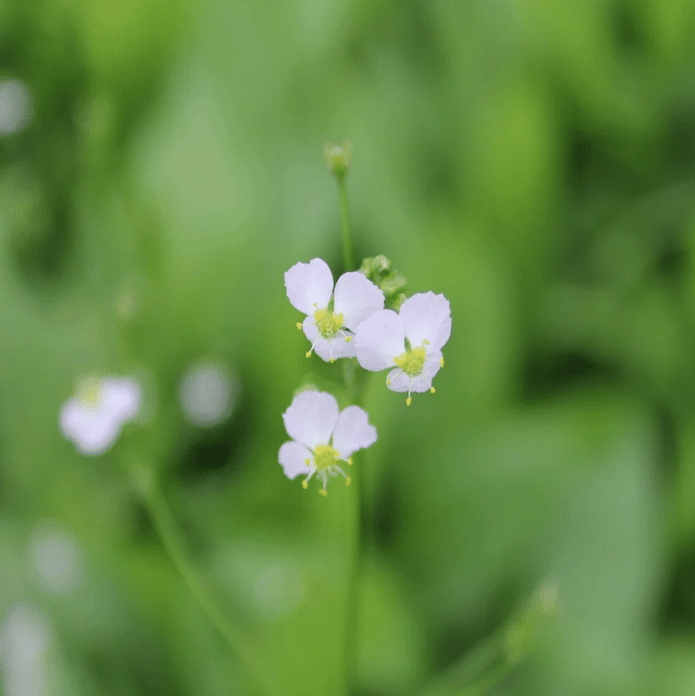
Water plantain gives a different shape. Its tiny white flowers, sometimes tinged lilac, sit on fine, branching stems above broad grey-green leaves. The RHS records flowering from late spring, and a UK grower gives June to August. Use it at a sunny wet edge, with a gap around its stems so you can see the flowers. If space is tight, take off the spent heads before they set seed. RHS water plantain profile · UK flowering record.
What to plant for August and September flowers
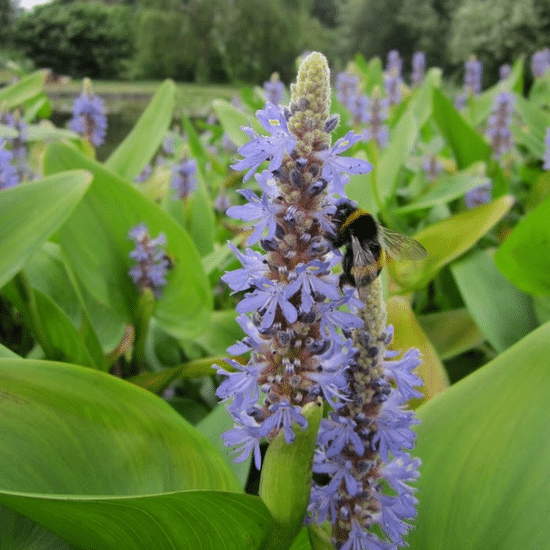
Pickerel weed has upright blue-violet flowers and glossy leaves. We’d put it on a sunny shelf with room for the full clump. Put it towards the far side if you want to see the spikes without looking through tall leaves. On the near bank a mature clump may sit right across your view.
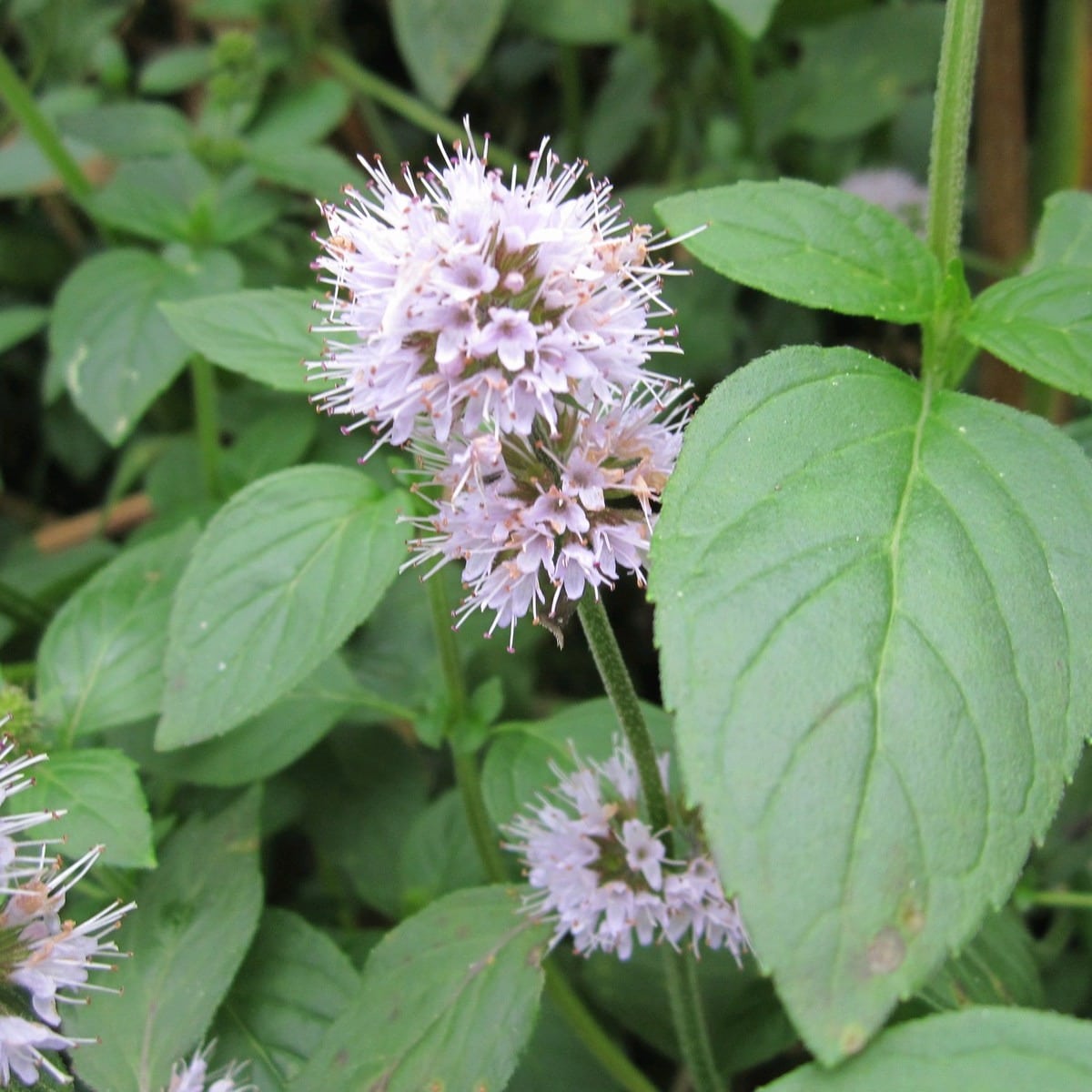
For a lower flower near the edge, use water mint. The rounded lilac flowers can keep going into September, and the leaves are aromatic when you brush past them. It’s one to put within reach. Keep it in its own basket and clip back runners where you can see them creeping over the rim. If a stem has already taken root in the next pot, tease it out before it gets tangled up with the other plant.
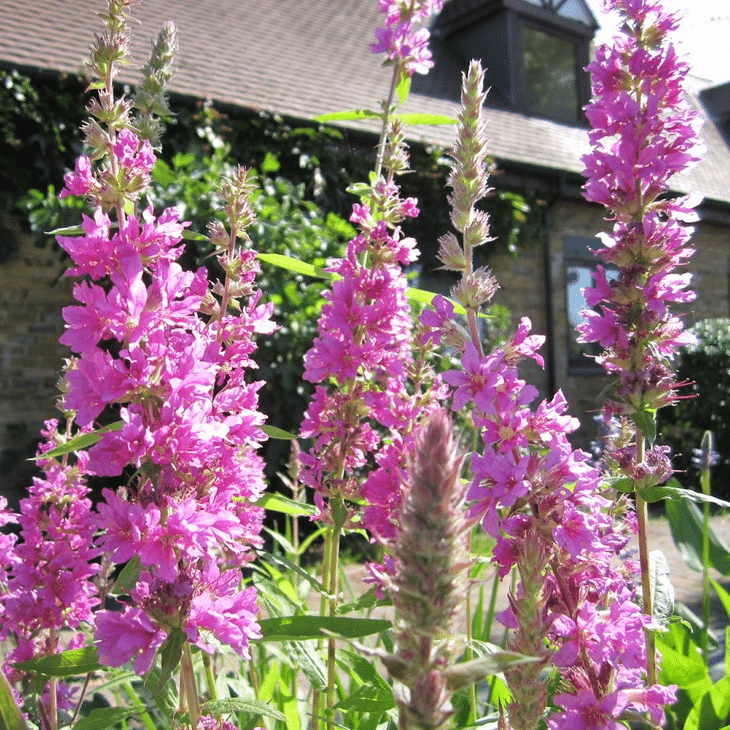
Where the bank is broad and stays moist, purple loosestrife gives you taller pink-purple flower spikes from June through August. Put it towards the back, where there’s room to get round it. If you want to limit seedlings, cut back the spent flower heads before the seed scatters. Purple loosestrife flowering record.
If you have space for one late plant, choose the one you can look after from the bank. A tall clump such as pickerel weed makes sense on a sunny shelf with enough depth and width. A basket of mint can work in a smaller position if you can get at it to trim it. Put the mint somewhere away from the intake so chasing loose stems doesn’t become a weekly job.
Which water lilies flower early or late?
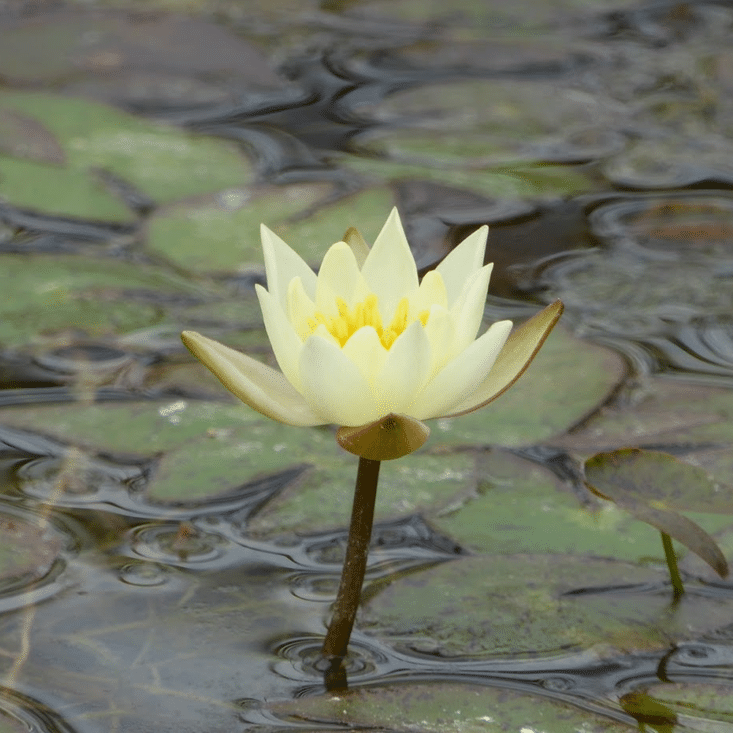
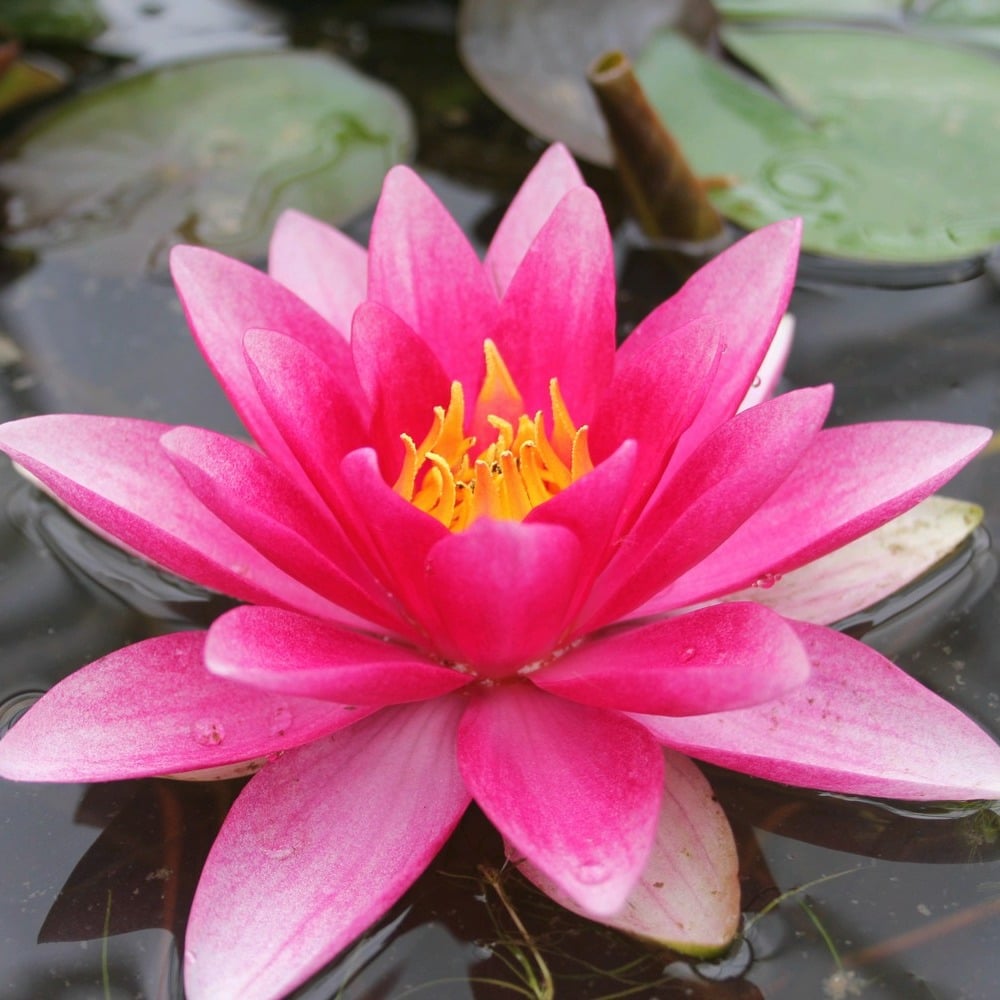
Most hardy water lilies flower in summer, and many varieties overlap from June to September. ‘Early’ and ‘late’ describe when you’re likely to see flowers within that season. If you want flowers on the surface in March or April, water hawthorn is the one we’d look at. For a summer lily, choose one that suits the depth and width of your pond, then look at colour and flowering time.
| When you want flowers | Named varieties | What to check |
|---|---|---|
| Early in the lily season | ‘Laydekeri Fulgens’ for early red flowers. The grower lists ‘Moorei’ as an early yellow that flowers from June to September. | Look for an early-flowering variety that will fit your pond. ‘Moorei’ can spread to about 1.5 m in the grower’s conditions. |
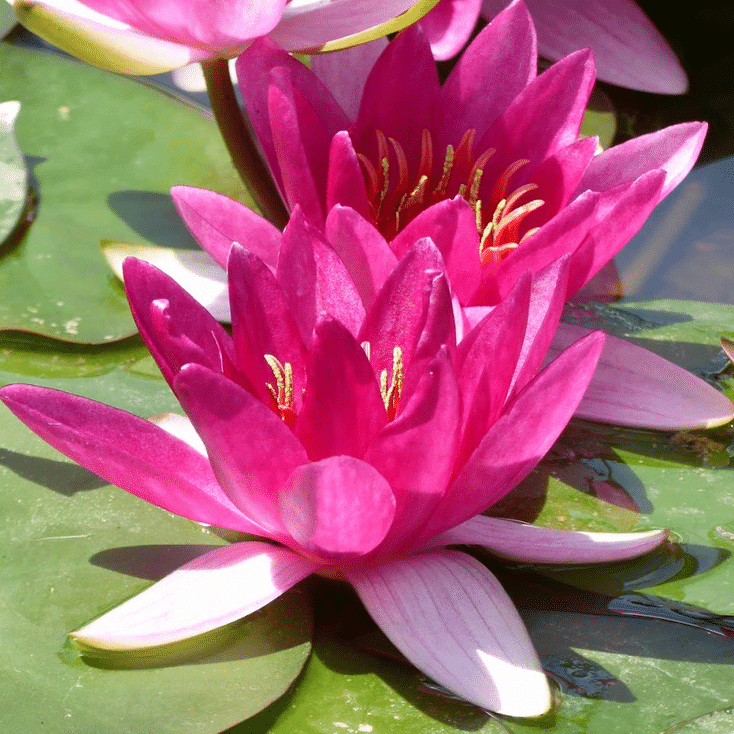
| Main summer display | ‘Pygmaea Helvola’ for small yellow flowers, or ‘Attraction’ for a larger red lily. Bennetts lists both for June to September. | In a small pond we’d use the compact Helvola. Give Attraction room for pads that can spread about 90 cm. |
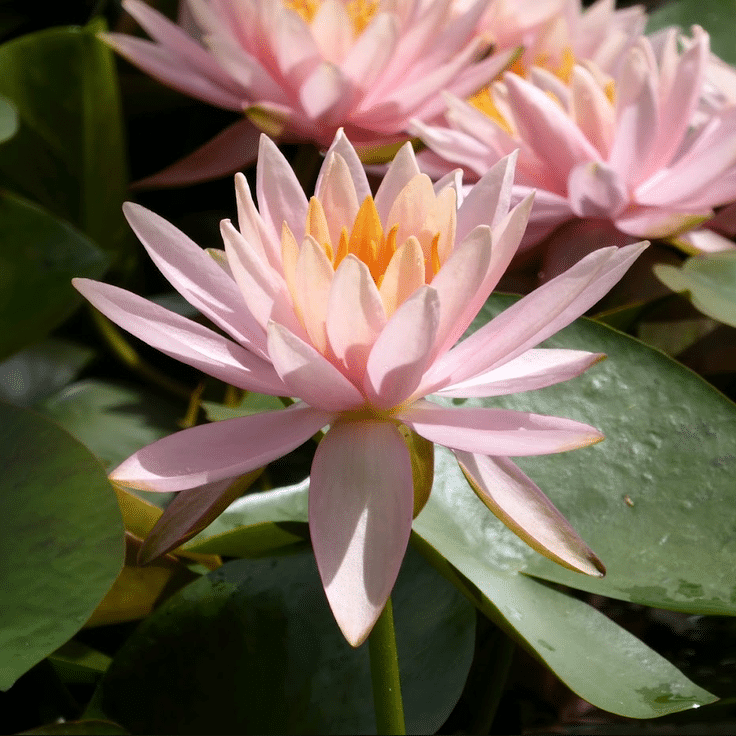
| Flowers later in summer | ‘Colorado’ has peach-pink flowers and a June–September season. Our compact pink ‘Xiafei’ is listed for early summer into autumn. | Choose a sunny spot and leave room for the pads. Add a late flower at the pond edge if you want colour there as well. |
The RHS pond plant guide names ‘Laydekeri Fulgens’ among its early choices. Bennetts lists the flowering months and growing sizes for ‘Pygmaea Helvola’, ‘Attraction’ and ‘Colorado’. For a pond with room for one lily, we’d buy for the space you have and extend the display with a spring or late-flowering plant at the edge.
How much room does a water lily need?
Measure the width of the water where you want the leaves to sit. A lily can arrive in a small basket and still grow pads that cover most of a small pond. Our ‘Pygmaea Helvola’ listing gives a spread of up to about 50 cm. Bennetts gives about 70 cm for ‘Colorado’ and 90 cm for ‘Attraction’ once established.
Say your pond is a metre across and you plant the lily in the middle. A 50 cm spread leaves about 25 cm of water showing either side on that line. A 90 cm spread leaves about 5 cm. It’s a quick way to picture the difference between two plants that may arrive in similar-looking baskets. In that size of pond we’d start with a compact variety, away from the spot where you reach for the pump. If there’s nowhere sunny and quiet for its leaves, use the shelf for flowers and keep the middle open.
Do the same check on the narrowest part of an oval pond. You might have a metre and a half from end to end and only 70 cm across the place you want to plant. That width is the one to use when you compare lilies. Try laying a tape across the water or draw the expected spread on a photo before you order.
How deep should I put the lily basket?
Check how much water the plant needs above the basket when it first goes in. For a newly growing ‘Pygmaea Helvola’, the RHS gives a starting depth of about 8–10 cm over the top of the basket. Once the plant is growing well you can lower the basket in stages, using the instructions for that variety. A larger lily may want a different depth, and some growers measure to the growing point. Use the point named on the label each time.
If the basket would sit too deep on the pond floor, choose a suitable shelf or raise it on a solid, level support that holds the whole base. Lower the basket gently so the planting medium stays in place. Check that the young leaves can reach the surface, and move it down a stage as they grow. Keep the pads away from steady fountain spray and the strongest flow from a return. If you can see the pads being pushed under, look for a quieter spot with similar light.
Check how the lily is supplied before you buy a basket or compost. Our Helvola is already planted in the aquatic basket you select. Keep that planted basket together when you put it in the pond. For a bare rhizome, you’ll need a mesh basket and an aquatic planting medium. Late spring and summer are the usual planting months for hardy lilies. Follow the growing-point and depth instructions for the variety you’ve bought.
Why has my water lily got leaves but no flowers?
First look at the light it gets in summer. The same corner that’s sunny in March can be shaded by a tree once it’s in leaf. If the lily is new, check the planting depth and give it time to settle. Young leaves that struggle to reach the surface are a good reason to check the depth again.
If it used to flower well and now there’s a pile of leaves pushing up above the surface, check the depth and see whether the basket has filled with roots. An overcrowded hardy lily can be divided or repotted in late spring or early summer. When light, depth and root space are right and growth is still weak, use an aquatic feed tablet as directed, pushed into the compost. Our water lily care guide covers the steps, and the RHS water lily growing guide explains the signs of overcrowding and poor growth.
Two planting plans you can try
A sunny one-metre pond with a narrow shelf
Put a marsh marigold where you’ll see the spring flowers near the path. Leave a gap, then add water forget-me-not further along the same shelf for late spring and early summer. Choose separate small baskets so you can lift one at a time. If the forget-me-not starts crossing the gap, cut it back while you can still get at the stems.
If you want flowers into September, check whether you have a spot for a small basket of water mint that you can reach from dry ground. If the shelf can only take two baskets, choose the months when you most want to see flowers. For spring and late summer, we’d pick marigold and mint. The mint gives you fresh green leaves at the edge while you’re waiting for its flowers. Our guide to plants for small ponds has more compact choices.
Add one compact lily if there’s a calm, sunny part of the pond with enough depth for it. Keep the pump side clear, and leave yourself room to put both hands round the basket when it needs lifting. Once the plants have had a summer to grow, see how much open water you have before adding any more.
A larger pond with shelves and a damp bank
We’d plant it in two groups with a gap between them. Put marsh marigold on the shelf nearer the house. Set variegated water iris a little way behind it for blue-purple flowers later and striped leaves in between. If the soil above that section stays moist and drains, use cowslip there for April colour. That gives you flowers at different heights while the taller leaves are filling out.
In the second group, set pickerel weed on a sunny shelf and purple loosestrife on the damp bank behind it. If you want mint as well, put its basket where you can take it out from the path. Leave a sunny, still spot off to one side for the lily. From your usual seat you’ll see across the open centre towards the far planting, and you’ll still have a place to reach the water.
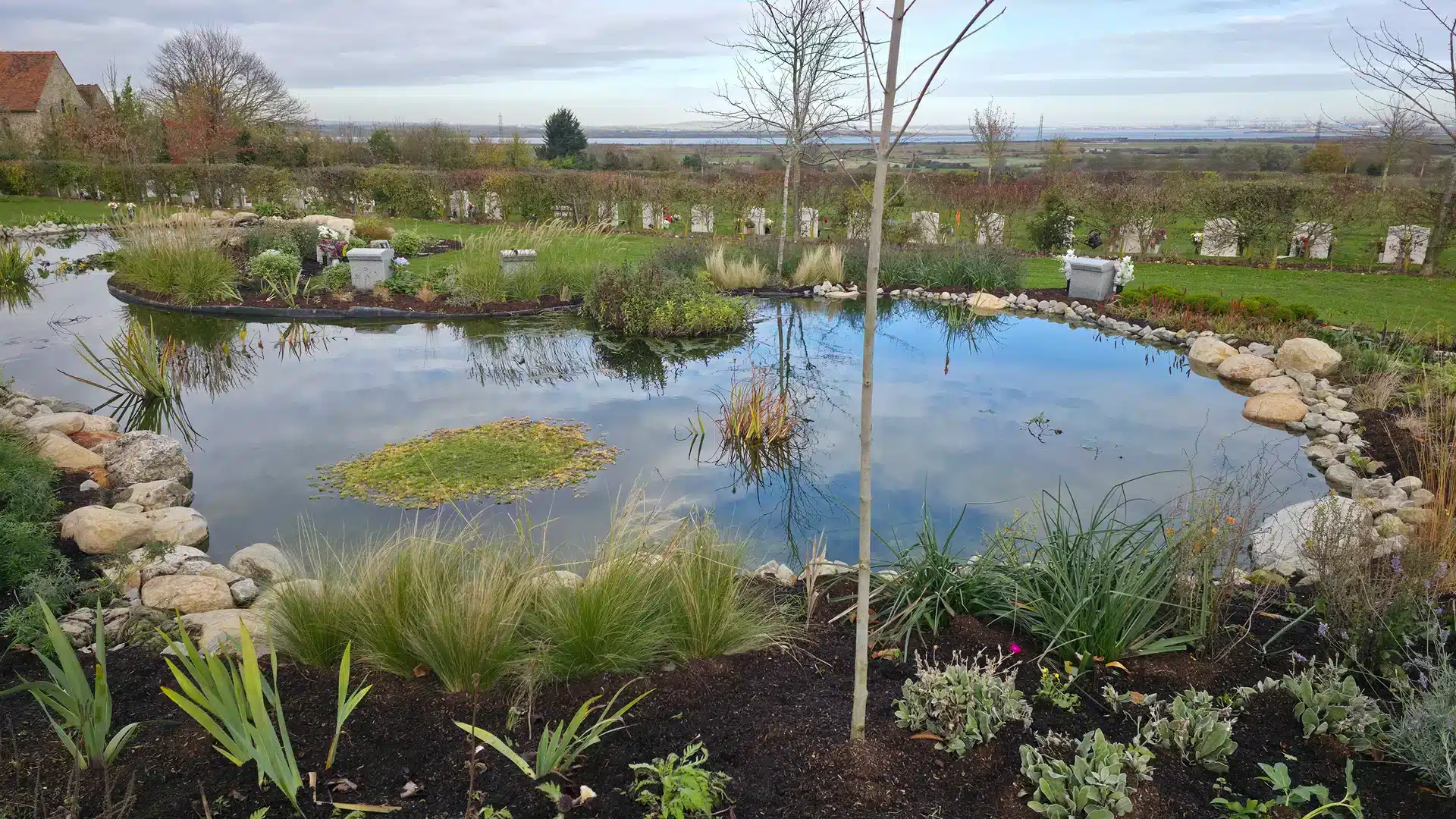
At our Thames View pond you can see the stone edge, the planted margins and the open water in the same view. Try taking a photo from the position where you usually sit and another from across the pond. You’ll see where a tall plant could block the view and where you’ve got room for one.
What grows well if part of the pond is shaded?
Watch where the light falls once the trees and shrubs are in leaf. A pond that gets sun in March may only get an hour or two in June. Put a sun-loving lily in the part that stays sunny, if you have one. In part shade, marsh marigold and water forget-me-not can give you spring and early summer colour at a suitably wet edge.
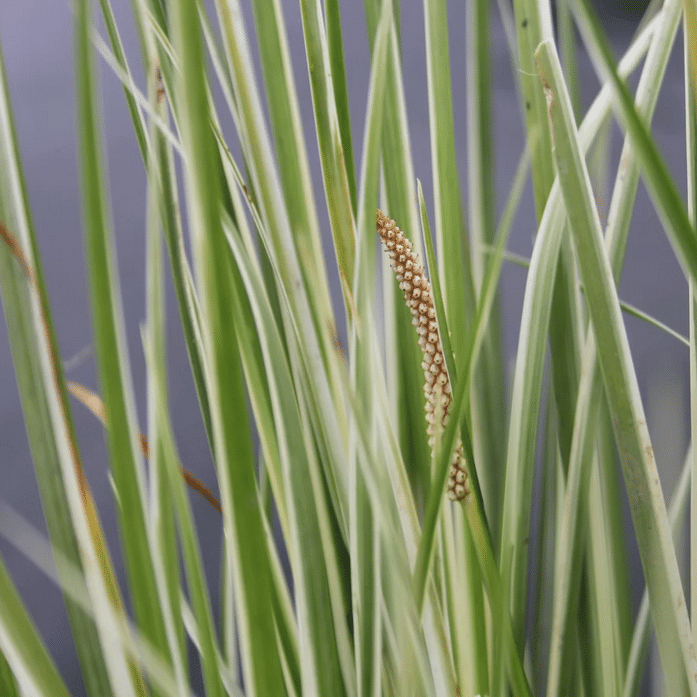
Water mint will also grow in part shade. It’s useful on a wet shelf that you can reach for trimming. On a damp edge in part shade, variegated Japanese sweet flag has cream stripes that show up against dark edging, even when there are few flowers. Look for the low-growing Acorus gramineus ‘Variegatus’ and give it a place where the leaves stay above the water. There are more options in our pond plants for shade guide.
What to do when the flowers finish
Leave healthy iris leaves and lily pads in place while they’re still growing. The iris keeps its upright shape after flowering, and ‘Pygmaea Helvola’ has mottled pads you can still see between flowers. Lift out soft dead leaves and spent lily flowers where you can reach them safely, especially where they collect near the intake. On a wildlife pond you can leave some firm stems above the water if they’re in a suitable spot.
Before you buy something to fill an apparent gap, check the plants around it. If a tall plant has been shading a spring-flowering clump, moving the shorter plant may be all you need to do. Keep the basket labels in place while the plants die back so you know what’s due to come up again.
Take a photo from the same spot in April, June and towards the end of August. If there’s a gap in April where the iris later fills the view, look for a spring plant you can put a little way in front of it. If August is the only month that looks bare, try one late-flowering basket next year. It’s worth seeing how far the plants spread in a full summer before buying more to fill every gap. Our seasonal pond care guide covers what else needs doing as the weather changes.
A few questions before you order
Can two pond plants share a basket?
They can if they need the same depth and can grow together without one crowding the other. For plants such as water mint or bog bean, we’d use their own baskets. That way you can trim or lift the quicker grower without uprooting something that’s only just got established. On a tight shelf it’s worth checking that there’s a gap around the rims so either basket can come out.
Can I get September flowers in a small pond?
Yes, if the plant fits the spot. Try a basket of water mint on a reachable wet edge, or look at ‘Xiafei’ if you have room in sunny, still water. Pickerel weed can flower into September as well, but give it the shelf space its upright clump needs. One late plant is plenty if the shelf is already busy.
Why has my new plant arrived with hardly any leaves?
Hardy plants can be dormant, recently trimmed or only just starting into growth. An established plant in a July photo can look very different from the same plant when it arrives in spring. Check whether yours came in a nursery pot or an aquatic basket. A plant supplied in a nursery pot may need potting into a basket before it goes on a submerged shelf. Check the product page for what comes in your chosen pot or basket size, the usual growing season and where the plant should go.
When is a good time to move plants that have outgrown the shelf?
Plan where they’ll go while you can still see how much space they take up. Check the right time to lift or divide the particular plant before you start. For many hardy lilies that’s late spring or early summer. Where a sprawling marginal is covering the next plant, you can often trim the trailing growth while leaving the rooted basket in place. Check for pond wildlife in anything you lift out.
How to find pond plants by type, colour and stock
Open the Pond Plants shop and look for Filter Pond Plants. Start with Plant Type so the results suit the place you want to plant. Then choose Flower Colour and use Availability to see in-stock or out-of-stock plants. Choose the in-stock option and press Apply if you’re buying now. Include out-of-stock plants if you’re drawing up a list for later.
- Marginal. Start here for a shallow shelf or a wet edge. Check each plant’s water cover. Some varieties, including the damp-border irises, belong above the waterline.
- Deep Water. Compare rooted plants such as water hawthorn, with room for both the submerged basket and the leaves on the surface.
- Water Lily. Look for a lily that fits the depth and width of your pond, then narrow the list by flower colour.
For example, for yellow flowers on a shallow shelf, start with Marginal and Yellow. Open the product pages for the plants you like. Check when they flower, how tall and wide they get, and what depth and light they need. Select the pot or basket size on the product page to see its current availability. Different sizes of the same plant can have different stock.
