






Variegated Water Iris (Iris laevigata ‘Variegata’)
| Size | 3 Ltr |
|---|---|
| Plant Type | Marginal |
| Sun / Shade | Full Sun |
| Growth Rate | Medium |
| Native to UK | No |
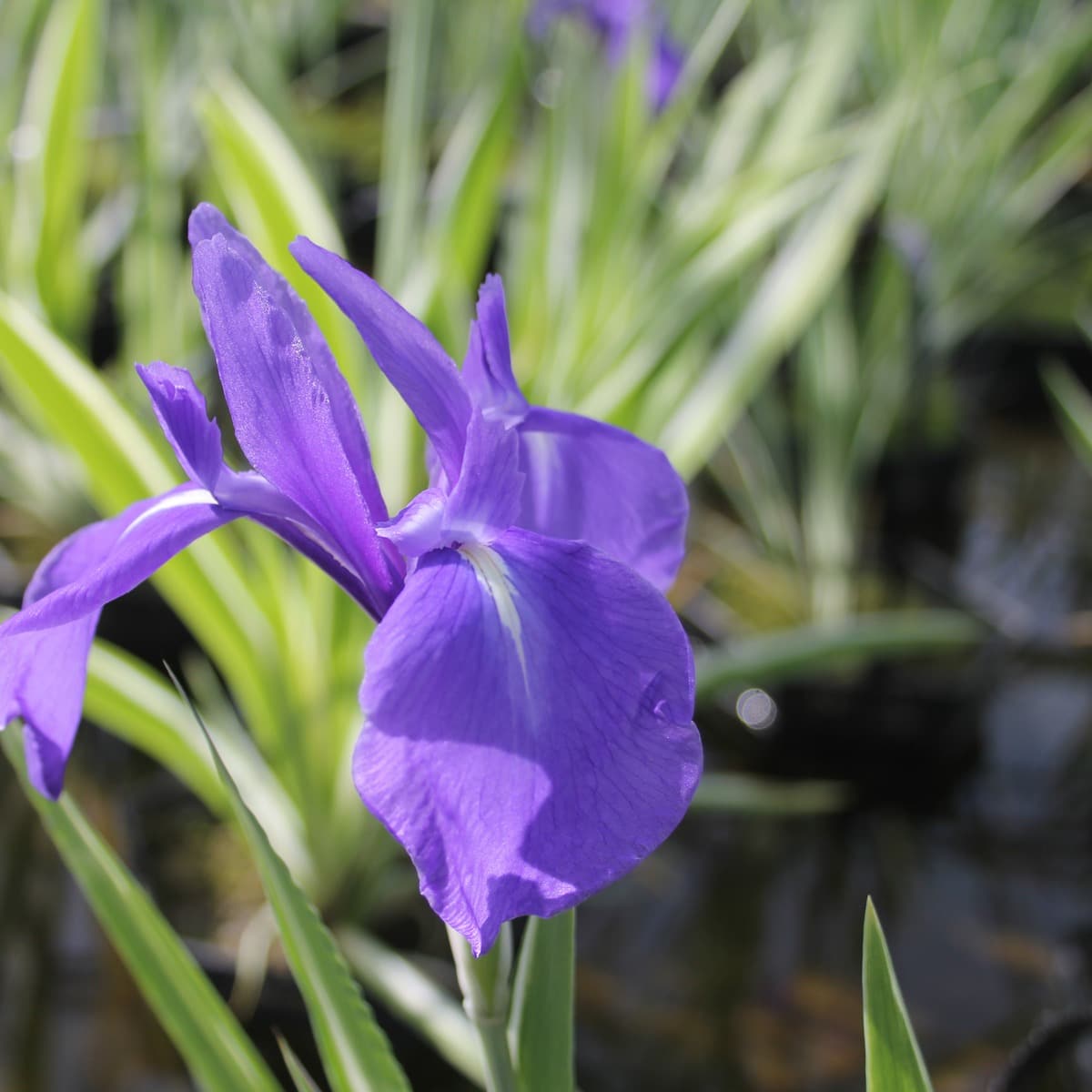
Variegated Water Iris has narrow upright leaves heavily striped with creamy white. Iris laevigata ‘Variegata’ gives a pond margin a clear vertical shape before its purple-blue flowers arrive. The combination of leaves and flowers makes it useful where a planting is seen from a path throughout the growing season, rather than only at peak bloom.
£26.50 (inc VAT)
Variegated Water Iris (Iris laevigata 'Variegata')
Cream-striped leaves and purple-blue flowers for a wet pond edge
Variegated Water Iris has narrow upright leaves heavily striped with creamy white. Iris laevigata ‘Variegata’ gives a pond margin a clear vertical shape before its purple-blue flowers arrive. The combination of leaves and flowers makes it useful where a planting is seen from a path throughout the growing season, rather than only at peak bloom.
The exact RHS cultivar description reaches about 70 cm, with flowers up to 10 cm wide. Allow room for the leaf clump and the flowering stems rather than planting it immediately behind an equally tall screen of rushes. Lower spreading plants can sit in front where their own moisture needs and growth habits are suitable.
Give it deep, humus-rich soil that stays moist to wet, preferably acid to neutral. The exact profile notes some lime tolerance, but a rich wet root zone remains the useful starting point. Choose full sun for the cultivar rather than relying on deep shade to provide a good flower display.
Unlike Iris ensata, Iris laevigata is suited to a pond margin. A basket helps with lifting and division; keep its rhizome close to the water surface and follow the supplied label for cover. Include the height of the planted basket when choosing a shelf, so the roots occupy the intended shallow zone.
The cream stripes provide interest before and after the flowers, then leaves die back through winter. This is a non-native cultivar rated H6. Keep access around its rhizomes for division and wear gloves when handling because iris material is harmful if eaten.
What you receive
You receive one plant in a 3 litre container.
Keep roots wet while preparing a suitable sunny shallow position. Basket volume is not a guaranteed fan or flower count, and the clump will need room to develop.
How it changes through the year
Purple-blue flowers appear in the late-spring and early-summer water-iris season, with striped leaves providing interest around that display. Foliage is deciduous and may die down over winter. The supplied container does not promise flowers at every time of year.
Choosing a place for it
- For striped leaves: Creamy-white markings add interest before the purple-blue flowers open.
- For a sunny wet margin: Use rich wet medium and label-led shallow rhizome placement.
- For accessible division: Leave room to reach and lift the basket as the clump develops.
Planting and getting it established
Choose a sunny wet pond margin with deep humus-rich medium, preferably acidic to neutral. This cultivar also has some lime tolerance, but reliable moisture remains the starting requirement. Set the rhizome at the current growing level rather than burying new shoots under a thick topping.
Unlike Iris ensata, Iris laevigata can occupy a pond margin. Keep the rhizome close to the water surface and use the supplied label for actual shallow cover. Measure above the planted crown or medium and allow for the basket beneath it when checking shelf depth.
Use suitable aquatic medium and a basket within reach for lifting. Leave room for a plant around 70 cm tall, with broad enough space for the striped leaves to remain visible. Avoid hiding the young clump behind an equally tall screen of rushes or filling every gap so tightly that later division becomes difficult.
Looking after it
- Moist roots: Keep the medium moist to wet, checking containers and low-water margins during dry spells. Restore the appropriate shallow position if water levels change.
- Flowers: Remove spent flower stems when the display is finished, keeping healthy striped leaves through their growing season.
- Young growth: Watch fresh leaves for slug, snail or iris sawfly damage where these pests are present. Inspect the cause before adding feed or cutting the whole clump down.
- Division: Divide congested rhizomes from midsummer to early autumn and replant promptly. Keep healthy rooted sections moist and restore the correct planting level.
- Seasonal tidying: Remove dead or damaged leaves without burying the crown or harming fresh shoots. Winter leaf loss is normal in this deciduous cultivar.
- Handling: Wear gloves during planting and division. Keep all removed material away from food use, children and pets because irises are harmful if eaten.
Plant details
- Botanical name
- Iris laevigata 'Variegata'
- Foliage
- Green leaves heavily striped cream-white
- Flowers
- Purple-blue, up to around 10 cm wide
- Height
- Around 70 cm; RHS band 50–100 cm
- Spread
- RHS band about 10–50 cm
- Position
- Full sun; deep humus-rich moist-to-wet soil
- Water position
- Rhizome close to the surface; label-led shallow cover
- Winter
- Deciduous; RHS H6
- Safety
- Harmful if eaten
- RHS information
- RHS plant profile: Iris laevigata 'Variegata'
Delivery and basket information
We do not deliver live plants to Northern Ireland.
Please read our delivery information for delivery arrangements and contact us if you need to check the timing of a particular order.
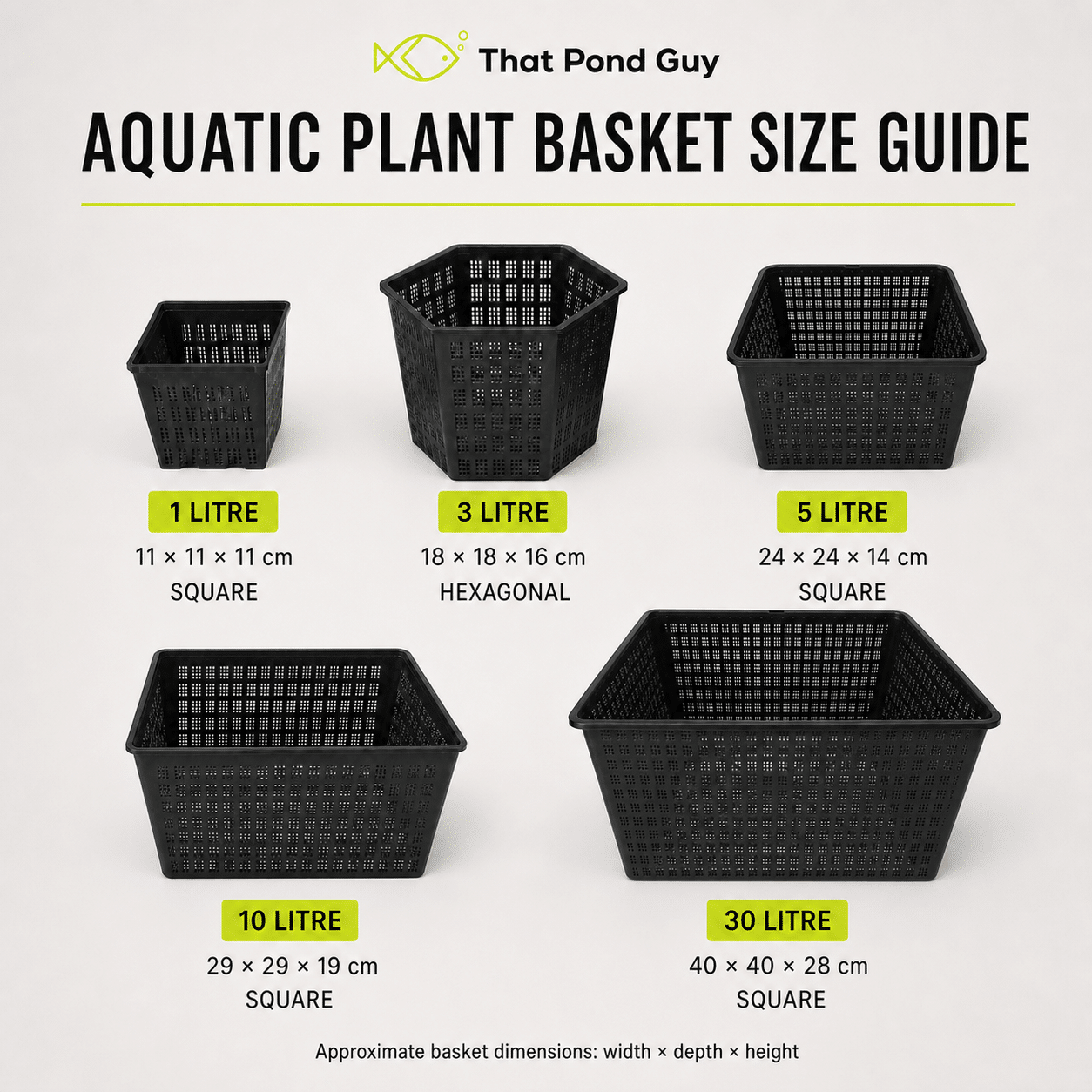
3 litre plants arrive planted in Finofil aquatic baskets with aquatic soil and slow-release fertiliser.
The fine mesh helps retain aquatic soil while allowing water to move around the roots. A separate hessian liner is optional and is not normally required.
Basket measurements for the offered sizes:
- 3 litre basket: 18 cm wide x 16 cm high
Unpack promptly and check that the planting medium is moist. Keep the rootball moist if planting is delayed, and keep the plant in a sheltered position. Follow the planting depth and position described above, together with the supplied plant label.
Other plants to compare
Japanese Clematis Iris — Compare broad summer flowers for moist acidic soil where the crown remains above standing water.
Gerald Darby Iris — Its purple young growth and darker stems give another form of foliage interest without cream striping.
Choosing plants and planting supplies
Marginal pond plants — Compare pond-edge plants by their eventual size, light and water-depth needs before filling a shelf.
Pond plant baskets and planting supplies — Choose a suitable container and growing medium for the position described above.






Reviews
There are no reviews yet.