






Water Lily Care in the UK: Planting, Flowering and Winter
A water lily can be the best thing you add to a garden pond: flowers to look forward to, leaves that soften the surface and a sheltered patch beneath them. Getting it right starts before the basket goes into the water. The variety, the depth above its crown and the space available matter much more than the colour on the label.
This guide covers hardy water lilies in outdoor UK ponds. We explain how to choose and plant one, what to check when it does not flower and how to look after it through autumn and winter. Tropical lilies need different conditions, so check the label before applying this advice.
Start with these three checks
- Measure the growing position. Record the depth above the top of the planted basket, not just the depth of the pond.
- Check the variety. A dwarf lily and a vigorous large lily need very different amounts of space.
- Watch the water. Choose a sunny, quiet position away from a fountain jet or waterfall splash.
Choosing a water lily that fits your pond
Start with the space the mature plant will occupy. A small plant in a small basket is not necessarily a small variety. Buying a vigorous lily in its youngest size does not turn it into a dwarf, and a large basket does not change the eventual habit of a miniature variety.
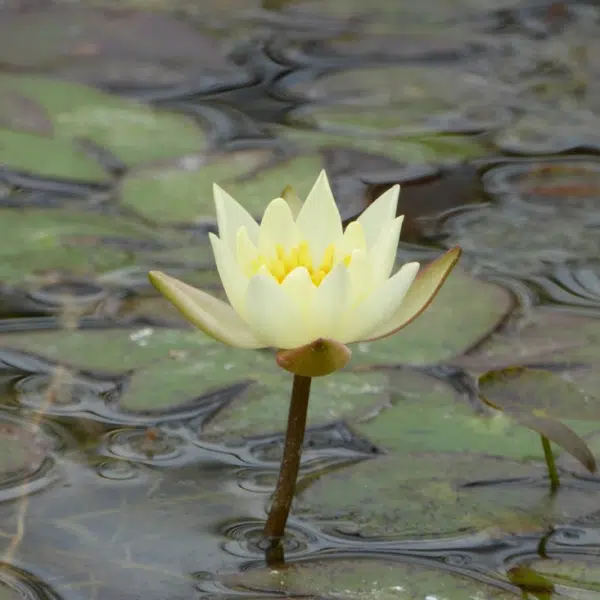
Our Pygmaea Helvola water lily, for example, is a compact variety with pale yellow flowers and mottled leaves. Its listing gives a spread of 30–45cm and a planting depth of 15–40cm. Those measurements make it a useful starting point for a small pond, but still check that the actual position you have available falls within the range.
For a larger pond, compare the mature spread and depth of each candidate before choosing your favourite flower. Leave room for open water, other planting and access to equipment. Draw the proposed lily patch on a rough plan rather than buying several plants to fill every gap immediately.
Sunshine, moving water and surface coverage
Watch the intended position at different times of day. A pond that looks sunny at lunchtime may be shaded by a fence through most of the morning and afternoon. Keep the lily clear of persistent splashing too. Moving it a short distance away from the return can make more sense than switching off equipment the pond needs.
The RHS recommends a sunny position in still water and no more than about half the surface covered by lily leaves. Treat coverage as something to review as plants grow, rather than a target to fill on planting day. Its water lily growing guide also explains the differences between hardy and tropical plants.
When to plant water lilies in the UK
Late spring into summer is the usual planting window for hardy water lilies. The RHS gives late spring to late summer; actual growth depends on the season and the condition of the plant. A newly bought lily needs time to establish, so do not judge its future performance from its first week in the pond.
If you are planning in autumn, use the time to measure the planting position and decide which variety fits. There is no need to disturb an established, healthy plant simply because its leaves are fading at the end of the season. That is a different situation from a lily struggling to grow in summer.
How deep should a water lily be planted?
Our plant listings measure planting depth from the top of the aquatic basket to the water surface. The crown is the growing point near the compost surface. Neither measurement means the distance from the pond floor to the water surface, and neither means the height of the basket itself.
A planting depth example
If a shelf is 50cm below the water surface and the top of your planted basket stands 20cm above that shelf, there is approximately 30cm of water above the basket. That is the measurement to compare with the plant listing.
Measure your own basket and shelf. This example explains the calculation; it is not a recommended depth for every lily.
A new plant may need a shallower starting position before it reaches its eventual growing depth. Do not put a small lily straight onto a deep floor simply because an established specimen of that variety could grow there. Equally, do not keep lowering a dwarf lily beyond the range on its label.
Record the final position somewhere you can find it again. A photograph of the basket on the shelf, together with the variety name and measured water depth, is particularly useful if you need advice later. Once the leaves cover the water, it becomes much harder to see what is underneath.
Planting in an aquatic basket
A basket makes future lifting and repotting more manageable. Choose one that suits the plant, and use aquatic compost rather than ordinary multipurpose potting compost. The RHS recommends a suitable loam based aquatic medium; garden soil is only appropriate when free from fertiliser and herbicides. Wide mesh may need a liner to retain the soil.
- Inspect the plant. Read its label and check whether it is already supplied in a suitable planted aquatic basket.
- Prepare any replacement basket. Add suitable aquatic compost and retain the growing point at the surface rather than burying it deeply.
- Keep the compost in place. A thin layer of washed gravel helps prevent disturbance. Do not cover the growing point with a heavy mound.
- Lower it gently. Use a stable, liner safe support where needed, with the young leaves able to reach the surface.
- Adjust as it grows. Lower in stages only towards a depth appropriate to that variety.
These planting principles follow the RHS aquatic planting guidance. Work from a secure position: a wet basket is heavy, and leaning across a deep pond to place one is not worth the risk.
Feeding and routine care
Water lilies use nutrients in their growing medium. Slow release aquatic feed tablets can be pushed into the compost in spring, following the product instructions. Do not scatter ordinary garden fertiliser into the pond or assume that a larger dose will produce more flowers. Check the dose, basket size and feeding interval on the actual product.
Keep a simple note of feeding and repotting dates. If several people look after the pond, this avoids somebody feeding a basket that has already been treated. It also makes it easier to work out whether poor growth followed a change in position, a new planting or an overdue repot.
Remove fading flowers and yellowing leaves when they are safely within reach. Trim the individual stem without pulling hard on the whole plant. You are maintaining the lily, not trying to strip it back to a perfectly tidy shape every week.
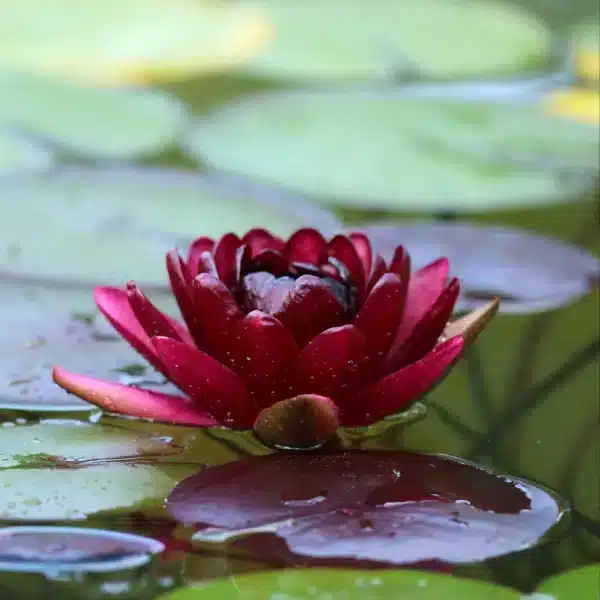
Why is my water lily not flowering?
First separate a new plant settling in from an established lily that has stopped performing. Then work through its position and care before buying a treatment or adding another plant. Changing several things at once makes it difficult to tell what helped.
Check the light and season
Look for shade from newly grown trees, surrounding plants or a garden structure. Also compare like with like: a lily in October should not be assessed against photographs of peak summer flowering. Anglo Aquatic describes June to September as the general lily flowering period in its pond planting advice, with variation between plants and conditions.
Recheck the depth and basket
Use a measured depth rather than a recollection of where the basket went. Ask whether it has tipped, moved from its support or been placed somewhere different during a pond clean. Check the plant identity as well: advice for a large variety may be wrong for a miniature.
Look at feeding and congestion
Review when the plant was last fed and repotted. An established clump with crowded growth deserves inspection, especially if flowering has declined over several seasons. The RHS suggests division roughly every four to five years where needed, in late spring or early summer. Keep healthy growing sections with shoots and roots; do not divide a plant solely because the calendar says it is due.
If you contact us about a reluctant lily, send a whole pond photograph, a close view of the plant, its variety name, planting date and measured depth. Those details are much more useful than a flower photograph alone. We can then discuss the likely next step without guessing what your pond looks like.
Holes, damaged leaves and pond wildlife
A few damaged leaves do not automatically mean the lily needs replacing. Water lily beetles, aphids and aquatic moth larvae can affect leaves and buds. Most pond snails prefer algae and decaying material, so finding a snail on a damaged leaf does not prove it caused the damage.
The RHS water lily invertebrate guide has identification photographs and describes wiping aphids or beetles off reachable leaves. Some damage can be tolerated. Identify the cause before acting, and avoid bringing garden sprays anywhere near the pond without checking that the exact product is appropriate for that use.
Take a close photograph of both sides of an affected leaf if possible. Include any visible insects rather than only the missing section. Keep one wider photograph as well, so it is clear whether the damage affects an isolated old leaf or most of the plant.
Can water lilies grow in a koi pond?
They can be part of a planted koi pond, but the layout needs thought. Koi may disturb baskets and damage planting. Anglo Aquatic suggests a barrier to separate fish from planted areas; the detail must suit the pond and allow safe circulation. Dropping an unprotected basket into a busy feeding area may simply give you another maintenance problem.
Consider access to the basket, the movement of fish and the route to skimmers or other equipment before deciding where it goes. Our guide to aquatic plants in koi ponds looks at the broader planting plan. A lily adds shade and interest, but should not be treated as a replacement for the filtration and aeration your fish require.
Autumn and winter water lily care
Hardy lilies normally lose their surface foliage and rest through winter. Remove dying material rather than leaving it to sink. A bare looking patch of water in winter is not, on its own, evidence that the plant has died.
The important distinction is between a planted basket safely below the freezing surface and a shallow container that could freeze through to the roots. Aquascape’s winter plant guidance describes protecting hardy lilies below the surface and allowing their dormant period, rather than bringing them into heated water to force growth.
For a small above ground container, check the plant’s winter requirements and plan protection before severe weather. Do not assume that being described as hardy makes every exposed planting position suitable. Tropical lilies are a separate case and should not be left outdoors on the basis of hardy lily advice.
Make a note of any basket moved for winter so it can be returned to an appropriate growing depth when growth resumes. If you cannot reach or lift it safely, arrange help rather than entering a deep pond or balancing on its edge.
A useful care record for your lily
You do not need a complicated maintenance diary. Keep the plant label and a few details together:
- Variety name and the date it was planted.
- Actual depth above the basket and where it sits in the pond.
- Basket size, repotting date and any change of compost.
- Feed product, dose and date used.
- A photograph in summer and a note of when flowering began.
This gives you a sensible basis for comparing one year with another. A change in flowering can then be considered alongside shade, maintenance and the age of the plant, rather than assuming the whole pond needs altering.
Choosing your next water lily
Measure first, then choose the flower you like from the varieties that fit. Browse our water lily collection for individual growing requirements, or get in touch with your pond dimensions and photographs if you would like help narrowing the choice.
We are a family run pond specialist supplying pond plants and equipment as well as caring for ponds. You can read about That Pond Guy and the people behind the business.
