






Blue Flag Iris (Iris versicolor)
| Size | 1 Ltr, 1Ltr Pack of 3, 3 Ltr |
|---|---|
| Plant Type | Marginal |
| Sun / Shade | Full Sun to Part Shade |
| Flower Colour | Purple |
| Growth Rate | Slow |
| Native to UK | No |
| Plant group |
Blue Flag Iris gives a pond edge two useful features: a fan of upright leaves and a seasonal display of bluish-purple flowers. It is a good plant to look at when you want a clear vertical line without the heavy outline of a broad-leaved arum.
Price range: £14.00 through £34.50 (inc VAT)
Blue Flag Iris (Iris versicolor)
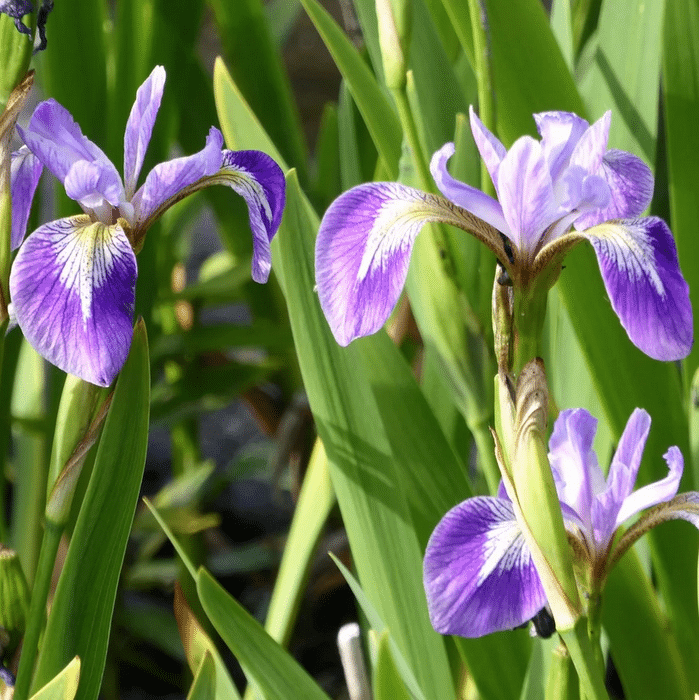
Bluish-purple flowers above upright pond-edge leaves
Blue Flag Iris gives a pond edge two useful features: a fan of upright leaves and a seasonal display of bluish-purple flowers. It is a good plant to look at when you want a clear vertical line without the heavy outline of a broad-leaved arum.
Look closely at the flowers and the falls show conspicuous pale patches marked with darker veins. The detail is more subtle than a plain block of purple. Placing the iris where it can be seen from a path makes that pattern easier to appreciate, while the green leaves remain part of the planting between flowers.
This is Iris versicolor, a North American species, rather than the native British Yellow Flag. The common name Blue Flag is helpful for colour, but the botanical name is the clearer way to distinguish it from other irises with different moisture needs. Do not assume that a dry-border bearded iris is planted in the same way.
Give it a sunny position with consistently moist to wet, humus-rich soil. It can be grown at a suitable shallow pond margin or in wet ground. Check whether a nursery's depth figure describes the shelf below the water or the water cover above the basket, as those measurements include different things.
Blue Flag flowers in late spring or early summer, followed by upright leaves that continue to give the margin structure. Allow room for its rhizomes to develop into a clump and keep the planting accessible for eventual division. Iris versicolor is hardy but harmful if eaten; use gloves when handling and keep removed material away from children and pets.
UK-grown plant. Grown at a dedicated aquatic plant nursery in the South of England.

What you receive
Choose one plant in a 1 litre container, three plants in 1 litre containers or one plant in a 3 litre container.
These describe supplied root-container formats, not the number of leaf fans or flowers. Keep the roots moist while preparing the planting place.
How it changes through the year
The main flowers appear in late spring or early summer, with timing varying between seasons and gardens. Upright foliage remains after flowering before dying back later. Plants are not supplied permanently in flower; the current season determines the visible amount of leaf growth.
Choosing a place for it
- For blue-purple colour: The pale, veined markings on the flower falls are best seen where the planting is accessible.
- For a sunny wet site: Choose moist to wet soil or a label-led shallow margin with appropriate growing medium.
- For upright structure: Allow for foliage around 60–80 cm high in descriptions, with conditions affecting the final size.
Planting and getting it established
Choose a sunny position with moist to wet, humus-rich soil, ideally on the acidic side. Blue Flag can be planted in wet ground or a suitable shallow pond margin. Keep the rhizome at the original growing level rather than applying the dry, exposed-rhizome treatment used for bearded irises.
For pond use, choose aquatic growing medium and a basket that can support the clump. Nursery growing guidance gives 0–15 cm of water cover above the planted basket. A specialist nursery also gives shelf-depth instructions, which include the basket itself. These are different measurements: check the supplied label and the actual distance from the planted crown to the surface before lowering the plant.
Leave enough room around the leaves for the flower pattern to be seen. A row of young baskets should not be packed so tightly that expanding rhizomes and leaves quickly overlap. Planting within reach also makes it easier to remove finished flower stems and divide a crowded clump later.
Looking after it
- Moisture: Keep the root area moist to wet during active growth. In a wet border or container above water, check during dry spells rather than relying on the fact that the plant is near a pond.
- Flowers: Remove spent flower stems when the display has finished. This tidies the clump without cutting away the healthy upright leaves that remain useful through the growing season.
- Foliage: Cut away dead or deteriorating seasonal leaves when practical. Avoid repeatedly shortening healthy fans just to keep a tall plant within a space that is too small.
- Crowding: Divide congested rhizomes from mid-summer to early autumn. Keep healthy rooted sections, maintain moisture during the work and replant at the correct level with space for new growth.
- Feeding: Use an appropriate growing medium. If an established basket needs supplementary nutrition, use a suitable aquatic feed at the pack rate; additional fertiliser will not correct a shaded or excessively deep position.
- Handling and winter: This is a hardy deciduous iris. Seasonal leaf loss is normal. Wear gloves for maintenance because the plant is harmful if eaten, and dispose of cut material responsibly.
Plant details
- Botanical name
- Iris versicolor
- Flowers
- Bluish purple with pale veined falls, about 6–8 cm across
- Flowering
- Late spring to early summer
- Mature size
- RHS height 50–100 cm; spread 10–50 cm
- Light
- Full sun
- Medium
- Moist to wet, humus-rich soil; acidic conditions suit it
- Native status
- North American species; not British native
- Safety
- Harmful if eaten
- RHS information
- RHS plant profile: Iris versicolor
Delivery and basket information
We do not deliver live plants to Northern Ireland.
Orders received by 11am Monday to Wednesday are normally dispatched on the following working day using a next working day courier service. During busy periods, dispatch may occasionally take an extra day.
To avoid plants being held in depots over a weekend, we do not usually dispatch on Fridays. Highlands and Islands orders using a two day service are not normally dispatched on Thursdays.
Please read our delivery information for delivery arrangements and contact us if you need to check the timing of a particular order.
Finofil baskets are made from 100% recycled polypropylene co-polymer. They are not suitable for ordinary kerbside recycling; reuse them where possible and check local specialist recycling options. Their fine mesh helps retain aquatic soil while allowing water to reach the roots.
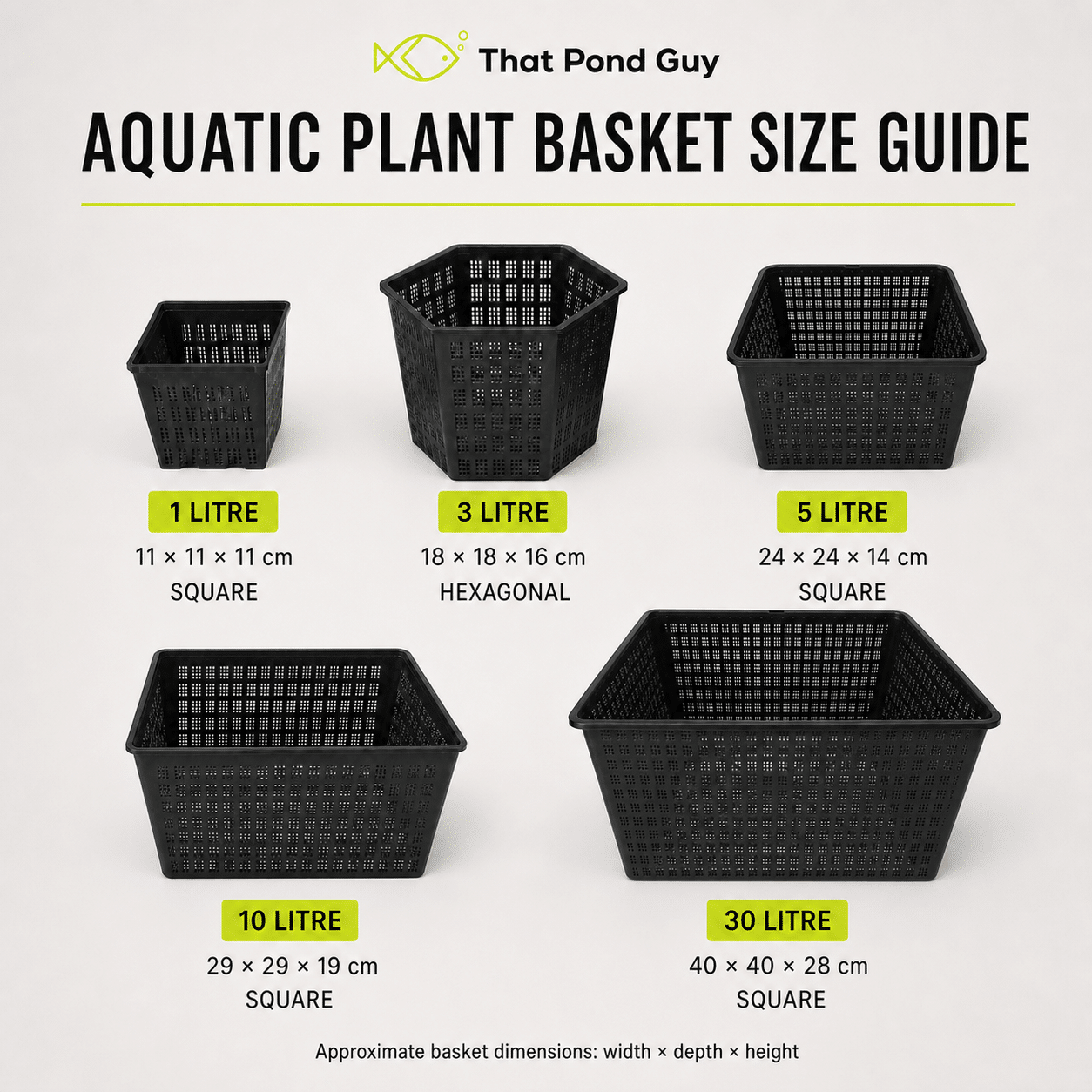
Basket measurements for the offered sizes:
- 1 Litre Basket – usually 11 × 11 × 11cm square; some varieties may be supplied in a 14cm diameter × 10cm round basket
- 3 Litre Hexagonal Basket – 18 × 18 × 16cm
Other plants to compare
Black Gamecock Louisiana Iris — Compare its very dark purple flowers if you want a different colour in a wet-ground iris; check its own planting details.
Double Yellow Flag Iris — Its double yellow flowers provide a contrasting colour and form, with the spread of an established yellow-flag cultivar to consider.
Choosing plants and planting supplies
Marginal pond plants — Compare pond-edge plants by their eventual size, light and water-depth needs before filling a shelf.
Pond plant baskets and planting supplies — Choose a suitable container and growing medium for the position described above.







Reviews
There are no reviews yet.