





Gerald Darby Iris (Iris Robusta ‘Gerald Darby’)
| Size | 1 Ltr |
|---|---|
| Plant Type | Marginal |
| Sun / Shade | Full Sun to Part Shade |
| Flower Colour | Purple / Blue |
| Growth Rate | Medium |
| Native to UK | No |
| Plant group |
Iris Robusta ‘Gerald Darby’ is a striking marginal iris with purple stained spring foliage, dark flower stems and violet blue flowers in late spring to early summer. Ideal for sunny pond margins, damp borders and water gardens, it adds height, structure and seasonal colour around the waterline.
£14.00 (inc VAT)
Gerald Darby Iris (Iris Robusta ‘Gerald Darby’)
A striking marginal iris with purple spring foliage, dark flower stems and violet blue blooms, ideal for sunny pond edges, damp borders and water gardens.
Purple spring foliage and violet blue flowers for pond margins and wet garden planting
Iris Robusta ‘Gerald Darby’ is a beautiful ornamental marginal iris grown for both its flowers and its striking early season foliage. In spring, the new leaves emerge with rich purple staining before gradually maturing to green as the season progresses. The base of the foliage remains attractively purple marked, giving the plant colour and interest before the flowers appear.
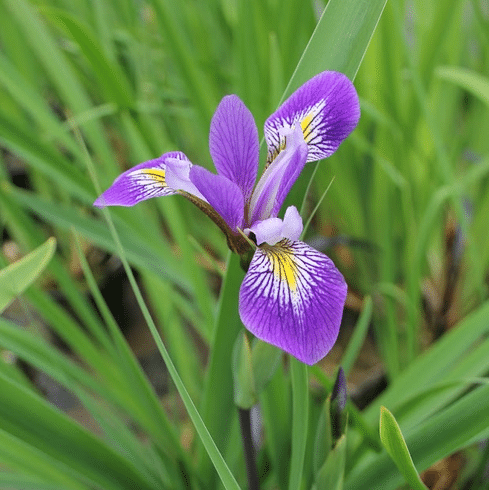
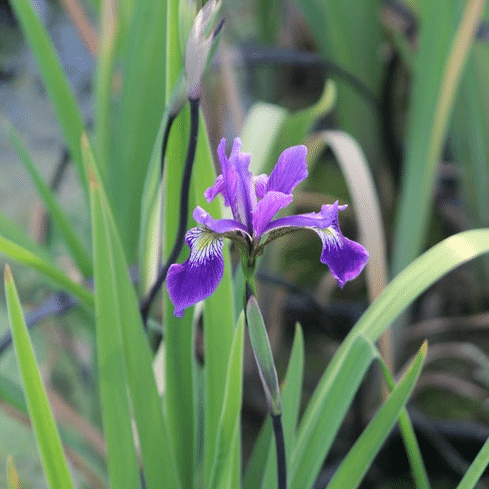
In late spring to early summer, ‘Gerald Darby’ produces elegant violet blue flowers on dark purple to almost black stems. The flowers have a delicate, natural iris shape, with subtle markings and a soft blue violet tone that works beautifully around water. The contrast between the dark stems, purple tinted foliage and blue flowers makes this a particularly attractive choice for ornamental ponds, wildlife ponds and damp garden borders.
This iris is well suited to sunny pond margins and moisture retentive soil. It can be planted as a pond side marginal, in a damp border, bog garden, wet meadow style planting scheme or beside a stream or water feature. It is happiest where the soil remains moist to wet and should not be allowed to dry out for long periods.
For pond planting, place the aquatic basket at the waterline or in shallow water, usually around 0 cm to 10 cm deep. Planting depth is measured from the top of the basket to the water surface. Avoid planting it too deeply, especially when newly supplied, as marginal irises generally establish best with the crown close to the surface.
Iris Robusta ‘Gerald Darby’ is useful for adding vertical structure around pond edges. The upright sword like leaves help soften hard margins, break up low planting and create a more natural transition between the pond and surrounding garden. It pairs well with Water Forget Me Not, Marsh Marigold, Purple Loosestrife, Pickerel Weed, rushes, sedges, Primulas, Astilbes and other moisture loving plants.
This iris is not UK native, but it is a well established garden cultivar and is suitable for home pond and damp border planting. It is a good choice for customers who want a more decorative iris with longer seasonal interest than flowers alone.
Please note that iris rhizomes and plant parts are harmful if eaten by humans or pets, so handle with care and avoid planting where pets are likely to chew the foliage or roots.
🇬🇧 UK-grown aquatic plant: Grown at a dedicated aquatic plant nursery in the South of England and carefully prepared for delivery across the UK.
Key Benefits
- Purple tinted spring foliage
- Dark purple to black flower stems
- Violet blue flowers in late spring to early summer
- Excellent for sunny pond margins and damp borders
- Adds height and structure around pond edges
- Attractive before, during and after flowering
- Suitable for shallow water and wet soil
- Good ornamental choice for water gardens
- Works well in natural and contemporary planting schemes
- Helps soften hard pond edges and liner lines
- Clump forming habit
- Ideal for planting with other marginal pond plants
Reasons to Buy Iris robusta ‘Gerald Darby’
- Iris Robusta ‘Gerald Darby’ is a brilliant choice if you want a marginal iris that gives interest for more than just its flowering period. The purple stained spring foliage is one of its standout features, adding colour to the pond edge before the violet blue flowers appear.
- It is especially useful for adding structure around ponds. The upright foliage creates a strong vertical effect, while the dark flower stems and blue blooms provide a more refined ornamental look.
- This iris is also a good choice for damp borders and bog gardens. It is happy in average to heavy soil, provided the soil remains moisture retentive, making it useful in areas where standard garden plants may struggle.
- For best impact, plant in groups or repeat through a pond margin. A single plant will add interest, but several plants together create a stronger, more natural effect.
Care Instructions
- Plant Iris Robusta ‘Gerald Darby’ in full sun or partial shade. A sunny open position will usually give the best foliage colour and flowering, although partial shade is suitable where the soil remains moist.
- For pond planting, place the basket at a depth of 0 cm to 10 cm. This means the top of the basket should sit at the waterline or just below the water surface.
- Avoid planting newly supplied irises too deep straight away. Start them shallow while they establish, then move them slightly deeper within the recommended range if needed.
- If planting outside the pond, choose damp soil, wet soil, heavy soil or a moisture retentive border that does not dry out for long periods.
- After flowering, old flower stems can be removed to keep the plant tidy. Once the foliage has died back in autumn, cut it back to just above the water surface or close to the base of the plant.
- If cutting back is left until spring, take care not to damage fresh emerging shoots.
- Divide mature clumps every few years if they become overcrowded or flowering begins to reduce. Division is best carried out after flowering or from midsummer into early autumn.
- Wear gloves when handling or dividing irises, as the rhizomes and plant parts are harmful if eaten and may irritate sensitive skin.
Flowering Period
Iris Robusta ‘Gerald Darby’ usually flowers from May to June, with the main display in late spring and early summer.
Flowering can vary depending on plant maturity, sunlight, soil moisture, water depth and seasonal weather.
Plants are not always supplied in flower. Outside the flowering period, the plant may arrive with foliage only, or may be naturally cut back depending on the time of year.
Size, Spread and Growing Conditions
Botanical name: Iris Robusta ‘Gerald Darby’
Common name: Gerald Darby Iris
Plant type: Marginal pond plant and moisture loving iris
Plant height: Typically 70 cm to 90 cm, with potential to reach around 120 cm in good conditions
Potential spread: Approximately 45 cm to 60 cm
Growth rate: Medium
Flower colour: Violet blue
Flowering period: May to June
Position: Full sun or partial shade
Soil: Moist soil, wet soil, heavy soil, aquatic soil or shallow pond margins
Soil preference: Moisture retentive soil, with acidic to neutral conditions preferred
Recommended planting depth: 0 cm to 10 cm
Foliage: Upright sword like leaves, purple stained in spring and maturing to green
Foliage type: Deciduous
Habit: Clump forming rhizomatous perennial
Native status: Not UK native
Best suited for: Pond margins, shallow water, damp borders, bog gardens, stream edges, water gardens and wet meadow style planting
Safety note: Harmful if eaten by humans or pets
Wildlife value: Provides cover and structure around the pond edge, with flowers that may attract pollinating insects
How Many Plants Will I Need?
For a full planted look on a marginal shelf, allow approximately:
• 5 x 1 litre plants per linear metre
• 3 x 3 litre plants per linear metre
Iris × robusta ‘Gerald Darby’ forms clumps over time, so allow enough space for the plant to develop. It looks particularly effective when repeated along a pond edge or planted with lower growing marginals in front.
Your Plant on Arrival
Your Iris Robusta ‘Gerald Darby’ will arrive potted, depending on the size selected.
1 litre, 3 litre and 5 litre marginal plants arrive pre planted in Finofil aquatic baskets using aquatic soil and slow release fertiliser. These can normally be placed straight onto a pond shelf at the recommended depth.
9 cm plants arrive in solid nursery pots and will need repotting into aquatic baskets before being placed into the pond.
Aquatic basket measurements:
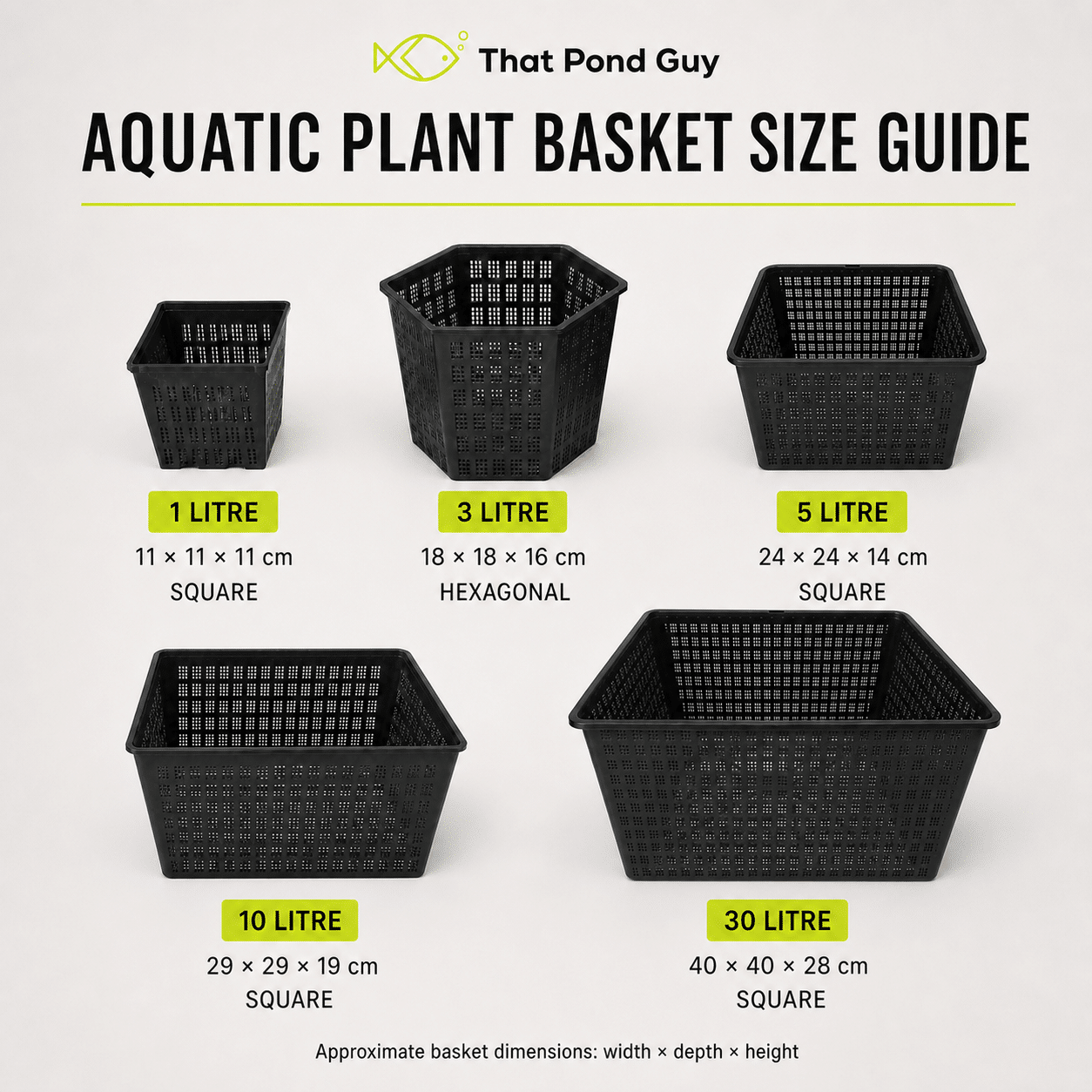
• 1 litre basket: 11 cm wide x 11 cm high
• 3 litre basket: 18 cm wide x 16 cm high
• 5 litre basket: 24 cm wide x 14 cm high
Finofil aquatic baskets are made from 100% recycled plastic and are designed with a fine mesh that helps retain aquatic soil while allowing water to move around the roots. A hessian liner is optional and is not normally required.
Dispatching Your Pond Plants
Pond plants are carefully selected, watered and packed before dispatch. As living plants, the amount of visible growth, foliage colour and flowering stage will naturally vary throughout the year.
Early season plants may arrive with less top growth and will develop once settled into suitable conditions. The purple spring colour may be more noticeable early in the season, while foliage often becomes greener as the plant matures through summer.
Plants sent outside the flowering period may not be in flower on arrival. In autumn and winter, the plant may be cut back or naturally dormant.
Unpack your plant promptly when it arrives and check that the aquatic basket or pot is moist. Place it into the pond, container pond, bog garden or damp planting area as soon as practical.
Do not allow the basket, pot or rootball to dry out. If you cannot plant immediately, keep the plant in a bright, sheltered position and ensure the compost remains moist.



Reviews
There are no reviews yet.