





Marsh Marigold (Caltha palustris)
| Size | 1 Ltr, 1 Ltr – Pack of 3, 3 Ltr, 5 Ltr, 9cm Pack of 3 |
|---|---|
| Plant Type | Marginal |
| Sun / Shade | Full Sun to Part Shade |
| Flower Colour | Yellow |
| Growth Rate | Slow |
| Native to UK | Yes |
| Plant group |
Marsh Marigold is a familiar native plant for early colour at a wet pond edge. Deep yellow flowers gather above rounded green leaves while much of the summer planting is still developing. Choose it for a spring display and combine it with later-flowering plants for the rest of the season.
Price range: £14.00 through £42.50 (inc VAT)
Marsh Marigold (Caltha palustris)
Bright yellow spring flowers over rounded green leaves
Marsh Marigold is a familiar native plant for early colour at a wet pond edge. Deep yellow flowers gather above rounded green leaves while much of the summer planting is still developing. Choose it for a spring display and combine it with later-flowering plants for the rest of the season.
The rounded leaf shape is useful against fine rushes and upright iris leaves. The flowers have the bright, glossy appearance associated with Kingcup, but the plant is not the same as the marigolds commonly grown as bedding plants. Its wetland root environment is an essential part of its identity.
Choose a rich boggy position at the water's edge, with an open sunny setting. A dry raised bed beside a pond does not provide the same conditions. If the supplied label allows a shallow marginal basket position, measure the water cover above the crown rather than simply measuring down to a shelf.
Allow room for the established clump. A small delivery pot does not show how the leaves will open and the rhizomes develop through a growing season. Keep the edge accessible, particularly where the planting is close to a path, intake, pipework or another low-growing species.
Caltha palustris is a hardy deciduous perennial. Leaves may also decline or become dormant in summer conditions, so reduced top growth after spring does not automatically mean the plant needs replacing. Keep the roots wet and treat the whole plant as ornamental, not edible.

What you receive
Choose one plant in a 1 litre container, three plants in 1 litre containers, one plant in a 3 litre container, one plant in a 5 litre container or three plants in 9 cm nursery pots.
Keep the rootball wet while preparing the site. Nursery-pot plants need suitable aquatic baskets for pond use. Container volume does not guarantee a flower count, especially outside the main spring season.
How it changes through the year
Spring is the principal flowering season. The rounded leaves develop around the golden display and may decline later, including possible summer dormancy. A plant delivered outside active growth may be resting, so a photograph of an established plant in leaf or flower is not its appearance at every time of year.
Choosing a place for it
- For spring colour: Golden flowers appear before many later marginals have reached their main display.
- For a true wet edge: Choose boggy ground or correctly measured shallow water, keeping roots wet.
- For seasonal planting: Allow for summer or winter dormancy rather than expecting permanent flowers and leaves.
Planting and getting it established
Choose rich boggy soil at the water’s edge in full sun. Set the plant at its original crown level, settling the medium around the roots without burying the rounded leaves or new shoots. A wet root environment is essential even when the main flower display has finished.
For a pond-basket position, follow the supplied label; the nursery growing guidance gives about 0–15 cm of water cover. Measure above the planted crown or top of the medium, allowing separately for basket height when deciding whether a shelf is suitable. This is a shallow edge plant rather than an instruction to use the deep pond floor.
Use suitable aquatic medium and a basket for pond placement, transferring nursery-pot plants where needed. Keep the basket within reach for removing dead material and eventual division. In a bog border, check soil moisture during dry weather rather than assuming proximity to the pond is enough.
Looking after it
- Moisture: Keep the root area consistently wet throughout growth, including after spring flowering. Check shallow shelves and bog margins during low-water periods.
- After flowering: Remove damaged or decaying material as needed while keeping healthy leaves. Do not assume that cutting down the clump will produce a guaranteed second display.
- Summer dormancy: Top growth can decline in summer as well as winter. Check the root conditions and living crown before deciding that a resting plant has died.
- Crowding: Divide or repot a congested clump when necessary, keeping healthy rooted sections. Replant at the proper level and maintain moisture as it establishes.
- Feeding: Use suitable rich wet or aquatic medium first. If supplementary food is needed, use an appropriate aquatic product at its labelled rate rather than fertilising the pond automatically.
- Safety: Do not eat the plant. Wear gloves when handling and keep removed growth away from children, pets and food use.
Plant details
- Botanical name
- Caltha palustris
- Native status
- Native to Britain and Ireland
- Flowers
- Deep yellow, around 4 cm across; spring
- Leaves
- Rounded green leaves
- Mature size
- RHS bands about 10–50 cm high and wide
- Position
- Full sun; rich boggy water edge
- Water cover
- Label-led; nursery growing guidance about 0–15 cm
- Seasonal note
- Deciduous; summer dormancy can also occur
- Safety
- Ornamental; do not eat
- RHS information
- RHS plant profile: Caltha palustris
Delivery and basket information
We do not deliver live plants to Northern Ireland.
Orders received by 11am Monday to Wednesday are normally dispatched on the following working day using a next working day courier service. During busy periods, dispatch may occasionally take an extra day.
To avoid plants being held in depots over a weekend, we do not usually dispatch on Fridays. Highlands and Islands orders using a two day service are not normally dispatched on Thursdays.
Please read our delivery information for delivery arrangements and contact us if you need to check the timing of a particular order.
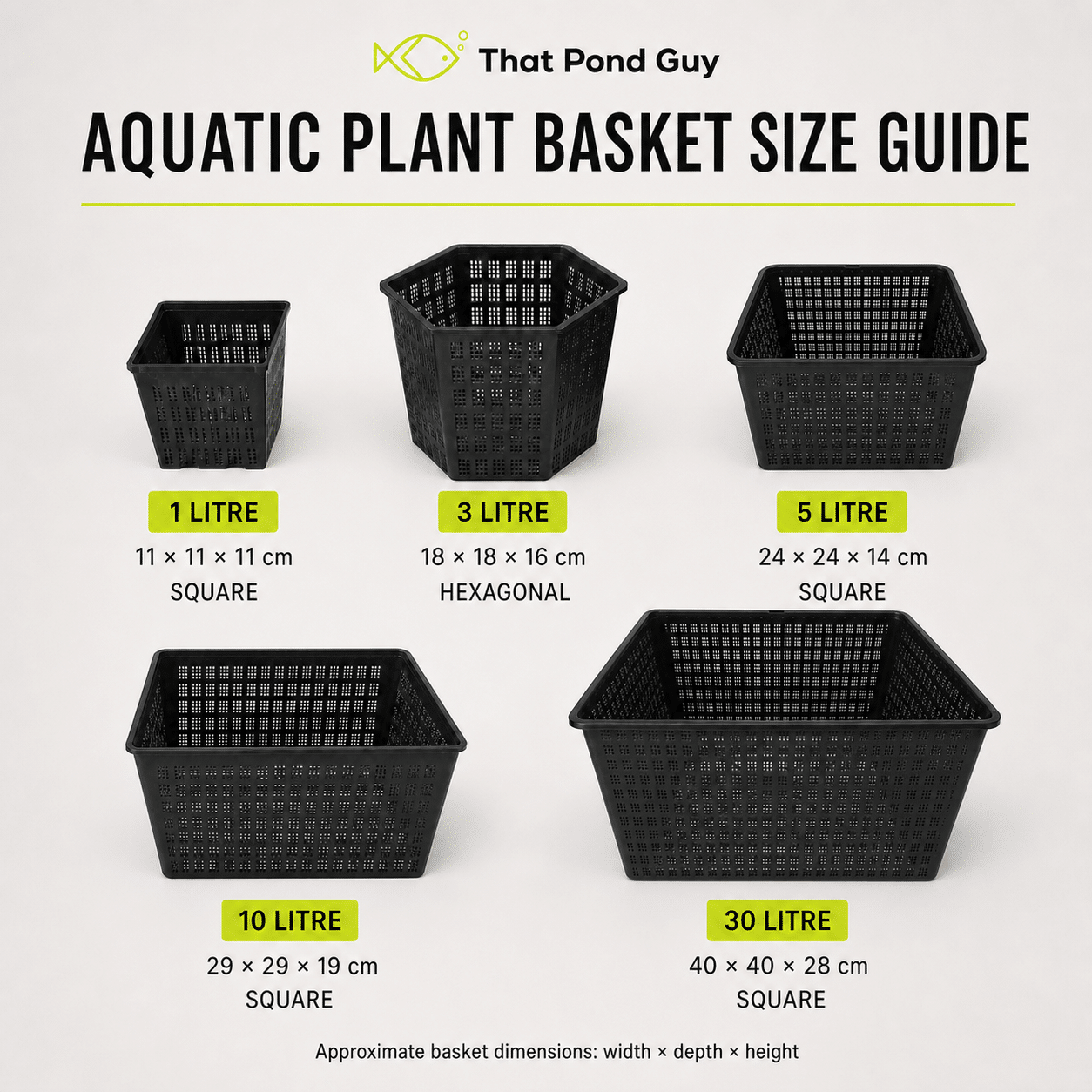
The 9cm option arrives in nursery pots. For pond planting, pot these plants into suitable aquatic baskets with aquatic planting soil before positioning them at the depth shown on their labels.
Finofil baskets are made from 100% recycled polypropylene co-polymer. They are not suitable for ordinary kerbside recycling; reuse them where possible and check local specialist recycling options. Their fine mesh helps retain aquatic soil while allowing water to reach the roots.
Basket measurements for the offered sizes:
- 1 Litre Basket – usually 11 × 11 × 11cm square; some varieties may be supplied in a 14cm diameter × 10cm round basket
- 3 Litre Hexagonal Basket – 18 × 18 × 16cm
- 5 Litre Square Basket – 24 × 24 × 14cm
Other plants to compare
Cuckoo Flower — Compare pale spring flowers in moist soil above water, with its own role as a caterpillar food plant.
Lesser Spearwort — Its smaller yellow summer flowers and narrow leaves provide a later wet-edge contrast.
Choosing plants and planting supplies
Marginal pond plants — Compare pond-edge plants by their eventual size, light and water-depth needs before filling a shelf.
Pond plant baskets and planting supplies — Choose a suitable container and growing medium for the position described above.








Reviews
There are no reviews yet.