





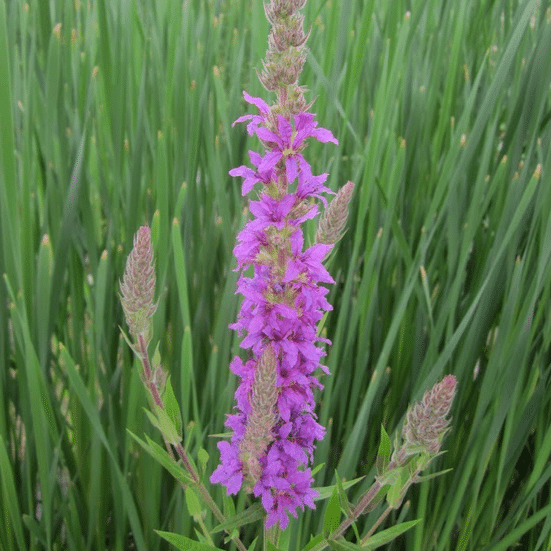

Purple Loosestrife (Lythrum salicaria)
| Size | 1 Ltr, 1 Ltr – Pack of 3, 3 Ltr, 9cm – Pack of 3, 5 Ltr |
|---|---|
| Plant Type | Marginal |
| Sun / Shade | Full Sun |
| Flower Colour | Purple |
| Growth Rate | Medium |
| Native to UK | Yes |
Purple Loosestrife is a native tall perennial with dense pink-purple summer flower spikes. Choose a sunny position in reliably moist ground and leave access for deadheading, spring division and seedling management.
Price range: £14.00 through £45.00 (inc VAT)
Purple Loosestrife (Lythrum salicaria)
Tall purplish-pink summer spikes for sunny damp ground
Purple Loosestrife is a tall British wildflower for a sunny, moisture-retentive part of the garden. Its narrow leaves and upright stems give a pond edge height, while the purplish-pink flowers add colour above lower planting. It is a natural choice to consider when there is room for a substantial summer perennial.
Many small flowers are grouped along the upper stems, creating a spike without hiding their individual star-like shapes. The display extends through part of summer, with the exact timing influenced by the site. The RHS includes the species among plants for pollinators, which supports its use in an insect-friendly planting scheme.
Space is important. The RHS gives an eventual height of around one to one and a half metres, so it is better placed behind low edge plants than immediately in front of them. The root clump and the flower stems occupy different kinds of space; allow access to both for maintenance.
Reliably moist ground and full sun are the cultivation requirements. A damp bank or bog garden is suitable without needing a deep layer of water over the crown. If using an aquatic basket on a shallow shelf, follow the supplied label for that plant and measure any water cover above the root level.
Decide whether you want seedlings. Removing finished flower heads can limit self-seeding, while spring division can reduce an expanding clump. These are ordinary choices about the appearance and space available in your garden, not evidence that the plant will remain in a precise outline without attention.
This is a native species and a hardy herbaceous perennial, with seasonal stems rather than permanent winter foliage. Its summer flowers can contribute to a varied garden planting, while the roots still need a suitable site. Choose Purple Loosestrife when its height, summer colour and damp-ground requirements fit the planting you are creating.
UK-grown plant. Grown at a dedicated aquatic plant nursery in the South of England.
What you receive
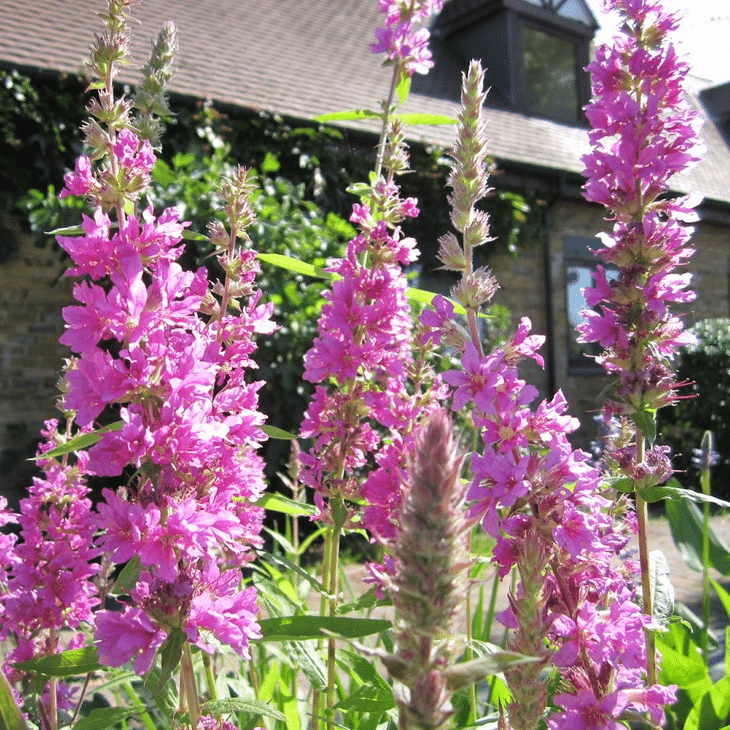
The choices include single 1-litre, 3-litre and 5-litre plants, a pack of three 1-litre plants and a pack of three 9cm pots. Plan the number around a tall summer clump, leaving room to reach the roots and flower stems as it develops.
Purple Loosestrife is herbaceous. A plant sent while resting can have very little top growth, while a growing-season plant can be leafy without flowers or past its main display. The pink-purple spikes develop in season, with the amount of growth affected by timing and conditions.
Is this right for your pond?
This is a strong upright flower for sunny, reliably moist ground. It is useful towards the back of a pondside border, where the summer spikes can rise above lower planting without blocking a path or access to the water.
- Sunny conditions: Choose full sun with moisture around the roots. A tall flowering plant in a dry bank needs a different watering commitment from one rooted in a damp bog-garden edge.
- A tall summer display: Allow around 1–1.5m in height. The small purplish-pink flowers gather into dense spikes, so leave a view of the stems rather than enclosing them behind equally tall foliage.
- Native planting: The species is native to Britain and Ireland and is useful in wildlife-minded schemes. Cultivated plants still belong in the managed garden planting rather than being introduced into natural watercourses.
- Seed management: It can seed where conditions suit. If you want the clump without extra plants, leave access to remove the spent flower heads before they scatter seed.
Planting position and getting established
Use fertile, reliably moist ground at the pond edge, in a bog garden or a damp sunny border. Plant at the existing rootball level, firm around it and water both the rootball and the surrounding soil. Allow enough space between plants for the mature stems and for a hand or tool to reach the base.
Moist soil is enough for this species; it does not have to be placed beneath standing water to be useful beside the pond. If using the aquatic-basket format on a margin, follow the water-cover instructions supplied with that plant. Do not substitute the total depth to a shelf for a labelled measurement above the planted soil.
Consider the mature view as well as the initial planting. Put lower plants in front where their flowers will remain visible, and keep the tall stems clear of an essential route to the pond. A small nursery plant can establish among other perennials, but it still needs its own light and root space as the clump grows.
Looking after your plants
- Moisture during growth: Keep the soil reliably moist, especially while the original rootball is becoming established. Check plants in raised edges or containers during dry weather rather than assuming all pondside ground stays wet.
- After flowering: Deadhead spent spikes if self-seeding is unwanted. Removing the flower heads before seed is shed is more straightforward than pulling numerous young plants out from among other marginals later.
- Tidying seasonal stems: Remove dead or damaged stems when they need clearing, retaining healthy growth through its useful season. Keep the base accessible so old material does not become tangled with neighbouring plants.
- Spring division: Divide an established clump in spring when it is congested or needs reducing. Replant healthy rooted sections into suitable moist soil and water them while they settle.
- Checking new growth: Look for slugs or snails around fresh spring shoots if damage appears. Leave room around the clump for light and inspection; a crowded base is harder to assess than one you can see and reach.
Size and growing conditions
- Botanical name
- Lythrum salicaria
- Plant type
- Robust herbaceous perennial
- Flowers
- Purplish-pink flowers in dense upright spikes
- Leaves
- Narrow, willowy green leaves
- Flowering
- Summer; timing and duration vary with conditions
- Height
- Allow around 1–1.5m
- Spread
- A developing clump, with additional room if seedlings are allowed
- Light
- Full sun
- Soil
- Reliably moist ground
- Planting level
- Normal soil level; use supplied instructions for an aquatic-basket position
- Winter habit
- Deciduous; seasonal top growth dies back
- Division
- Spring when required
- Native status
- Native to Britain and Ireland
- RHS information
- RHS plant profile: Lythrum salicaria
Delivery and basket information
We do not deliver live plants to Northern Ireland.
Orders received by 11am Monday to Wednesday are normally dispatched on the following working day using a next working day courier service. During busy periods, dispatch may occasionally take an extra day.
To avoid plants being held in depots over a weekend, we do not usually dispatch on Fridays. Highlands and Islands orders using a two day service are not normally dispatched on Thursdays.
Please read our delivery information for delivery arrangements and contact us if you need to check the timing of a particular order.
The 9cm option arrives in nursery pots. For pond planting, pot these plants into suitable aquatic baskets with aquatic planting soil before positioning them at the depth shown on their labels.
Finofil baskets are made from 100% recycled polypropylene co-polymer. They are not suitable for ordinary kerbside recycling; reuse them where possible and check local specialist recycling options. Their fine mesh helps retain aquatic soil while allowing water to reach the roots.
Basket measurements for the offered sizes:
- 1 Litre Basket – usually 11 × 11 × 11cm square; some varieties may be supplied in a 14cm diameter × 10cm round basket
- 3 Litre Hexagonal Basket – 18 × 18 × 16cm
- 5 Litre Square Basket – 24 × 24 × 14cm
Other plants to compare
Purple Lobelia — Purple Lobelia has violet-purple flowers later in the season, with a different narrow-leaved outline. It is a non-native hybrid for a sheltered moist border and needs specific winter crown protection.
Marsh Woundwort — Marsh Woundwort has softer hairy leaves and hooded pink-purple flowers rather than dense loosestrife spikes. It suits a damper, informal patch and can accept more partial shade.





Reviews
There are no reviews yet.