






Pond Plants for Small Ponds: What to Choose and What to Leave Out
A small pond needs a short, sensible plant list
A miniature water lily, a few suitable plants around the edge and a submerged plant can make a lovely small pond. You do not need to squeeze in every type of aquatic plant. The important part is choosing plants that will still fit once they have grown.
We clean and plant ponds as well as supplying pond plants. When we look at planting, we want it to work with the pond: the depth of the shelves, the amount of sun, the fish and the space needed for maintenance. A plant can be healthy and attractive, yet still be the wrong choice for a particular pond.
This guide is about choosing plants for a small garden pond or a container pond. If you already have your plants and need to know how to pot them, keep their labels and check the basket, growing material and planting depth before starting. Choosing a plant and planting it correctly are two separate jobs.
Our advice: start with fewer plants than you think you need. Choose for the pond you have, leave some open water and watch how the planting develops. It is much easier to add a suitable plant later than to untangle an overcrowded shelf.
What counts as a small pond?
A half-barrel on a patio, a shallow wildlife pond and a compact fish pond might all be described as small. They do not offer the same growing conditions. Before comparing plants, write down the water surface dimensions, the depth of each shelf and the deepest water. Add a note about fish and where the sun reaches the pond.
Surface area is particularly useful when choosing a water lily. The leaves spread across the surface, so a deep, narrow pond does not necessarily have room for a large lily. Marginal plants need suitable positions around the edge. A pond can hold plenty of water and still have very little usable shelf space.
For example, a rectangular pond measuring two metres by one metre has two square metres of surface water. That calculation does not tell you how many plants to buy. You still need to know which part is shallow enough for marginals, how much of the surface a lily may occupy and whether the equipment needs a clear route.
Make a quick drawing with the planting positions marked on it. Include the parts that are awkward to reach. If the only way to lift a basket is to lean over a deep section of water, change the position while the job is still on paper.
Sun, shade and the position of the pond
Look at the pond during the day rather than judging it from one sunny photograph. A fence may shade it in the morning, a house may block the afternoon sun, and a deciduous tree will make the light very different in summer from winter. Choose plants for those actual conditions.
Water lilies generally need a sunny position to flower well. A plant that tolerates some shade may still flower less freely there. If the pond gets very little sun, choose foliage and habitat plants that suit the site rather than expecting a lily to solve the problem.
A small container can also heat up and lose water quickly in an exposed position. The RHS container-pond advice recommends some sunshine without putting a miniature pond in sun all day. There is a balance between giving plants light and placing a tiny volume of water where it overheats.
Check the surroundings as well. Overhanging branches can bring shade and falling leaves. Garden borders can shed soil or fertiliser into the water. Positioning a container before it is filled is much easier than trying to move a heavy planted pond afterwards.
Understand the different planting positions
The word aquatic covers plants with quite different needs. Some grow in wet soil beside a pond. Others sit in shallow water, grow below the surface or float freely. Do not lower them all to the bottom and expect them to sort themselves out.
| Planting type | Where it belongs | What matters in a small pond |
|---|---|---|
| Marginal | A suitable shallow shelf or wet edge, depending on the plant | Its depth range and eventual spread, not just its height in the delivery pot |
| Water lily | A depth suited to the particular variety | Enough light and room for the floating leaves |
| Submerged plant | Below the water surface | Whether that species roots, floats or attaches to something |
| Floating plant | At the water surface | Room for expansion and regular thinning where needed |
| Pondside plant | Suitable soil outside the pond | Moisture requirements; pondside does not automatically mean submerged |
Our marginal plant range and oxygenating-plant guide are useful next steps once you know which position you need to fill. Keep the botanical name when comparing plants, as similar common names can refer to different species.
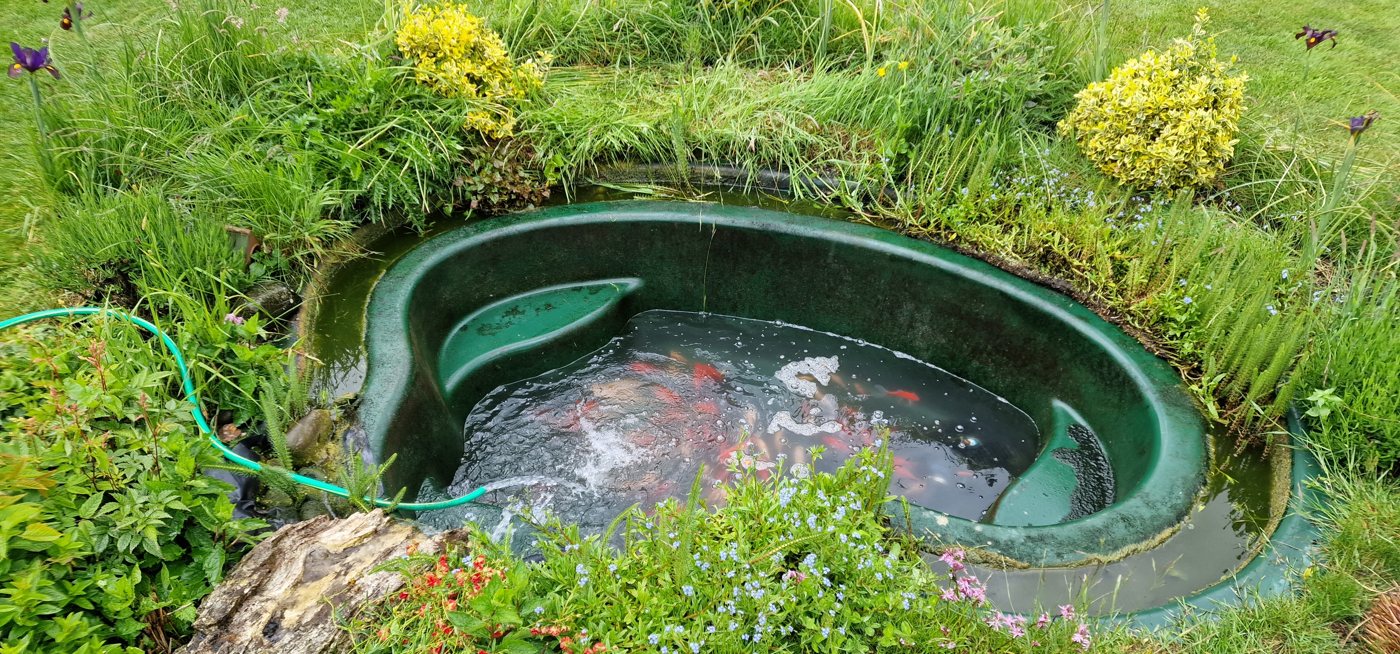
A miniature water lily for a small sunny pond
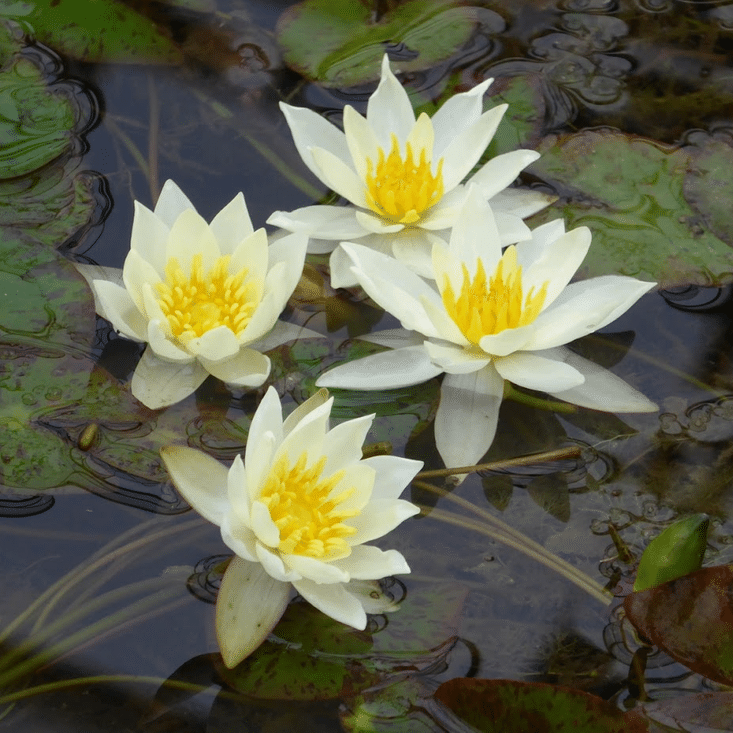
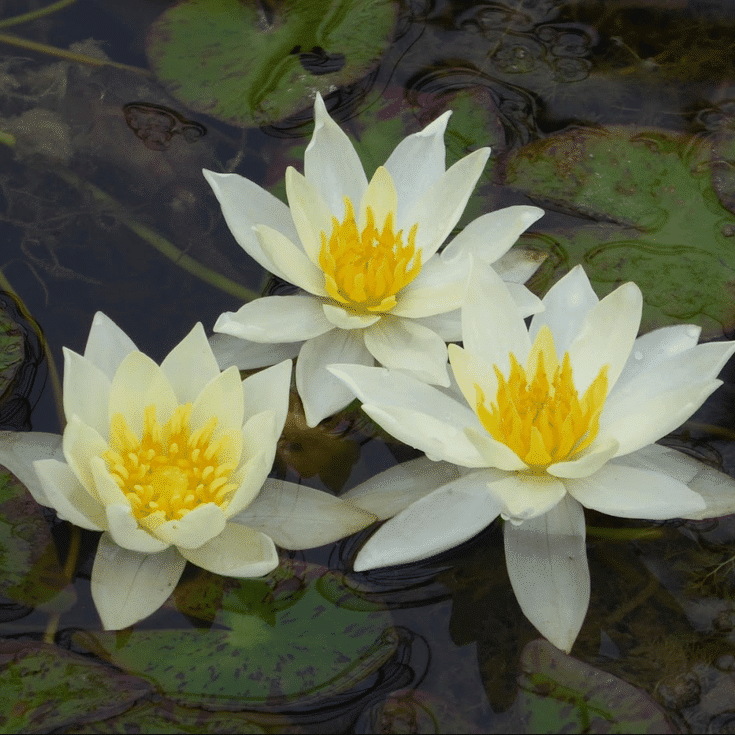
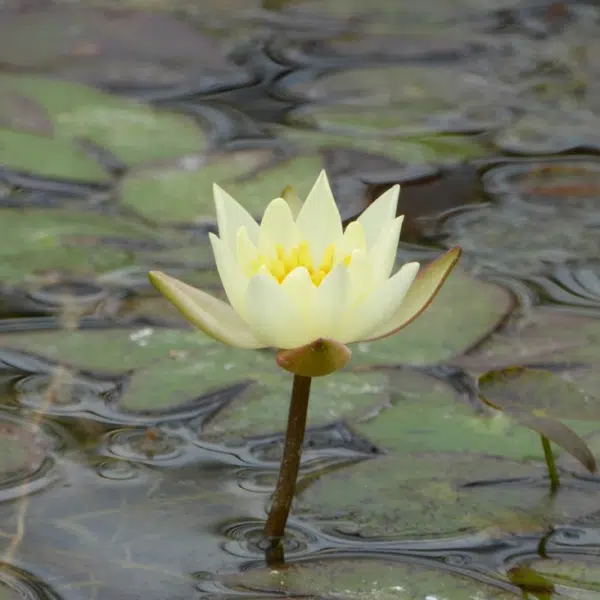
If you have a suitable sunny position and enough depth, Pygmaea Helvola is worth considering. It is a miniature water lily with small yellow flowers and mottled leaves. It offers the look of a lily without the spread of a large variety.
The RHS profile for Helvola identifies it as a miniature lily for full sun, with a spread of around 0.1–0.5 metres. Treat that as a guide to the variety’s habit, not a guarantee that any small container will suit it. Check the supplied plant’s depth instructions and the room needed for its basket.
A young lily may need a shallower starting position than an established plant. Do not confuse the maximum depth listed for a variety with the depth at which every new plant should immediately be placed. Our water-lily care guide explains establishment, flowering and repotting in more detail.
You also do not have to include a lily. In a very small wildlife container, upright and submerged plants may give you a more practical arrangement. Leaving a lily off the list can be a good decision if it would take most of the available water surface.
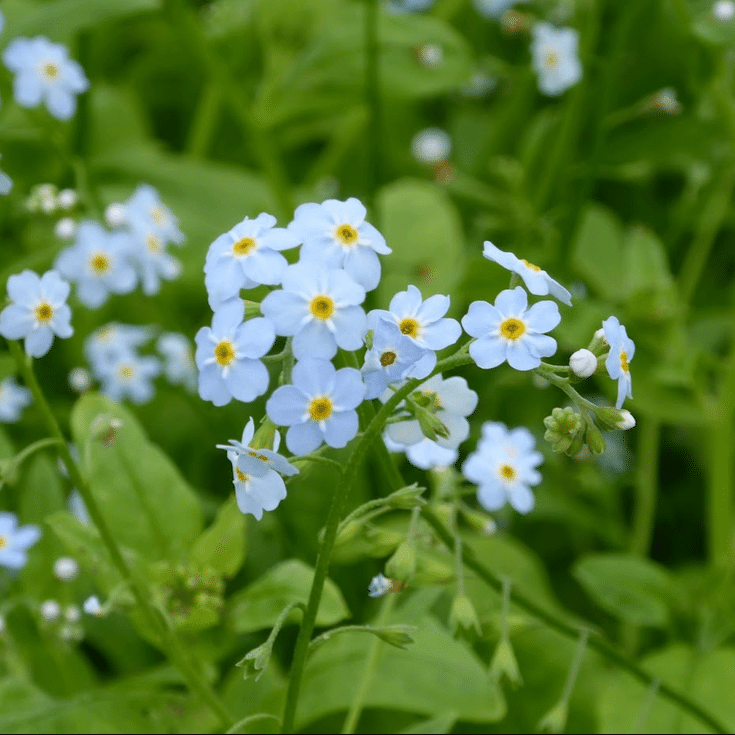
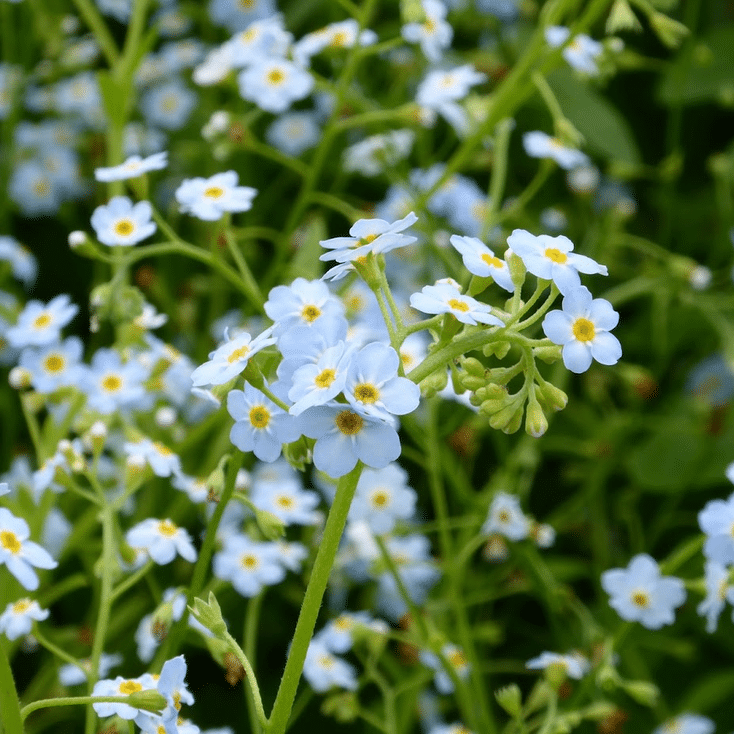
Water forget-me-not for a shallow edge
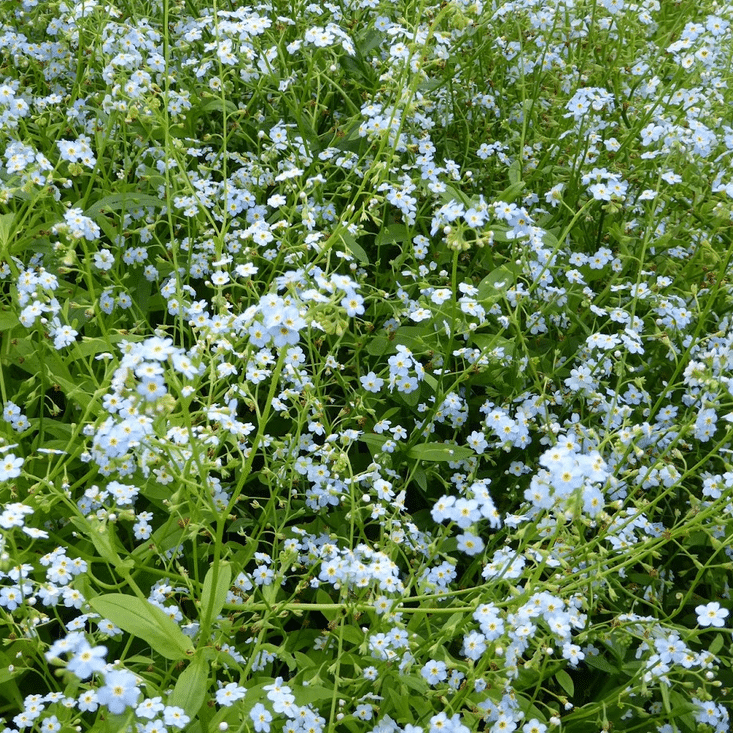
Water forget-me-not, Myosotis scorpioides, is a native marginal with small blue flowers. It can soften a pond edge without the height of a large iris or reedmace. It is a plant to consider for shallow planting, rather than the deep part of the pond.
The RHS species profile places it in wet soil or shallow water up to 10cm deep, in sun or partial shade. Give it a shallow edge rather than dropping the basket into the deepest part. Remember that the basket raises the plant above the shelf: measure the water above the planting point, rather than the depth of the pond floor.
It is still a living, spreading plant. The fact that it has small flowers does not mean it will remain the same size as its nursery pot. Leave access for trimming and lifting the basket. In a miniature pond, one well-positioned clump may be more useful than a row of them.
Do not substitute an ordinary garden forget-me-not because the flowers look similar. Buy the named aquatic species for a wet position. The same care with names matters when comparing white-flowered cultivars with the blue species.
Marsh marigold: spring colour, with room to grow
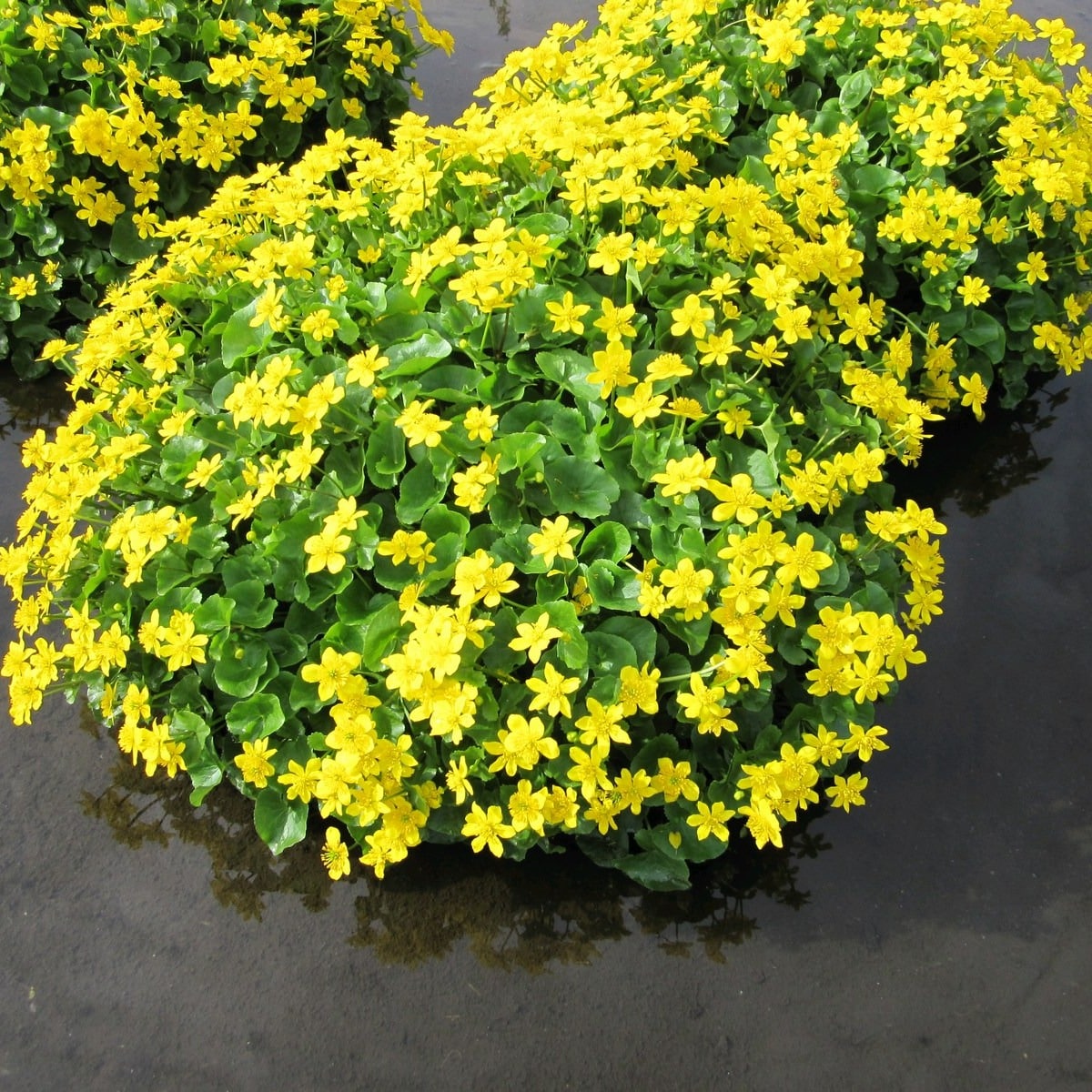
Marsh marigold, Caltha palustris, brings yellow flowers to a wet pond edge in spring. It can be a useful choice for a small garden pond with a suitable shallow planting position, especially where you want early colour.
We would distinguish a small garden pond from a tiny bowl here. A plant that is manageable in a garden pond may dominate a very small container. Check the eventual size and the footprint available, rather than choosing only because the flowers appear at the time you want them.
Keep it in the wet conditions specified for the plant, and do not assume it belongs on a deep shelf. If you want to combine it with a lily, mark the two positions separately. One is an edge planting decision; the other concerns the deeper water and the surface above it.
Think beyond the flowering period too. A planting scheme looks more considered when its foliage and other plants continue to work after the spring flowers finish. You do not need every plant to flower at once.
Hornwort for submerged cover
Hornwort, Ceratophyllum demersum, gives cover below the water surface. It is rootless, so it does not need a basket of compost in the same way as a marginal. Check the supplied format and handling advice when it arrives.
The RHS hornwort profile describes a submerged plant suited to still or slow-moving water. Do not confuse its usefulness with a promise that adding a bunch will keep a fish pond permanently clear or make aeration unnecessary.
Oxygenating plants release oxygen during photosynthesis when there is enough light, but plants also respire. For a stocked fish pond, plant numbers are not a substitute for checking oxygen, filtration and stocking. A small wildlife pond and a small heavily stocked fish pond need different advice.
Allow space for growth and remove excess carefully when necessary. A loose submerged plant can fill more of a tiny pond than its delivery bunch suggests. Our oxygenator guide covers thinning, winter appearance and the differences between rootless plants, rooted oxygenators and aquatic mosses.

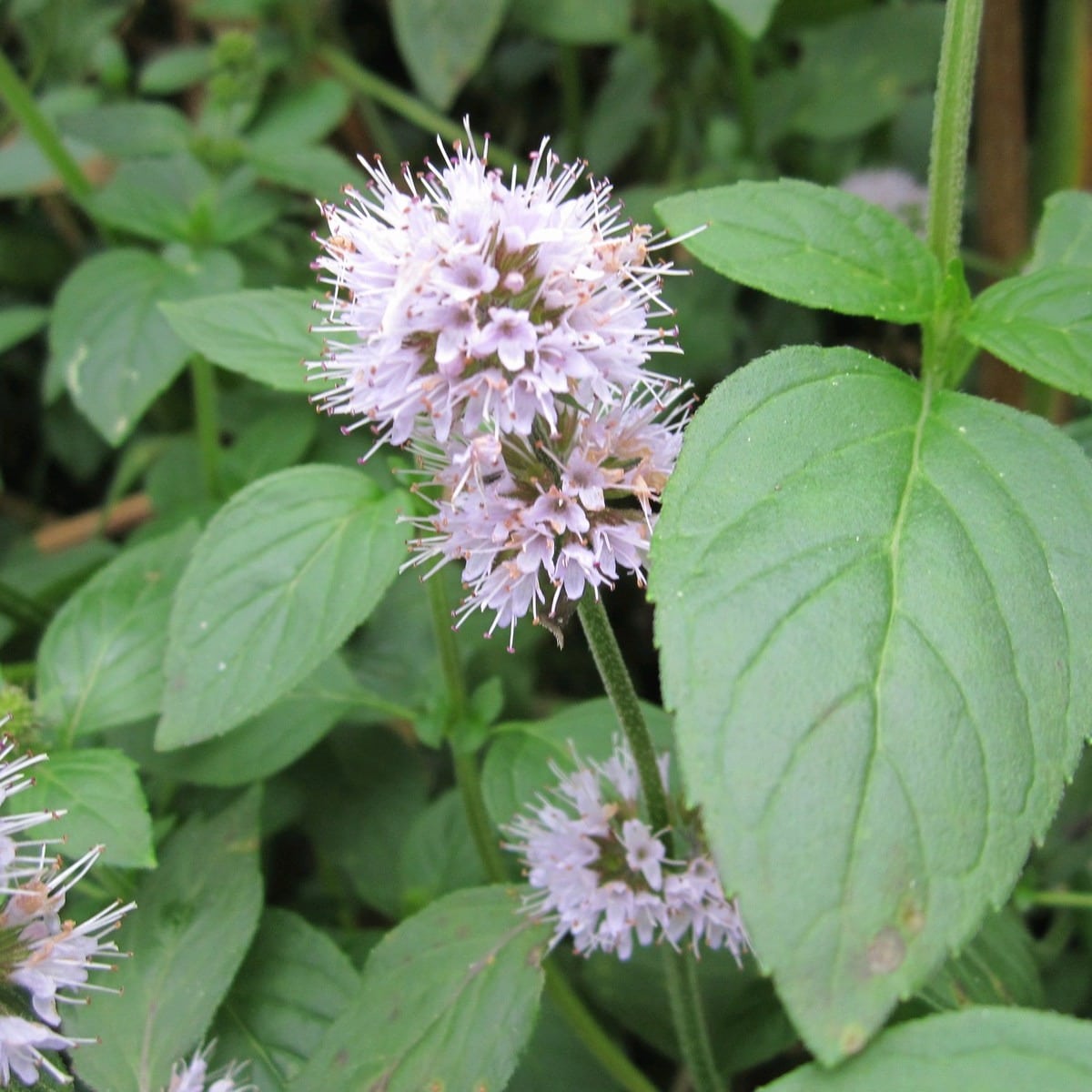
Water mint: useful, but not automatically a tiny-pond plant
Water mint, Mentha aquatica, has aromatic foliage and summer flowers. It is a native wet-edge plant, but it can spread strongly. We would choose it with a maintenance plan rather than calling it a compact plant simply because it arrives in a small pot.
The RHS specifically warns that water mint can become a nuisance if it is not managed. A basket helps you lift and divide it, but it does not make the plant permanently small. Keep an eye on growth outside the basket as well as the original clump.
In a larger wildlife pond, with room for its spreading growth and access to keep it in check, it may be useful around the edge. In a small patio container, a less vigorous choice is usually easier to live with. You can enjoy water mint without trying to fit it into your smallest pond.
What would we leave off a small-pond shopping list?
We would be cautious with anything whose mature spread takes up most of the space you have. Large lilies, vigorous reedmace and substantial marginal clumps can look impressive in a bigger pond. Their size does not become less relevant when they are sold in a one-litre pot.
We would also leave out unidentified spare plants from another pond. You need to know what the plant is, how it grows and whether bringing it in could introduce an unwanted organism. A plant described only as pond weed is not a useful starting point for a carefully planned small pond.
Do not buy a mixture just because the pack contains a large number of plants. Compare its contents and intended pond size with your available positions. A native wildlife marginal pack may help with a suitable garden pond, but it should not be treated as a ready-made planting plan for every container.
Finally, leave out plants chosen only to hide a problem. If there is no suitable shelf, deal with the planting position. If fish keep uprooting the plants, look at protection. If the pond is losing water, establish why before adding more baskets around the edge.
Putting a small planting plan together
Imagine a small garden pond with one sunny deeper section and a short shallow shelf along one side. We would choose the lily for the sunny section first, if there is room for one, then choose a limited number of marginals that suit the shelf. Submerged planting can be considered separately. The aim is a few plants with room to grow, rather than a continuous ring of baskets.
Now imagine a container with no shelf at all. That needs a different plan. You would have to create secure planting positions at the correct heights, while retaining enough water and a safe exit for wildlife. If the necessary supports and baskets occupy most of the container, simplify the planting or choose a larger container. It is better to notice that before buying.
In a partly shaded wildlife pond, we would start with plants that tolerate those conditions and leave out a sun-loving lily if the position does not suit it. You can still have an interesting pond without making flowering the only measure of success. The shape of the leaves, submerged cover and accessible shallow edge all contribute.
These are ways to organise your choices, not fixed planting packs. Your measurements decide which arrangement is possible. A photograph taken from above, together with shelf depths and the time of day the sun reaches the pond, is often enough to spot why a proposed plant would struggle.
How many plants should you buy?
There is no reliable number based only on litres of pond water. Three large, established plants and three small nursery pots do not create the same planting. Surface area, mature spread, water depth and the purpose of the pond matter much more than a count on its own.
For a miniature wildlife pond, think in terms of a few different functions: some submerged cover, a suitable upright or spreading edge plant, and perhaps floating foliage where there is room. The RHS wildlife-pond guidance explains how submerged plants offer cover, taller stems help emerging insects, and floating leaves give wildlife resting places. You do not need to fill every space immediately.
For a small ornamental pond, you might prefer one carefully chosen lily and a limited group of marginals. For a pond with fish, you also need to allow for feeding, filtration and fish disturbing the planting. Those are different starting points, even if the ponds have similar dimensions.
Look at the pond from the place where you normally enjoy it. Keep some visible open water and a clear route to lift baskets. If you can no longer reach anything without moving three other plants, the arrangement is already becoming inconvenient.
Planting depth: measure from the right place
A shelf thirty centimetres below the water is not automatically thirty centimetres of water above the plant. The basket and growing material raise the plant above that shelf. Find out whether the label measures depth from the crown, the planting surface or another stated point.
Say a shelf is thirty centimetres below the normal water level and the plant’s crown sits twenty centimetres above the basket base. There are ten centimetres of water above the crown. Changing the basket height changes that figure even though the shelf has not moved.
Measure at the pond’s normal running level. A photograph taken during a clean or refill can be misleading. So can a measurement made when the water has fallen during dry weather. Keep the intended final position in mind when choosing a support.
A support must stand securely and protect the liner beneath it. Do not stack loose, sharp materials into a narrow tower just to reach a depth figure. If the position cannot be made safe and stable, choose a plant that suits a different part of the pond.
Baskets, compost and the supplied pot
Check what you are buying. A small solid nursery pot is not the same thing as an aquatic mesh basket. Some plants arrive ready planted in a suitable basket; others need repotting. The supplied format should guide the job rather than a blanket instruction to strip every plant out of its pot.
A small solid nine-centimetre nursery pot is different from a ready-planted aquatic basket. Check the selected format and the individual plant instructions. A healthy aquatic plant already in a suitable basket may not need immediate disturbance; a pondside plant still needs the soil conditions on its own label.
Use growing material intended for that plant and method. Ordinary multipurpose potting compost is not a direct replacement for aquatic compost. Gravel can be a surface dressing or part of a particular planting method; it is not a universal substitute for every plant’s growing requirements.
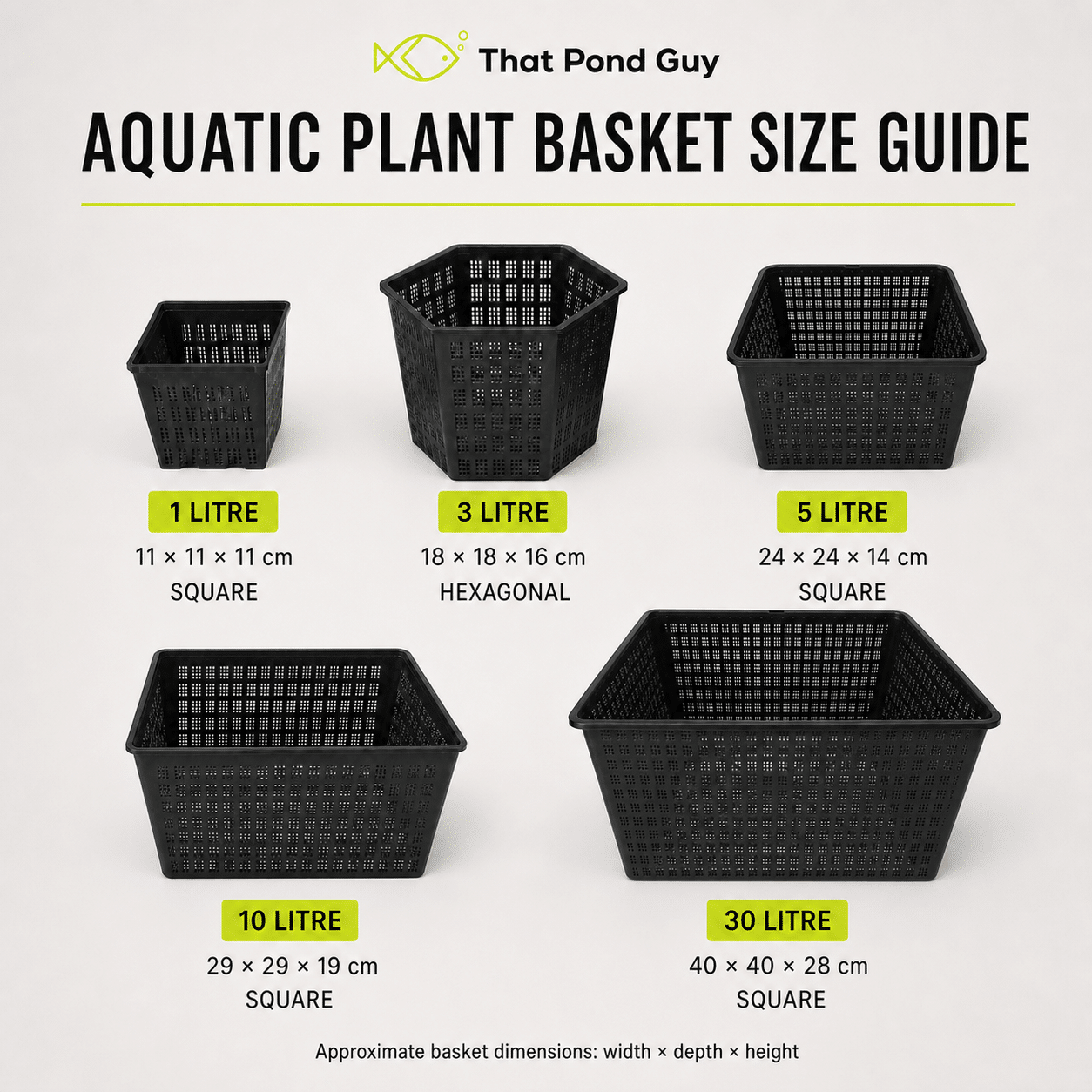
Choose basket dimensions to fit the shelf and allow for the mature plant. A tall basket and a shallow basket with the same litre capacity can leave the crown at different depths. Check the footprint, height and how you will lift it later.


Small ponds with koi, goldfish or wildlife
Decide what sort of pond you are creating before buying the plants. A tiny wildlife container is not a suitable home for koi. Do not let a photograph of a small planted water feature suggest otherwise. Fish need appropriate space, water quality and long-term care.
Where a suitable fish pond is planted, think about what the fish can reach. Koi may disturb the roots and growing material. With supplied three-litre lilies in koi ponds, we normally move them into a larger basket and cover the planting with washed gravel of roughly twenty millimetres to discourage rummaging. Leave the growing point clear. This is our approach for lilies in koi ponds; other plants and planting situations need their own care.
Our koi-pond planting guide covers protected planting areas and fish access. If the main aim is wildlife, our wildlife-pond guide is the more relevant next read.
For a raised wildlife container, provide a safe way for animals to get in and out. Planting can give cover, but it should not be expected to replace a secure, usable exit. Keep pond safety in mind wherever children or visitors can reach the water.
When to plant, and what to expect through the year
Spring into early summer is the main planting period in the RHS aquatic-planting guidance. The water is warming and new plants have a growing season ahead of them. The exact timing still depends on the species, the weather and the condition of the plant supplied.
It is useful to plan before spring: measure the shelves, choose varieties, check baskets and think about the final layout. It is less useful to judge dormant plants against photographs taken at peak summer growth. Seasonal appearance and current availability should be clear when you order.
During the growing season, watch how each plant is using the space. Remove failing foliage where appropriate and deal with excessive spread before it prevents access. Avoid repeatedly lifting a healthy plant just to check its roots. Good maintenance should have a reason.
In autumn and winter, a quiet-looking pond does not necessarily need replacing. Many hardy aquatics change appearance or lose top growth. Keep the names and care instructions so you know what to expect. Check water levels in containers, including during dry or windy weather, rather than assuming winter means no attention at all.
Do you need plants that look green all year?
A pond can be attractive through winter without every plant keeping summer foliage. Check whether a species is evergreen, semi-evergreen or dies back, and look at the structure left around the pond when flowers finish. Do not buy a tender floating plant expecting it to behave like a hardy native through a British winter.
If keeping costs down is important, a smaller carefully chosen collection is often a more sensible starting point than a large assortment. Compare supplied pot sizes and what is included, allow for any baskets needed, and choose plants whose mature size you can manage. Cheap plants that have nowhere suitable to grow are not good value. Check current prices and availability rather than relying on a figure copied into an old article.
If the planting is not doing what you hoped
Start with the conditions before buying another product. Check the plant’s identity, season, water depth, light and the state of its container. A yellow leaf, a missing flower and a plant being pulled apart by fish are different problems.
| Problem | Check first | What to avoid |
|---|---|---|
| The lily does not flower | Variety, sunlight, depth, establishment and congestion | Adding feed repeatedly without checking its position |
| The edge plant looks submerged | Its named depth range and the point the measurement uses | Assuming every marginal belongs at the same depth |
| Most of the surface is covered | The mature spread and growth of each plant | Adding more plants before making space |
| Water goes cloudy after planting | Escaping growing material, mesh and surface dressing | Treating disturbed sediment as green-water algae |
Green water and blanketweed also need identifying properly. Plants may form part of a sensible pond layout, but no assortment comes with a guarantee of clear water. Our algae guide explains the difference between the main problems and the checks that matter.
Buy named plants and keep them out of natural waterways
A small pond is easier to manage when you know what is growing in it. Keep labels or take photographs of them, and do not add plants collected from the wild. Avoid moving water, animals or unidentified vegetation from another pond.
The Ornamental Aquatic Trade Association’s Be Plant Wise advice explains why unwanted aquatic plants and fragments must not reach natural water. Disposal needs to suit the species; suspected invasive plants should be identified before choosing a method.
For an ornamental garden pond, a suitable cultivated lily can be a good choice. For a pond closely connected to a natural wetland, locally native planting and specialist advice may be more appropriate. British grown describes where a plant was produced; it does not mean the species is native.
If you want help choosing, send us the pond’s dimensions, shelf depths, a photograph and a note about sunlight and fish. That gives us something useful to work with. Start with our pond plant range, but choose a manageable group for your pond rather than trying to own the whole catalogue.
