






Japanese Clematis Iris (Iris ensata)
| Size | 1 Ltr, 3 Ltr, 1 Ltr – Pack of 3 |
|---|---|
| Plant Type | Marginal |
| Sun / Shade | Full Sun to Part Shade |
| Flower Colour | Purple / Blue |
| Growth Rate | Medium |
| Native to UK | No |
| Plant group |
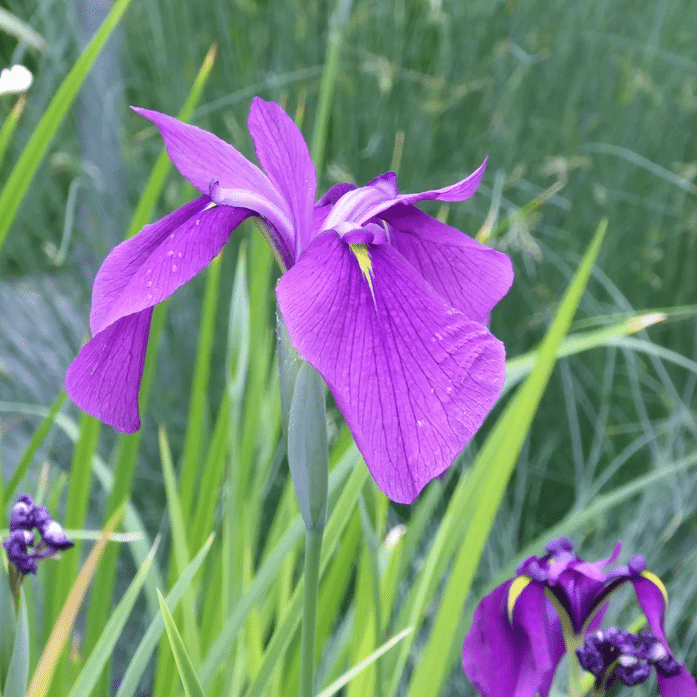
Japanese Clematis Iris, Iris ensata ‘Kaempferi’, is a showy Japanese Iris with large purple, violet or white flowers in June and July. Ideal for bog gardens, damp borders and very shallow pond edges, it adds bold summer colour, upright foliage and ornamental structure around the waterline.
Price range: £14.00 through £34.00 (inc VAT)
Japanese Clematis Iris | Iris ensata ‘Kaempferi’
A stunning Japanese Iris with large purple, violet or white flowers, ideal for bog gardens, damp borders and very shallow pond edges.
Large showy flowers for bog gardens and damp pondside planting
Japanese Clematis Iris, botanically known as Iris ensata ‘Kaempferi’, is a beautiful moisture loving perennial grown for its large, elegant flowers and upright sword like foliage. Also known simply as Japanese Iris, this variety is perfect for adding a refined, ornamental look to damp garden areas, bog gardens, pond edges and naturalistic planting schemes.
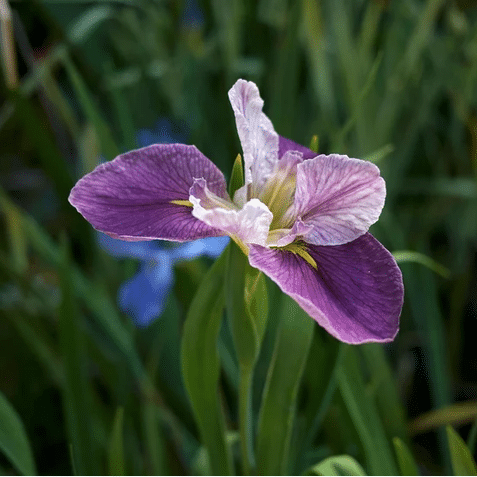
The main feature of Iris ensata ‘Kaempferi’ is its spectacular summer flowers. Depending on the plant supplied and natural variation within the group, blooms may appear in shades of purple, violet or white. The flowers are large, open and graceful, sitting above strong green foliage during June and July. This makes it a superb choice for adding colour and height at a time when many pondside planting schemes are at their best.
This iris is best grown in moist to wet soil rather than deep water. It is ideal for boggy pond edges, damp borders and very shallow marginal positions where the crown is kept close to the waterline. The recommended planting depth is 0 cm, meaning the top of the basket should sit at the water surface or in consistently damp soil, rather than being submerged below the water. It is not suitable for deep pond shelves.
Japanese Iris prefers plenty of moisture during the growing season and performs best in fertile, moisture retentive soil. Unlike some other irises, Iris ensata often prefers slightly acidic conditions, so it is particularly well suited to bog gardens and damp beds where the soil can be improved with organic matter. It can grow in full sun or partial shade, although flowering is usually strongest in a bright position with consistently moist soil.
The tall, sword like foliage gives structure even when the plant is not in flower. Around a pond, it helps soften the edge, disguise hard lines and create a more natural transition between water and garden planting. It also combines beautifully with Pickerel Weed, Chinese Marshflower, Golden Club, Water Forget Me Not, Primulas, Astilbes and other moisture loving plants.
Japanese Clematis Iris is hardy in the UK and will die back naturally in autumn before returning with fresh growth in spring. It is a strong choice for ornamental ponds, wildlife friendly pond edges, bog gardens and damp borders where bold summer flowers and upright foliage are wanted.
Please note: Iris ensata may be harmful if eaten by humans or pets.
🇬🇧 UK-grown aquatic plant: Grown at a dedicated aquatic plant nursery in the South of England and carefully prepared for delivery across the UK.
Key Benefits
- Large, showy Japanese Iris flowers
- Blooms in shades of purple, violet or white
- Flowers in June and July
- Ideal for bog gardens and damp pond edges
- Best at 0 cm planting depth or in moist soil
- Tall sword like green foliage adds structure
- Suitable for full sun or partial shade
- Helps soften pond edges and planted margins
- Works well in naturalistic and ornamental planting schemes
- Pollinator friendly flowers
- Useful cover around pondside planting for small wildlife
- Hardy in UK garden conditions
Reasons to Buy Japanese Clematis Iris
- Japanese Clematis Iris is a brilliant choice if you want a more ornamental plant for the damp areas around your pond. Its flowers are larger and more dramatic than many standard marginal plants, making it ideal for customers who want strong visual impact.
- It is especially useful for bog gardens and pond edges where the soil remains damp throughout the growing season. The upright foliage creates height and structure, while the flowers bring colour during early to midsummer.
- This iris also works well in mixed pondside planting schemes. Pair it with lower growing plants at the front and softer foliage plants around it to create a layered display. It looks particularly good with Pickerel Weed, Golden Club, Water Forget Me Not, Astilbes and creeping marginal plants.
- For the best result, plant in groups or repeat along a damp pond edge. Several plants together will create a stronger, more natural looking display than a single plant on its own.
Care Instructions
- Plant Japanese Clematis Iris in full sun or partial shade. A bright position will usually give the best flowering, but partial shade is suitable if the soil remains moist and fertile.
- This plant prefers moist to wet soil and is best positioned in a bog garden, damp border or very shallow pond edge. The recommended planting depth is 0 cm, measured from the top of the basket to the water surface.
- Do not place this iris in deep water. It should be kept at the waterline, on a wet shelf, or planted directly into damp soil where the crown is not submerged.
- If planting in the ground, improve the soil with compost, leaf mould or well rotted organic matter to help retain moisture. Slightly acidic soil is preferred.
- Water regularly during dry periods, especially in the first growing season. Japanese Iris needs reliable moisture while actively growing and flowering.
- After flowering, remove faded flower stems if required. Once the foliage has died back in autumn, cut it back to just above ground level or just above the water surface. If pruning is left until spring, take care not to damage emerging shoots.
- Divide congested clumps every few years in early spring to keep plants healthy and flowering well. Slugs and snails may occasionally damage young shoots, especially in damp conditions.
Flowering Period
Japanese Clematis Iris usually flowers in June and July.
The flowers are large, elegant and showy, often appearing in shades of purple, violet or white. Flowering performance will depend on sunlight, moisture, soil quality and plant maturity.
Plants are not always supplied in flower. If dispatched outside the flowering period, they may arrive as leafy plants or may be naturally dormant depending on the time of year.
Size, Spread and Growing Conditions
Botanical name: Iris ensata ‘Kaempferi’
Common name: Japanese Clematis Iris, Japanese Iris
Plant type: Moisture loving iris, bog garden plant and very shallow marginal plant
Plant height: Approximately 60 cm to 90 cm
Potential spread: Up to approximately 60 cm
Growth rate: Medium
Flower colour: Purple, violet or white
Flowering period: June to July
Position: Full sun or partial shade
Soil: Moist to wet, fertile soil
Soil preference: Moisture retentive and slightly acidic where possible
Recommended planting depth: 0 cm
Foliage: Tall, narrow, sword like green leaves
Habit: Rhizomatous perennial with upright foliage
Hardiness: Hardy in the UK
Best suited for: Bog gardens, damp borders, pond edges, very shallow pond shelves, ornamental ponds and naturalistic planting schemes
Wildlife value: Flowers can support pollinators and the foliage adds cover around damp pond edges
Safety note: Harmful if eaten by humans or pets
How Many Plants Will I Need?
For a full planted look on a marginal shelf or damp pond edge, allow approximately:
- 5 x 1 litre plants per linear metre
- 3 x 3 litre plants per linear metre
Leave space between different plant varieties so each plant has room to establish. Japanese Iris can form clumps over time, so avoid overcrowding it with very vigorous spreading plants.
Your Plant on Arrival
Your Japanese Clematis Iris will arrive potted, depending on the size selected.
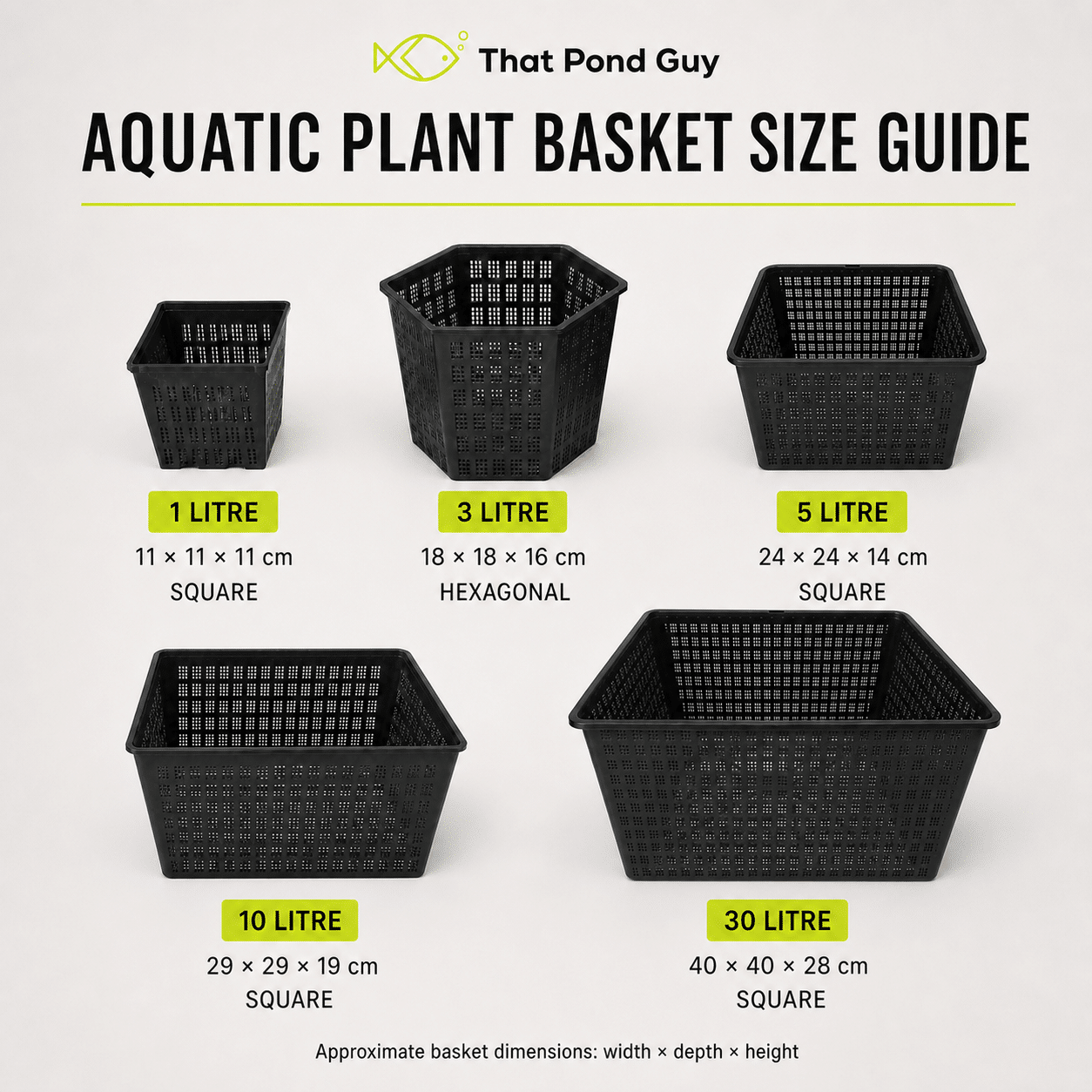
1 litre, 3 litre and 5 litre marginal plants arrive pre planted in Finofil aquatic baskets using aquatic soil and slow release fertiliser. These can normally be placed straight onto a very shallow pond edge or damp shelf at the recommended depth.
9 cm plants arrive in solid nursery pots and will need repotting into aquatic baskets before being placed at the waterline.
Aquatic basket measurements:
- 1 litre basket: 11 cm wide x 11 cm high
- 3 litre basket: 18 cm wide x 16 cm high
- 5 litre basket: 24 cm wide x 14 cm high
Finofil aquatic baskets are made from 100% recycled plastic and are designed with a fine mesh that helps retain aquatic soil while allowing water to move around the roots. A hessian liner is optional and is not normally required.
Dispatching Your Pond Plants
Pond plants are carefully selected, watered and packed to help protect them during delivery. As living plants, the amount of visible growth, foliage colour and flowering stage will naturally vary throughout the season.
Japanese Clematis Iris is normally available from June, depending on seasonal growing conditions and nursery stock.
Plants are not always supplied in flower. Early season plants may arrive with fresh foliage and developing growth, while later season plants may have already flowered. In autumn and winter, the plant may be cut back or naturally dormant.
Upon arrival, unpack your plant promptly and check that the compost is moist. Place pre potted plants into a damp pond edge, bog garden or very shallow marginal position as soon as possible.
Do not allow the rootball or aquatic compost to dry out. If you cannot plant immediately, keep the plant in a bright, sheltered position and ensure the compost remains moist.





Reviews
There are no reviews yet.