





Pale Yellow Flag Iris (Iris pseudacorus var. bastardii)
| Size | 1 Ltr, 1 Ltr – Pack of 3, 3 Ltr |
|---|---|
| Plant Type | Marginal |
| Sun / Shade | Full Sun to Part Shade |
| Flower Colour | Cream |
| Growth Rate | Fast |
| Native to UK | No |
| Plant group |
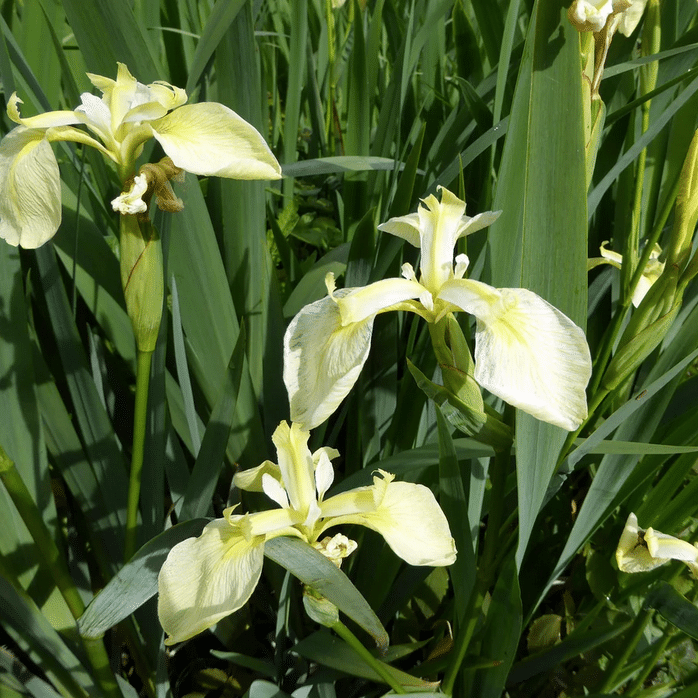
Pale Yellow Flag is a softer-coloured form of the familiar yellow iris. The flowers are pale yellow rather than a bright golden shade, carried above grey-green sword-shaped leaves. It is useful when you want the upright outline of a flag iris with a quieter colour in the planting.
Price range: £14.00 through £34.50 (inc VAT)
Pale Yellow Flag Iris (Iris pseudacorus var. bastardii)
Pale yellow flowers above tall grey-green leaves
Pale Yellow Flag is a softer-coloured form of the familiar yellow iris. The flowers are pale yellow rather than a bright golden shade, carried above grey-green sword-shaped leaves. It is useful when you want the upright outline of a flag iris with a quieter colour in the planting.
The botanical variety name bastardii distinguishes this pale-yellow form from ordinary Yellow Flag and other cream-flowered irises. Use the complete name when comparing plants, alongside their mature size and moisture requirements.
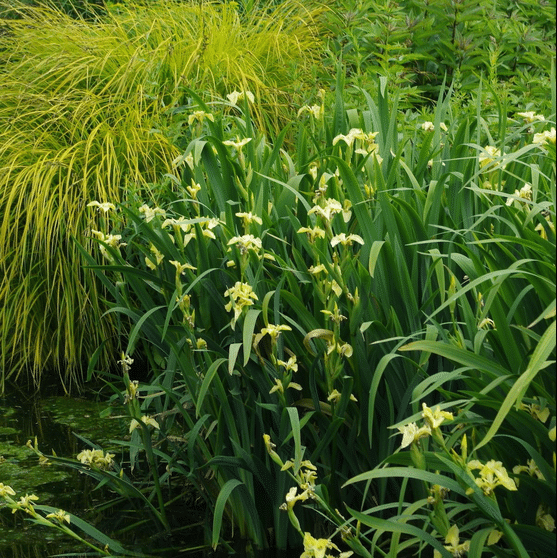
Leave room for the mature clump and flower stems around 1.2 m tall. Keep access around the rhizomes and consider the smaller plants nearby before filling a narrow gap. Its long grey-green leaves continue the upright outline after flowering.
Choose wet, deep, humus-rich soil in sun or partial shade, with acidic conditions favoured in cultivation guidance. Larger pond or stream margins give the plant room. Follow the supplied label for any shallow aquatic placement rather than borrowing the depth of a different iris.
This named variety is a form of the British native Yellow Flag, rather than unselected wild stock. The pale flowers are an early-summer feature above grey-green leaves, with seasonal dieback later. Treat it as ornamental and wear gloves when handling because the plant is harmful if eaten.
UK-grown plant. Grown at a dedicated aquatic plant nursery in the South of England.

What you receive
Choose one plant in a 3 litre container, one plant in a 1 litre container or three plants in 1 litre containers.
Keep the roots wet while preparing the site. Container volume is the starting root format, not a flower count or a permanent limit to spread.
How it changes through the year
Pale yellow flowers appear in early summer above grey-green leaves. The foliage dies back seasonally, and a resting plant will look less full than an established clump in leaf. The named variety and its colour are distinct from ordinary bright-yellow or double-flowered forms.
Choosing a place for it
- For a softer yellow: The pale flowers give a quieter colour than bright golden Yellow Flag forms.
- For a substantial clump: Allow for tall stems and spreading rhizomes, with maintenance access.
- For a wet root environment: Choose deep humus-rich soil or the shallow margin approved by the supplied label.
Planting and getting it established
Choose a roomy pond or stream margin with wet, deep, humus-rich soil. Sun or partial shade can suit it, with acidic growing conditions favoured in the cultivation guidance. Set the rhizome at its existing level and settle suitable medium around the roots, leaving new growth clear.
For an aquatic-basket position, follow the actual supplied label. Nursery growing guidance gives about 0–20 cm of water cover. Measure from the planted crown or top of the medium to the water surface, accounting for basket height separately when checking whether a shelf is suitable.
Use appropriate aquatic medium for pond placement. Allow for stems around 1.2 m tall and a developing rhizomatous clump. Keep the base accessible for eventual division rather than filling a narrow gap beside smaller plants.
Looking after it
- Wet roots: Keep the root area reliably wet, checking borders and low-water margins during dry spells. Correct the moisture before assuming poor growth needs more feed.
- Flower stems: Remove old flower stems after the display if required. Keep healthy sword-shaped foliage through its growing season rather than shortening the whole clump.
- Rhizome spread: Inspect the developing patch and remove unwanted expansion. Lift and divide or repot when congested, keeping healthy rooted sections and room for new growth.
- Medium and feeding: Retain suitable humus-rich growing conditions when repotting. If a pond basket needs extra nutrition, use an appropriate aquatic feed at its labelled rate.
- Winter: This is a hardy deciduous iris. Remove dying or dead leaves as practical, taking care around the crown and new shoots.
- Handling: Wear gloves for planting, cutting and division. The plant is harmful if eaten; keep removed pieces away from children, pets and food use.
Plant details
- Botanical name
- Iris pseudacorus var. bastardii
- Flowers
- Pale yellow; early summer
- Mature height
- Flower stems around 1.2 m; RHS band 1–1.5 m
- Mature spread
- About 50–100 cm; inspect rhizome growth
- Position
- Sun or partial shade; wet deep humus-rich soil
- Winter
- Hardy deciduous iris; RHS H7
- Native status
- Named variety of a British native species
- Safety
- Harmful if eaten
- RHS information
- RHS plant profile: Iris pseudacorus var. bastardii
Delivery and basket information
We do not deliver live plants to Northern Ireland.
Orders received by 11am Monday to Wednesday are normally dispatched on the following working day using a next working day courier service. During busy periods, dispatch may occasionally take an extra day.
To avoid plants being held in depots over a weekend, we do not usually dispatch on Fridays. Highlands and Islands orders using a two day service are not normally dispatched on Thursdays.
Please read our delivery information for delivery arrangements and contact us if you need to check the timing of a particular order.
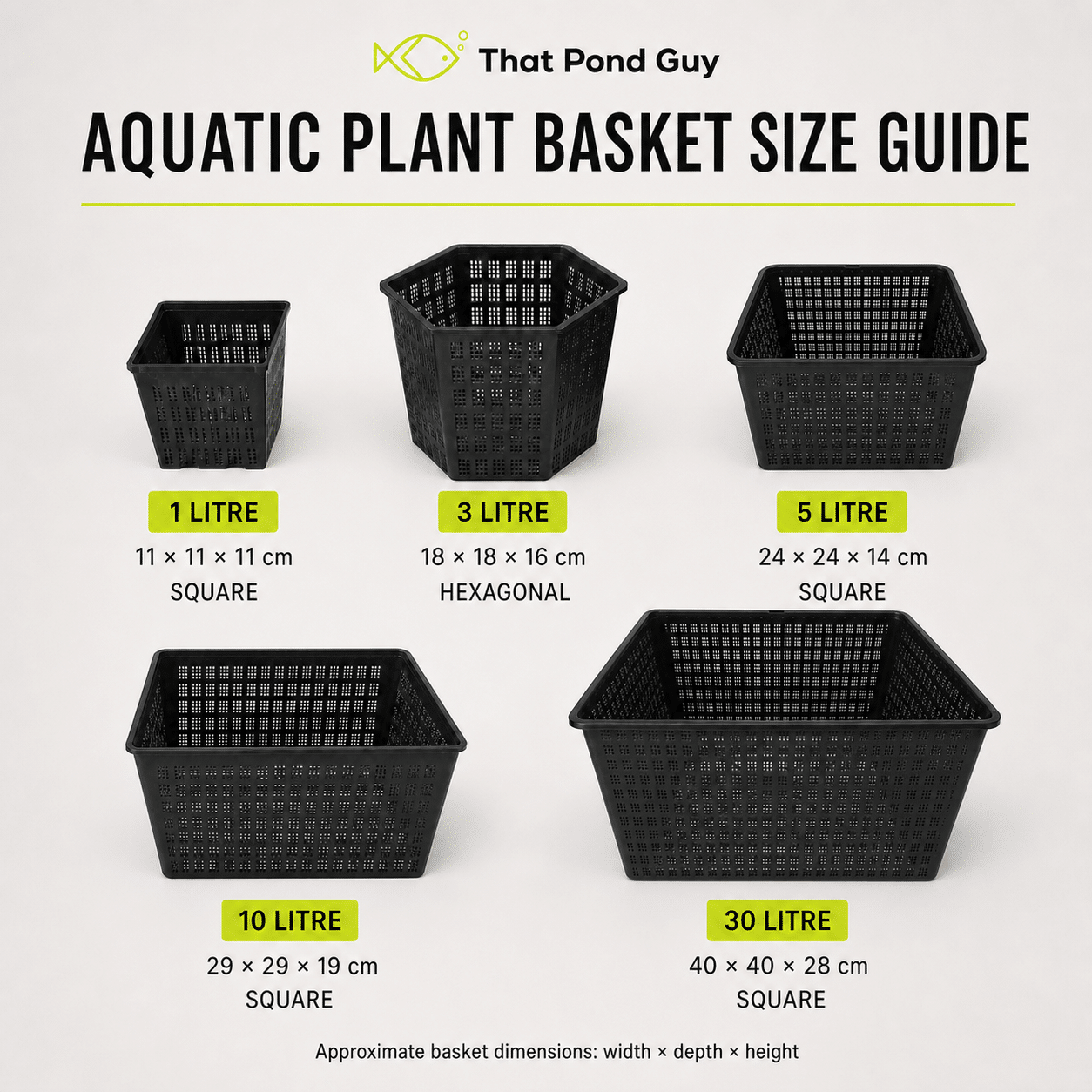
Finofil baskets are made from 100% recycled polypropylene co-polymer. They are not suitable for ordinary kerbside recycling; reuse them where possible and check local specialist recycling options. Their fine mesh helps retain aquatic soil while allowing water to reach the roots.
Basket measurements for the offered sizes:
- 1 Litre Basket – usually 11 × 11 × 11cm square; some varieties may be supplied in a 14cm diameter × 10cm round basket
- 3 Litre Hexagonal Basket – 18 × 18 × 16cm
Other plants to compare
Double Yellow Flag Iris — Compare fuller, deep-yellow double flowers if you want stronger colour and a different flower structure.
Blue Flag Iris — Choose bluish-purple veined flowers for a cooler colour, checking its own moisture and depth guidance.
Choosing plants and planting supplies
Marginal pond plants — Compare pond-edge plants by their eventual size, light and water-depth needs before filling a shelf.
Pond plant baskets and planting supplies — Choose a suitable container and growing medium for the position described above.






Reviews
There are no reviews yet.