





Water Forget-me-not (Myosotis scorpioides)
| Size | 1 Ltr, 1 Ltr – Pack of 3, 3 Ltr, 9cm – Pack of 3 |
|---|---|
| Plant Type | Marginal |
| Sun / Shade | Full Sun to Part Shade |
| Flower Colour | Blue |
| Growth Rate | Fast |
| Native to UK | Yes |
Water Forget-me-not gives small blue flowers and scrambling growth at a wet pond edge. Keep it shallow, leave the basket accessible and manage stems with after-flowering trimming and spring division.
Price range: £14.00 through £34.00 (inc VAT)
Water Forget-me-not (Myosotis scorpioides)
Small blue flowers and spreading stems for a shallow pond edge
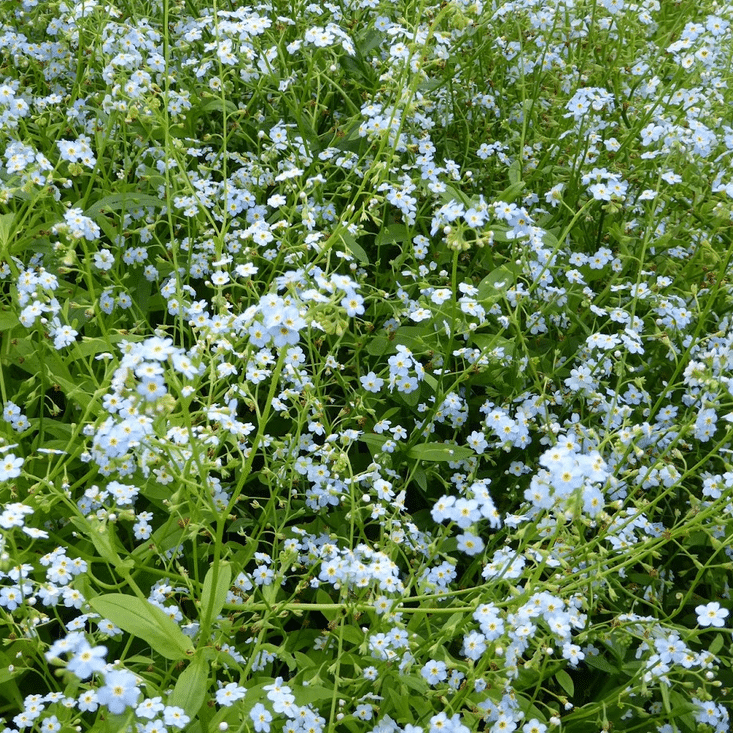
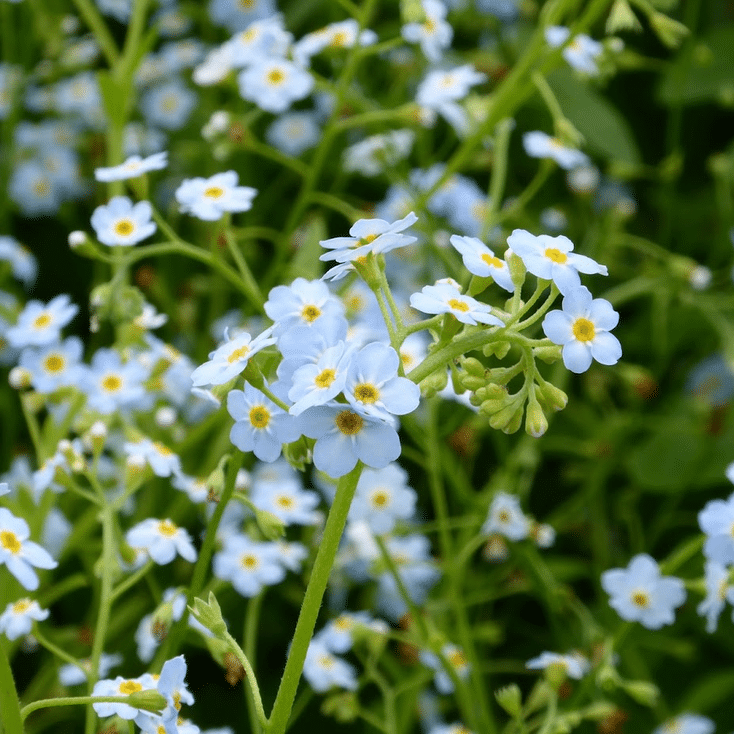
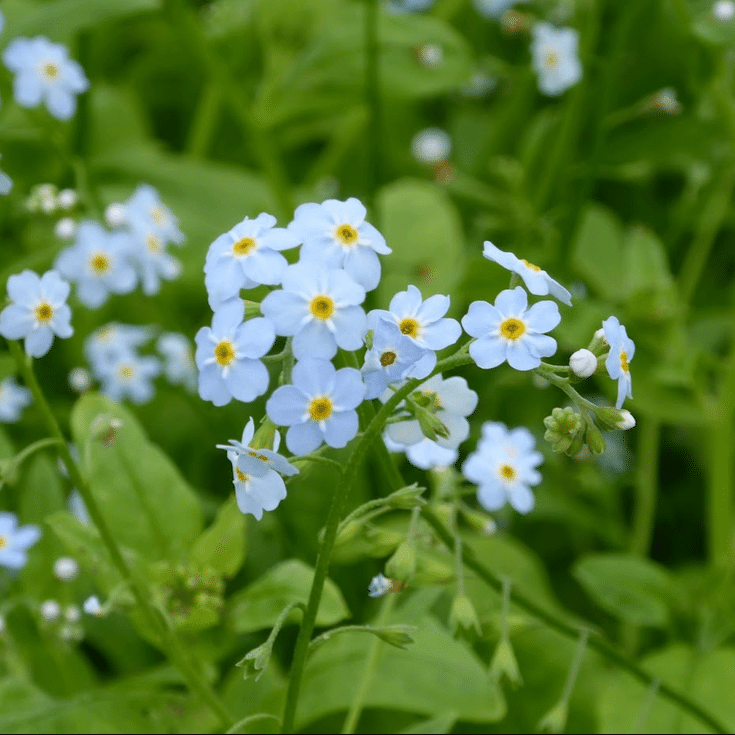
Water Forget-me-not brings small blue flowers close to the waterline. Myosotis scorpioides is a native marginal perennial with narrow green leaves and upright or partly spreading stems. It differs from the familiar garden forget-me-nots used in ordinary borders: this species is suited to a wet pond edge rather than a dry planting bed.
The bright blue flowers have a small coloured eye and appear in clusters in early summer in RHS guidance. They are best appreciated from nearby, where the low growth can link taller planting to the pond without hiding the open water. Leave enough room around the stems for the individual flowers to remain visible.
Choose wet soil at the margin or a basket in shallow water, no deeper than about 10cm over the planted soil, subject to the supplied label. Measure above the planted soil surface rather than the pond floor. A small nursery pot may need repotting, but the supplied format and label must determine that, not a generic assumption about all pond plants.
Sun or partial shade is suitable if the roots stay wet. The plant spreads through rhizomes and stems, so check its footprint as the season develops. A softer appearance does not mean it should be allowed to cover a skimmer, block a path or overwhelm a smaller neighbour without occasional thinning.
Cut back after flowering as needed and remove decaying material without stripping all healthy growth. Established plants can be divided in spring, with divisions replanted promptly into wet soil or suitable shallow baskets. Look through removed stems for pond animals before disposing of surplus growth responsibly away from natural waterways.
Some foliage can persist in mild weather, but this is not a promise of the same cover or flowers throughout winter. Mature plants are usually around 30cm high, with space needed for a spreading clump. Keep access to the basket so seasonal tidying remains straightforward and the low blue display can be enjoyed at the front of the pond margin.
What you receive
Choose a single 1-litre or 3-litre plant, a pack of three 1-litre plants or a pack of three 9cm pots. Plan for its scrambling growth and leave room to trim the edge rather than packing the young plants tightly against paths or outlets.
Water Forget-me-not can arrive before its blue flowers develop, after flowering or with reduced growth during colder weather. Some foliage may persist in sheltered conditions. A young planting will not immediately have the coverage of a mature spring or summer patch.
Is this right for your pond?
This is useful for softening a wet pond edge with small blue flowers and scrambling green growth. It needs a suitable shallow or muddy position and regular checks where it approaches smaller plants or access routes.
- Wet soil or shallow water: Use wet pond-edge ground or an appropriate shallow basket. The small flower stems should stay above the water, not be placed as a deeply submerged oxygenator.
- Sun or partial shade: Both are suitable with wet roots. Leave enough light around the flowering growth that the small blue blooms do not disappear under broad neighbouring leaves.
- A spreading edge: Allow for stems extending beyond the original basket. Keep the boundary visible so trimming or spring division remains easy rather than letting growth block an outlet or inspection point.
- Native planting: The species is native to Britain and Ireland. Choose it for its wet-edge habit and flower detail, with the normal management needed to keep a garden planting within its intended area.
Planting position and getting established
For a wet-soil position, plant at the existing rootball level and firm it gently into the damp ground. Water around a new planting if needed and keep the growing base visible. Leave room for the stems to extend without immediately covering neighbouring crowns.
For aquatic planting, use a suitable basket and aquatic medium, repotting a 9cm nursery plant before pond use. Keep the position shallow: the species guidance allows water no deeper than about 10cm. For this basket-grown form, measure water cover above the planted basket level, allowing separately for the container height when choosing a shelf.
Follow the label with the actual plant and keep the leaves above the surface. Leave a clear route to trim or lift the basket later. Check its position after changes in water level, particularly where a small container might become either too dry or much more deeply covered than intended.
Looking after your plants
- Root conditions: Keep the root area wet and check new baskets when pond levels fall. A patch can continue to look leafy while part of its original rootball has become exposed and drier than intended.
- After flowering: Cut back after flowering where tidying or size control is needed. Work around sound new growth and clear cut stems from the water rather than leaving a mat of decaying material at the edge.
- Managing spread: Trim stems before they block access or cover smaller plants. Inspect rooted growth beyond the basket instead of relying on a surface trim alone to keep the planting within bounds.
- Spring division: Divide in spring when the patch is crowded. Replant healthy rooted sections into mud or a basket in shallow water, maintaining suitable moisture while they establish.
- Seasonal foliage: Some leaves may remain through mild weather and more may die back after exposure. Remove dead material selectively and keep the plant’s position known while fresh growth is developing.
Size and growing conditions
- Botanical name
- Myosotis scorpioides
- Common name
- Water Forget-me-not
- Plant type
- Spreading wet-margin perennial
- Flowers
- Small blue flowers with a coloured eye
- Main season
- Early summer, with timing affected by conditions
- Height
- Around 30cm
- Spread
- A developing patch with stems to manage
- Light
- Sun or partial shade
- Root environment
- Wet soil or shallow water
- Water cover
- No deeper than about 10cm over the planted basket level, subject to the supplied label
- Division
- Spring
- Winter foliage
- Semi-evergreen; retention varies
- Native status
- Native to Britain and Ireland
- RHS information
- RHS plant profile: Myosotis scorpioides
Delivery and basket information
We do not deliver live plants to Northern Ireland.
Orders received by 11am Monday to Wednesday are normally dispatched on the following working day using a next working day courier service. During busy periods, dispatch may occasionally take an extra day.
To avoid plants being held in depots over a weekend, we do not usually dispatch on Fridays. Highlands and Islands orders using a two day service are not normally dispatched on Thursdays.
Please read our delivery information for delivery arrangements and contact us if you need to check the timing of a particular order.
The 9cm option arrives in nursery pots. For pond planting, pot these plants into suitable aquatic baskets with aquatic planting soil before positioning them at the depth shown on their labels.
Finofil baskets are made from 100% recycled polypropylene co-polymer. They are not suitable for ordinary kerbside recycling; reuse them where possible and check local specialist recycling options. Their fine mesh helps retain aquatic soil while allowing water to reach the roots.
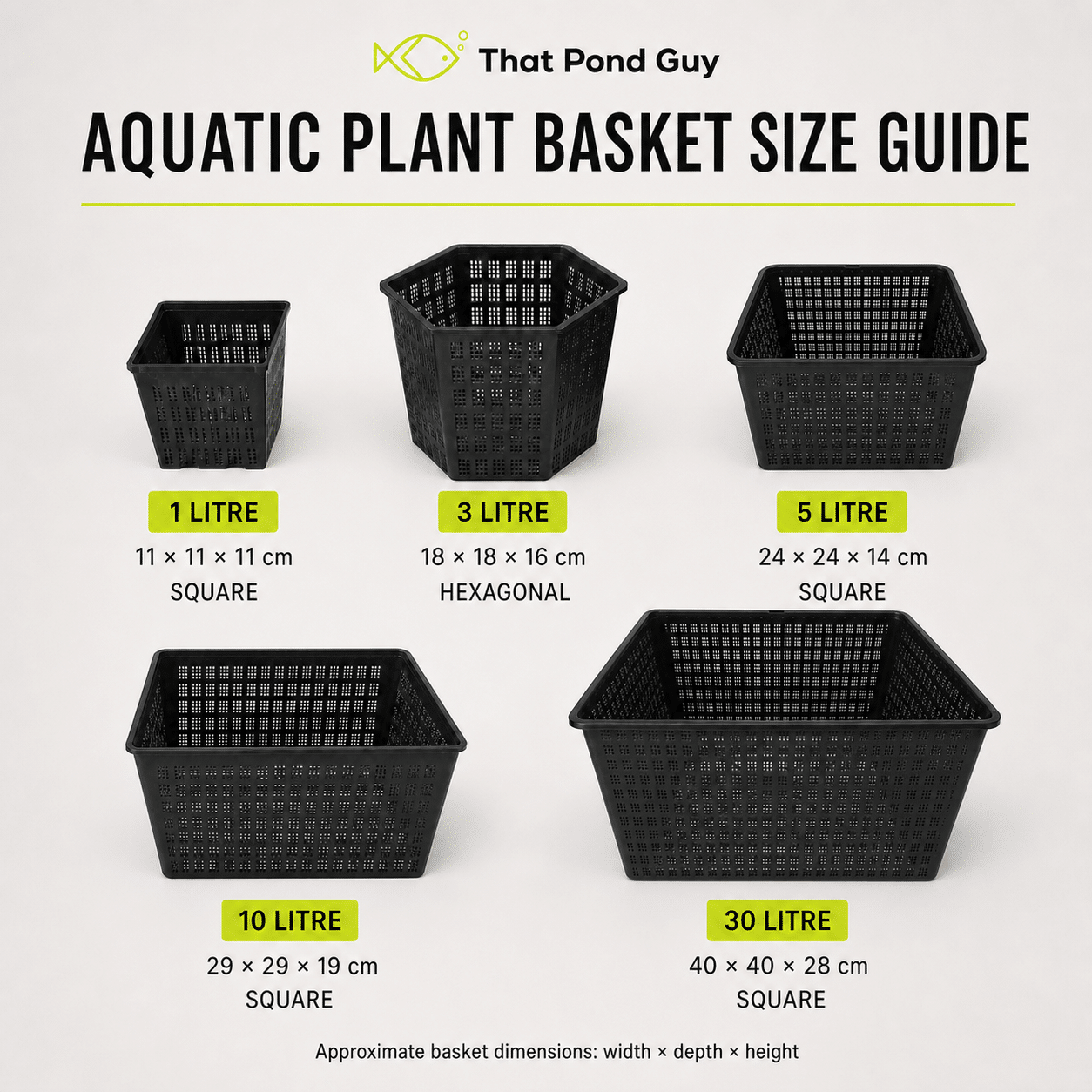
Basket measurements for the offered sizes:
- 1 Litre Basket – usually 11 × 11 × 11cm square; some varieties may be supplied in a 14cm diameter × 10cm round basket
- 3 Litre Hexagonal Basket – 18 × 18 × 16cm
Other plants to compare
Water Forget-me-not ‘Snowflakes’ — Water Forget-me-not ‘Snowflakes’ gives white rather than blue flowers. Compare it where a pale wet-edge display is wanted, allowing for the same need to inspect spreading growth.
Brooklime — Brooklime has fleshier leaves and a different low scrambling habit with small blue flowers. It is another native wet-edge texture to compare, using its own planting-depth instructions.





Reviews
There are no reviews yet.