





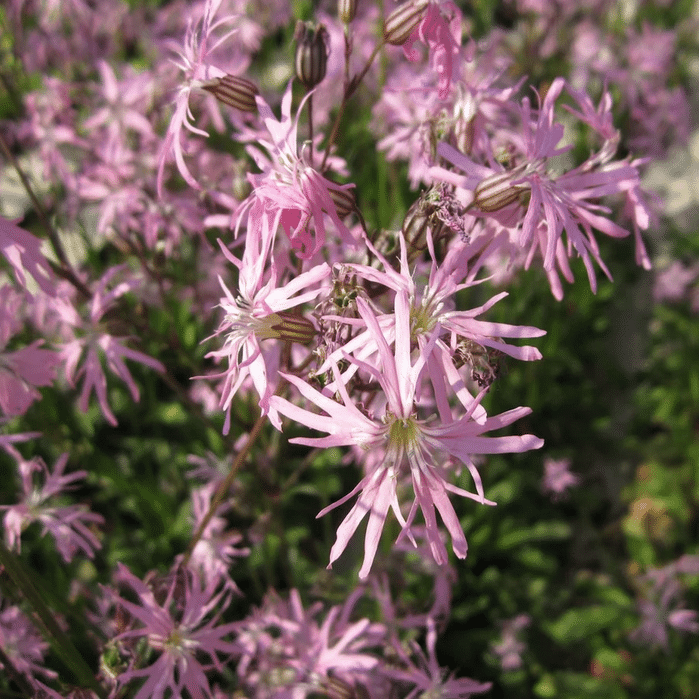
Ragged Robin (Silene flos-cuculi, syn. Lychnis flos-cuculi)
| Size | 1 Ltr, 1 Ltr – Pack of 3, 3 Ltr, 9cm – Pack of 3 |
|---|---|
| Plant Type | Marginal |
| Sun / Shade | Full Sun to Part Shade |
| Flower Colour | Pink |
| Growth Rate | Slow |
| Native to UK | Yes |
Ragged Robin is a native moist-soil perennial with finely divided rose-pink flowers in late spring and early summer. Plant above standing water and leave its low crown clear of vigorous neighbours.
Price range: £14.00 through £34.50 (inc VAT)
Ragged Robin (Silene flos-cuculi, syn. Lychnis flos-cuculi)
Finely divided pink petals for a moist, meadow-like pond edge
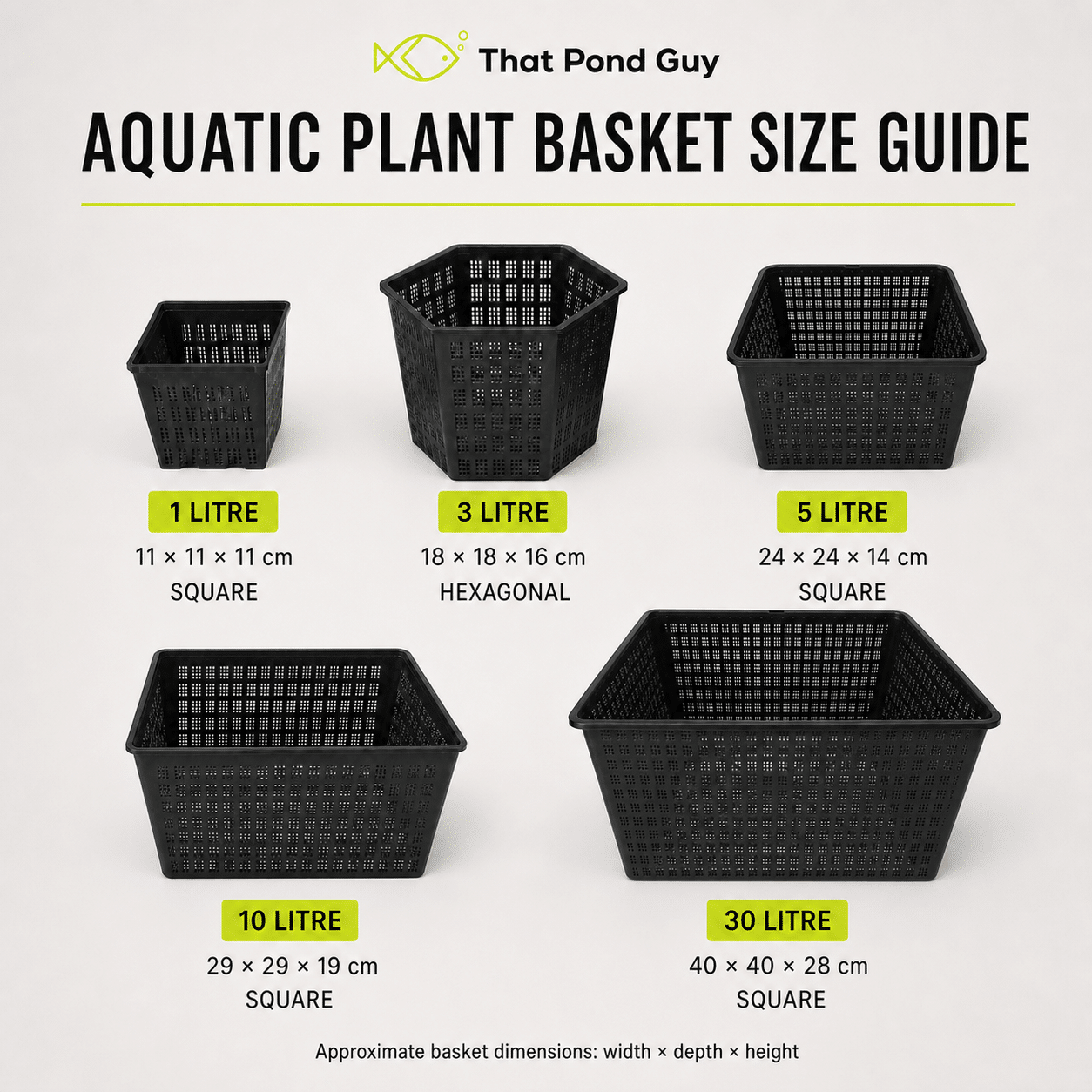
Ragged Robin has a lightness that makes it useful beside the stronger shapes of irises, rushes and sedges. Its pink petals are deeply divided into narrow strips, which gives the flowers the ragged appearance behind the common name. The blooms are held on slender, branching stems rather than in a heavy upright spike.
Late spring and early summer are the main time to look for its flowers. They can be pale or deeper rose-pink, standing above narrow green leaves. A small group where the stems can be seen against darker foliage is often easier to appreciate than a single plant lost among much taller marginals.
The correct place is moist ground. The RHS recommends moderately fertile soil in sun or partial shade and notes its suitability for a moist meadow or wild garden. Plant it beside the water or in a damp border, with the crown at soil level, rather than assuming that a pondside wildflower needs to be submerged.
Allow for stems approaching three quarters of a metre in a suitable position. A delivery pot will naturally look much smaller than a mature flowering patch. Leave the plant some breathing room and keep nearby creeping species from covering its base while it is establishing.
The botanical name Silene flos-cuculi is now widely used, although Lychnis flos-cuculi remains familiar on labels and older guides. Both refer to Ragged Robin here. It is a British native species and is included in RHS pollinator planting, but garden-grown plants should remain within managed planting.
Remove finished flowers if you want to keep the display tidy, and keep the ground moist through establishment. Growth above ground is seasonal, so the plant does not make a permanent winter screen. It is a choice for delicate flower detail and an informal damp-ground setting rather than an all-purpose plant for every pond shelf.
UK-grown plant. Grown at a dedicated aquatic plant nursery in the South of England.
What you receive
Choose a 1-litre or 3-litre plant, a pack of three 1-litre plants or a pack of three 9cm pots. These can be used to repeat the airy flower shape through a damp planting, with room between the young rootballs for each clump to develop.
Ragged Robin loses its top growth seasonally. A delivered plant may be a leafy rosette, developing flower stems or resting with little visible growth. The divided pink petals are an early-season display, not a condition every nursery plant must show on arrival.
Is this right for your pond?
Ragged Robin works well where a moist pondside planting should have a light, meadow-like feel. Its fine pink petals are best seen where they are not hidden behind broad leaves or a dense stand of rushes.
- Moist soil: Choose a damp border, meadow-like edge or bog-garden margin with moderately fertile soil. Its crown belongs at soil level rather than being routinely lowered under pond water.
- Sun or partial shade: Both are suitable. Give the flowering stems enough light and space to be visible, while keeping the root area moist during establishment and dry weather.
- Early flowers: The deeply divided rose-pink flowers appear mainly in late spring and early summer. Later-flowering marginals can follow them without needing to crowd the same crown.
- Space around the rosette: The flowering stems can reach around 75cm. Keep creeping neighbours from growing across the lower leaves and allow access for deadheading and occasional division.
Planting in moist pondside soil
Prepare moist, moderately fertile soil where the rootball can sit at its existing level. Firm gently and water the surrounding area after planting. Keep the centre of the plant visible rather than burying the low leaves beneath a thick cap of soil or other material.
A damp meadow-like edge is different from a submerged shelf. Plant above the permanent waterline and keep the root area moist; a generic pond-plant depth range is not needed for this soil-growing position. Where a supplied container is used temporarily, its top and drainage still need to suit the plant rather than the nearest available water depth.
Leave gaps that allow the flower stems to rise between neighbouring foliage. During the first season, check the rootball itself in dry weather and water when needed. The finer growth can be hidden easily by more vigorous marginals, so choose neighbours and distances around the mature planting rather than the small nursery pots.
Looking after your plants
- Establishing in the border: Maintain moisture around the roots while the plant settles. A raised pond bank may dry faster than a low bog garden, so check the soil before deciding how often it needs watering.
- Finished flowers: Deadhead faded flowers to help prolong the display and keep the stems tidy. Cut the finished stalks carefully rather than pulling them through healthy leaves or neighbouring plants.
- Competition at the base: Keep the rosette clear of encroaching stems and mats of other plants. The plant needs light around its lower leaves as well as a visible route for its flowering stems.
- Refreshing a clump: Division can be used when established growth becomes crowded. Replant healthy rooted pieces into suitable moist soil, water them in and keep their planting positions clear while they establish.
- Seasonal tidy: Remove dead stems and tired leaves when they need clearing, without mistaking a resting crown for an empty planting space. Mark the position if winter dieback makes the plant difficult to see.
Size and growing conditions
- Botanical name
- Silene flos-cuculi
- Also known as
- Lychnis flos-cuculi
- Plant type
- Herbaceous pondside perennial
- Flowers
- Rose-pink, star-like flowers with deeply divided petals
- Main season
- Late spring and early summer
- Height
- Usually around 75cm; site conditions affect growth
- Spread
- Allow room for a developing clump and its flower stems
- Light
- Sun or partial shade
- Soil
- Moist, moderately fertile soil
- Crown position
- At normal soil level above permanent standing water
- Winter habit
- Deciduous; top growth dies back
- Native status
- Native to Britain and Ireland
- RHS information
- RHS plant profile: Silene flos-cuculi
Delivery and basket information
We do not deliver live plants to Northern Ireland.
Orders received by 11am Monday to Wednesday are normally dispatched on the following working day using a next working day courier service. During busy periods, dispatch may occasionally take an extra day.
To avoid plants being held in depots over a weekend, we do not usually dispatch on Fridays. Highlands and Islands orders using a two day service are not normally dispatched on Thursdays.
Please read our delivery information for delivery arrangements and contact us if you need to check the timing of a particular order.
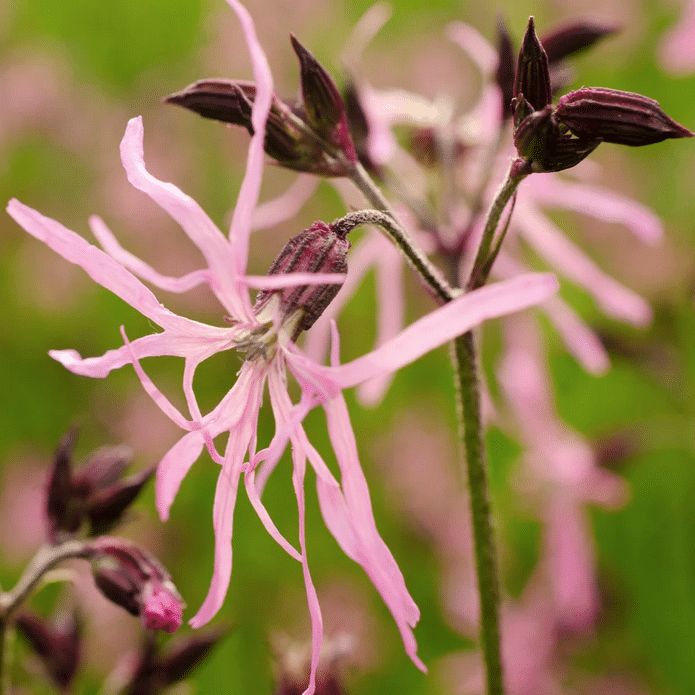
Finofil baskets are made from 100% recycled polypropylene co-polymer. They are not suitable for ordinary kerbside recycling; reuse them where possible and check local specialist recycling options. Their fine mesh helps retain aquatic soil while allowing water to reach the roots.
Basket measurements for the offered sizes:
- 1 Litre Basket – usually 11 × 11 × 11cm square; some varieties may be supplied in a 14cm diameter × 10cm round basket
- 3 Litre Hexagonal Basket – 18 × 18 × 16cm
Other plants to compare
White Ragged Robin — White Ragged Robin gives a white-flowered version of the same finely divided petal effect. Compare it where a pale planting is preferred to the pink species.
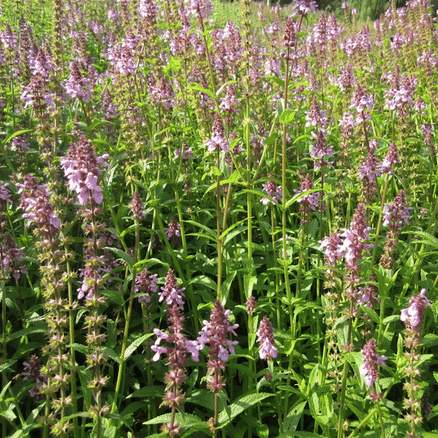
Water Avens — Water Avens has nodding flowers above a lower leafy clump. It provides a different flower shape in a moist border, with its own spacing and seasonal care.





Reviews
There are no reviews yet.