






Pond Plants for Shade and Partial Shade: What to Choose
Pond plants for partial shade: light, depth and mature size
A pond does not need sunshine all day to have attractive planting. It does need plants that suit the light reaching their particular position. Start there, then check water depth and mature spread. “Partial shade” on a label does not promise success in a permanently dark corner.
We clean and plant ponds as well as supplying pond plants. When planning a scheme, we want to know where the light falls, where the roots will sit and how the planting can be maintained. Choosing from a photograph alone leaves too much to chance.
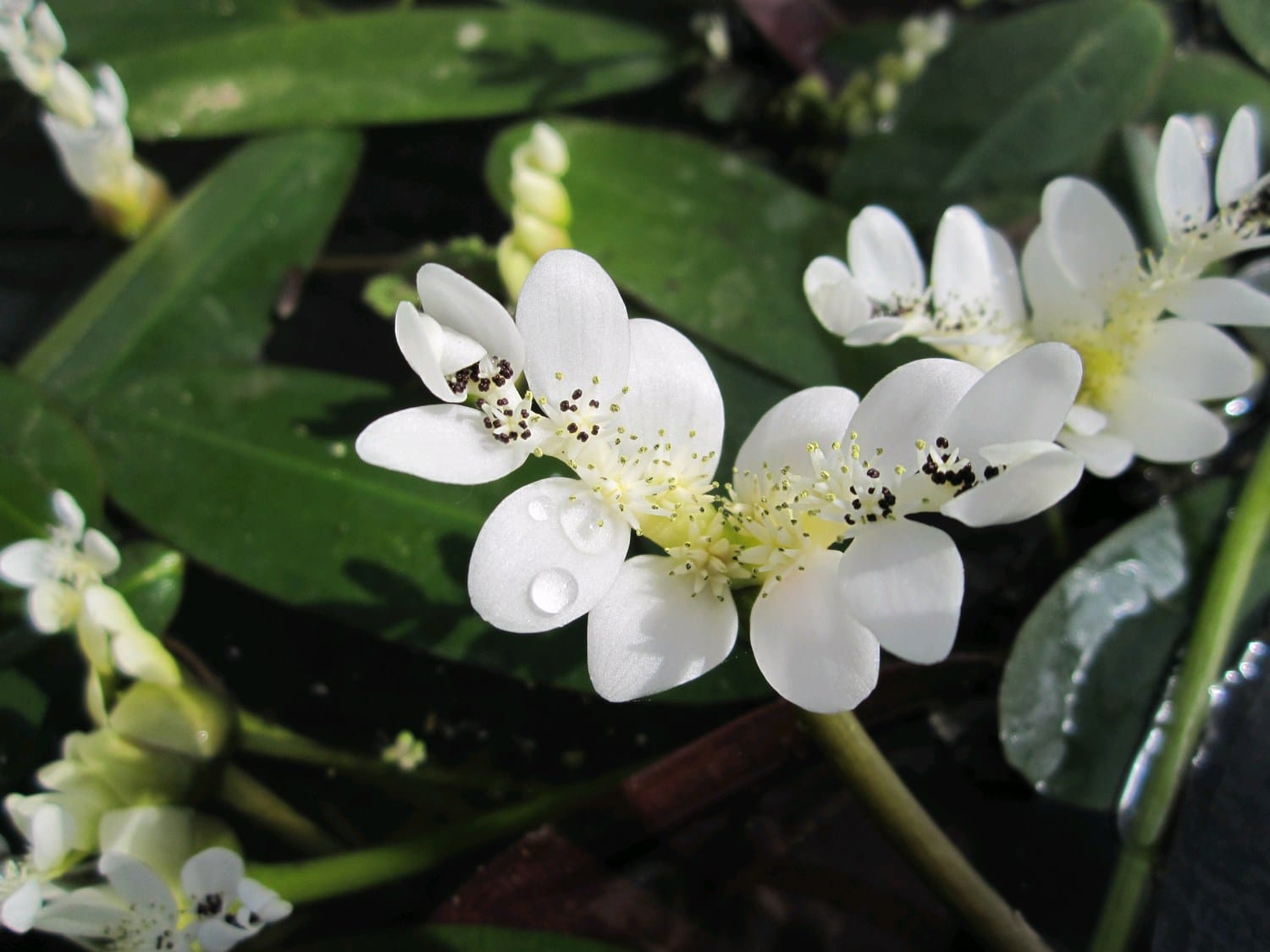
Water forget-me-not, water mint, water hawthorn and suitable sedges are worth considering for different parts of a partly shaded pond. They are not interchangeable. Some need a shallow margin; water hawthorn grows from a rooted position beneath floating leaves; a sedge may be better in suitable damp ground beside the water.
Our starting point: make a short list for the positions you actually have. Keep partial or light shade separate from deep shade, leave room for growth, and do not plant the darkest gap merely to fill it.
Work out what “shade” means in your garden
Two ponds can both be described as shady and offer quite different growing positions. One might receive direct morning sun before a fence shades it. Another may get broken light through a tree. A third may sit beside a tall wall with very little direct light at any time. Those differences are more useful than simply deciding that the whole garden is sunny or shaded.
Spend a little time watching the pond before ordering a large planting scheme. Note the light in the morning, around the middle of the day and later in the afternoon. If you are only at home in the evening, a photograph taken then does not tell you what happened earlier. A few observations on days when you can check the garden will give you a better basis for choosing.
Record where the light falls, rather than only whether the pond gets sun. A sheltered shelf beside the house might remain shaded while the opposite bank is much brighter. Floating leaves can move into a different patch of light from the rooted plant beneath them. A tall plant behind a small pond may shade its neighbours even when nothing outside the pond has changed.
Think about the time of year too. A view beneath a bare deciduous tree in winter does not show the same canopy as a summer view. Equally, a photograph taken before a hedge grew does not describe the pond as it is now. You do not need a complicated survey; simply make sure the conditions you are planning for are the conditions the plants will experience.
| Position | What to record | What the answer helps you decide |
|---|---|---|
| Water surface | Where direct light reaches it and where shade persists. | Whether a floating leaf plant has a realistic position. |
| Marginal shelf | Light at the chosen shelf and whether neighbouring planting covers it. | Which shallow plants to investigate for that exact spot. |
| Pondside soil | Light, moisture and the space outside the liner. | Whether damp edge planting is a better choice than another aquatic basket. |
| Seasonal canopy | Whether trees, climbers or hedges change the light through the year. | Whether a bright winter impression is misleading. |
Keep partial shade and deep shade separate in your notes. The plants discussed below have evidence for partial or light shade. That should not be stretched into a guarantee for a position that remains dark for most of the growing season. If you are unsure, describe the position and the source of shade when asking for advice, rather than relying on one general word.

Match the planting position before choosing a name
Light is only one part of the choice. A plant can have suitable shade tolerance and still be completely wrong for the way you intend to plant it. Before looking at flowers or leaf shape, decide whether the roots will be in damp soil, on a shallow shelf or in a deeper aquatic position.
Pondside planting sits around the pond. The roots may be in moist garden soil without being below the pond water. Check that this ground really remains suitable; a narrow strip beside a raised pond is not necessarily wet just because water is close by. Consider how you will reach it to divide, tidy or remove a plant later.
Marginal planting is associated with the shallow water and wet margins. The exact plant determines the depth. A wide shelf gives you options, but it does not make every plant suitable for every point on that shelf. The depth also changes when a basket is raised or lowered, so measure after deciding where the basket will actually sit.
Rooted plants with floating leaves need an appropriate position for their roots or tubers as well as room at the surface. They are not planted in the same way as a loose floating rosette. Water hawthorn is an example in this guide. Its floating foliage does not mean you should simply drop the whole plant onto the water and leave it there.
Submerged planting needs its own assessment of species, light and depth. A marginal plant is not a substitute for a submerged oxygenator merely because both are described as pond plants. Our guide to oxygenating pond plants explains the differences between rootless growth, attached plants and rooted species.
The RHS aquatic and bog plant guide makes the distinction between plants growing in water and plants in damp ground, and directs gardeners to individual plant information for suitable water depths. Use the same approach when planning a shaded pond: choose for the actual root position, not just the appearance of the foliage above it.
Five pond plants for partial or light shade
A short, well chosen list is more useful than a long list of plants with loosely described requirements. The following examples cover different positions and sizes. Read the individual plant information before choosing a combination, and leave out any plant for which you cannot provide the appropriate position.
| Plant | Position to consider | RHS mature size guide | Important point when choosing |
|---|---|---|---|
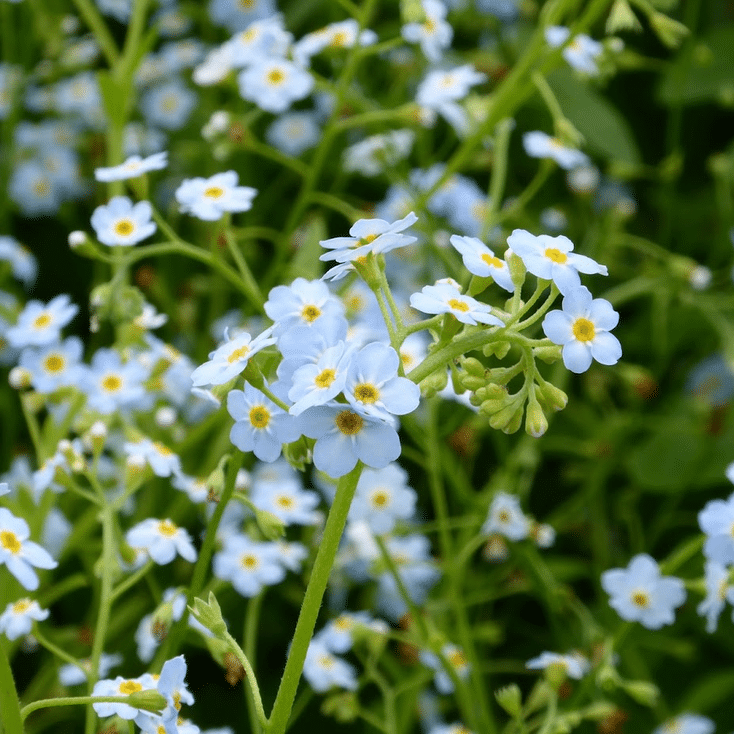
| Water forget-me-not Myosotis scorpioides |
Wet margin or suitable shallow water. | Height and spread categories: 0.1–0.5m. | A lower flowering example; check the supplied depth guidance. |
| Water mint Mentha aquatica |
Managed marginal position. | Spread category: 0.5–1m. | Allow for spread; sunlight is helpful for flowering. |
| Water hawthorn Aponogeton distachyos |
Rooted aquatic position with floating leaf space. | Spread category: 0.5–1m. | Needs room at the surface and appropriate root depth. |
| Palm sedge Carex muskingumensis |
Moist edge or suitable shallow position. | Height and spread categories: 0.5–1m. | Foliage can give structure without relying on a flower display. |
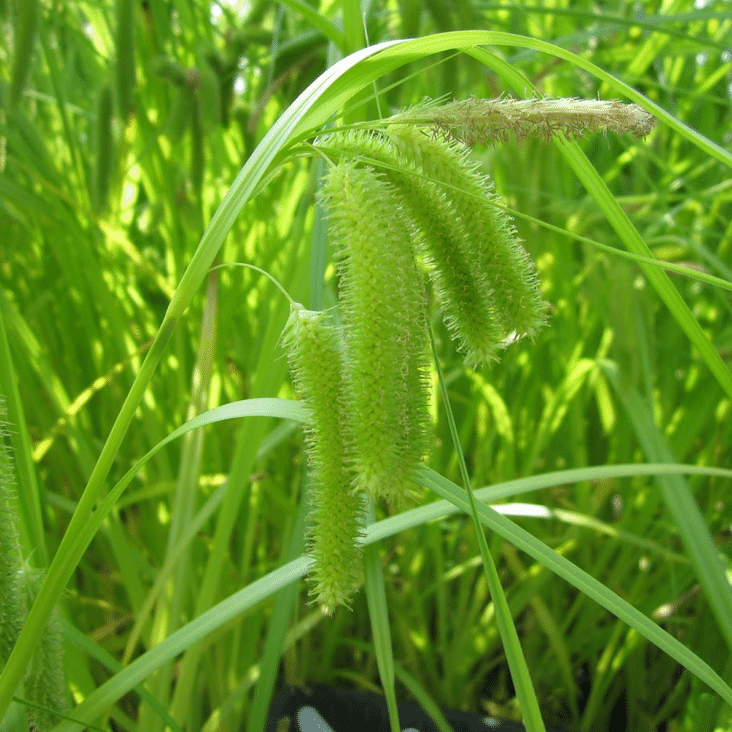
| Cyperus sedge Carex pseudocyperus |
Larger marginal or bog area. | Height: 1–1.5m; spread: 0.5–1m. | A tall plant; choose it for a position that can accommodate it. |
These mature size ranges, from the individual RHS profiles linked below, are planning guides rather than the dimensions of a newly supplied plant. Spread is particularly useful when comparing a plant with the shelf space available. For example, a spread approaching one metre is a substantial part of a small pond, even when the plant arrives in a modest pot.
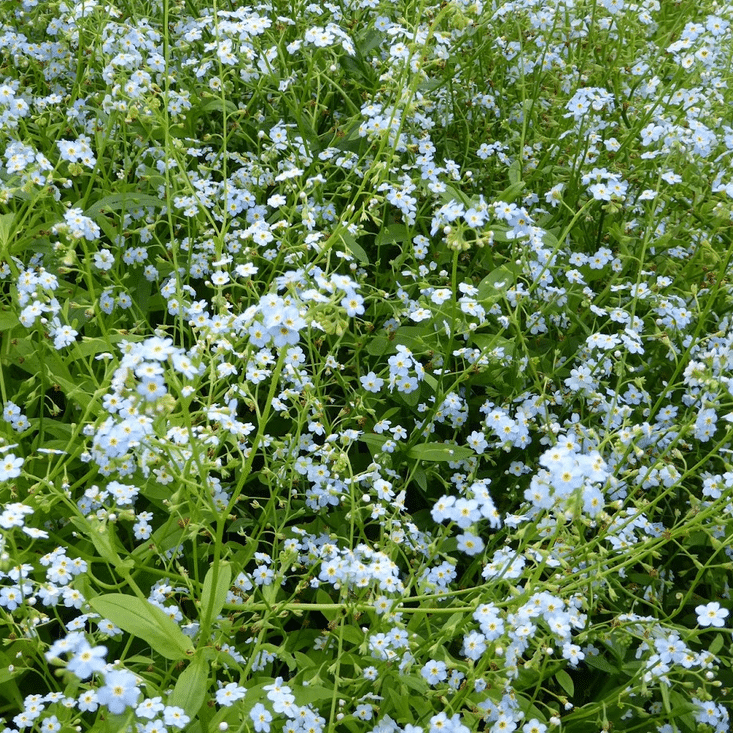
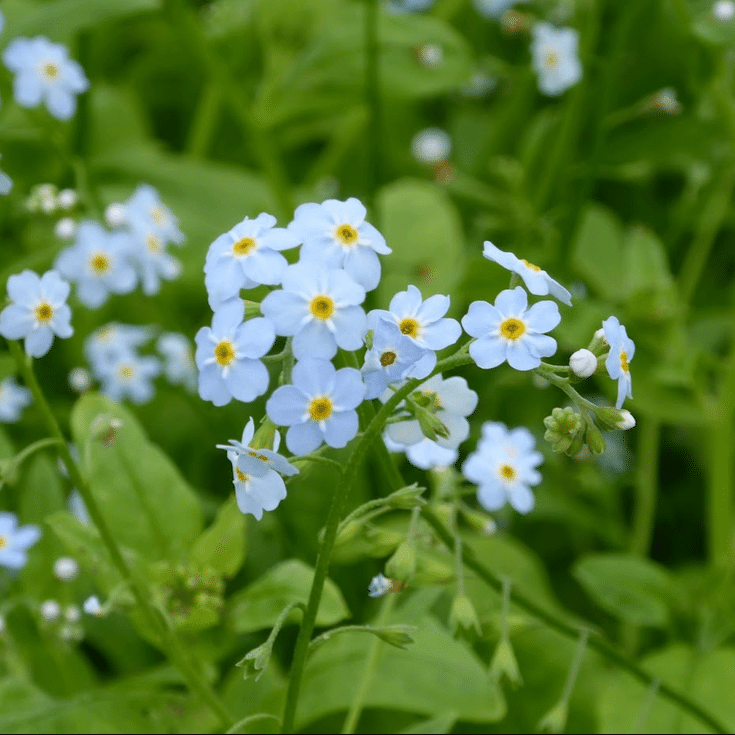
Water forget-me-not for a lower flowering margin
Water forget-me-not, Myosotis scorpioides, gives a lower flowering option for a suitable shallow edge. Its small blue flowers have a different effect from a tall stand of foliage. The RHS species profile supports sun or partial shade in wet pond margins or shallow water.
Look at the shelf before deciding how many to buy. There needs to be an appropriate depth, room for the clump to develop and access for trimming or lifting. A low plant placed behind a large sedge may receive much less light than the original shelf did.
Keep the botanical name with your plan. An ordinary garden forget-me-not, or a named form with a similar common name, should not be substituted on appearance alone. Use the supplied plant’s depth instructions when setting it in place.
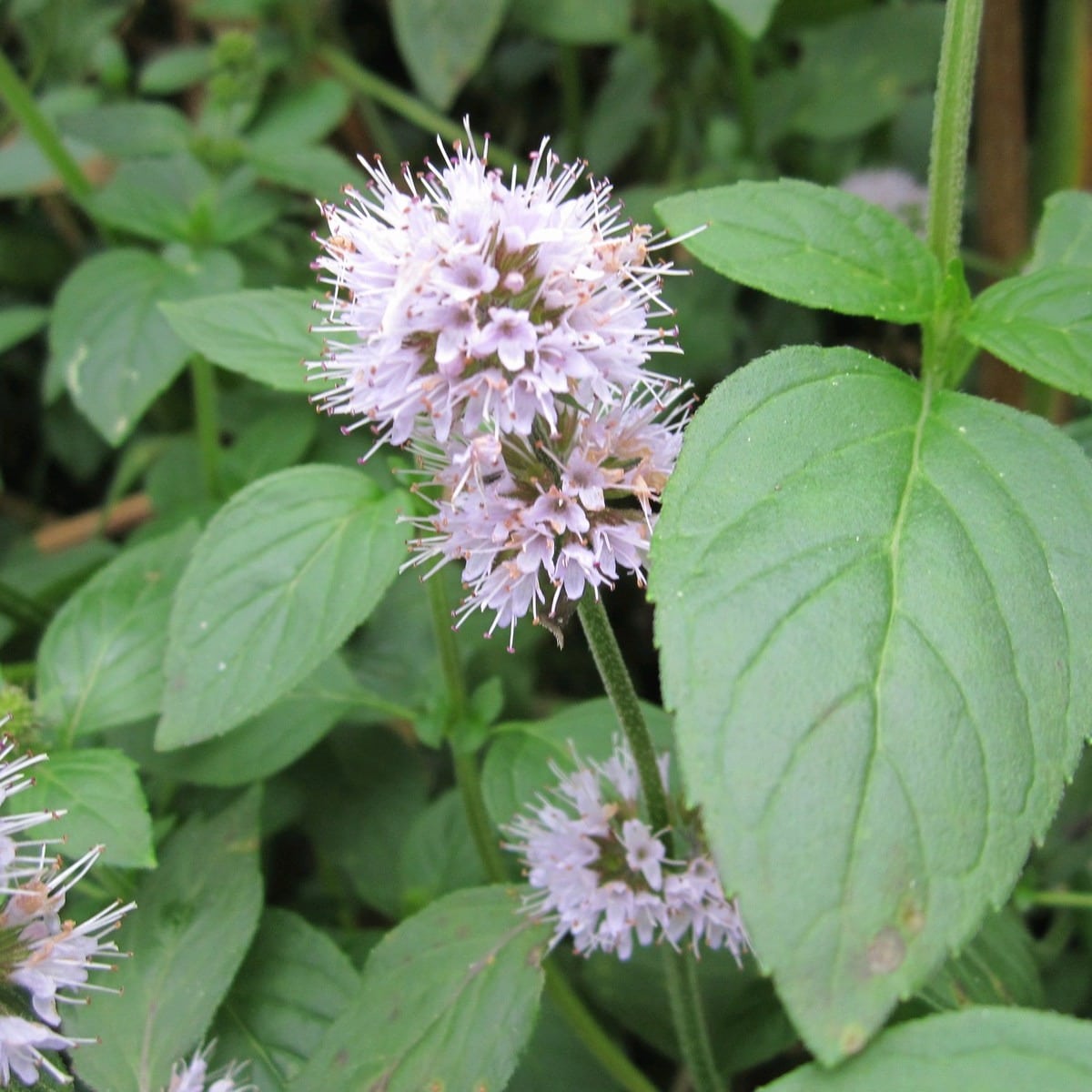
Water mint needs a space you can manage
Water mint, Mentha aquatica, can suit a managed marginal position in partial shade. There is a useful qualification in the RHS profile: its position information includes partial shade, but the cultivation advice favours sun for flowering and warns that growth needs management.
That makes the choice more specific than simply calling it a plant for shade. Decide what you want it to do:
- If flowers are the priority, give the available sunlight particular thought.
- If there is very little shelf space, allow for spreading growth before adding it.
- If you use a basket, keep a route to lift it and check growth beyond its original footprint.
A basket helps with handling; it does not make a vigorous plant permanently small. We would give water mint a deliberate place in the scheme rather than use it to fill every spare gap around a tiny pond.
Water hawthorn: rooted below, leaves at the surface
Water hawthorn, Aponogeton distachyos, offers floating leaves from an anchored aquatic plant. It is not a free-floating rosette to drop onto the water. The RHS profile supports sun or partial shade in still water and notes that it can spread strongly in favourable conditions.
Plan two spaces: the position for its roots or tubers and the surface area its leaves will occupy. A narrow gap between neighbouring aquatics may disappear as the planting develops. Check that the root position will not block access to those neighbours or to equipment.
Choosing for floating foliage? Water hawthorn is an option to compare on its own requirements. It is not a guaranteed replacement for a flowering water lily in every dark pond. Check its planting depth, still-water position and room to spread before deciding.
Palm sedge for foliage at a moist edge
If the planting needs shape and structure rather than a bright flower display, consider palm sedge, Carex muskingumensis. The RHS profile describes partial shade as ideal and requires soil that stays moist; it also allows suitable shallow water.
Decide whether it belongs beside the pond or in it. Those are different planting jobs. Ground next to a raised pond can be dry despite the water being close by, while “shallow water” still needs checking against the exact supplied plant’s instructions. A general reference to shallow water is not a depth you can use for every basket.
Allow for the mature clump and look from your usual seat as well as from above. Foliage that frames the water from one direction can hide it from another. Keep the maintenance route clear.
Cyperus sedge for a larger margin
Cyperus sedge, Carex pseudocyperus, is the taller choice here. The RHS profile supports sun or light shade in a marginal or bog position, with a mature height category of 1–1.5 metres and a spread category of 0.5–1 metre.
That is a substantial plant beside a small pond. Use it where the scale is appropriate, with room for its clump and a practical route to its base. Check the view from the house and the light it would leave for plants behind it.
The height figure is not a planting depth. Keep any water-depth decision tied to the supplied plant information. This is a candidate for a larger margin, not a compact default for a small container or narrow shelf.

Plan for mature spread and maintenance access
You do not need every plant in the table. Start by writing down the jobs that actually need doing. You might want a low margin beside a path, a single area of floating foliage or some taller structure at the back. Those are different requirements, and they may call for only two or three plant types rather than a large assortment.
For a small pond, draw the water surface and the shelves on a simple plan. Mark the main viewing direction and the point from which you will reach the baskets. Then sketch the space each proposed plant would occupy when established. The aim is not an exact landscape drawing; it is to avoid buying several plants for the same small patch.
In a larger pond, resist the temptation to spread isolated specimens everywhere without thinking about how the scheme will be maintained. Grouping the plan around clear planting areas can make the choices easier to understand. Keep room for lifting plants and inspecting edges. The most shaded part does not need to be planted merely because it is currently empty.
Think about the view at sitting height as well as when standing beside the pond. A tall sedge may be attractive from one direction and obstruct the water from another. A floating leaf plant may suit the water surface but become awkward if its root position blocks access to an item that needs regular attention. Make those decisions before the pond is full of established planting.
Choose the level of maintenance you can realistically manage. If you prefer a simple scheme, keep the list short and leave space. If you enjoy dividing, thinning and adjusting planting, you may be comfortable with a more involved arrangement. Neither approach makes an unsuitable plant right for deep shade, but it does affect which otherwise suitable candidate is sensible for you.
Planting depth: measure above the plant, not just the shelf
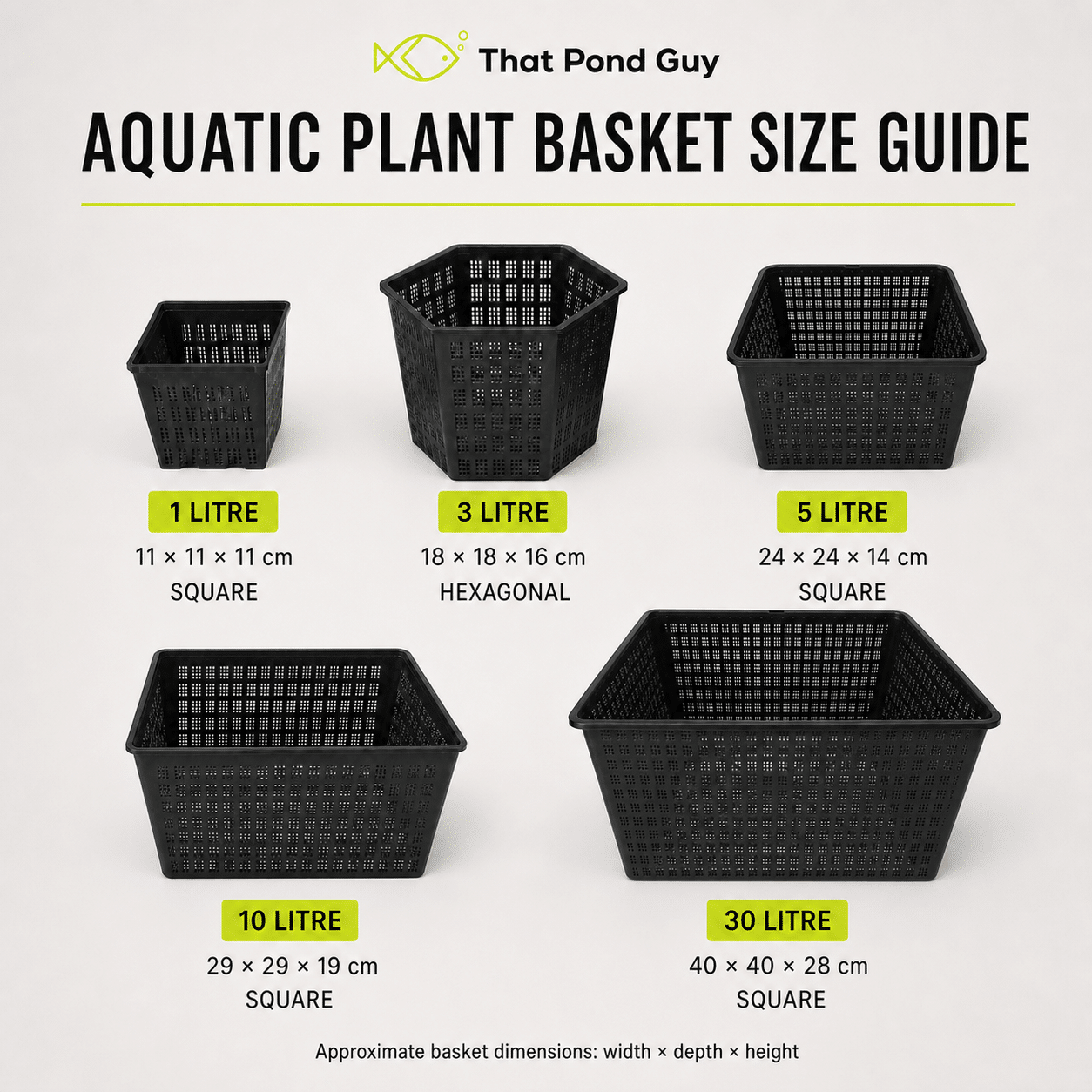
Measure the water depth at the final planting position. A pond shelf might be a certain distance below the surface, but the plant does not necessarily sit directly on that shelf. Basket height, the level of the growing material and any support beneath the basket all affect the finished position.
When a label gives a water depth, establish what the measurement refers to. Do not confuse a plant’s above water height with its planting depth, or use the height of the basket as though it were a depth recommendation. If the instructions are unclear, ask before setting the plant in the pond.
The differences between species can be substantial. RHS cultivation guidance places water forget-me-not in water no deeper than 10cm, describes water mint in water up to 25cm deep, and gives water hawthorn a water depth of 30cm or more. Those are the source’s cultivation figures, not a single rule for how far every shelf should be below the surface. Check the supplied plant instructions and their measuring point before using any figure to position a basket.
A shelf-depth example
Suppose the normal water surface is 30cm above the shelf. A basket and its growing material put the plant’s crown 20cm above the basket base. With the basket directly on that shelf, there are 10cm of water above the crown, not 30cm.
This is a measuring example, not a planting recommendation for a particular species. If the label uses a different measuring point, use that point. A taller basket or a support changes the result without changing the shelf itself.
Place a ruler or measuring stick where the basket will sit and check the normal water level. If you plan to use a support, include it in the measurement. Choose something stable and appropriate for the pond rather than balancing a heavy basket on a narrow object. A scheme that is difficult to position safely will also be awkward to maintain.
Use the plant’s requirements to decide its place. Do not begin with an unsuitable deep shelf and try to justify the choice from a general description such as “pond plant” or “marginal”. If there is no appropriate planting position, select a different plant or reconsider where it belongs.
Our guide to planting pond plants in baskets explains the planting method in more detail. The pond plant basket and planting supplies category is a useful next step once you know the plant and position. Choosing the basket follows the planting plan; it should not be used to make an unsuitable plant fit a position it does not tolerate.
Can you grow water lilies in shade?
Do not choose a water lily on the assumption that every pond can provide the conditions for a reliable display. The RHS water lily growing guide favours sun and still water. The exact variety, available space and planting depth also matter.
If flowers are the main aim, give the lily’s position particular thought. Compare the spot you would like to use with the light you actually recorded. A bright patch at one end of the pond may be a more sensible place to investigate than the darkest central position, even if that changes the original visual plan.
A plant described as coping with some shade should not be sold to yourself as certain to flower well in deep shade. Avoid making a purchase decision from an unqualified phrase such as “shade tolerant” without checking what it means for the exact variety and for the result you want.
If you already have a lily that is not flowering, do not assume shade is the only possible reason or immediately replace it. Check its identity, position, planting depth and the condition of the established plant. Our water lily care guide takes you through those checks. Changing several things at once makes it harder to understand what was affecting the plant.
Floating foliage can still be part of a partly shaded pond without every plant being a lily. Water hawthorn is one of the separately described candidates above. Compare its role and requirements properly rather than treating two plants with floating leaves as interchangeable.
What about oxygenating plants and ponds with fish?
Choose submerged plants as deliberately as the plants around the edge. The right question is which exact species suits the conditions and intended position. It is not enough to buy something described simply as an oxygenator and assume it belongs at the bottom of every shaded pond.
Keep the distinction between rooted and rootless plants clear. Planting instructions that make sense for a rooted species can be wrong for a plant that does not grow in the same way. If you are comparing bunches, pots and attached growth, use our oxygenating pond plant guide before deciding how they will be placed.
In a pond with fish, consider planting and the wider system together. Do not remove established aeration or change the equipment plan merely because you are adding plants. A planting guide is not a calculation of the pond’s oxygen requirements. Our pond oxygenation and aeration guide covers that separate subject.
Think about access for checking the fish, cleaning and maintaining equipment. A basket positioned where it is constantly disturbed is not a useful solution, even if its light requirements fit. If koi are part of the plan, read our guide to plants in a koi pond alongside the species information.


Three planting plans for different shaded positions
A small pond beside a building
Imagine a small pond with a shallow shelf along one side, direct morning light at the front and persistent shade behind it. This is a planning example, not a description of a particular job.
- Reserve the practical access from the front before drawing in the planting.
- Choose a suitable lower marginal for the brighter shallow shelf. Check the mature spread against the length of that shelf.
- Consider taller foliage only after checking the space it would occupy and the light it would leave for its neighbours.
If the rear position stays too dark for the plants you want, leave it open while you assess the scheme. It is easier to add a suitable plant later than to move an established row chosen merely to fill a gap.
A fixed number of plants per square metre would miss the important details here: the available shelf, mature spread and the need to reach the water. Use the measurements and supplied labels to decide quantities.
A pond with a damp, lightly shaded bank
Here, look at the soil position before adding more plants into the water. A suitable sedge might fulfil the need for foliage around the pond without occupying another aquatic basket position. Check that the soil conditions fit the plant and that its mature size will not block the view or the path.
Keep the boundary between the soil and pond clear in your plan. The plant may belong beside the water rather than beneath it. Avoid extending a border into the pond in a way that makes the liner difficult to inspect or the planting difficult to manage.
If you are comparing palm sedge with cyperus sedge, their different stature matters. Choose for the height and spread the position can accommodate, not simply because both have a shade reference. A successful design decision here may mean choosing one suitable plant rather than using both.
A larger pond with some open, still water
A larger scheme may have room to investigate water hawthorn as a floating leaf element as well as planting around the edge. Identify a suitable root position and leave an area where the foliage can develop without competing for the same surface space as every other plant.
Position taller margins with the main view and maintenance route in mind. The presence of extra space does not remove the need for a plan. It can be tempting to buy a large range of plants, but each should have a clear place and a reason for being there.
These are planning examples, not fixed planting recipes. They illustrate how to use light, position and scale together. Your pond may need fewer plants, a different combination or an entirely different approach once its conditions are properly assessed.
What to check before moving or feeding a plant
A plant keeping its leaves but flowering poorly needs a different check from one that has outgrown its position. Start by describing what has changed.
Before adding fertiliser, altering depth or buying a replacement, work through the position:
- Identity. Check the botanical name and supplied label. Similar-looking plants or named forms may need different treatment.
- Light now. Compare the current canopy with your original notes. A neighbouring plant, climber or new garden structure may be shading a position that used to be brighter.
- Water and basket level. Measure at the normal running water level, using the label’s measuring point. Record any support beneath the basket.
- The whole plant. Photograph its position as well as the affected leaves, including nearby planting and available space.
Fewer flowers, excessive spread and a disturbed basket are different problems. A plant may be accepting the position while giving less of the display you hoped for, or it may be healthy but too large for the space. Reassess the scheme before replacing all the planting.
Make a change for a reason. Note what you alter and why, then review the result. Changing several conditions repeatedly makes it harder to work out what helped.
If you ask us for advice, send the light pattern, planting depth as measured, basket position and photographs of the whole plant and pond. That gives us more to work with than “it is in shade”.
A practical buying checklist
Before choosing pond plants for shade, check these points for every plant on the list:
- Exact identity: keep the botanical name and any cultivar name with the plan.
- Light: match partial or light shade advice to the position you observed, without assuming it covers deep shade.
- Root position: distinguish damp soil, a shallow margin and a rooted aquatic position.
- Depth: follow the supplied plant guidance and establish where any measurement starts.
- Mature size: allow for spread, height and access once the scheme develops.
- Purpose: decide whether you mainly want foliage, flowers, floating leaves or an edge planting effect.
- Maintenance: leave room to reach, lift and manage the planting.
Then keep the initial order focused. You can browse our marginal pond plants and deep water pond plants with a clear idea of the position you are choosing for. If you would like help narrowing the choice, contact That Pond Guy with the pond dimensions, a few photographs and the light and depth information you have gathered.
A partly shaded pond does not need an exaggerated list of plants or a promise that every favourite will thrive. A few suitable plants, placed with care and allowed room to develop, give you a much more sensible starting point.
