





10 Common Pond Problems and How to Solve Them
Start with what has changed in the pond
A pond problem is easier to sort out when you know what you are looking at. Green water needs a different response from long strands of blanketweed. Fish at the surface might be short of oxygen, but ammonia or a gill problem can produce similar behaviour. Reaching for a treatment before checking those basics can waste time and make the cause harder to find.
We build, clean and maintain ponds, and our first questions are straightforward: what changed, when did it start, what are the fish doing and what do the water tests show? This guide takes you through ten common problems and points you towards the more detailed advice where it matters.
Deal with distressed fish first. If several fish are gasping, losing balance or deteriorating quickly, check circulation and air supplies promptly, stop feeding while investigating and test the water. Add suitable supplementary aeration. Get experienced pond or aquatic-veterinary help if distress continues; do not wait for the pond to look worse.
| What you notice | First useful check | Detailed advice |
|---|---|---|
| Fish gasping or crowded near a return | Air, circulation, oxygen and water quality. | Pond aeration |
| Clear water but unsettled fish | Ammonia, nitrite, pH and recent changes. | Ammonia and nitrite |
| Green water or long green strands | Which kind of algae is actually present? | Identifying pond algae |
| Flow has fallen | Pump intake, mechanical filter, valves and return. | Pump flow and pipework |
| Water level keeps dropping | Overflow, splash, pipework, waterfall and pond edge. | Help investigating a loss |
Which water tests help you narrow it down?
Start with a thermometer, pH, ammonia and nitrite when fish behaviour changes. Add KH when pH is moving, GH when investigating hardness, and a suitable oxygen measurement when oxygen shortage is suspected. Tell us the numbers and the units. A strip with every square described as “normal” is much harder to interpret than a dated set of results.
The NT Labs Pond Lab Multi-Test covers six useful measurements: pH, KH, GH, ammonia, nitrite and nitrate. It is a practical starting point for routine pond care. Oxygen and chlorine need separate methods, so do not assume that a multi-test name covers those too.
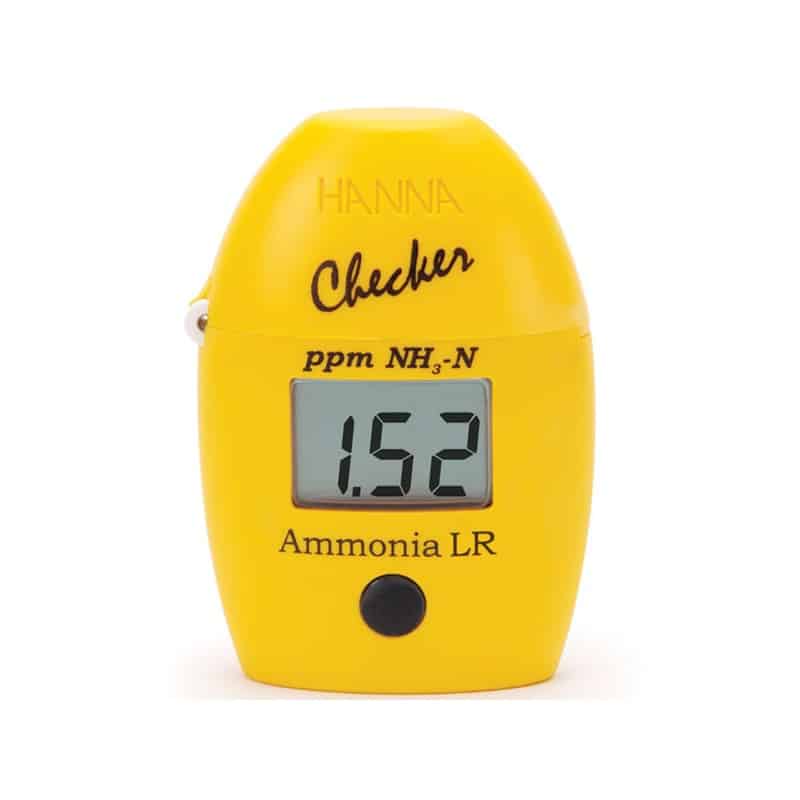
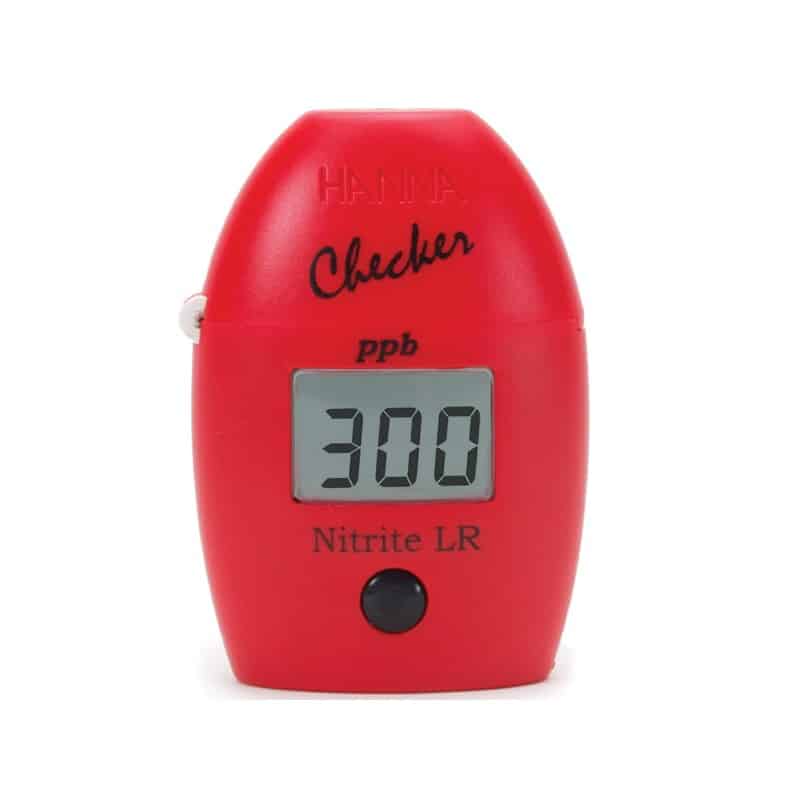
Digital testing can be helpful if colour matching is difficult or you want a clearer numerical record. Choose the instrument for the parameter, rather than buying a familiar brand name and assuming it tests everything. Our Hanna Instruments range includes single-parameter Checkers, electrode testers, test kits and their consumables.
| Question | Useful option | Keep in mind |
|---|---|---|
| What is happening to the basic chemistry? | NT Labs Pond Lab Multi-Test | Six chemistry tests, not dissolved oxygen or chlorine. |
| Is ammonia building up? | Hanna HI700 | Freshwater ammonia measurement. Interpret the reporting basis with pH and temperature. |
| Is the biological filter leaving nitrite? | Hanna HI707 | Reports ppb of nitrite-nitrogen. Do not read it against an mg/L nitrite-ion chart. |
| Why is pH changing? | Hanna HI98100 pH tester and HI775 alkalinity Checker | Separate pH and buffering measurements, with different methods and care. |
| Has the source-water supply changed? | Water testing and purification equipment | Check the actual supply and disinfectant treatment, not just its appearance. |
Small errors in technique can be larger than the change you are trying to follow. Use a clean sample tube, the correct volume and fresh reagents. On optical Checkers, fingerprints, scratches, bubbles and timing affect the reading. Wipe the vial and follow the exact method.
Do not compare two results until you know they use the same units and chemical basis. Hanna’s HI707, for example, reports nitrite-nitrogen. Its manufacturer guidance explains the conversion to nitrite ion. If you are unsure, send a photograph of the screen together with the model code instead of guessing the conversion.
1. Fish are gasping or breathing faster than usual
Check the equipment before assuming the fish need medicine. Is the air pump running and actually delivering air? Is water returning to the pond normally? Has a valve been left closed, or has the supply tripped? A motor making noise does not prove that water or air is getting where it needs to go.
Test dissolved oxygen if you have the appropriate instrument, together with ammonia, nitrite, pH and temperature. An ordinary multi-test kit may not include oxygen. If your biological filter needs its own air supply, keep that running as well as the pond’s diffusers. Our air-pump and diffuser guide explains the separate jobs.
Warm weather, heavy feeding and decomposing waste can increase the pressure on a system. Do not rely on a waterfall that is switched off through the night. A deep, stagnant lake needs a carefully assessed response rather than immediately mixing its bottom water into the surface.
2. Ammonia or nitrite is showing on the test
Water can be clear while it contains harmful dissolved waste. Recheck a surprising result using clean equipment and the test’s instructions, but do not dismiss a positive reading because the pond looks clean. Note the result, units, pH, temperature and what has changed recently.
Look at feeding, fish additions, a new or recently disturbed biological filter, cleaning and interruptions to circulation. Reduce or stop feeding as appropriate while correcting the cause. Any partial water change needs suitable source water, correct dechlorination and care over temperature and chemistry; there is no sensible fixed percentage for every emergency.
A drum screen removes particles. The biological stage processes ammonia and nitrite; one does not replace the other. The University of Florida’s ammonia guidance explains why oxygen, alkalinity, pH and temperature matter too. Use our ammonia and nitrite guide for the fuller response.
3. The water has turned green or cloudy
Green water usually means suspended microscopic algae. Check that it really is green water, rather than brown sediment, a surface covering or a different water-quality problem. A UV clarifier can help when it is appropriate to the pond and the filter can remove the treated material.
If a fitted UV is not clearing it, check the lamp’s age, quartz sleeve, actual flow and the manufacturer’s model-specific maintenance requirements. A visible glow does not measure effective UV-C output. Lamp replacement intervals differ between designs, so avoid applying one annual rule to every unit.
Review waste, feeding, sunlight and filtration as well. Replacing all the water or continually adding different treatments rarely tells you why the problem returned. Our algae guide starts with identification and the complete pond setup.
Why has the pond suddenly gone murky?
Take a sample in a clear container so you can see what the water itself looks like. Brown water may contain suspended sediment, dissolved staining or both. Grey or milky water after a new installation or substantial cleaning needs a different investigation from a long-established green-water problem. Do not choose a clarifier simply from the colour in a photograph.
Note the timing. Has heavy rain washed soil into the pond? Has someone disturbed the bottom, repotted plants or cleaned the biological filter? Has a new return started moving a previously quiet area? Those changes help explain where particles came from. If a sample settles, that is useful evidence of suspended material, but it does not prove the remaining water is safe for the fish.
Look at what the filter actually catches. If the mechanical stage is collecting a great deal of debris, maintain it as instructed and find the source of the load. If the water stays cloudy while the mechanical stage collects little, the cause may need a different method or a closer check of the installation. A UV cannot be expected to remove every kind of brown staining or sediment.
Persistent foam is another clue, rather than a diagnosis by itself. Note whether it appeared after spawning, feeding, leaf breakdown, a water change or a new treatment. Compare temporary bubbles at a waterfall with foam that remains across the surface. Check the fish and water tests before using a foam-control product. Collapsing visible foam does not necessarily remove the material or event that produced it.
A suspected detergent, spray or other contamination is a different situation. Stop the source if you can do so safely, preserve the product name and get prompt advice about the pond. Do not experiment with several more additives to try to hide the appearance. If fish are struggling, support aeration and get help with the actual water results.
4. Long strands of blanketweed are spreading
Attached string algae is a different problem from green water. A flow-through UV treats water passing through its chamber; it does not directly treat strands attached to the pond walls, plants or equipment.
Remove manageable amounts carefully, checking lifted material for pond wildlife. Keep it away from intakes and avoid damaging delicate plants while pulling out a large tangle. Look for accumulated waste and feeding that exceeds what the fish actually eat.
If using a treatment, follow the current label for pond volume, species, temperature, aeration and compatibility. Do not treat “natural” or “pond safe” as permission to ignore those checks. The blanketweed treatment guide covers that separate choice.
5. The pump or filter return has slowed down
Trace the water route before buying a bigger pump. Check the intake cage, mechanical filter, pipework, open valve positions and return. A blocked intake, kinked hose or cleaning valve left in the wrong position can reduce delivery without the pump itself having failed.
Isolate electrical equipment safely before opening or servicing it, and follow the manual. Do not keep resetting a tripping supply or work on damaged electrical connections beside the pond. Arrange competent electrical help where needed.
Mechanical and biological sections need different cleaning methods. Avoid stripping or replacing established biological media simply because the water looks dirty. Our filtration guide explains those roles, and the pump guide covers flow lost through the installation.

Measure a change in flow where you can
A return that looks weaker is worth investigating, but a short measurement can be more useful than a photograph of splashing water. Where an outlet is safely accessible and the measurement does not alter the normal water route, time a known collection volume. Ten litres collected in 20 seconds is equivalent to 1,800 litres per hour. Multiply litres collected by 3,600 and divide by the number of seconds.
That is an example of measuring that outlet, not a recommended flow for every pond. A split return needs each branch considered, and holding pipework at a different height may change the result. Compare like with like: the same route, water level and valve positions. The number on a pump box is a maximum under stated test conditions, not a measurement of your installed return.
6. Leaves, sludge or uneaten food are building up
Remove fresh debris before it breaks down where practical. Check skimmers and pump intakes, adjust feeding and look at how waste is collected. A layer of silt in a wildlife pond is not automatically a reason to empty it, while a heavily stocked koi pond needs deliberate waste removal.
Use tools suited to the pond and work in manageable areas. Avoid stirring a large amount of old sediment into water occupied by fish. If a pond has been neglected, plan the cleaning around the fish, water quality, filter and safe handling arrangements rather than starting with a complete drain.
The RHS wildlife pond guidance is a useful reminder that habitat ponds need a lighter approach. Our wildlife pond article and pond vacuum guide cover different maintenance needs.
A skimmer and a pond vacuum collect different waste
A surface skimmer helps collect floating leaves and debris before they sink. The Oase Swimskim 25 is an example from our range. Positioning and the pond’s surface movement affect what reaches it. Emptying its basket remains part of the job, particularly during heavy leaf fall.
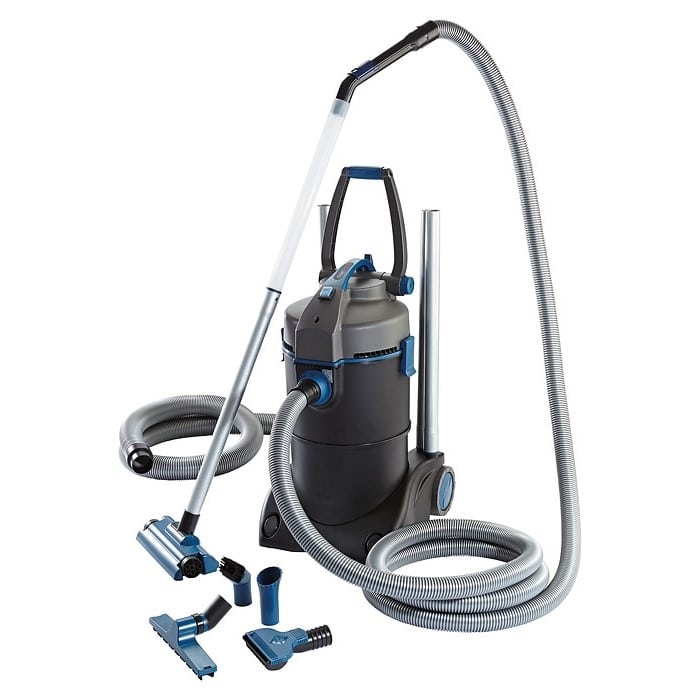
A pond vacuum deals with accessible deposits below the surface. The Oase PondoVac 4 is one option to compare in our pond vacuum guide. Plan where dirty water will discharge and how the lost water will be replaced safely. The debris bag is not a complete fine-water filter, so do not assume everything collected can simply be returned to the pond.
Neither tool replaces biological filtration or a sensible feeding load. Use them to remove the material they are designed to collect. A fish pond with deep, long-neglected sludge may need a planned clean rather than an afternoon of stirring the whole bottom around the fish.

7. pH readings have changed
Record the time as well as the pH. Compare a morning and later reading using the same reliable method, and check KH, source water and recent additions. Recheck the kit’s range, expiry and instructions before deciding a large correction is needed.
Stability and the cause of the change matter more than forcing every pond towards one narrow target. Avoid adding acid, buffer or household chemicals simply to chase a preferred number. A change in pH also affects ammonia interpretation, so test both when fish seem unsettled.
Our pH, KH and GH guide explains the difference between those measurements. The pH troubleshooting guide deals with the changing-reading problem.
8. The water level keeps dropping
Look for an overflowing filter, water escaping around a waterfall, splash, wet ground, exposed liner edges and leaking joints. Note when the loss happens and measure it consistently. Rain and automatic top-ups can hide the pattern.
If equipment is at risk of running dry, protect it according to its instructions while maintaining the fish’s essential air and circulation through an appropriate alternative. Do not leave a stocked pond without life support for a long “pump off” leak test.
A controlled investigation can separate pond loss from a leaking circuit. Keep records and photographs, and ask us about the setup if the cause is unclear. Do not permanently seal an outlet or alter structural pipework until you know what it does.
Keep a simple water-level record
Mark the starting level at a fixed point and record the time, weather and whether automatic top-up is operating. Use the same reference again. A top-up supply that quietly replaces every loss can conceal a leak and make changes in source-water chemistry harder to understand.
Inspect the complete system, including the waste line and filter drain. A cleaning valve that has not fully shut can lose water even when the pond liner is sound. Water may also leave a stream or waterfall through a low edge or plant growth. Fixing a liner hole will not help if the actual loss is elsewhere.
We would want photographs of the pond edge, filter, returns and surrounding wet areas, together with the pattern of the loss. Avoid digging up buried pipework or dismantling a working filter before that initial investigation. Keep essential circulation and air supported while any controlled isolation is planned.
9. Koi are hiding, flashing or showing marks
Compare with their normal behaviour. Recent handling, a new environment, predators, noise, water quality and illness can all be relevant. Start by observing quietly and testing the water, rather than assuming a shy fish or one that rubs against a surface has a particular parasite.
Photograph visible changes without unnecessary repeated handling. Record recent fish introductions and any treatments already used. Diagnosis may need a competent examination or microscopy. Generic salt baths and a series of guessed medications are not a substitute.
Our guide to koi hiding covers settling and disturbance, while the koi health guide follows the diagnosis question. If there are unexplained deaths or signs suggesting a serious outbreak, seek help promptly. Follow the official KHV reporting guidance where applicable; symptoms alone do not confirm KHV.
10. Plants are taking over, struggling or disappearing
Check the plant’s identity, supplied form, depth and light. Water lilies have rooted growth with leaves at the surface; they are not marginal plants. Rootless hornwort, attached willow moss and a rooted pot need different handling.
Allow for fish disturbing new planting and for normal seasonal dieback. Thin excessive growth in stages, checking for wildlife and keeping removed fragments out of natural waterways. Do not introduce unlabelled cuttings from another pond.
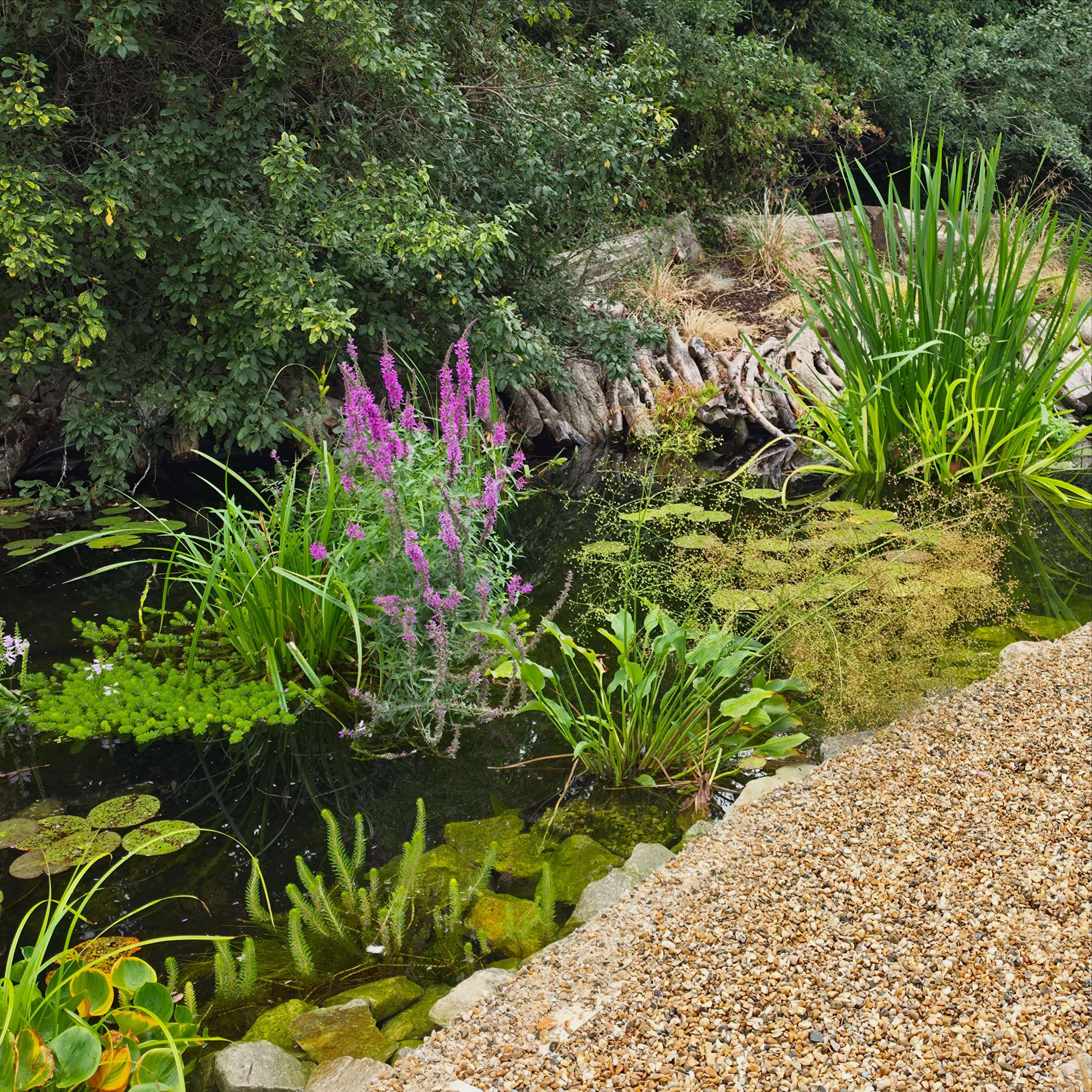
Use the oxygenating plants guide for submerged planting and the water lily guide for lilies. Check the official invasive-plant rules for the exact species and your part of the UK, rather than assuming anything called a pond plant is suitable.
Which pond problems are most urgent?
Several fish struggling at once, rapid deterioration, unexplained deaths, an equipment failure that removes life support, or a serious loss of water deserve prompt attention. Keep the fish’s immediate needs ahead of making the pond look clearer. A dirty-looking pond and an acutely dangerous pond are not always the same thing.
For a suspected stagnant pond, look at circulation, accumulation of decaying material and water measurements. Smell, colour and a quiet surface are observations, not a dissolved-oxygen test. A wildlife pond can function without the same equipment as a stocked koi pond, so its still surface should not automatically be treated as a fault.
If the concern is cosmetic and fish are behaving normally, take time to identify it before adding anything. Use the detailed guide for the particular issue, keep changes manageable and record the result. Cleaning, adding a treatment, replacing media and changing the food on the same afternoon makes it much harder to know what helped or caused a further problem.
Keep a short record before changing the pond
Write down the symptoms, dates, test results and equipment checks. Add fish and approximate feeding, pond measurements, filter and pump models, and recent cleaning or additions. If the pond is already heavily loaded, review fish growth and filtration capacity rather than relying on a length-per-gallon stocking rule.
Clear photographs and this basic history make advice much more useful. Send us the details if you would like help deciding what to check next. Deal with an urgent fish problem promptly; the cosmetic appearance can wait.
