





Oxygenating Pond Plants: Choosing, Planting and Winter Care
Which oxygenating plants should you put in your pond?
Oxygenating plants are the plants that grow mainly below the surface. They give pondlife somewhere to hide, take up nutrients as they grow and release oxygen in daylight. They are useful in a planted pond, but it pays to choose them for the space you have. A sunny wildlife pond and a deep pond full of large koi can be quite different places to grow a plant.
We plant and maintain ponds as well as selling the plants. The first thing we would check is how a plant grows and where it will go. Hornwort does not need planting in compost; willow moss can attach to a stone; a rooted milfoil needs somewhere suitable to root. Treating them all the same is an easy way to get disappointing results.
This guide explains those differences, how to introduce new plants and what to expect through the seasons. If you are choosing equipment for a fish pond, our pond aeration guide covers that separate job.
How oxygenating plants help a pond
They can help with oxygen during daylight, but they cannot keep a heavily stocked fish pond supplied with oxygen on their own. In daylight, aquatic plants use light to photosynthesise and can release oxygen into the water. Plants also respire, consuming oxygen. At night, photosynthesis stops while respiration continues. The US Geological Survey explains this daily oxygen cycle.
Submerged leaves and stems also create places for small pond creatures to shelter. A plant growing well removes some nutrients from the water into its tissues; taking away excess growth removes that material from the pond. You still need to keep on top of fallen leaves, fish waste and excessive growth. Adding a few bunches will not immediately clear a green pond.
A note for ponds with fish Choose plants that suit the pond and give wildlife useful cover. Keep the filtration and air supply your fish need as well; there is no dependable “bunches per koi” calculation.
Floating plants sit at the surface, while water lilies have roots below and leaves above. They do a different job in a planting scheme, providing shade and surface cover. A mix of submerged plants, lilies and marginals usually gives you more variety than filling the pond with one type.
Before buying: check the depth and light
Measure where the plants will actually go. The pond may be a metre deep in the middle but have a much shallower shelf around the edge. Check how much sun reaches each position and whether you can get to it for thinning without disturbing pumps or drains.
Clear water lets light reach submerged foliage. A deep position beneath dense lily leaves, heavy blanketweed or persistent green water may receive much less light than the sunny surface suggests. Check the depth advice for the plant you order, rather than dropping every bunch into the deepest part.
A small container pond needs a manageable plant and regular attention to spread. A wildlife pond can have more varied submerged growth while retaining open water. In a pond with fish, allow for nibbling and disturbance. Large koi can make delicate new planting difficult, so a protected planted area may be more practical than loose stems in their main swimming space.
Hornwort, willow moss or spiked water milfoil?


| Plant | How it grows | What to plan for |
|---|---|---|
| Hornwort Ceratophyllum demersum |
Rootless submerged stems that float freely or settle lower in the water. | No soil needed. Allow room for growth and remove excess gently. Some foliage dies back in winter. |
| Willow moss Fontinalis antipyretica |
A submerged moss that can attach to stone or other suitable surfaces. | Clear, cool water; slower growth than a vigorous stem plant. Attachment is different from planting roots in compost. |
| Spiked water milfoil Myriophyllum spicatum |
A rooted submerged plant with finely divided leaves. | Suitable substrate or a basket where appropriate to the supplied form. Leave access for thinning established growth. |
Hornwort: a straightforward rootless choice
Native hornwort is useful when you want submerged foliage without adding another planted basket. The RHS describes it as free floating and rootless, able to grow in water up to 150cm deep. It still needs enough light, so do not assume the deepest corner is the best place for a new bunch.
Keep the foliage submerged and follow the supplier’s planting directions. There is no benefit in burying rootless stems in a large pot of soil. Check their position after introduction, especially where fish or moving water can shift them.
Willow moss: attachment rather than ordinary planting
Willow moss is another UK native, with a different appearance and slower habit. The RHS willow moss profile describes evergreen growth in clear, clean, cool water, in sun or shade, and attachment to a stone or brick. Its cited depth range is 10–90cm.
That makes willow moss a plant to consider for cooler, clear-water positions. A hot, exposed container or a murky deep pond may be a poor fit. If you buy it as a weighted bunch, follow the supplied placement or attachment instructions. There are no ordinary roots to bury in a pot of compost.
Choose a plant that suits your water. We would not start changing a settled fish pond’s pH just to grow a particular moss.
Spiked water milfoil: give rooted growth a suitable position
Spiked water milfoil is a native submerged plant that can develop substantial growth. The RHS species profile describes a loamy basket in full sun, submerged at about a metre. Nursery stock may also be supplied as weighted bunches, so read the directions for the actual option you choose.
Our spiked water milfoil page lists both weighted bunches and a deep-water pot option. A pot and a bunch need different handling on arrival. Use the full botanical name when comparing plants: several different milfoils are sold for ponds, with different habits.
What about small ponds or shade?
In a small pond, choose a plant you can reach and thin easily. Hornwort can avoid the need for another basket, but it still needs room to grow. Do not fill a container with a large bundle simply because the plant is rootless. Allow for the plants you already have as well as the new bunches.
Shade at the surface is only part of the picture. Hornwort and willow moss have species guidance allowing shade, but submerged foliage beneath a dense canopy of lilies may receive very little light. If you already grow lilies, our water lily care guide helps you plan their spread alongside the submerged planting.
Do oxygenating plants need a basket?
It depends on the plant. Hornwort does not have roots to plant in compost. Willow moss can attach to a suitable surface. Rooted plants may benefit from a basket that holds aquatic planting material and keeps their position manageable.
Anglo Aquatic’s oxygenator advice distinguishes potted plants and weighted bunches. Keep the label so you can check the name and depth later. A weight simply helps a bunch stay in position; it does not mean it needs burying.
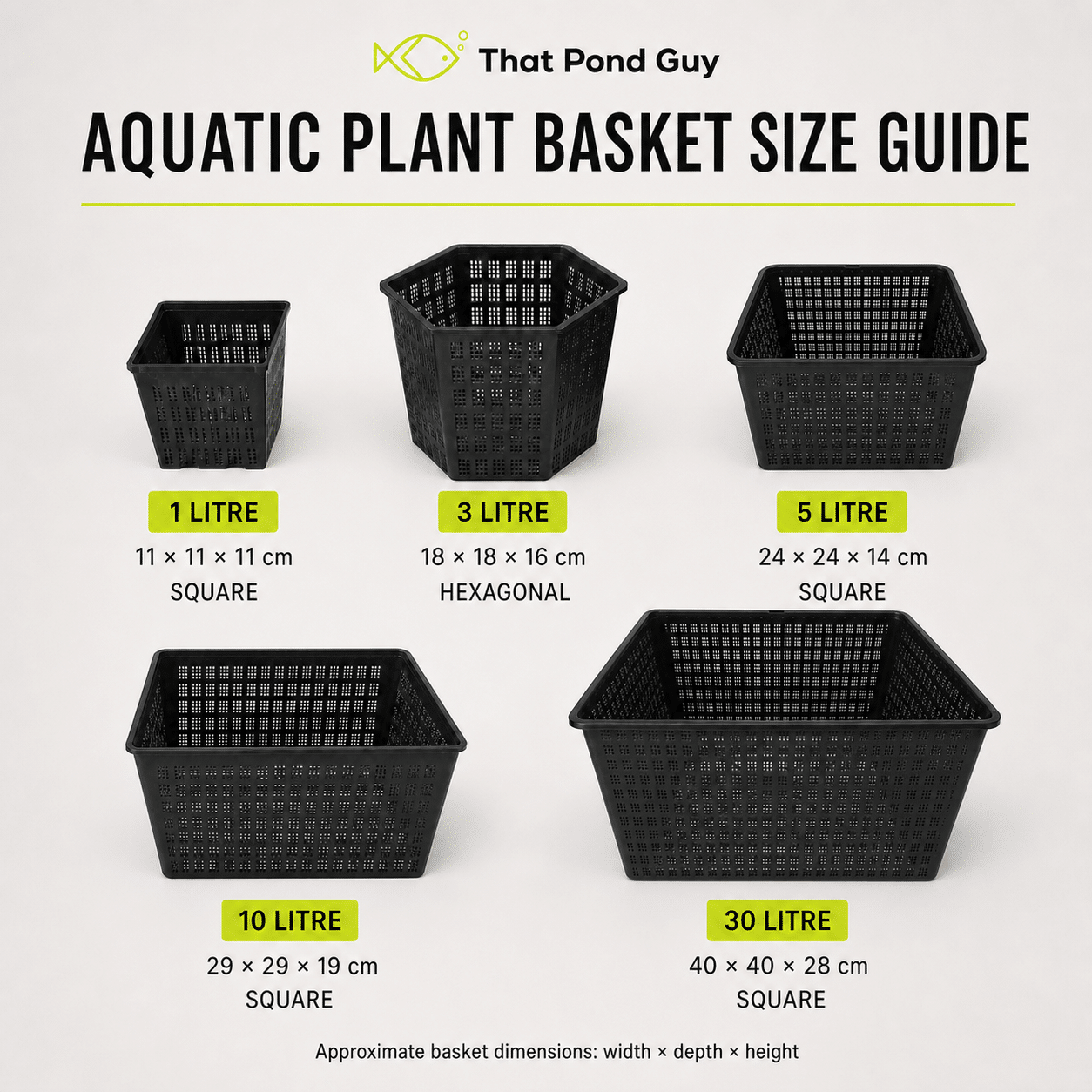
For a rooted plant, use the planting material recommended for that species and avoid rich multipurpose compost or loose fertiliser falling into the water. Set a basket securely without damaging the liner. Do not balance it where a fish, moving water or routine maintenance will knock it into a deeper area.
How many oxygenating plants should you buy?
Look at the space available and the size of the bunches being sold. Ten small bunches and ten large ones are not the same amount of planting. Growth will also vary with light, temperature and disturbance from fish.
For example, a rectangular pond 3m long and 2m wide has a surface area of 3 × 2 = 6m². If shelves, established lilies and access areas occupy part of it, the area available for new submerged growth is smaller. Sketch those areas before comparing the supplier’s planting guidance. For an irregular pond, a rough sketch with measurements is more useful than just its widest point.
As a general reference, the RHS suggests four to five bunches per square metre, with each bunch containing three to four stems. For the full 6m² example, that works out at 24–30 bunches of that size. Compare the actual nursery bundle and its directions before ordering: retail packs are not all equivalent. That helps with an initial order; it does not replace aeration for a stocked fish pond.
Use that plan to choose a sensible starting quantity, then watch how the plants establish. Leave space for open water and maintenance. It is easier to add suitable plants after observing growth than to introduce a dense mass you cannot reach to thin.
A useful detail when asking us for help: tell us the pond’s approximate length, width, available depth, hours of sun and whether it contains fish. Those details help us suggest an appropriate planting position and quantity. The pond’s volume alone does not tell us where the plants can grow.
When and how to add them
Mid-spring to early summer is a useful starting point for new planting: the RHS recommends this period as the water warms. If you are planning in autumn or winter, check the species’ seasonal behaviour and current nursery availability before ordering.
Open the plants when they arrive and keep them wet. Check the label and planting directions, then look through the foliage for unwanted weeds or other hitchhikers. Avoid tipping the packing water straight into the pond.
The RHS pond planting advice is a useful reference for choosing and introducing aquatic plants. Buy identified nursery stock; do not collect plants from a wild pond, ditch or river. Keep removed plants and packing material away from natural waterways too.
The RHS also recommends keeping new purchases separate for a few weeks before adding them, to check for unwanted plant contaminants. Keep them in suitable water and growing conditions while you observe them. A quick rinse can miss small fragments tucked between the stems.
Place each species where it has the required light and depth. For a rooted pot, remember that a supplier’s depth normally refers to water over the planted crown or basket surface; check its stated convention. Remember that the basket itself brings the plant closer to the surface.
As an illustration, a shelf 40cm below the surface with a planting crown 15cm above the shelf leaves about 25cm of water above the crown. Use that measurement for a rooted plant’s depth instructions. Loose hornwort is different because it has no planted crown.
Recheck the position after introduction and during routine pond care. Plants may move, fish may disturb them and seasonal foliage may look different from a summer catalogue photograph. Give new plants time to establish, and check that they stay in a suitable position.
Buy the right species and keep it out of waterways
Use the botanical name when comparing oxygenators. Spiked water milfoil, Myriophyllum spicatum, is a different species from parrot’s feather, Myriophyllum aquaticum. Curled pondweed, Potamogeton crispus, is also different from curly waterweed, Lagarosiphon major. Similar common names can hide an important difference.
The government’s rules for England and Wales list parrot’s feather, curly waterweed and Nuttall’s waterweed among restricted invasive plants. Check the rules for your part of the UK if you are unsure. Do not take unlabelled cuttings from another pond or release surplus plants into a ditch, stream or wild pond.
Keep plant fragments contained when cleaning equipment or thinning growth. If you discover a listed invasive species, follow the government’s disposal guidance rather than passing it to another pond owner. For an ordinary planting scheme, choose clearly identified plants from our oxygenating plant range and keep their labels.
Keeping summer growth under control
Healthy submerged growth can become too dense. Keep pump intakes, drains and inspection areas accessible; remove strands caught around equipment during maintenance. Leave some open water, and do not let a thick mat cover the intakes or crowd out everything else.
Thin manageable sections, rather than clearing the whole pond in one go. Inspect lifted material carefully for pond wildlife and return animals safely to the water. Follow seasonal wildlife advice for your pond, particularly where amphibians are breeding. Compost suitable surplus securely away from streams, drains and other waterways.
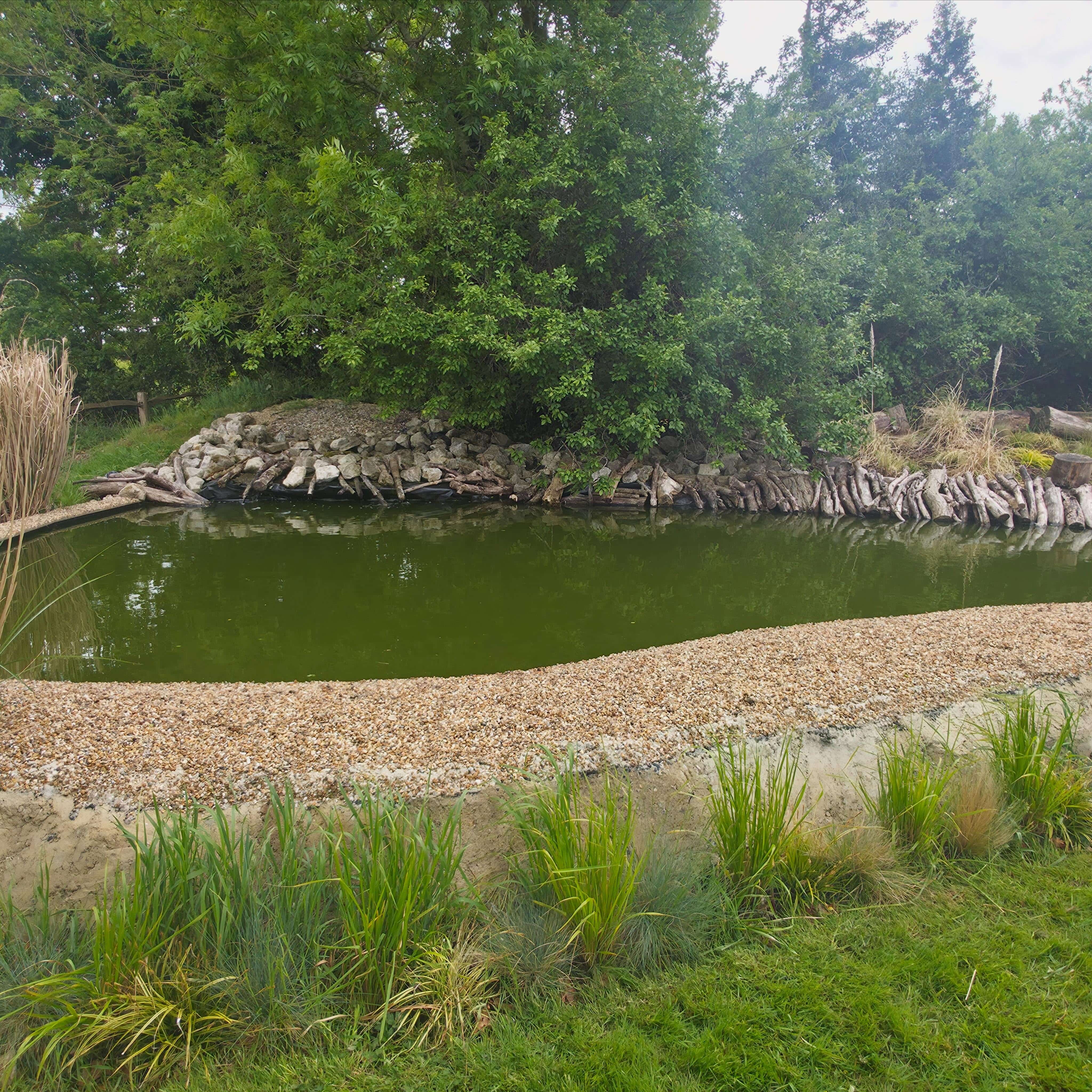
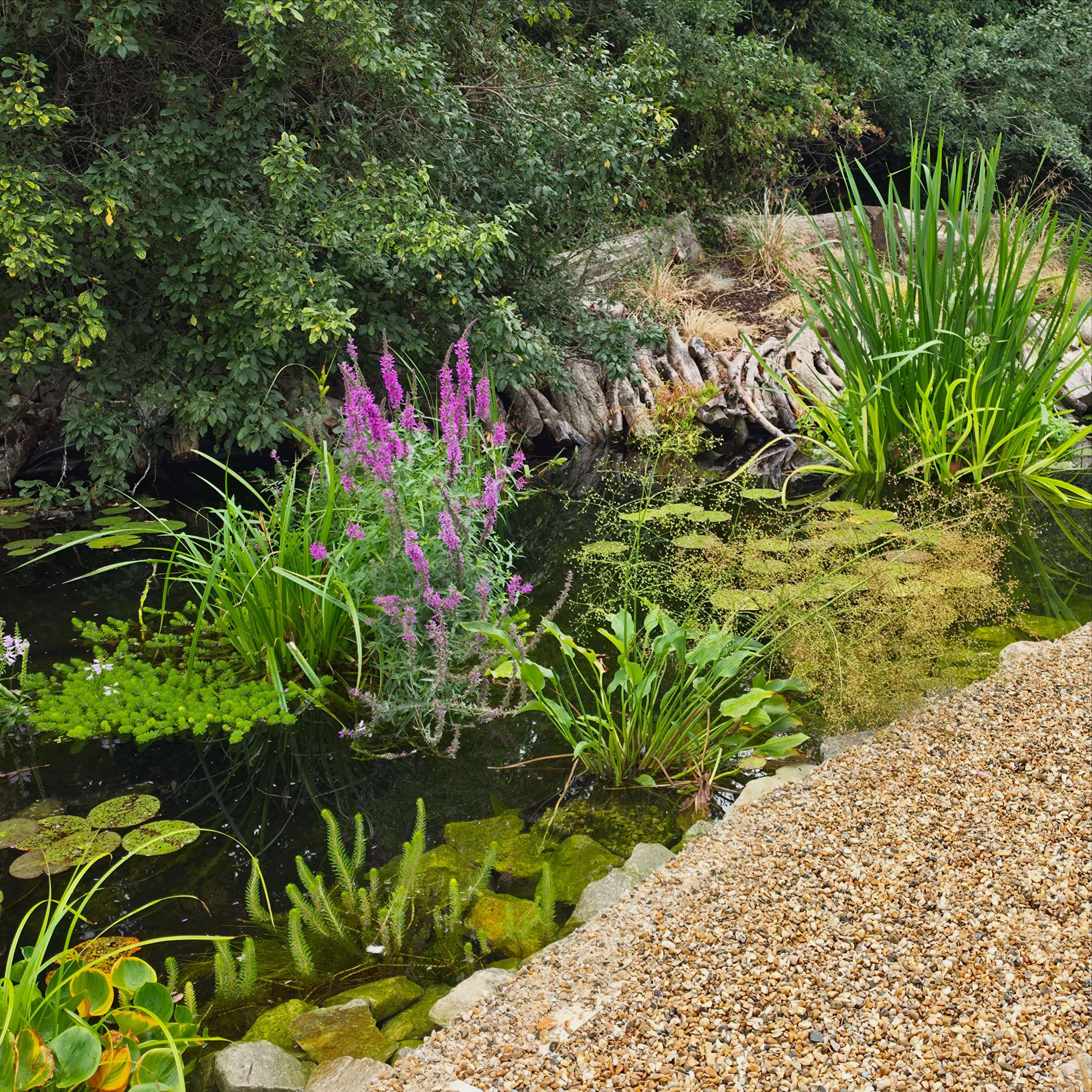
The photographs below show how submerged planting fits into a wider pond scheme, with marginals around the edge and lily leaves at the surface. They are from our Sevenoaks planting work.
What happens to oxygenating plants in winter?
Winter appearance depends on the species. Hornwort can lose much of its visible growth and form compact overwintering buds, called turions. These can remain lower in the pond and grow again when conditions improve. So if you see much less hornwort in winter, it may simply be resting rather than dead.
Willow moss is described as evergreen, while spiked water milfoil is deciduous. Even evergreen growth slows as the days get shorter.
Remove genuinely decaying surplus without stripping out every resting fragment. Keep leaves and debris from smothering remaining submerged growth. If the pond has fish, maintain suitable aeration and other winter care rather than relying on plant foliage to meet their needs. The RHS seasonal pond care advice gives useful context.
Can oxygenating plants live with koi?
They can be part of a koi pond’s planting, but the fish may eat, pull apart or move fresh growth. We would allow for that when planning a koi pond. A plant that grows well in an undisturbed wildlife pond may have a much harder time among large fish.
A protected planting shelf or separate planted area may be a better home for vulnerable plants. Keep water movement appropriate and make the area accessible for maintenance. See our guide to planting a koi pond for the broader layout choices.
Plants cannot replace a correctly maintained fish filter or adequate aeration. If fish are repeatedly gathering at the surface or appear distressed, investigate water quality and oxygen promptly rather than buying plants as an emergency remedy.
Will oxygenating plants clear green water?
Do not expect a new bunch to clear the pond straight away. Plants need suitable conditions to establish, and algae can reduce the light reaching them. Review accumulated debris, feeding and the complete planting scheme rather than continually adding more bunches to murky water.
In a fish pond, keep the filter maintained and check the water. Our pond water-quality guide covers the wider routine, and the pH and hardness guide explains readings that planting alone will not manage for you.
Why are my oxygenating plants dying or disappearing?
| What you notice | Useful checks | A sensible next step |
|---|---|---|
| Less hornwort visible in winter | Season, remaining buds and whether material is decaying. | Allow for normal dieback. Remove rotting surplus without discarding every resting bud. |
| New bunches keep moving | Fish disturbance, water movement and the supplied weight or attachment. | Reposition according to the species’ directions; protect delicate growth where needed. |
| Weak growth in deep water | Light reaching the foliage, shading, green water and the recommended depth. | Review the position. Do not assume extra compost fixes a light problem. |
| Broken stems or missing shoots | Fish, birds, recent handling and strands caught in equipment. | Protect new planting and check intakes during routine maintenance. |
| Dense growth with little open water | Spread, access to equipment and other plants being shaded. | Thin in stages and remove surplus safely after checking for wildlife. |
If several plants start struggling at once, think about what has changed in the pond. Has the water become greener, have lilies shaded them out, or have fish disturbed them? Send us a clear photograph and the plant’s name if you would like help working it out.
More questions about oxygenating plants
Do I need to keep half the surface clear?
For a planted garden pond, the RHS suggests keeping around half the surface clear of vegetation. Think about lily leaves, floating plants and vigorous growth together. That is different from counting submerged bunches: the aim is a varied pond with open water as well as cover.
What if blanketweed is tangled around the plants?
Heavy algae can shade submerged foliage. Remove excess carefully and check the stems as you work, rather than pulling out a large tangle and losing the plants with it. Keep on top of dead leaves and other debris too. The RHS guide to pond algae explains why light, shade and the wider planting scheme matter. More oxygenators alone will not solve every algae problem.
Before you order
Choose the plant for its growth habit and position first. Check the botanical name, supplied form, depth guidance and likely maintenance. If you are ordering outside the growing season, read the current availability information on the product page; seasonal stock and dispatch arrangements can change.
Browse our oxygenating pond plants to compare suitable options. For lilies and flowering planting, our water lily care guide covers their separate requirements. If you are unsure where a submerged plant should go, send us the pond measurements and a photograph, and we can help you work through the choice.
