





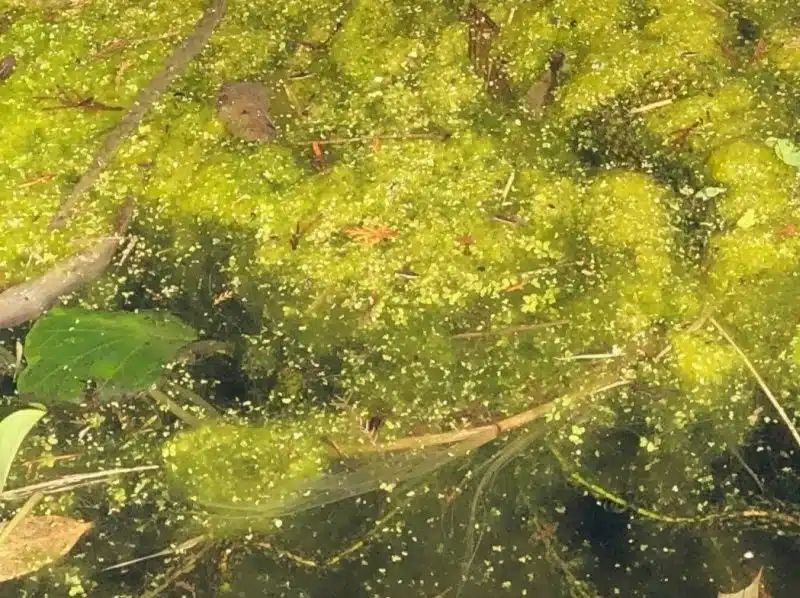
Best Blanketweed Treatment: How to Remove Blanket Weed from a Pond
Why Blanketweed Appears, How to Treat It Safely and How to Prevent It Returning
Quick Answer: What Is the Best Blanketweed Treatment?
For most garden ponds and koi ponds, the most effective approach is to remove as much blanketweed as possible by hand, improve filtration and aeration, and then apply a reliable treatment that targets the conditions encouraging the algae to grow.
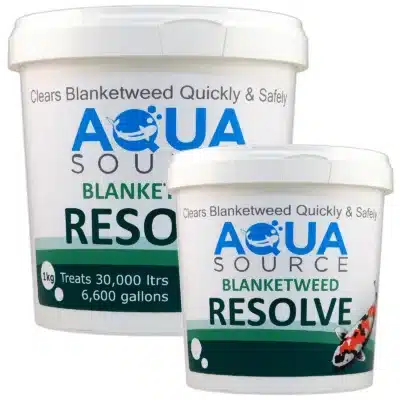
Through our professional pond cleaning and maintenance work, the treatment we most regularly recommend is Aqua Source Blanketweed Resolve. It is designed to help control blanketweed by reducing the nutrients, particularly available phosphate, that support repeated algae growth.
Buy Aqua Source Blanketweed Resolve here: https://www.thatpondguy.co.uk/product/blanket-weed-resolve/
How to Remove Blanketweed and String Algae from Garden Ponds
Blanketweed is one of the most common and frustrating problems faced by pond owners. A pond can appear clear and healthy through winter, only for long green strands of algae to begin spreading across the water as temperatures and daylight increase.
Also known as blanket weed, string algae or filamentous algae, it can attach itself to pond walls, waterfalls, rocks, pumps, plants and filter inlets. When growth becomes heavy, the individual strands join together and form dense floating mats across the pond surface.
A small amount of algae is a natural part of a pond ecosystem. However, excessive blanketweed can make the pond difficult to maintain, restrict water flow, trap organic debris and interfere with pumps and filtration equipment.
The good news is that blanketweed can normally be brought under control. The best results come from treating the visible growth while also addressing the nutrients and pond conditions that allowed it to develop.
What is Blanketweed?
Blanketweed is a type of filamentous algae that grows in long, visible strands. It is different from the microscopic algae responsible for green pond water.
Green water algae remain suspended in the water and can often be controlled with an appropriately sized UV clarifier. Blanketweed attaches itself to solid surfaces, which means it will not normally pass through a UV unit.
Typical signs of blanketweed include:
- Long green strands attached to pond walls and rocks
- Algae growing across waterfalls and water features
- Green material wrapping around pond plants
- Floating mats forming across the water surface
- Pump cages and filter inlets becoming blocked
- Filters requiring more frequent cleaning
- Reduced water flow through waterfalls and filtration systems
Blanketweed often starts around the shallow edges of the pond, where sunlight is strongest and the water warms more quickly. It can then spread rapidly through the rest of the pond.
If your pond is already heavily affected by algae, a full pond clean can often restore balance quickly. You can learn more about our pond cleaning services here.

Close-Up of Blanketweed Strands
Why Blanketweed Appears in Ponds
Blanketweed develops when the pond provides a suitable combination of nutrients, sunlight and water temperature. Simply pulling out the visible algae may improve the pond temporarily, but it is likely to return unless these underlying conditions are also considered.
Excess Nutrients
Excess nutrients are one of the main causes of persistent blanketweed growth. These nutrients commonly enter the pond through:
- Fish waste
- Uneaten fish food
- Decaying leaves
- Dying pond plants
- Sludge on the pond floor
- Fertiliser washing in from surrounding borders
- Organic debris trapped inside filters or pipework
As organic material breaks down, it releases nutrients including phosphate and nitrate into the water. These nutrients act as fertiliser for algae.
Regularly removing debris and maintaining the filtration system reduces the amount of material available to break down inside the pond.
Strong Sunlight
Like other plants, blanketweed uses light to grow. Ponds positioned in open gardens and exposed to direct sunlight for much of the day can therefore experience faster algae growth.
Water lilies, floating leaves and carefully selected pond plants can provide shade while also competing with algae for nutrients.
Increasing Spring Temperatures
Blanketweed commonly becomes noticeable during March, April and May.
As the water warms, fish become more active, feeding increases and organic debris accumulated during winter begins to decompose. At the same time, the days become longer and sunlight becomes stronger.
The biological bacteria inside the pond filter may still be recovering from colder winter temperatures. This temporary imbalance can allow nutrients to build up faster than the filtration system can process them.
Inadequate or Poorly Maintained Filtration
A correctly sized filter removes suspended waste before it breaks down and releases additional nutrients.
Blanketweed problems are more likely when:
- The pond filter is too small
- Water flow through the filter is insufficient
- Mechanical filter media is blocked
- The filter is cleaned too infrequently
- The filter is cleaned too aggressively
- The fish stock has increased
- The pump is no longer delivering its expected flow
You can explore pond filtration equipment here: https://www.thatpondguy.co.uk/product-category/pond-filters/
Low Oxygen and Poor Circulation
Beneficial bacteria require oxygen to process fish waste and organic material efficiently. Poor circulation and low oxygen levels can slow these biological processes and allow waste to accumulate.
Adding an air pump or diffuser can improve oxygen levels and help move water through areas that would otherwise remain stagnant.
Our complete pond oxygenation guide can be found here: https://www.thatpondguy.co.uk/oxygenation-and-aeration-for-koi-ponds/
Is Blanketweed Harmful to Fish?
A small amount of blanketweed is not usually harmful. It can provide habitat for small pond organisms and is part of a natural pond environment.
Problems develop when the growth becomes excessive.
Heavy blanketweed can:
- Restrict water movement
- Block pumps and filter inlets
- Trap leaves, food and fish waste
- Smother smaller pond plants
- Cause large daily changes in oxygen levels
- Create additional oxygen demand as loosened algae decomposes
Extra aeration is particularly important when treating a heavily affected fish pond. Loose and dying algae should be removed regularly rather than being allowed to decompose in the water.
Fish gasping at the surface, gathering around a waterfall or behaving unusually should always be treated as an urgent warning sign. Increase aeration immediately and test the pond water.
Why Blanketweed Explodes in Spring
Many pond owners notice that blanketweed suddenly appears during March or April, even if the pond looked perfectly healthy throughout winter.
This happens because several seasonal changes occur at the same time.
As temperatures rise, biological activity within the pond increases. Fish become more active and begin producing more waste, while organic debris that accumulated over winter starts to break down.
At the same time sunlight becomes stronger and the days become longer, creating ideal conditions for algae growth.
However the beneficial bacteria within pond filters are still recovering from the colder winter period and are not yet operating at full capacity. This temporary imbalance allows nutrients to accumulate, giving algae the opportunity to grow rapidly.
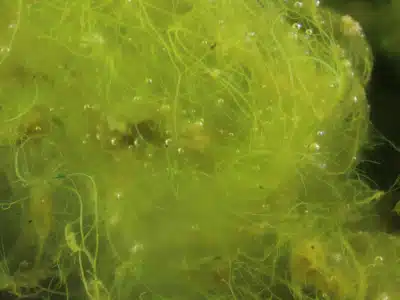
Close-Up of Blanketweed Strands in a Pond
The Best Way to Remove Blanketweed
The most reliable approach combines physical removal, equipment checks, improved pond management and a suitable blanketweed treatment.
1. Remove the Heaviest Growth by Hand
Before applying treatment, remove as much of the thick blanketweed as reasonably possible.
The strands can be twisted around a smooth stick or blanketweed brush and lifted from the pond. A pond net can also be used to collect loose pieces.
Work carefully around spawning fish, tadpoles, newts, aquatic insects and delicate plants. Leave removed material beside a wildlife pond for a short period so small creatures have an opportunity to return to the water.
Manual removal gives the treatment less algae to tackle and prevents large amounts of dying material from decomposing inside the pond.
2. Clean Pumps and Mechanical Filter Media
Check pump cages, skimmers, filter screens and mechanical filter media for blockages.
Remove trapped blanketweed and rinse mechanical media as appropriate. Biological media should not be aggressively cleaned with untreated tap water, as this can damage the beneficial bacteria living inside the filter.
3. Check Feeding and Organic Waste
Only feed fish what they can consume within a few minutes. Remove uneaten food and avoid feeding heavily while the filtration system is struggling.
Clear fallen leaves, dead plant material and visible sludge where practical.
4. Increase Aeration
Keep strong aeration running throughout treatment, especially in warm weather or heavily stocked koi ponds.
An air pump and diffuser provide additional oxygen while also improving circulation and supporting the pond’s biological filtration.
Pond air pumps can be found here:
https://www.thatpondguy.co.uk/product-category/air-pumps/
5. Apply a Suitable Blanketweed Treatment
Once the heaviest growth has been removed and the equipment has been checked, apply a treatment specifically intended for blanketweed.
Always calculate the pond volume carefully and follow the current instructions printed on the product packaging.

Overgrown Pond with Blanketweed Infestation
Aqua Source Blanketweed Resolve Sizes and Coverage
The product is available in several tub sizes:
| Size | Treats Up To | UK Gallons |
|---|---|---|
| 250g | 7,500 litres | 1,649 gallons |
| 500g | 15,000 litres | 3,300 gallons |
| 1kg | 30,000 litres | 6,600 gallons |
| 2kg | 60,000 litres | 13,200 gallons |
Dosage
The current dosage information is:
25g per 750 litres of pond water
Product formulations and manufacturer instructions can change, so always check the directions on the tub before applying treatment.
Never estimate the pond volume by sight where fish are present. Measure the average length, width and depth and calculate the volume as accurately as possible.
For an irregular pond, use average measurements and reduce the calculated volume where there are large planting shelves, rocks or other features displacing water.
How to Apply Aqua Source Blanketweed Resolve
- Calculate the pond volume as accurately as possible.
- Remove the thickest blanketweed manually.
- Clear blanketweed from pump cages and filter inlets.
- Measure the correct amount of treatment.
- Distribute it around the pond according to the current pack instructions.
- Keep strong aeration running throughout treatment.
- Remove loosened algae and clean mechanical filter media as required.
- Repeat treatment only at the interval specified on the packaging.
The supplied treatment guidance recommends repeating the dose every 10 days during the first 30 days for heavy infestations, followed by monthly maintenance dosing where necessary. Check the current tub instructions before following this schedule.
Avoid overdosing. Using more treatment than recommended will not necessarily produce quicker results and could place unnecessary stress on the pond ecosystem.
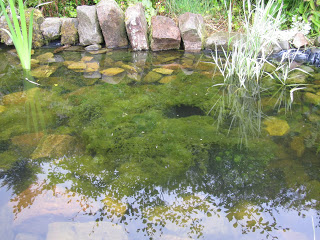
Blanketweed Growth in a Pond
How Long Does Blanketweed Resolve Take to Work?
Many pond owners begin noticing changes within approximately 7 to 10 days. Thick growth may start to weaken, lose structure and become easier to remove over the following weeks.
A heavily affected pond may require more than one correctly timed treatment.
Results can take longer when:
- The pond volume has been underestimated
- The blanketweed is extremely dense
- Nutrient levels remain high
- Large amounts of sludge are present
- The filter is undersized
- Water circulation is poor
- Fish are being overfed
- Fertiliser or surface water is entering the pond
Treating the algae without addressing these factors can result in it returning.
Natural Ways to Help Reduce Blanketweed
A treatment can bring an outbreak under control, but the following improvements can help reduce the likelihood of it returning.
Add More Pond Plants
Healthy pond plants compete with algae for nutrients. Water lilies also provide surface shade, which reduces the amount of sunlight reaching the water.
Choose plants suitable for the pond depth and avoid introducing highly invasive species.
Remove Leaves and Organic Debris
Remove fallen leaves before they sink and decompose. Trim dead plant growth and empty skimmer baskets regularly.
A pond net can be useful during autumn where the pond is surrounded by deciduous trees.
Maintain the Filter
Clean mechanical stages regularly enough to maintain water flow. Avoid completely sterilising biological filter media unless there is a specific reason to do so.
Check that the pump is delivering a suitable turnover rate for the pond and fish stock.
Avoid Overfeeding
Uneaten food quickly breaks down and increases nutrient levels. Feed smaller amounts and make sure the fish consume everything offered.
Improve Water Movement
Check for stagnant corners, blocked returns and areas where debris continually collects. Additional circulation or aeration may be required.
Provide Shade
Water lilies and other floating-leaved plants can reduce the amount of direct sunlight entering the pond. This is particularly useful in shallow ornamental and wildlife ponds.
Does a UV Clarifier Kill Blanketweed?
A UV clarifier is primarily used to control the microscopic algae that cause green pond water.
Blanketweed is attached to pond surfaces and does not normally travel through the UV unit. A working UV can therefore leave the pond water clear while blanketweed continues growing on the walls, plants and waterfall.
Both problems are algae related, but they require different methods of control.
Why Does Blanketweed Keep Coming Back?
Blanketweed normally returns because the conditions supporting it are still present.
Common causes include:
- High phosphate or nitrate levels
- Excessive fish feeding
- Heavy fish stocking
- Insufficient filtration
- Sludge and organic debris
- Strong sunlight
- Poor circulation
- Seasonal changes in water temperature
- Fertiliser entering the pond
Regular maintenance dosing may help, but it should not replace good filtration, sensible feeding, debris removal and proper circulation.
Should You Completely Clean the Pond?
A complete pond clean is not required for every blanketweed outbreak.
Treatment and targeted maintenance may be sufficient when the pond has good water quality, manageable levels of debris and a suitable filtration system.
Professional cleaning may be more appropriate when:
- Thick sludge covers the pond floor
- Pumps and filters block repeatedly
- The pond has an unpleasant smell
- Water quality remains poor
- Fish are showing signs of stress
- Blanketweed returns immediately after treatment
- The filtration system needs inspecting or upgrading
- The pond has been neglected for several years
Our pond cleaning service removes accumulated sludge and organic waste, cleans pumps and filters and helps identify the underlying reasons for recurring algae problems.
Learn more about professional pond cleaning: https://www.thatpondguy.co.uk/our-pond-care-services/pond-cleaning/
For regular ongoing care, visit: https://www.thatpondguy.co.uk/our-pond-care-services/pond-maintenance/
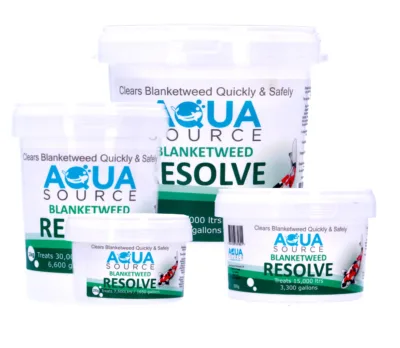
Aqua Source Blanketweed Resolve – Available in Multiple Sizes
Need Professional Help With Blanketweed?
Persistent blanketweed can indicate a wider issue with nutrient levels, sludge, circulation, filtration or fish stocking.
That Pond Guy provides professional pond cleaning, maintenance, filtration upgrades and algae control across Kent, London, Essex, Surrey and Sussex.
We work on everything from small wildlife ponds and formal garden ponds to heavily stocked koi ponds and larger ornamental water features.
For professional advice or a quotation, contact us and include photographs of the pond, filter and existing blanketweed growth.
https://www.thatpondguy.co.uk/contact/
About the Author
Matthew Adlington is the founder of That Pond Guy, a specialist pond construction and maintenance company working across Kent and the South East.
Through the cleaning, restoration and maintenance of hundreds of ponds, Matthew and the That Pond Guy team regularly diagnose and treat blanketweed problems in wildlife ponds, ornamental garden ponds and koi ponds.
Blanketweed Frequently Asked Questions
Blanketweed can be frustrating, particularly when it returns shortly after being removed. The questions below explain how to identify blanketweed, why it appears, how to treat it safely and what can be done to reduce the chance of it returning.
This advice is based on our experience cleaning, maintaining and restoring garden ponds, wildlife ponds and koi ponds across Kent and the South East.
Understanding Blanketweed
What is blanketweed?
Blanketweed is a type of filamentous algae that grows in long green strands within pond water. It attaches itself to pond walls, rocks, waterfalls, plants, pumps and filtration equipment.
As the strands grow, they begin to tangle together and can eventually form thick floating mats across the surface of the pond.
A small amount is a natural part of many pond ecosystems. It becomes a problem when the growth becomes excessive, blocks equipment or begins covering large areas of the pond.
Is blanketweed the same as string algae?
Yes. Blanketweed, blanket weed, string algae and filamentous algae are different names commonly used to describe the same type of long, fibrous pond algae.
The name used may vary between pond keepers, manufacturers and suppliers, but they generally refer to the same problem.
What is the difference between blanketweed and green water?
Blanketweed grows in visible strands that attach themselves to pond surfaces. It can usually be lifted from the water in clumps or twisted around a pond brush.
Green water is caused by microscopic algae suspended throughout the pond. It gives the water a green, cloudy appearance but does not usually form long strands.
This difference is important because the two problems require different methods of control. A UV clarifier can be extremely effective against green water, but it will not normally remove blanketweed attached to pond walls and plants.
How can I tell whether my pond has blanketweed?
Blanketweed usually appears as bright green, hair like strands growing around the pond edges, across waterfalls or over submerged surfaces.
Common signs include:
• green strands attached to pond walls and rocks
• algae wrapping around aquatic plants
• floating green mats on the surface
• blocked pump cages or filter inlets
• reduced flow through a waterfall
• filters requiring unusually frequent cleaning
Acting when the first strands appear is normally easier than waiting until the blanketweed has spread throughout the pond.
Why does blanketweed grow in ponds?
Blanketweed grows when the pond contains a suitable combination of nutrients, sunlight and water temperature.
The nutrients that feed it commonly come from fish waste, uneaten food, decaying leaves, dying plants and organic sludge on the pond floor. Fertiliser and nutrient rich surface water can also enter the pond from surrounding lawns or flower beds.
As this material decomposes, it releases nutrients such as phosphate and nitrate. Blanketweed uses these nutrients in much the same way that garden plants use fertiliser.
Why does blanketweed sometimes appear very suddenly?
Blanketweed can begin growing before it becomes immediately noticeable. Once the conditions are suitable, the existing strands can expand extremely quickly.
This often happens when several changes occur at the same time. Water temperatures rise, daylight hours increase, fish become more active and organic material starts decomposing more quickly.
The pond may therefore appear clear one week and contain obvious strands of algae the next.
Why is blanketweed particularly common during spring?
During early spring, sunlight and water temperatures begin increasing before the pond’s biological filtration has fully recovered from winter.
Fish become more active and produce more waste, while leaves and other organic material that accumulated during the colder months begin to break down.
The beneficial bacteria inside the pond filter may not yet be operating at full strength. This temporary imbalance gives blanketweed an opportunity to use the available nutrients before other plants and microorganisms become fully active.
What colour should blanketweed be?
Actively growing blanketweed is usually bright or dark green. Healthy strands often feel soft, fibrous or slightly slimy.
During treatment, the algae may become duller, softer or easier to pull apart. It can eventually turn brown, grey or almost white as it weakens and begins breaking down.
Remove loose and dying material where practical rather than allowing large amounts to decompose inside the pond.
Is blanketweed harmful to fish?
Blanketweed is not normally toxic to fish. A limited amount can provide habitat for insects and other small pond organisms.
Heavy growth can nevertheless create problems. It may block pumps, reduce circulation, trap debris and cover areas where fish would normally swim or feed.
Dense growth can also contribute to fluctuating oxygen levels. Additional aeration is particularly important when blanketweed is being treated and begins decomposing.
Can blanketweed reduce the oxygen level in a pond?
Blanketweed produces oxygen during daylight, but it also uses oxygen when there is no sunlight. Larger daily changes can therefore occur in ponds containing heavy algae growth.
Further oxygen is consumed when loose or dying algae begins decomposing. This can place additional pressure on heavily stocked ponds, particularly during warm weather when the water naturally holds less oxygen.
Keep an air pump, diffuser or well aerated return running throughout treatment. Fish gasping at the surface or gathering around a waterfall should be treated as an urgent warning sign.
Removing and Treating Blanketweed
What is the fastest way to remove blanketweed?
The quickest immediate improvement normally comes from manually removing the thickest growth.
Use a blanketweed brush, smooth stick or pond net to carefully lift the strands from the water. Check the removed material for insects, tadpoles, newts and other pond life before disposing of it.
Manual removal improves the appearance of the pond straight away, but it does not remove the nutrients that caused the algae to grow. For longer lasting results, it should be combined with improved pond maintenance and a suitable treatment.
Should blanketweed be removed before applying treatment?
Yes. Remove as much of the heavy growth as reasonably possible before applying treatment.
This reduces the amount of algae that must break down inside the pond, lowers the risk of blocked pumps and allows the treatment to work on the remaining strands more effectively.
It is not necessary to remove every individual piece. Concentrate on the thick mats and areas wrapped around pumps, waterfalls, plants and filter inlets.
What is the best blanketweed treatment?
Treatments that reduce the nutrients supporting blanketweed generally provide more reliable long term control than methods that only attack the visible algae.
Through our professional pond cleaning and maintenance work, the product we most regularly recommend is Aqua Source Blanketweed Resolve.
It is designed to help control blanketweed by reducing the nutrients, particularly available phosphate, that support repeated algae growth.
You can view the available sizes, dosage information and current price here:
https://www.thatpondguy.co.uk/product/blanket-weed-resolve/
How long does blanketweed treatment take to work?
Blanketweed treatment should not be expected to clear a pond overnight.
Visible changes are often noticed within approximately 7 to 10 days. The algae may begin losing colour, weakening and becoming easier to remove.
A heavy infestation can take several weeks to bring under control and may require further correctly timed applications. Always follow the latest instructions supplied with the treatment.
Can blanketweed treatment be used in a pond containing fish?
Treatments designed for fish ponds can normally be used safely when the pond volume is calculated correctly and the current manufacturer instructions are followed.
Never guess the dosage or add extra product in an attempt to speed up the result. An overdose can unnecessarily disturb the pond and may place fish, plants and biological filtration under stress.
Maintain good circulation and strong aeration throughout the treatment period.
Can blanketweed treatment harm pond plants?
Most purpose made blanketweed treatments are intended to be compatible with established pond plants when used at the correct dosage.
Delicate plants may still react differently, particularly if the pond is overdosed or several treatments are combined. Always check the current product instructions and avoid using different algae treatments together unless their manufacturers specifically confirm that this is safe.
Remember that loosened blanketweed can settle over plant crowns and leaves. Remove this material carefully where necessary.
How often should blanketweed treatment be applied?
The correct treatment interval depends on the product being used and the severity of the outbreak.
During a heavy outbreak, Aqua Source Blanketweed Resolve may require repeated applications at the interval stated on the current packaging. Once the algae has been controlled, some ponds benefit from maintenance applications during the warmer months.
Do not automatically continue treating a pond that is already clear. Review the water quality, filtration, feeding and amount of organic waste before deciding whether another application is required.
Why has my blanketweed treatment not worked?
There are several common reasons why a treatment may appear ineffective.
The pond volume may have been calculated incorrectly, the infestation may be particularly heavy or the algae may need more time to weaken. Large amounts of sludge, poor circulation and continuously high nutrient levels can also reduce the overall result.
Other possible causes include:
• insufficient treatment for the true pond volume
• applying another chemical at the same time
• failing to remove the heaviest growth first
• heavy fish feeding during treatment
• blocked pumps or restricted filter flow
• fertiliser or nutrient rich runoff entering the pond
• expecting an immediate result
Do not simply add another dose early. Check the product instructions and identify why the pond continues to provide favourable conditions for algae.
Should the pond pump and filter remain running during treatment?
In most cases, circulation and filtration should remain running, but the current treatment instructions must always take priority.
Keeping the water moving distributes the treatment and helps maintain oxygen levels. Mechanical filter media may require more frequent cleaning as loosened algae passes through the system.
Never leave a stocked fish pond without adequate oxygen or circulation unless the manufacturer specifically instructs you to temporarily isolate a piece of equipment.
Does a UV clarifier remove blanketweed?
No. A UV clarifier is designed primarily to control microscopic algae suspended in the water.
Blanketweed remains attached to pond walls, rocks, plants and equipment, so it does not normally pass through the UV unit.
A pond can therefore have perfectly clear water while still suffering from a serious blanketweed problem. This does not necessarily mean that the UV clarifier or filter is faulty.
Does barley straw remove blanketweed?
Barley straw has traditionally been used as a natural method of discouraging algae growth.
As the straw decomposes, conditions may develop that inhibit some forms of algae. However, the results can be slow and unpredictable, particularly once blanketweed has become well established.
Barley straw is generally better viewed as a possible preventative aid than a rapid treatment for a heavily affected pond.
Does baking soda remove blanketweed?
Baking soda is sometimes recommended online because it can increase carbonate hardness.
A suitable carbonate hardness can support stable pH and biological filtration, but baking soda does not directly remove the phosphate, sludge or organic waste causing blanketweed.
It should only be used to correct a confirmed water chemistry issue and not as a general algae treatment.
Can vinegar or hydrogen peroxide be used to kill blanketweed?
We do not recommend adding vinegar to a pond containing fish, wildlife or aquatic plants. It can alter the water chemistry and potentially harm pond life.
Hydrogen peroxide can damage algae, but an incorrect concentration can also harm fish, plants and beneficial bacteria. It is not a suitable routine blanketweed treatment for most garden pond owners.
Use a product specifically developed and labelled for pond use instead of experimenting with household chemicals.
Preventing Blanketweed from Returning
Why does blanketweed keep coming back?
Blanketweed usually returns because the nutrients and pond conditions supporting it remain present.
Removing or treating the visible algae deals with the immediate problem, but fish waste, uneaten food, sludge, decaying leaves and poor circulation may continue feeding new growth.
Long term control requires a combination of treatment, filtration, sensible feeding, plant management, debris removal and good water movement.
Does sludge cause blanketweed?
Sludge is one of the most common causes of persistent pond algae problems.
It consists of fish waste, leaves, plant material, uneaten food and other organic debris that has settled on the pond floor. As it decomposes, nutrients are released back into the water.
A thin natural layer is common in wildlife ponds, but heavy black or foul smelling sludge may indicate that the pond requires cleaning or improved filtration.
Can overfeeding fish cause blanketweed?
Yes. Food that is not eaten quickly sinks into the pond or becomes trapped in the filter, where it begins decomposing.
Even food consumed by the fish eventually increases the amount of waste that the filtration system must process.
Feed smaller amounts and only provide what the fish can consume within a few minutes. Reduce feeding if food remains uneaten or the filter is struggling to maintain good water quality.
Can having too many fish cause blanketweed?
A heavily stocked pond produces more waste and requires considerably more filtration and oxygen than a lightly stocked pond.
If the pump and filter cannot process the waste being produced, nutrient levels rise and blanketweed becomes more likely.
Upgrading the filtration may help, but the complete system must be considered. Pump flow, mechanical filtration, biological capacity, aeration and regular maintenance all need to be appropriate for the fish load.
Can pond plants help prevent blanketweed?
Healthy aquatic plants compete with algae for nutrients. Floating leaves can also reduce the amount of sunlight reaching the water.
Water lilies, marginal plants and suitable oxygenating plants can all contribute to a more balanced pond. However, plants should not be treated as an instant cure for an established infestation.
Remove dead leaves and trim dying growth before it decomposes and releases nutrients back into the pond.
Does shade help prevent blanketweed?
Reducing direct sunlight can slow algae growth, particularly in shallow ponds that warm quickly.
Water lily leaves provide useful natural shade while also adding colour and habitat. Pergolas, surrounding planting and carefully positioned garden features may also reduce direct sunlight.
Complete shade is neither practical nor necessary. The aim is to create a better balanced environment rather than remove all natural light.
Will aeration reduce blanketweed?
Aeration will not directly kill blanketweed, but it can support the biological processes that help keep the pond healthy.
Beneficial bacteria require oxygen to break down fish waste and organic material. Better oxygen levels can therefore help the filter process nutrients before algae has an opportunity to use them.
Aeration is particularly valuable in koi ponds, heavily stocked ponds and during warm weather.
Can a waterfall help control blanketweed?
A waterfall can improve circulation and add some oxygen to the water.
This contributes to a healthier pond, but a waterfall alone will not remove the nutrients causing blanketweed. The amount of oxygen added will also depend on the height, width and flow of the waterfall.
Blanketweed commonly grows directly on waterfalls because they are shallow, well lit and constantly supplied with nutrient rich water. These areas may still require manual cleaning.
Can poor water circulation cause blanketweed?
Poor circulation allows waste and nutrients to collect in quiet areas of the pond.
These stagnant areas can become hotspots for blanketweed, sludge and poor water quality. Check behind planting baskets, under waterfalls and in corners where debris regularly settles.
Improving the position of pond returns, adding aeration or selecting a more suitable pump can help reduce dead areas.
Will installing a larger filter stop blanketweed?
A correctly sized filter can significantly improve water quality by removing waste before it decomposes.
However, even a large filter cannot completely prevent blanketweed if it is poorly maintained, receives insufficient flow or the pond continues accumulating high levels of nutrients.
Before replacing the filter, check the pump flow, pipe sizes, fish stock, feeding routine and maintenance frequency. The filter must be considered as part of the complete pond system.
You can view our pond filtration equipment here:
https://www.thatpondguy.co.uk/product-category/pond-filters/
Can cleaning a filter too thoroughly cause algae problems?
Yes. Biological filter media contains beneficial bacteria that process harmful waste and help maintain a stable pond.
Aggressively cleaning all the media at once, particularly with untreated tap water, can reduce the bacterial population and temporarily weaken the filter.
Mechanical media should be cleaned as required to maintain flow. Biological media should normally be cleaned more gently and only when necessary, following the filter manufacturer’s guidance.
Does testing pond water help prevent blanketweed?
Water testing helps identify conditions that may be contributing to poor pond health.
At a minimum, fish ponds should be checked for ammonia, nitrite, pH and carbonate hardness. Phosphate and nitrate testing can provide further information where blanketweed repeatedly returns.
A test result is most useful when it leads to action. Record the results, look for changes over time and correct the source of the problem rather than repeatedly adding treatments.
Can rain cause a blanketweed outbreak?
Rain itself does not automatically cause blanketweed, but runoff entering the pond can carry nutrients from lawns, flower beds, soil and surrounding paving.
Heavy rain can also disturb debris and wash decomposing material into the water.
Check that surrounding ground slopes away from the pond and that lawn treatments, compost and fertiliser cannot wash into it.
Can garden fertiliser cause blanketweed?
Yes. Garden and lawn fertilisers commonly contain phosphate and nitrate, which can rapidly encourage algae growth if they enter the pond.
Avoid applying fertiliser where it can be washed into the water. Be particularly careful around raised borders, waterfalls, streams and ponds positioned below surrounding ground level.
Even a small amount of concentrated fertiliser can have a significant effect on a relatively small pond.
Seasonal and Pond Specific Questions
Should blanketweed be treated in early spring?
Early treatment is often easier than waiting until thick mats have developed.
Begin by removing visible strands, cleaning any accumulated winter debris and checking that the pump, UV and filtration system are operating correctly.
If using a blanketweed treatment, follow the current instructions regarding minimum water temperature and treatment intervals.
Does warm weather make blanketweed worse?
Warm water and strong sunlight can create ideal growing conditions, particularly when nutrient levels are already high.
Warm weather also reduces the amount of oxygen the water can hold. This makes aeration more important during heavy algae growth and treatment.
Check pumps and filters frequently during hot periods because loose blanketweed can quickly restrict water flow.
Does blanketweed grow during autumn?
Blanketweed growth usually slows as water temperatures fall and daylight hours become shorter.
Existing strands may remain in the pond, particularly during a mild autumn. Remove excessive growth and fallen leaves before they become part of the winter sludge layer.
Autumn maintenance can significantly reduce the nutrients available when the pond begins warming again in spring.
Will frost kill blanketweed?
Cold weather can slow or temporarily stop blanketweed growth, but frost rarely eliminates the problem completely.
Small amounts can survive through winter and begin growing again when temperatures and daylight increase.
Removing organic waste during autumn and winter is often more effective than relying on cold weather to solve the problem.
Are wildlife ponds more likely to develop blanketweed?
Wildlife ponds may experience blanketweed because they often have no pump, filter or artificial circulation.
A well balanced wildlife pond containing healthy plants can still remain relatively clear. Problems normally arise when nutrient levels increase because of leaves, soil, fertiliser or excessive decaying vegetation.
Avoid completely stripping a wildlife pond of all algae. Remove excessive growth gradually and carefully check it for pond life.
Can a complete pond clean remove blanketweed permanently?
A thorough pond clean can remove large amounts of sludge, algae and organic debris. This may dramatically improve a neglected pond and reduce the nutrients supporting future growth.
It cannot guarantee that blanketweed will never return. Sunlight, fish waste, feeding and seasonal changes will continue affecting the pond.
The best long term results come from combining cleaning with suitable filtration, aeration and regular maintenance.
When does a blanketweed problem require professional help?
Professional assistance may be worthwhile when:
• blanketweed returns immediately after treatment
• the pond contains heavy sludge or has an unpleasant smell
• pumps and filters repeatedly become blocked
• fish appear stressed or gather at the water surface
• the filtration system is undersized or poorly configured
• the pond volume or treatment dosage is uncertain
• water quality remains poor despite regular maintenance
A professional inspection can help establish whether the main cause is nutrient build up, inadequate filtration, poor circulation, overstocking or another underlying problem.
Where can I buy Aqua Source Blanketweed Resolve?
Aqua Source Blanketweed Resolve is available in several sizes for garden ponds, wildlife ponds, goldfish ponds and koi ponds.
View the available pack sizes, treatment coverage, dosage guidance and current price here:
https://www.thatpondguy.co.uk/product/blanket-weed-resolve/
Need Professional Help With Blanketweed?
If blanketweed is accompanied by heavy sludge, poor water quality or repeated filter blockages, a professional pond clean can often restore the pond much more effectively than treatment alone.
That Pond Guy provides pond cleaning, maintenance, filtration upgrades and algae control across Kent, London, Essex, Surrey and Sussex.
You can find out more about our professional pond cleaning service here:
https://www.thatpondguy.co.uk/our-pond-care-services/pond-cleaning/
