





Koi Pond pH: Testing, Stability and Safe Correction
Check the reading before adding a treatment
A pH result is useful, but it needs a little context. Has it always been around that level, or has it changed since yesterday? Was the sample taken first thing in the morning or late in the afternoon? And what is the KH doing?
Those are the questions we would start with before reaching for a treatment. This guide is for working out why your koi pond’s pH is high, low or changing. For a fuller explanation of the different tests, read our guide to pH, KH and GH alongside it.
If the fish are struggling, treat that as urgent. Gasping, loss of balance or several fish suddenly becoming unwell need prompt attention. Check the air supply and circulation, stop feeding while investigating, test the water and get experienced help. A pH test on its own cannot tell you everything that is wrong.
Before changing anything, check these five things
- Repeat the pH test. Use a clean tube, the correct sample volume and the timing on your kit’s instructions.
- Test KH. This tells you about the water’s ability to resist a pH drop.
- Test ammonia and nitrite. A pH problem and a filter problem can happen together.
- Record the water temperature and time. These help you compare readings properly.
- Think about what has changed. Heavy rain, topping up, building work, a filter clean, extra feeding or a treatment may all be relevant.
Write the actual numbers down. “The water was fine last week” is much less useful than a few dated results. Keep the kit name and units with the record too, particularly when asking someone else to interpret an ammonia result.
How to take a pH reading you can trust
Use a clean container reserved for the pond. Take the sample from the pond water rather than a puddle on a cover, a stagnant hose or a bucket that recently held a treatment. If you are comparing results through the week, use a consistent sampling point. A reading from a concentrated return immediately after adding something may tell you very little about the rest of the pond.
With a liquid kit, fill to the stated line and use the exact number of drops. A small error in sample volume changes the test. Hold the bottle as directed, mix properly and wait for the specified development time. Read the colour against the supplied chart in suitable light. A photograph on a phone, taken under a warm kitchen bulb, can make colours harder to judge.
Do not return tested water to the pond. Keep reagents out of reach of children and keep sample tubes away from food preparation. Rinse and store the equipment as the kit instructs, without leaving traces of washing-up liquid in the next sample.
For a meter, let the probe settle and follow its immersion and calibration instructions. Automatic calibration still needs you to supply the correct fresh buffer. It does not mean the instrument checks itself every time it touches pond water.
If two methods disagree, repeat both using fresh samples before choosing the reading you prefer. Check the liquid kit’s age and measuring range, then check the meter against a suitable reference buffer. Keep the fish under observation while doing this. A disagreement between instruments is a reason to investigate the testing, not a reason to add two different pH treatments.
What pH should a koi pond be?
OATA’s pond-fish care sheet gives a general pH range of 6.5–8.5 and stresses good water quality with minimal fluctuations for koi. It is a useful reference, rather than a reason to ignore a fish that looks unwell because a reading falls somewhere within that range.
We would not try to force every pond to exactly 7.0. Equally, “stability matters” does not mean a persistently extreme result is harmless. Compare the pond with its normal readings and with the water you use for top-ups. If a kit is showing its lowest or highest colour, the actual result may be outside that kit’s measuring range.
pH, KH and GH tell you different things
pH describes how acidic or alkaline the water is. KH is the buffering test normally used by pond keepers: a low KH leaves less protection against a sudden fall in pH. GH describes general hardness, mainly associated with calcium and magnesium. A GH result cannot stand in for a KH test.
This is why buying a pH adjuster without checking KH can lead to repeated trouble. You may move the pH reading without dealing with the reason it keeps changing. Our hardness guide goes through the units and how to read them.
| What you find | What we would check next |
|---|---|
| A lower reading than usual | Repeat the test; check KH, ammonia, recent rain and the top-up water. |
| Higher in the afternoon than early morning | Compare paired readings, KH and the amount of plant or algae growth. |
| High at both times of day | Check source water, the test’s range, and any recent materials or treatments added. |
| A sudden change after maintenance | Record exactly what was changed, how much replacement water was used and how it was treated. |
| Fish unwell even though pH looks normal | Check oxygen, ammonia, nitrite, temperature and equipment; do not stop investigating at pH. |
KH in degrees and alkalinity in ppm: are they different?
A pond drop test may report KH in degrees, while a Hanna alkalinity test reports a number in mg/L or ppm as calcium carbonate. The numbers look very different even when they describe a similar amount of buffering. Keep the unit beside every result.
NT Labs explains the units. For the usual carbonate-hardness conversion, one degree of KH is approximately 17.8 mg/L as calcium carbonate. An alkalinity result of 100 mg/L as calcium carbonate therefore corresponds to about 5.6 degrees KH. That is a unit conversion, not a recommended target or a dose calculation. It does not turn an alkalinity reading into a pH reading.
Likewise, a general-hardness result cannot be used to fill a missing KH column in your notebook. GH and alkalinity can differ considerably between water supplies. If the pond has trouble holding its pH, test the buffering rather than assuming that a kettle full of limescale proves the pond has enough.
Write the whole result down. “KH 100” is ambiguous. “Alkalinity 100 mg/L as CaCO3, Hanna HI775” is useful. “KH 6 degrees, liquid titration kit” is useful too. The instrument, unit and time matter when someone else is helping you interpret a change.
Why does pond pH fall?
A pond’s biological filter processes fish waste, and that process uses alkalinity. If the supply is not being replaced, KH can gradually fall. The pond may look clear throughout. By the time a very low pH is noticed, there may also be a problem with the filter’s ability to deal with the fish’s waste.
Start with both pond and source-water tests. A partial water change may help where the replacement water is suitable, but naturally soft top-up water may provide little buffering. Use a dechlorinator or correctly maintained treatment system suitable for the supply, and avoid abrupt temperature changes.
Where a buffer is needed, use a pond-suitable product with clear directions, a reliable pond volume and repeat tests. Different products are not interchangeable scoop for scoop. NT Labs’ pH Stabiliser guidance, for example, calls for checking KH and pH before use. Restoring buffering is a measured job, not a reason to keep adding powder until a colour looks right.
Check ammonia before raising a very low pH. The more toxic un-ionised part of ammonia increases as pH and temperature rise. If the pond has crashed and ammonia is present, get a plan for the whole situation rather than trying to correct one number quickly.
Why is pH different in the morning and evening?
Plants and algae take up carbon dioxide during photosynthesis in daylight, which can push pH upwards. Overnight, respiration adds carbon dioxide and pH can fall. Low buffering can make those swings more pronounced. This relationship is explained in UF/IFAS guidance on pond alkalinity; its agricultural liming instructions are not a dosing guide for a lined koi pond.
Take an early-morning reading and another later the same afternoon using the same method. Repeat that comparison, rather than comparing this morning with a result from a sunny afternoon last month. Record the weather, KH and anything recently added to the pond.
If there is heavy green water or blanketweed, investigate the cause as well as the visible growth. See our algae guide. Removing a great deal of growth or treating it all at once can create other water-quality problems; it is not a quick way to guarantee a stable pH.
Why does tap water give a different pH from the pond?
The pond contains fish, plants, algae, biological media and accumulated material, so it is not simply a storage tank for unchanged tap water. Carbon dioxide and buffering help explain why a fresh top-up sample and the pond may give different results. There may also be a difference between water straight from the supply and a sample that has stood in contact with the air.
Record how you took each sample. Comparing a pond reading taken immediately with a source sample left in an open container overnight is not a like-for-like check. If a source-water comparison is needed, use a deliberate, repeatable method and explain it when asking for advice. Do not leave the pond sample on the kitchen counter for hours and treat the eventual result as the original pond pH.
Check which tap actually supplies the pond. Water from a domestic softener, a rainwater tank and the outside mains tap are not automatically equivalent. A normal ion-exchange household softener changes calcium and magnesium chemistry; it should not be assumed to provide the buffering plan your koi need.
When a water change forms part of the response, deal with disinfectants as well as pH. The water-testing and purification range includes different ways to check or treat a supply. Select a dechlorination method suitable for chlorine or chloramine as applicable, and maintain it as instructed. A similar pH reading does not prove that untreated replacement water is safe.
Reverse-osmosis water also needs a plan. It is not a simple shortcut for lowering an occupied pond’s pH. Changing the supply can reduce buffering and alter the whole mineral balance. For that broader decision, use the water-hardness guide and discuss the actual pond and supply results first.
What should you do about high pH?
First establish that it really is persistently high. Confirm the result with a suitable-range test, compare morning and afternoon, and test your source water. If it began after construction or repairs, include the new materials in the investigation. Do not assume one cause from the number alone.
We would avoid adding acid to an occupied pond simply to make the test show a preferred number. The change can be abrupt, and it may rebound if the underlying conditions are unchanged. Peat, bogwood and household remedies are not a dependable general correction plan for a koi pond either.
High pH makes an ammonia reading more concerning, so keep the two together. UF/IFAS explains the ammonia relationship. Our ammonia and nitrite guide covers the practical follow-up.
Choosing a test kit or Hanna tester for the job
There is no need to buy a meter for every measurement before you can look after a pond properly. A well-used liquid kit, a thermometer and a written record are a sensible starting point. Digital equipment becomes useful when you want an easier numerical reading, find colour matching difficult, or need to follow a particular measurement more closely.
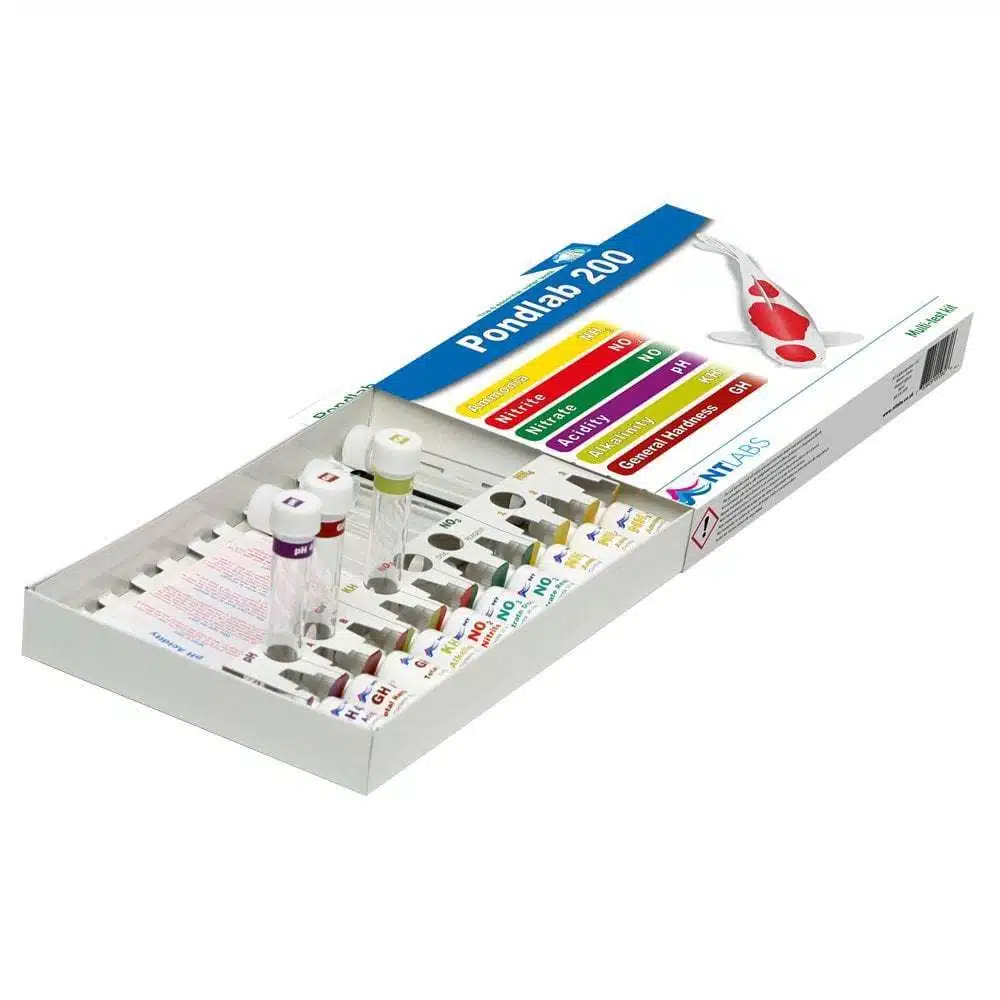
The NT Labs Pond Lab Multi-Test covers pH, KH, GH, ammonia, nitrite and nitrate. It gives a useful view of water chemistry from one kit. It does not test dissolved oxygen, chlorine or every possible contaminant. If you already have reliable pH and waste tests, the NT Labs hardness kit provides the separate KH and GH checks.
| What you need to find out | A relevant option | What it does not replace |
|---|---|---|
| Several basic water checks | NT Labs Pond Lab Multi-Test | A separate dissolved-oxygen or chlorine method when needed. |
| A digital pH reading | Hanna HI98100 Checker Plus | KH, GH, ammonia or nitrite tests. |
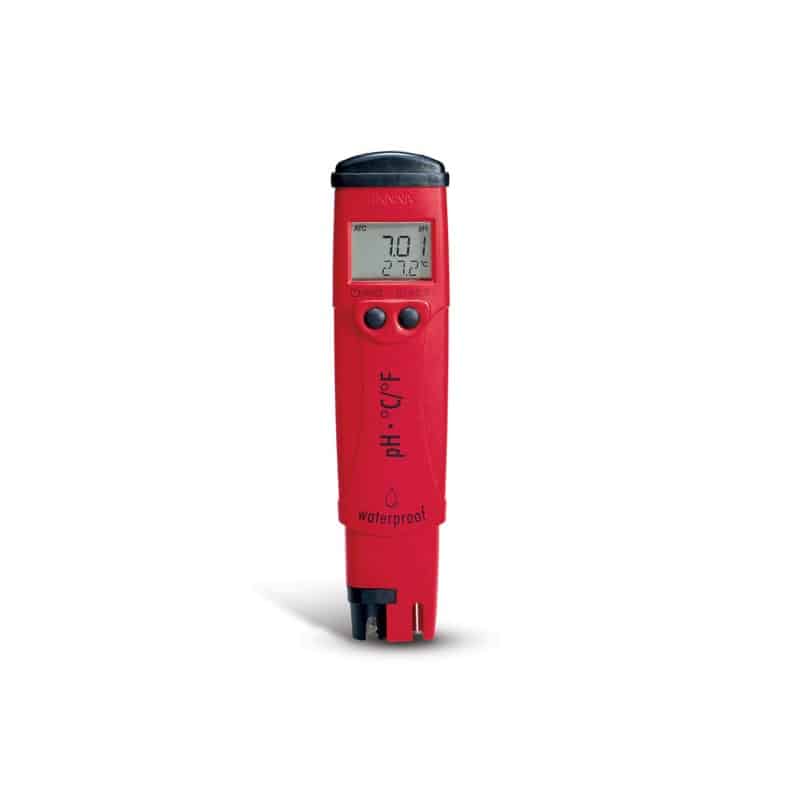
| pH with a temperature display | Hanna HI98127 pHep4 | Checking buffering and fish-waste compounds. |
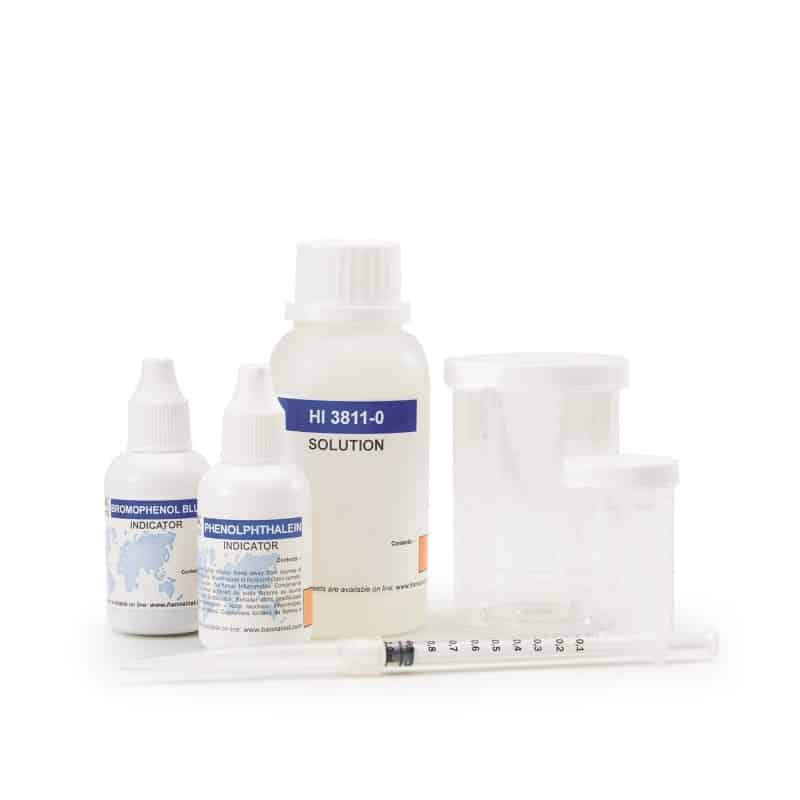
| Alkalinity by titration | Hanna HI3811 | pH itself, or general hardness. |
| A digital freshwater alkalinity result | Hanna HI775 | A marine-model method or an ordinary pH pen. |
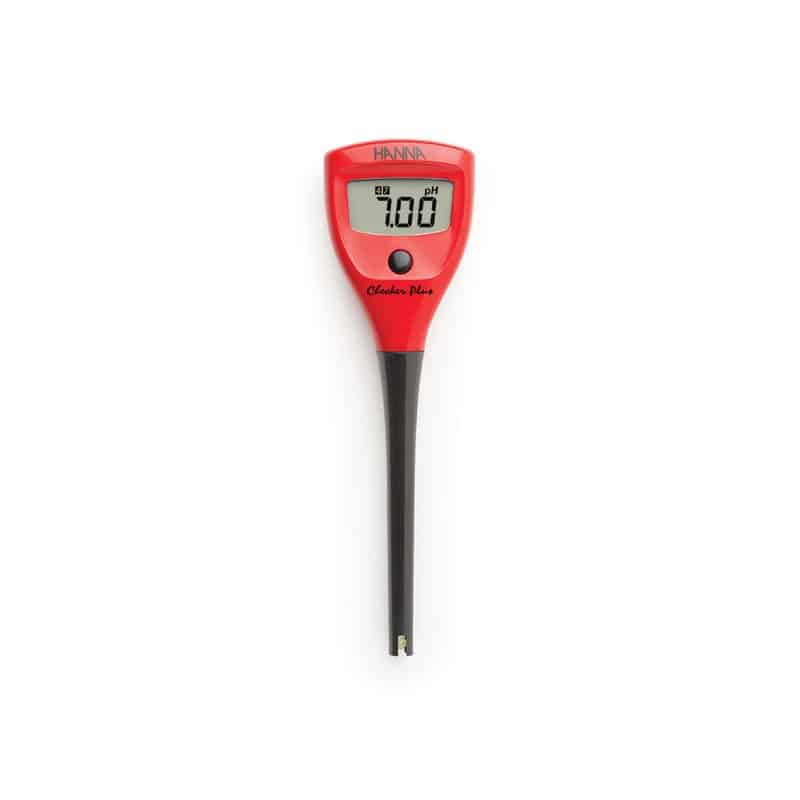
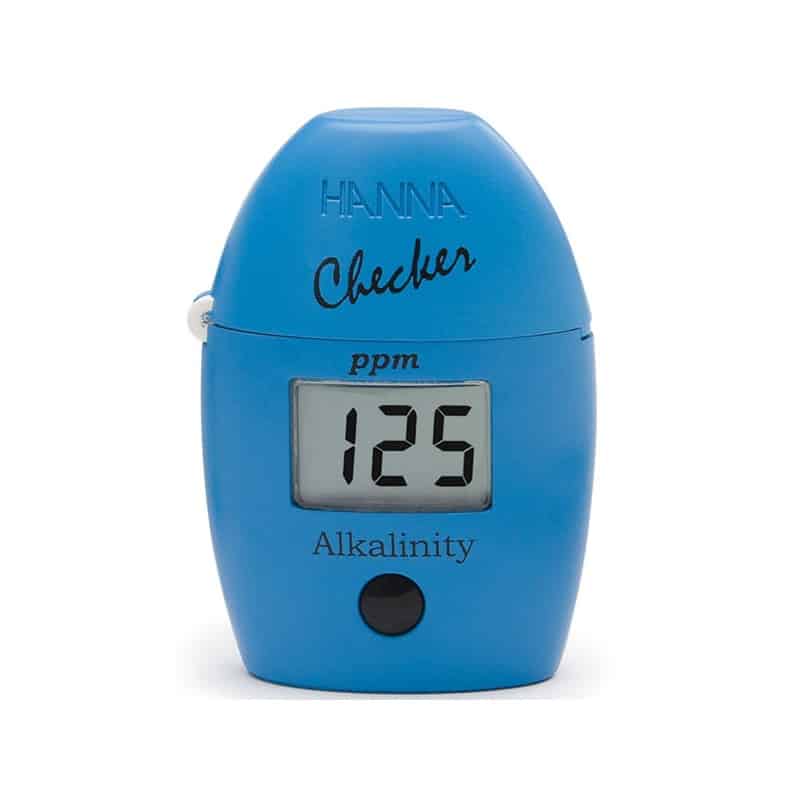
The distinction between the two Hanna instruments pictured is useful. The pH tester uses an electrode. The alkalinity Checker measures the colour produced by a reaction in a sample vial. They need different care and consumables. Buying an alkalinity Checker does not give you a digital pH test as well.
The HI775 reports freshwater alkalinity from 0–500 ppm and uses its own HI775-26 reagents. Follow the supplied method, including any required handling of chlorine interference. The similar-looking marine alkalinity Checkers are intended for a different sample type. Use the manufacturer’s freshwater model information to check the choice.
If pH trouble coincides with an ammonia or nitrite result, investigate those directly. The Hanna HI700 ammonia Checker and HI707 nitrite Checker are separate instruments. Record their stated reporting units rather than copying a number into a chart intended for another method. Our ammonia and nitrite guide explains why the waste result matters alongside pH.
Is a digital pH meter better than drops?
It can be easier to read, but a display with two decimal places is not a promise of laboratory accuracy. For example, Hanna specifies 0.01 pH resolution for the HI98100 and an accuracy of ±0.2 pH. The small step on the screen and the accuracy specification describe different things. Do not chase every change in the final digit as though it represents a confirmed change in the pond.
A meter is particularly useful when you find the colours difficult to separate or want to compare morning and afternoon consistently. It still needs a good electrode, suitable buffers and sensible handling. Our Hanna pH and alkalinity range contains both instruments and their care products, so check the model code when ordering a replacement probe or solution.
Calibration, cleaning and storage are different jobs
Calibration checks the instrument against a known reference. Cleaning removes deposits that affect the electrode. Storage keeps the electrode ready for its next use. A bottle of cleaning solution cannot take the place of calibration buffer, and buffer should not be assumed to replace the recommended storage solution.
Use the calibration points and procedure supported by your instrument. Fresh buffer matters: do not pour used solution back into the stock bottle or let pond water contaminate it. Hanna’s electrode guidance explains choosing reference points around the measurements you expect. The meter’s own instructions decide which buffer values it recognises.
Rinsing and long-term storage need different treatment. Purified water may be used for rinsing in the manufacturer’s procedure, but Hanna advises against storing its pH electrodes in distilled or deionised water. Use the appropriate electrode-storage solution. Letting a probe dry, then immediately trusting a drifting reading, defeats the point of buying a meter.
If an electrode has dried out, follow the model’s rehydration instructions before calibration. If it still fails to calibrate or responds very slowly after suitable cleaning and care, get the probe checked. Some testers have replaceable electrodes, while others do not. The cheapest meter to buy is not always the cheapest to keep working.
Hanna’s troubleshooting advice is a useful reference if readings wander. Keep a reliable liquid kit available as another check, particularly while a meter is being serviced. Avoid changing the pond repeatedly to follow an instrument you already suspect.
Other pH questions that come up
How do I bring pond pH down quickly?
We would first establish whether it needs a rapid change at all. Confirm the test, check ammonia and temperature, compare the water supply and look at KH. If fish are distressed, get help with those actual results. Adding acid because a search result promises a quick correction can create a sudden change without removing the cause of the high reading.
Can fish recover from low pH?
The outcome depends on how far and how long the pH changed, the fish’s condition and any accompanying water-quality problem. We cannot predict recovery from a pH number alone. A very low result needs prompt attention to the complete pond, including ammonia. Avoid repeated handling and guessed treatments while trying to restore suitable conditions.
Will rainwater improve a hard-water pond?
It may change the chemistry, but that does not automatically make it an improvement. Rainwater can have little buffering, and water collected from roofs can bring other material with it. Test the water and assess the collection system before using it. Replacing established pond water simply to move a pH reading can introduce a new problem.
Should I buy a pH controller?
A controller is a different commitment from a handheld tester. It may operate dosing equipment and needs installation, calibration, maintenance and a response plan if a sensor fails. For a normal garden koi pond with an unexplained reading, we would establish the cause with reliable testing before considering automated chemical control.
How often should you retest after a problem?
Keep checking while you are making changes and while the fish’s behaviour or water readings remain abnormal. The interval depends on the problem and any product instructions. A pond recovering from a pH crash needs a different level of attention from an established pond whose measurements are steady.
Once things have settled, keep enough routine testing to know the pond’s normal pattern. Test again after relevant changes such as substantial rainfall, a different water supply, maintenance, more fish or increased feeding. If the original issue was a morning-to-evening swing, repeat that paired comparison rather than declaring it solved from one convenient afternoon sample.
A useful record also includes the action taken. Write down the product, amount, time and actual pond volume used for any calculation. That lets you see whether the result changed after the intervention and helps avoid another person adding the same treatment later. Keep pH alongside KH and the waste tests, rather than filing it as a separate job.
A useful record to keep beside the test kit
Note the date, time, temperature, pH, KH, ammonia and nitrite, along with any maintenance or additions. Add the test brand and units. For a suspected daily swing, put the morning and afternoon results on the same line.
When asking us for help, send those results, an approximate pond volume, the filter details and a short description of how the fish are behaving. That gives us something practical to work from. A photograph of clear water, on its own, cannot show whether the chemistry is safe.
