






Designing Your Koi Pond with Aquatic Plants: A Complete Guide
Koi pond plants: choosing, planting and protecting your aquatic plants
We supply pond plants and put them into ponds ourselves. That makes the practical questions just as important as the flowers: where will the basket sit, can the koi reach the roots, and will you still be able to clean the pond once everything has grown?
A planted koi pond can look wonderful, but it needs a plan that works for the fish as well as the planting. Some ponds suit lilies and a planted shelf. Others work better with a separate planted area, or greenery around the outside while the main pond stays open. We would rather choose a few plants that suit the space than fill it with varieties that will need moving later.
Start with the pond you actually have
- Measure the planting positions. A marginal shelf and a deep pond floor are very different growing places.
- Allow for your koi. Fish may move gravel, investigate roots and damage new growth.
- Keep the equipment accessible. Plants must not block skimmers, returns or the route to lift a pump.
- Plan for mature growth. Leave open water and room to remove baskets for maintenance.
What planting changes
Plants soften a hard pond edge, break up a broad surface of water and bring flowers at different times of year. Upright foliage gives the edge some height, while a lily sits much lower and draws the eye across the water. The contrast between those shapes often matters more than the number of varieties.
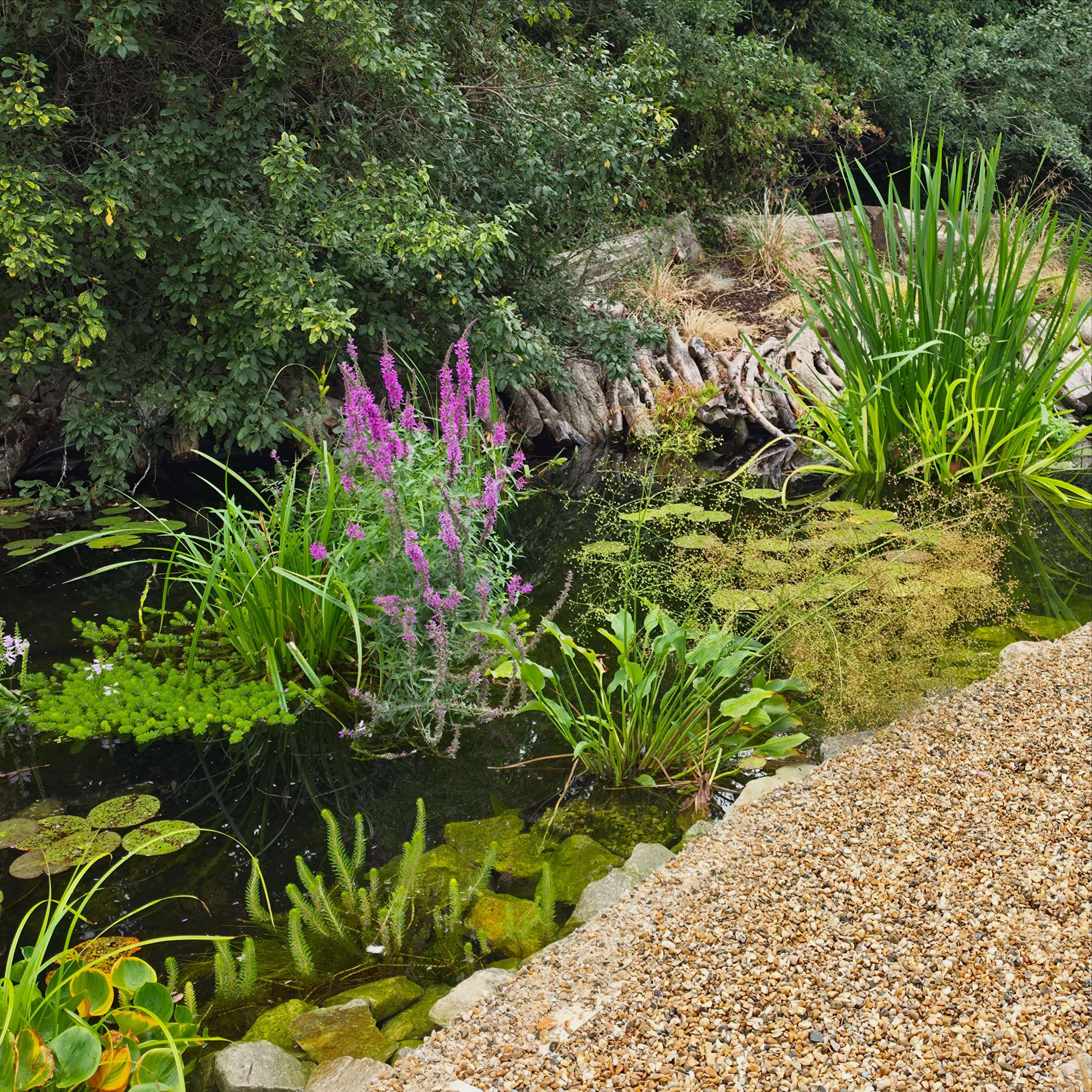
Our Sevenoaks project is a good example. The customer thought the pond might need a complete refurbishment, but we were able to change its appearance through planting instead. The before and after views show how flowers, upright leaves and surface cover softened the setting. For a pond with koi, we would also look at protecting the baskets from the fish.
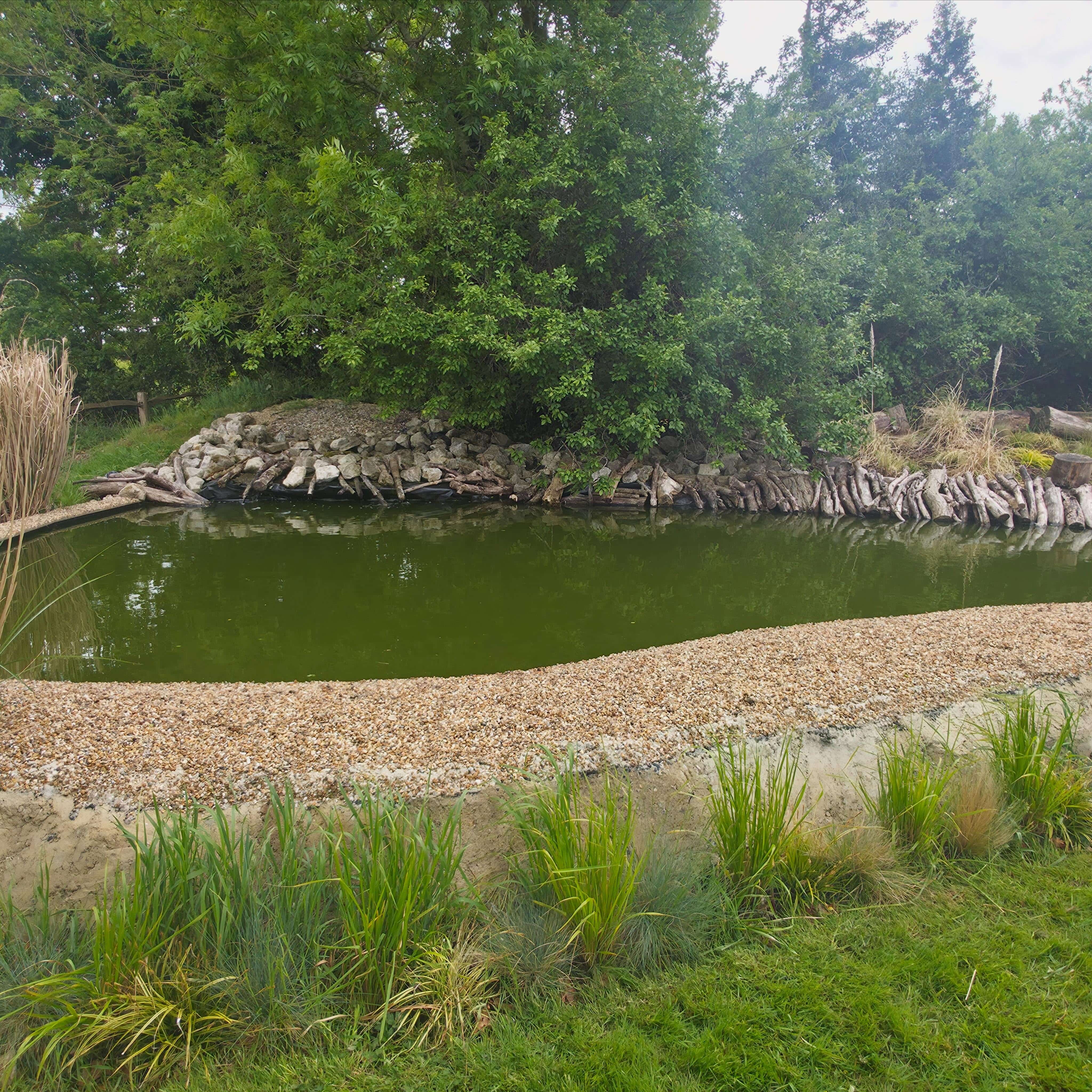
A real That Pond Guy project in Sevenoaks. See the original project post. Select either photograph for a larger view.
There are practical benefits too. Leaves create shade and shelter, and growing plants use nutrients. Those benefits are useful, but plants are not a substitute for correctly sized filtration, aeration, sensible feeding or water testing. We would not recommend relying on a lily basket to deal with the waste from a heavily stocked koi pond.
Plan the planting from the places you use most
Before choosing a shopping list, look at the pond from the house, the patio and your usual feeding spot. A tall clump may look lovely from one side and hide the fish from the other. We would keep the main viewing area open, then use taller foliage towards the back or to one side. A window in a raised koi pond is another view worth protecting: you do not want a basket, support or mass of roots sitting directly behind it.
Take a photograph from each of those positions and mark where you want height, flowers and open water. Then check the actual planting space. The most attractive spot in the photograph may be directly above a return or beside a skimmer. It is much easier to alter a pencil mark than to move an established, heavy basket later.
Measure the water above the basket, not just the pond
For example, a shelf 30cm below the water surface with the planting crown 20cm above the shelf leaves roughly 10cm of water above that crown. That is the useful figure to compare with the plant’s stated planting depth. Check how the supplier defines depth, because a basket base, compost surface and growing point are not the same reference point.
Write down the shelf width as well. A large basket balanced on a narrow ledge is not a good planting position, even if the water depth is right. Allow space for the whole base, for nearby equipment and for your hands when the basket needs lifting.
Our first question is not “which flower colour?”
It is “where can this plant grow and be looked after properly?” Once the position, basket and access work, choosing the flowers becomes the enjoyable part.
Choose a layout before choosing the plants
Planting inside the pond
Baskets on a suitable shelf keep roots contained and give you a way to lift and divide the plants later. Check that the shelf is wide enough for the whole basket, not just part of its base. Measure the water above the planted basket and compare it with the individual plant requirements.
If the pond has no shelves, do not assume a marginal plant can simply stand on the bottom. A secure planting platform or a separate planted section may be more appropriate. Any support needs to be stable, suitable for the pond finish and positioned so fish cannot become trapped around it.
A protected planted area
Where koi are persistent, separating them from the roots can be more effective than repeatedly replacing damaged plants. A planted bay or another suitably designed barrier can give the plants space while keeping them part of the overall pond design. It must allow the intended water movement and remain accessible for cleaning.
Planting around the outside
You can have a green, natural looking setting without putting every plant in the fish water. Moisture loving plants around a suitable pond margin can frame the view while leaving the main pond clear. Keep the distinction between a damp garden border and a submerged planting shelf: the same plant will not necessarily tolerate both.
Three planting ideas for different koi ponds
These are example layouts to help you plan, rather than fixed planting packages or descriptions of customer jobs. The quantities and varieties still need to suit the dimensions, sunlight and fish in your pond.
A small formal pond with a clear view of the koi
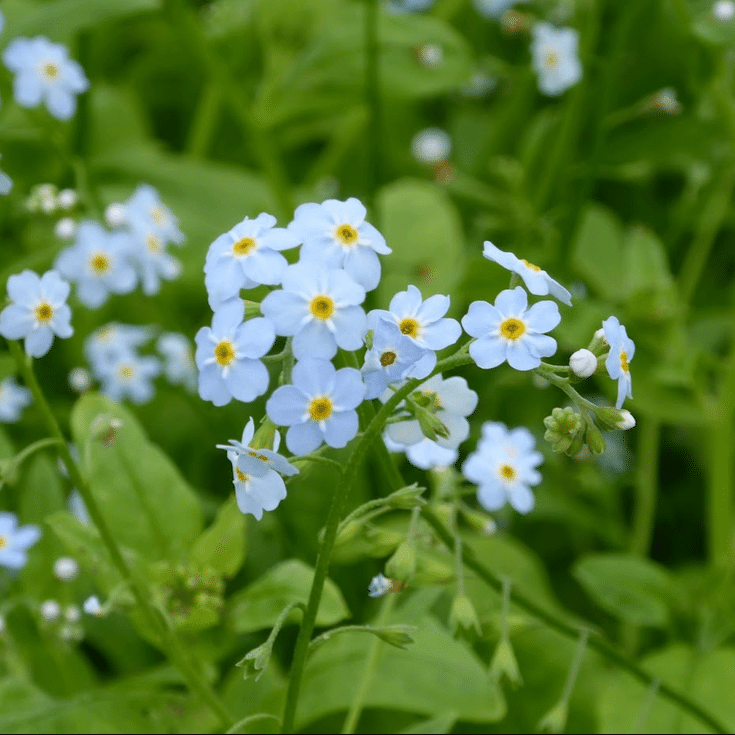
We would start with one restrained planting group towards a rear corner, leaving the feeding and viewing side clear. A compact lily could provide surface interest where the depth and light suit it. A shallow basket of water forget-me-not could soften an edge if there is a suitable shelf. There is no need to add a tall iris simply to include another type of plant.
Keep the skimmer side open and check the lily’s eventual spread against the available surface. If your fish continually damage the new leaves, move the planting into a protected area rather than buying another plant for the same unprotected position.
A larger garden pond with a broad planting shelf
Here there may be room for separate groups: upright pickerel weed or a suitable water iris towards the back, lower planting closer to the main viewpoint, and lilies beyond the shelf. Repeating a plant at a few points can make the scheme feel connected. Putting a different variety in every small gap can make it harder to see the overall shape.
Leave deliberate gaps between groups so you can see water at the edge and reach the baskets. Plan how the pond will look when the plants have grown, not only on delivery day. A basket full of fresh leaves is a starting point, not the finished size.
A deep koi pond with no planting shelves
We would not drop shallow water plants onto a deep floor and hope they adapt. Depending on the construction, a designed planting bay or a separate pondside bed may be the better answer. You can use foliage to frame the pond from outside without interfering with the fish water.
Any internal platform needs to be assessed as part of the pond: support, liner or fibreglass protection, fish access, water movement and cleaning all matter. If those cannot be made to work comfortably, keeping plants outside the main pond is a sensible design choice.
Water lilies: flowers and surface shade
A hardy water lily is often the first plant people ask us about. Choose it by mature spread and planting depth, then by flower colour. A small plant supplied in a 3 litre basket is not necessarily a small growing variety.
For a compact pond, compare a compact variety such as Pygmaea Helvola with the space available. For other sizes and flower colours, look through our water lilies and read the individual depth and spread information. Keep lilies out of persistent fountain spray or strong waterfall splash.
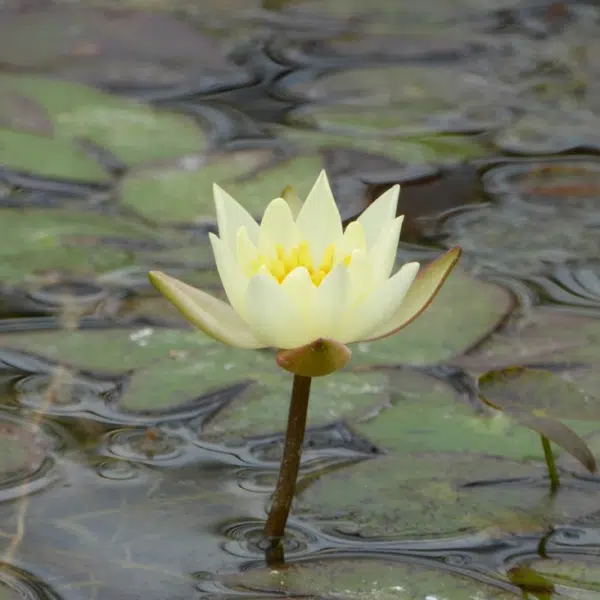
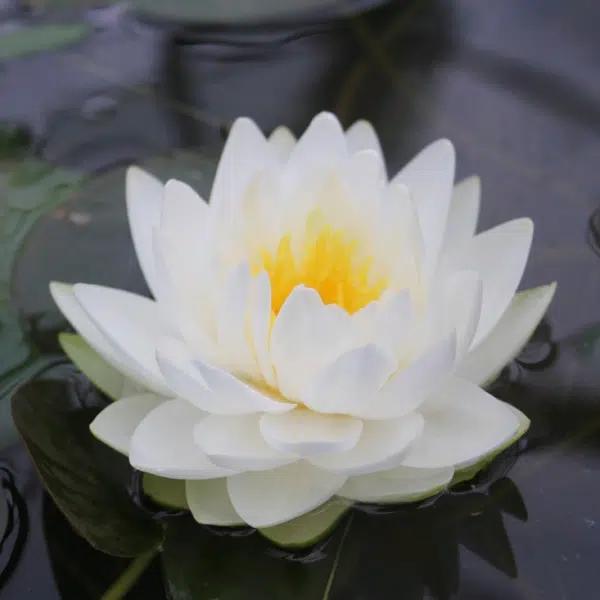
We cover planting depth, feeding, flowering problems and winter care in our water lily care guide. It shows how to measure the water above the basket, so you can put the plant at the right depth.
Basket size and protecting the roots from koi
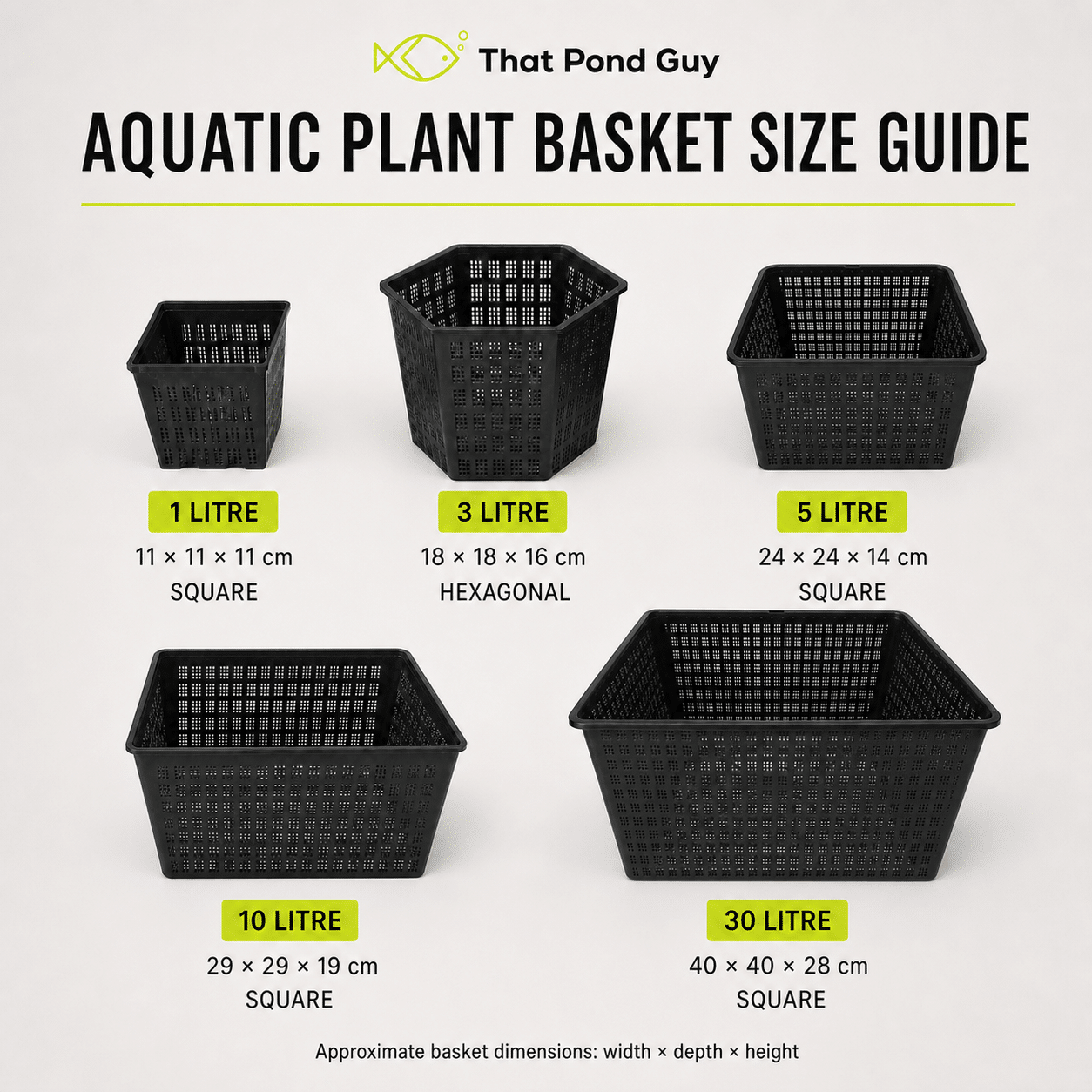
When installing lilies supplied in 3 litre baskets, we normally repot into a larger basket straight away. We use at least 5 litres as a starting point, with 10 or 30 litre baskets considered for suitable varieties and larger planting schemes. The basket must still fit the shelf and be manageable when wet.
For a fuller planting from the outset, we may plant two 3 litre lilies in a 10 litre basket, or three in a 30 litre basket, where the varieties and pond allow it. Leave the growing points clear and allow for their eventual spread. It gives the planting a fuller start, with division and repotting still part of its future care.
The gravel matters when koi investigate a basket
Koi search for food and can pick up small gravel, particularly pieces of 10mm or less, then spit it out to reach the compost beneath. When we are specifically protecting lilies in koi ponds, we normally top dress with washed 20mm gravel suitable for use with fish.
Larger gravel is harder to move, but it does not make a basket koi proof. Keep crowns clear, avoid sharp material and watch how your own fish behave. Young leaves may still need a protected growing area.
Marginal plants for colour and height
Marginals let you build up the edge without covering the whole surface. Choose a mixture of upright and lower growth, and check each plant’s preferred water depth. Our marginal pond plant range gives the individual growing information.
Pickerel weed and water iris
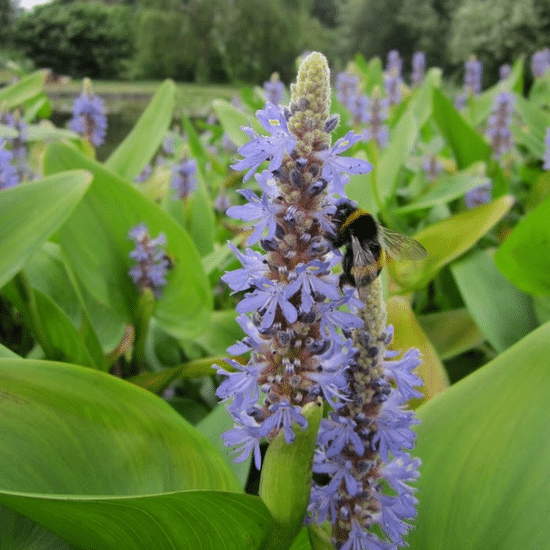
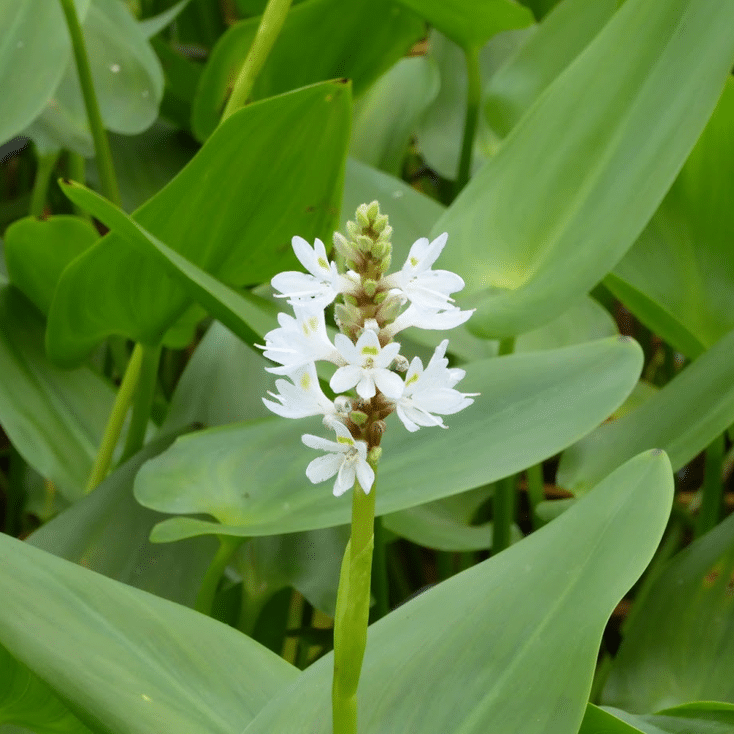
Pickerel weed, Pontederia cordata, gives upright foliage and blue flowers later in summer. White flowering forms offer a different colour where available. It is worth considering when you want height near the edge without choosing a tall reed simply because it looks dramatic in a photograph.
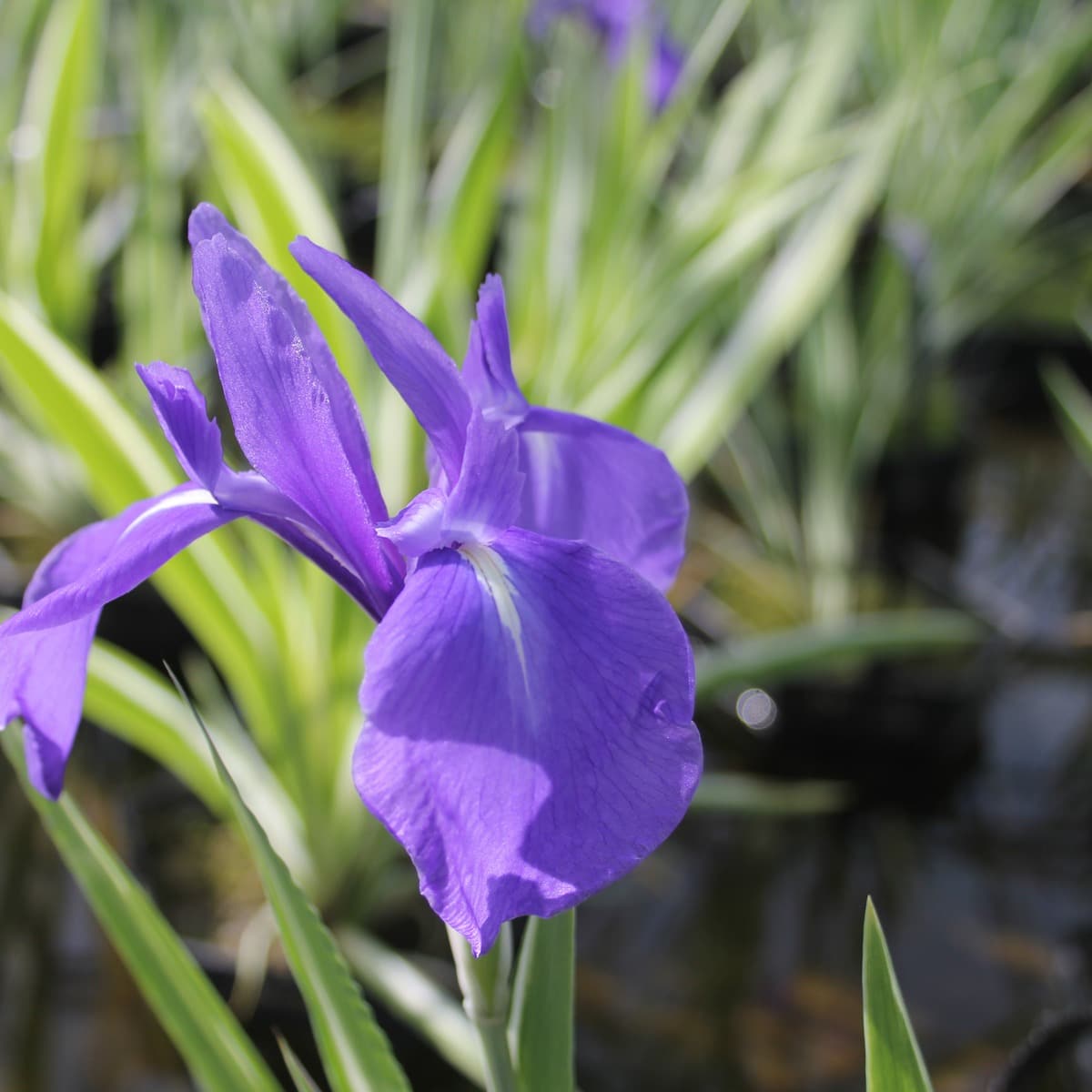
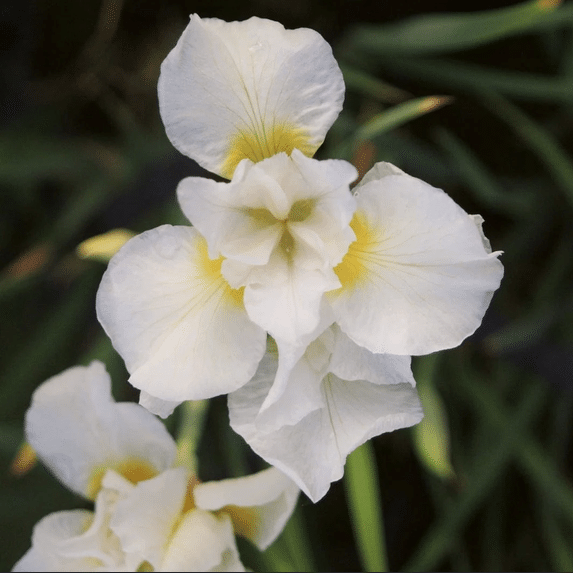
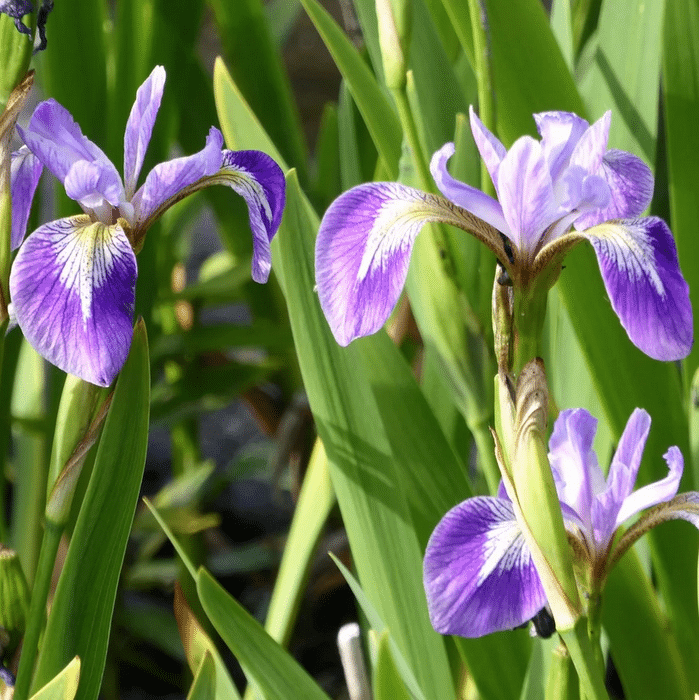
Water iris can also give strong upright leaves and seasonal flowers. Choose an iris intended for the conditions you have: “iris” covers plants with different requirements, and an ordinary garden iris should not be treated as a pond plant. Allow room to lift and divide established clumps.
Marsh marigold and water forget-me-not
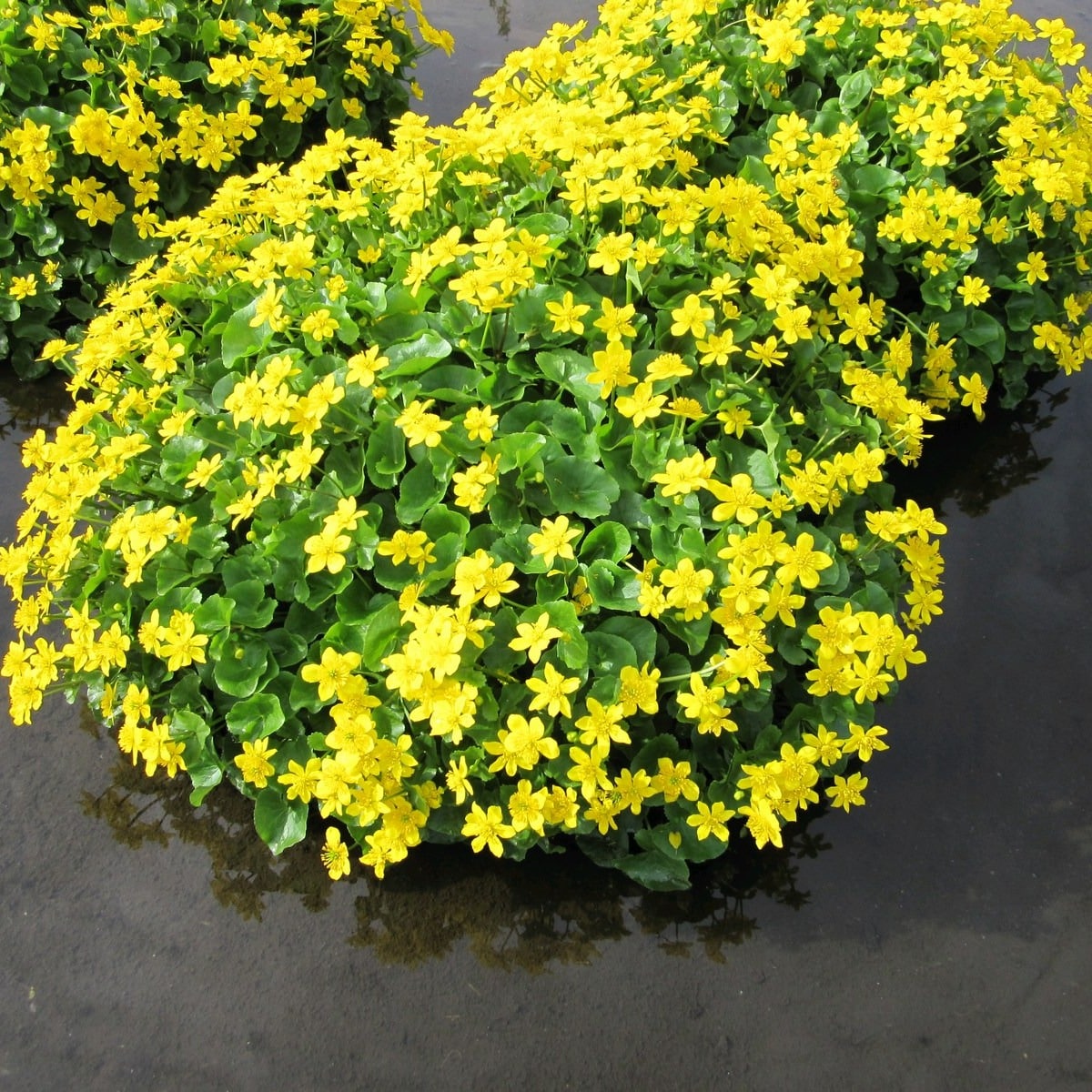
Marsh marigold, Caltha palustris, brings yellow flowers early in the season. Water forget-me-not, Myosotis scorpioides, offers smaller blue flowers and a lower growing edge. These are useful choices to compare when a planting scheme needs more than tall leaves and summer lily flowers.
Keep them in the appropriate shallow position rather than placing them at water lily depth. Their role in the design is different: they soften the margin and add seasonal detail instead of spreading broad leaves across deep water.
Water mint, purple loosestrife and plants for damp margins
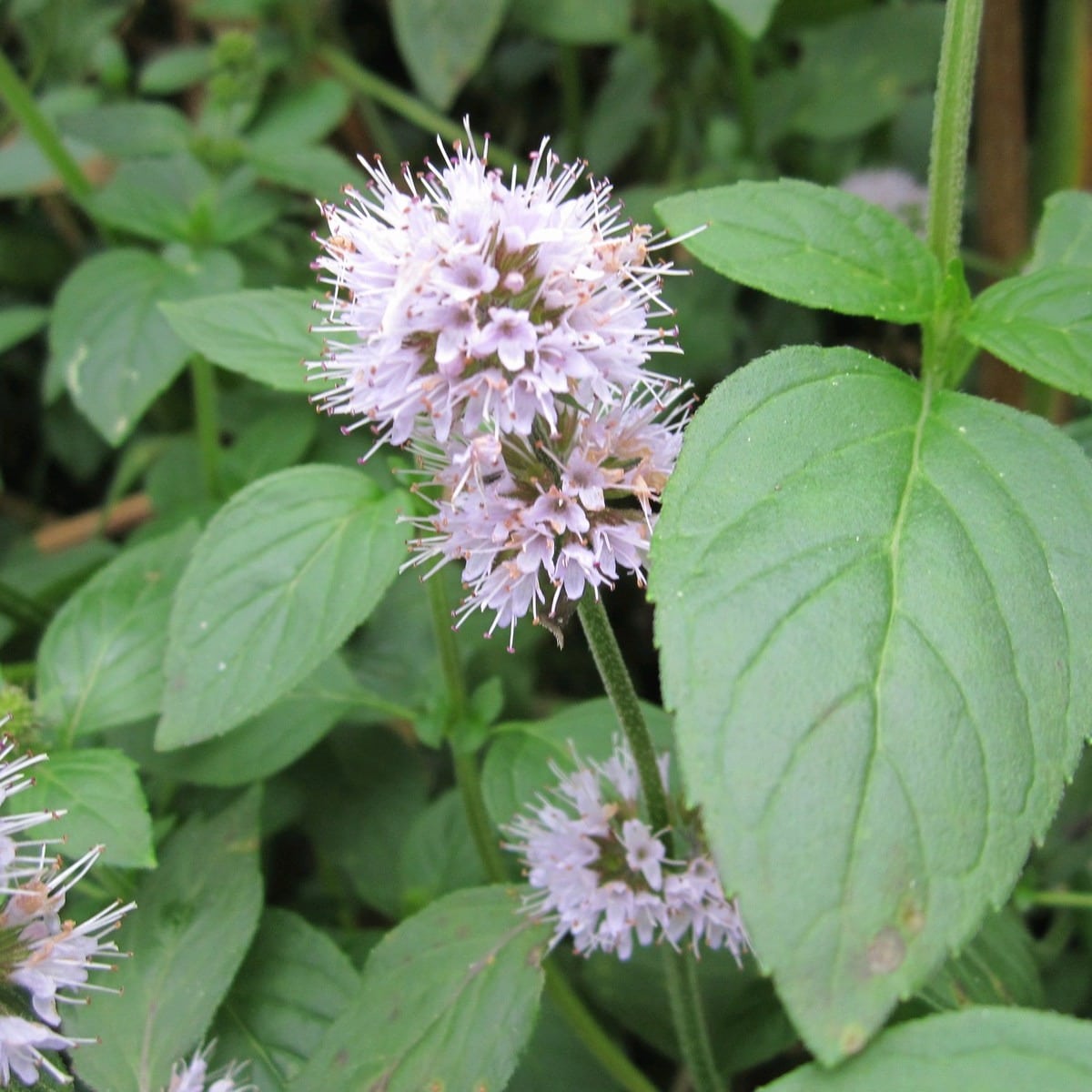
Water mint and purple loosestrife are further options to consider for a natural looking margin. Check their mature size and manage spreading growth. A variety that looks modest in its delivery basket can occupy much more space after establishment.
Ragged robin and other moisture loving plants may work around a damp edge where their requirements are met. They should not all be grouped together as plants to submerge. Our pond plant collection separates different planting groups so you can compare the position each needs.
Use foliage as well as flower colour
A pond should still look considered when a particular plant is not flowering. Compare a broad leaf with a narrow upright leaf, or a low spreading plant with a taller clump. Variegated water iris can bring a lighter stripe into green planting, while a white flowering pickerel weed gives another option alongside the blue form.
We would use those contrasts deliberately, rather than put every colour in one small area. If you like a simple scheme, start with two or three repeating plant types and leave room to see them. If you prefer a cottage garden feel, use more variety but keep the main viewing line and maintenance access clear.
Submerged plants and the limits of natural oxygenation
Hornwort is one option to consider among oxygenating pond plants. Submerged planting provides cover and produces oxygen in daylight, but it also respires. It must not be used as a reason to turn off the aeration a stocked koi pond needs.
Koi may disturb or eat soft submerged growth, and loose stems can reach equipment. Start with a suitable protected position, watch the fish and remove loose material before it collects around an intake. More planting is not automatically better if you cannot keep open water and circulation clear.

Plants we would approach carefully
Tall reedmace, vigorous horsetail and strongly spreading plants can be difficult to manage in a small formal pond. Consider their eventual size and the work needed to contain them. Lotus needs its own growing conditions and is not an interchangeable replacement for a hardy water lily.
We do not recommend water hyacinth or parrot’s feather. Both are listed invasive species in the government guidance for England and Wales. Always check the exact botanical identity when buying pond plants, and never release unwanted plants into natural waterways.
Getting new planting established
Mid spring into early summer is generally a useful planting window as the water warms. Check the individual plant and its condition on arrival, rather than expecting a newly delivered basket to look like a full summer photograph straight away. Keep plants from drying out while you organise their positions.
Prepare the basket before moving it to the pond
Use aquatic planting compost and a basket suited to the plant. Where the mesh needs lining, use suitable basket lining to help retain the compost. Follow the planting instructions for the crown or rhizome and keep growing points clear. Ordinary rich potting compost is not a substitute for an aquatic planting mix.
Do the messy work somewhere you can clean up easily. Check that the finished basket is manageable before carrying it to the pond edge. Wet compost and gravel add weight, particularly in the larger sizes. Plan the lifting route so you are not reaching over a pond while trying to support an awkward load.
Give the plant a chance to settle
Place it at the appropriate starting depth for that variety and stage of growth. Some young deep water plants need a shallower start before being lowered as they grow. Do not bury short new leaves under deep water just because the mature variety can eventually tolerate that position.
Watch what happens after planting. A basket that looked secure may need attention if koi repeatedly push at it. Check whether gravel is being moved, roots are exposed or leaves are being torn. A quick adjustment to protection or position is better than letting the plant struggle and assuming the variety was the problem.
For the planting principles behind these steps, see the RHS advice on planting aquatics. Our larger gravel recommendation above is specifically the approach we use when koi are investigating lily baskets.
Keeping the planting looking good
Our seasonal pond care guide covers the wider maintenance calendar. If the pond needs practical help, see our pond maintenance service.
Leave access for routine jobs when you arrange the baskets. Removing a few yellow leaves is straightforward when you can reach them; it becomes awkward when the only route involves leaning over deep water or moving several heavy baskets.
Check growth around skimmers and returns, remove damaged material and review crowded baskets. Use aquatic planting materials and follow the label of any fertiliser or pond treatment. If a treatment requires plants to be removed, make suitable temporary arrangements before dosing the pond.
A simple seasonal routine
- Spring: check crowded baskets, look for new growth and review any plants that struggled last year before adding more.
- Summer: keep the feeding area, skimmer and access routes open. Remove fading leaves and flowers within safe reach.
- Autumn: remove collapsing plant material before it builds up in the pond. Keep labels so you know what should return next season.
- Winter: check the hardiness and depth requirements of each plant. Keep fish care and the pond’s winter equipment plan separate from assumptions about dormant planting.
A photograph from the same viewpoint each season is useful. It shows which clumps are spreading, where a bare patch needs attention and whether a plant is starting to block a view you wanted to keep. That makes the next planting decision more precise than simply ordering more of whatever is flowering at the time.
Questions we would ask before changing a planting scheme
Are the koi damaging the plant, or is the position wrong?
Look for evidence. Moved gravel and exposed roots suggest fish disturbance; an unsuitable depth or shaded position needs a different response. Check the plant’s label and the basket position before assuming every damaged leaf is caused by koi. Clear photographs of the plant, basket and surrounding water help us give more useful advice.
Can planting replace a filter or clear green water on its own?
No. We would assess filtration, maintenance and fish loading separately. Planting can be part of a well managed pond, but it does not remove the need to understand why a particular pond is struggling. A pleasing planting scheme and healthy fish water are related goals, not the same job.
Do we need plants in every part of the pond?
No. Open water is part of the design. It lets you see the koi, feed them, check their condition and enjoy the reflections. Plant the positions that work well and leave the others clear. A few healthy, well placed groups usually give a better result than squeezing baskets into every available space.
What if we want a fuller result straight away?
Larger suitable baskets and established planting can give more presence from the start. For lilies, our approach to using two or three supplied plants in a larger basket is described above. That still needs the right variety, space and future maintenance. We would rather agree a realistic first season appearance than promise instant maturity.
Before you order
- Photograph the whole pond and the proposed planting position.
- Measure shelf depth and available basket space.
- Note the size and number of koi, and any history of damaged plants.
- Compare mature spread, sunlight and planting depth for each choice.
- Decide how you will reach the baskets for maintenance.
Send us those details if you would like help. We can discuss the planting as part of a working pond, including the fish, equipment and maintenance, and help you choose plants that will suit it.
Get in touch, browse our pond plants, or meet the team behind That Pond Guy.
For further plant selection guidance, see the RHS guide to choosing pond plants. Always use the requirements for the individual plant alongside the practical layout of your pond.
