






NT Labs Pond Lab Multi-Test Kit
| Brand |
|---|
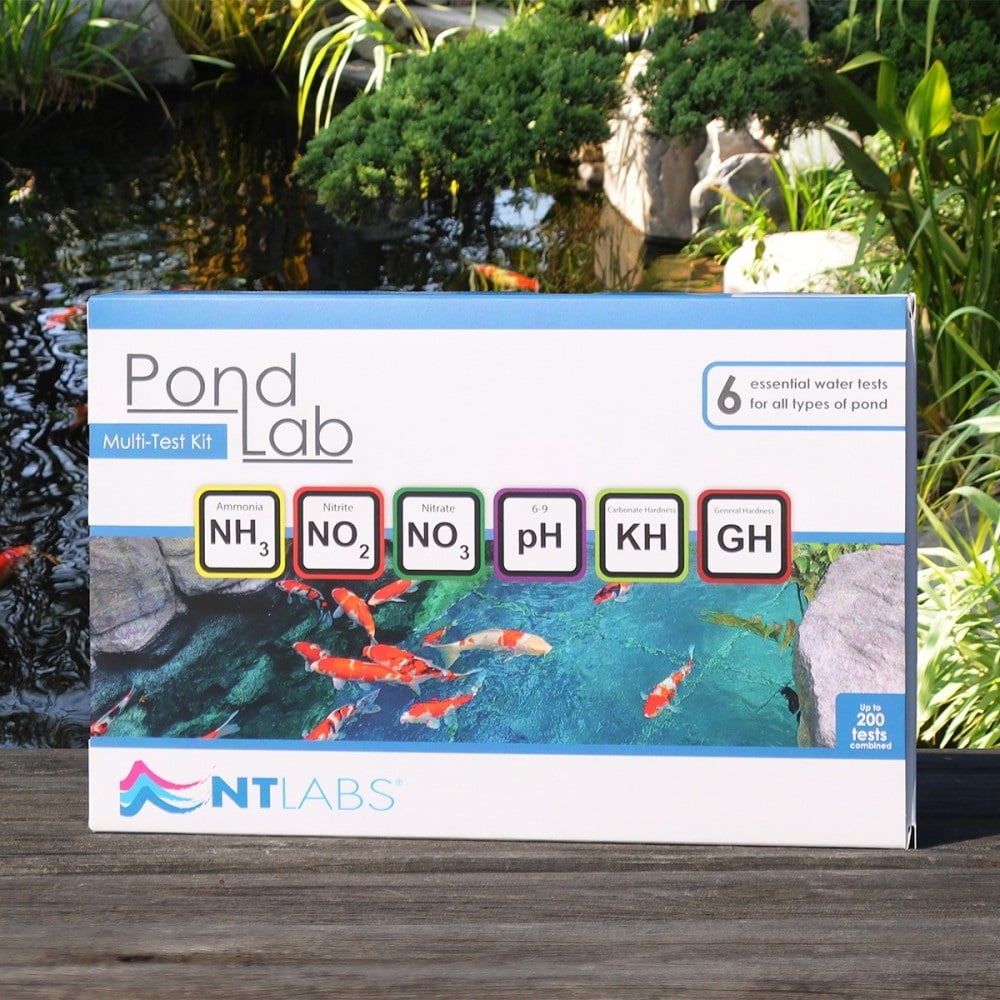
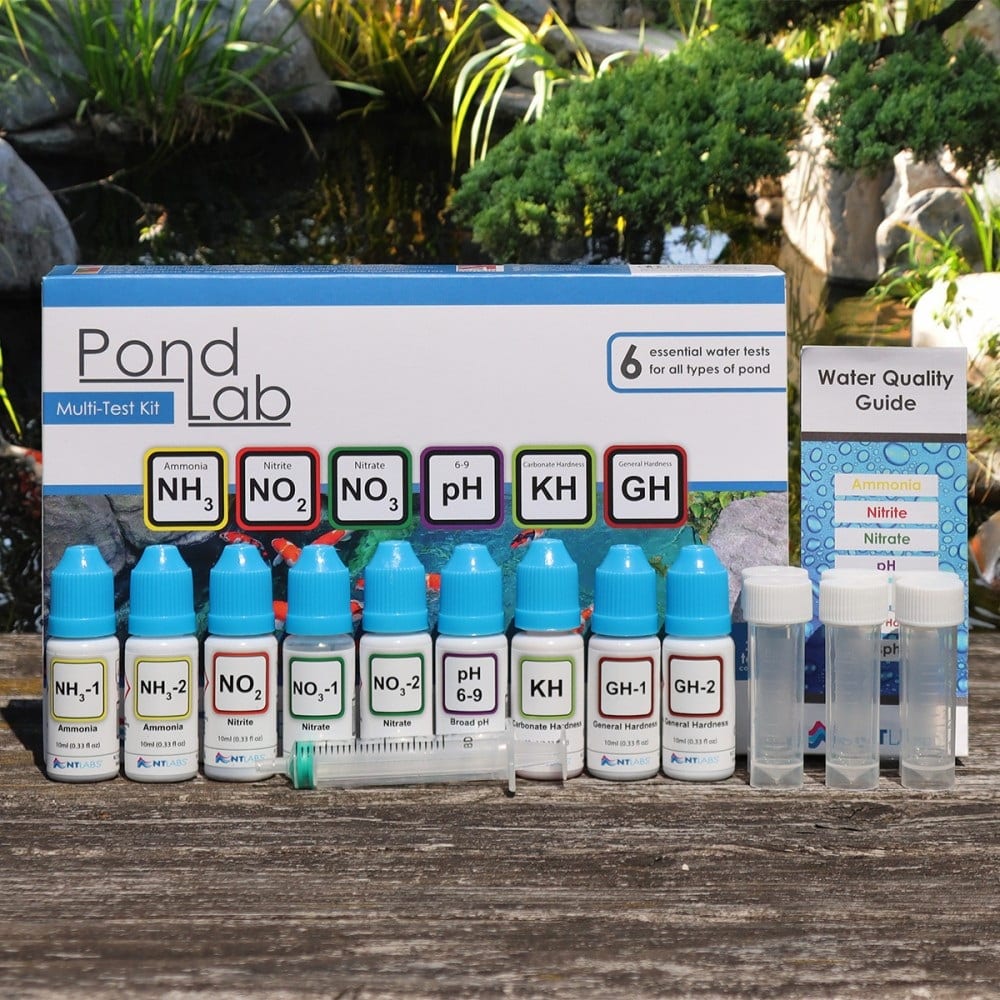
Six liquid pond water tests in one kit: ammonia, nitrite, nitrate, pH, KH and GH. Up to 200 tests combined, with colour charts, a water quality guide and integrated tube rack.
£29.99 (inc VAT)
NT Labs Pond Lab Multi-Test Kit
Six pond water checks in one practical liquid test kit
The NT Labs Pond Lab Multi-Test Kit brings ammonia, nitrite, nitrate, pH, carbonate hardness and general hardness testing together in one box. It is a useful choice when you want to keep a record of your pond water rather than buying a separate kit each time you need to investigate another parameter. The kit provides up to 200 tests combined, with liquid reagents, colour comparison charts, a water quality guide and an integrated test tube rack.
Use it as part of your regular pond care routine, when establishing a new filter, or when a change in fish behaviour prompts a closer look at the water. A set of results gives you more useful information to discuss than the appearance of the pond alone. Keep your readings alongside notes about feeding, maintenance and any recent additions so that you can see what changed and when.
What does this kit measure?
| Test | What you are checking |
|---|---|
| Ammonia | A nitrogen waste compound that biological filtration needs to process. |
| Nitrite | An intermediate stage in the biological conversion of ammonia to nitrate. |
| Nitrate | A later product of the nitrogen cycle that can accumulate in pond water. |
| pH | How acidic or alkaline the water is. |
| KH | Carbonate hardness, associated with the water’s ability to resist pH changes. |
| GH | General hardness, reflecting dissolved calcium and magnesium. |
These measurements answer different questions. A pH reading does not replace an ammonia test, and KH and GH should be recorded separately rather than combined into one hardness figure. Looking at the results together helps you avoid making a decision from a single number without its context. For example, record pH when investigating ammonia, and keep a KH history when watching changes in pH.
A sensible routine for taking and recording samples
Before opening the reagents, set out the tubes, instructions and a notebook on a stable surface. Give yourself enough room to keep the different tests separate. Label the sample source in your notes first, especially if you intend to compare the main pond with a quarantine system or the water used for top ups. This simple preparation makes it easier to trace an unexpected reading later.
Follow the instructions supplied with your kit for the sample volume, bottle order, shaking and development time of each individual test. Do not assume that the procedure is identical across all six parameters. Use a timer where a waiting period is specified, and read the appropriate chart under consistent lighting. Keep bottle caps with their own bottles and avoid allowing a dropper to touch the sample or another reagent.
Write down the date, time, test name and actual result, including its units. An entry such as “nitrite checked” is much less useful than a recorded reading that you can compare with the next test. Add a short note if the sample was taken before or after a water change, filter maintenance or treatment. If a colour is between two chart values, record that observation instead of inventing extra precision.
Using results to guide pond maintenance
Water testing is particularly useful when something has changed. A new fish introduction, a different feeding routine, substantial filter work or an interruption to circulation gives you a clear reason to compare fresh readings with the pond’s previous results. Keep those events in the same record as your measurements, rather than relying on memory when reviewing the pond several weeks later.
If you obtain an unexpected result, check the method and repeat the test with a fresh sample before treating a doubtful colour match as a confirmed trend. Where fish are visibly distressed, do not let repeated testing delay appropriate help. Give the person advising you the readings, pond volume, equipment details and recent maintenance history. Those details make the discussion more specific and reduce the temptation to choose a treatment from a symptom alone.
NT Labs recommends checking water quality before adding medicines because poor water conditions can resemble disease and can affect treatment suitability. This kit measures water parameters; it does not identify a particular parasite or tell you that every medicine is appropriate. Use the treatment’s own label and seek advice when a result or diagnosis is unclear.
Multi-Test or individual test kits?
Choose the Multi-Test when you want these six checks together for an ongoing pond record. If you already own the other tests and need to replace one frequently used parameter, our NT Labs Pond Ammonia Test Kit, Pond Nitrite Test Kit and Pond Nitrate Test Kit offer individual alternatives. Compare the tests you actually need, rather than choosing only by the number printed on the box.
The NT Labs Pond Lab Mini Test Kit is another option to compare when putting together your testing supplies. Read its own included parameters before deciding which set suits your pond. Keeping a complete kit together also makes it easier for another member of the household to find the correct chart and record results in the same way.
Understanding the test quantity and keeping the kit organised
The stated capacity is up to 200 individual tests across the kit, not 200 complete six-parameter sessions or 200 tests of every parameter. Your pattern of use determines which reagent you use up first. Check remaining supplies before a planned period of monitoring so that you do not discover an empty bottle halfway through comparing several samples.
Keep the guide and charts with the original reagents. Check dates and the supplied storage instructions, replace caps after use, and keep the kit away from children and food preparation areas. After each session, clean and store the equipment as directed. A tidy testing routine protects the usefulness of your records: the aim is a repeatable check you can perform consistently, not simply a collection of bottles in the pond shed.






Reviews
There are no reviews yet.