





Choosing a Pond Vacuum: Oase and Rössle Models Explained
Check the depth, access and waste outlet first
The best pond vacuum for your garden is the one that can reach the waste, remove it reliably and send the dirty water somewhere sensible. Pond depth matters, but so do the bank, hose route, type of debris and how often you expect to use it.
A small vacuum can be quite adequate for occasional work in an accessible pond. For a larger clean, having to stop repeatedly or struggle with the discharge can make the job much slower. Here we explain the Oase PondoVac and Rössle options, the accessories worth considering and the checks that make the cleaning itself more straightforward.
The vacuum body stays on dry land. Only the suction parts intended for use in the water go into the pond. Keep electrical connections dry, follow the machine’s instructions and safely isolate it before servicing or clearing a blockage.
PondoVac 5 includes a separate discharge pump.
Do pond vacuums really work?
Yes, for the material they can reach and collect. A pond vacuum draws water and loose waste through a suction head, then sends that waste to a collection chamber and discharge hose. That is useful for sediment sitting on a liner, leaves caught in a corner and waste that is not making its way to the filter.
It will not repair a leaking liner, remove dissolved ammonia or cure the reason algae keeps growing. If the water is green but there is very little loose dirt on the floor, buying a vacuum may leave the main problem untouched. Our guide to common pond problems helps separate these different jobs.
Before recommending a machine, we want to know what you are trying to remove. A photograph of the waste and a view of the pond edge can tell us more than the pond volume alone. There is little benefit in paying for a larger machine if the nozzle still cannot reach the area that needs attention.
Start with the pond and the waste route
Before comparing machines, measure the water depth and the distance from where you can safely stand to the furthest area you want to clean. Then look at where the vacuum itself will sit. A steep bank or awkward access can matter just as much as the pond’s length.
Next decide where the dirty water will go. A discharge hose that must run uphill needs a different arrangement from one that can drain freely to a suitable lower area. Do not buy a machine and leave this question until you have already started cleaning.
Also identify the material you want to remove. Loose sediment, leaves and long strands of blanketweed behave differently. Remove large loose debris first where practical, and check the nozzle and debris limits for the actual vacuum. A pond vacuum is not a way to suck up every stone, root and object on the bottom.
Oase PondoVac Classic, 3, 4 and 5 compared
| Model | How it empties | Manufacturer’s maximum suction depth |
|---|---|---|
| PondoVac Classic | Automatic fill-and-empty cycle; suction pauses while the chamber empties. | 2.0 metres |
| PondoVac 3 | Two chambers alternate filling and emptying for continuous suction. | 2.1 metres |
| PondoVac 4 | Two-chamber continuous suction, with a different reach and accessory package. | 2.4 metres |
| PondoVac 5 | Separate suction and integrated discharge-pump functions. | 2.5 metres |
These are maximum figures from Oase’s current GB product information, not a promise of the same performance in every garden. Hose condition, the machine’s position, waste and the discharge route all affect the job. Check the instructions for how the permitted depth and installation height are measured.
The official references are PondoVac Classic GB, PondoVac 3 GB, PondoVac 4 and PondoVac 5. Match the GB model and selected package rather than copying a specification from a different regional version.
PondoVac Classic: occasional, accessible jobs
The Classic uses one collection chamber and automatically changes between suction and emptying. That means pauses are part of its normal operation. It can be a practical option where the work is occasional and the pond is straightforward to reach.
Think about the whole job, though. A lower purchase price is less helpful if the depth, hose reach or repeated emptying cycle makes your particular pond difficult to clean. Check where the discharge hose can drain before choosing it.
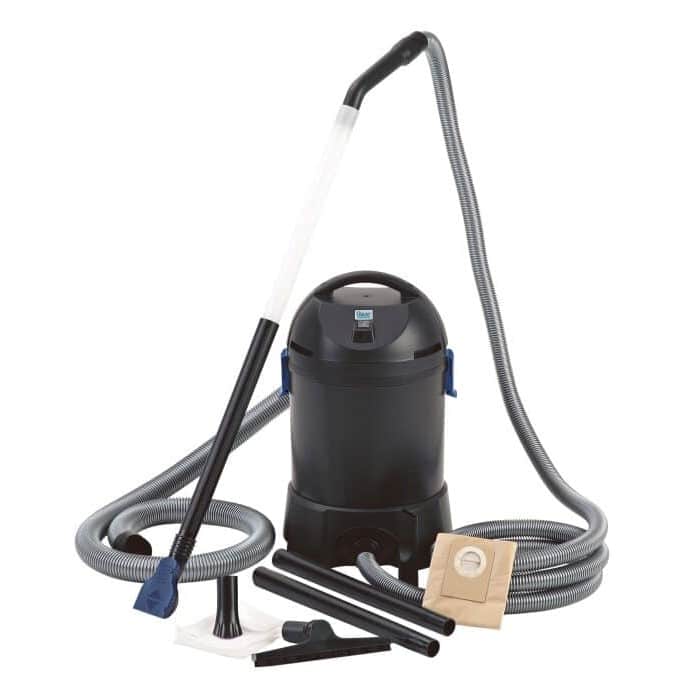
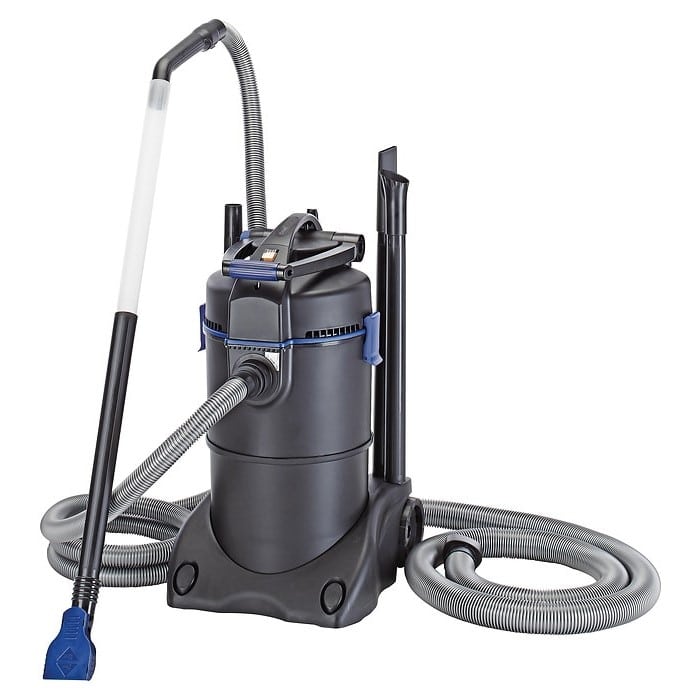
PondoVac 3 and 4: continuous suction
The 3 and 4 use two chambers, alternating between collection and emptying. This avoids the same stop-and-start cleaning pattern as a single-chamber machine. They still need a suitable discharge arrangement.
The PondoVac 4 offers a greater published maximum suction depth than the 3. Compare the supplied suction hose, pipe sections and nozzles as well. Extra depth on a specification table is not the only reason to move up a model; make sure the package will reach the actual corners, shelves and bottom of your pond.
PondoVac 5: when the discharge needs more thought
The PondoVac 5 has a separate integrated discharge pump. That is an important difference where dirty water cannot simply drain away by gravity. It also supports an optional floating-hose arrangement, which Oase lists for this model.
It is a larger machine, so include storage, lifting and the route through the garden in the decision. Check the permitted discharge height, hose arrangement and electrical requirements in the current instructions. “It has a pump” does not mean it can send waste water any distance or height you choose.
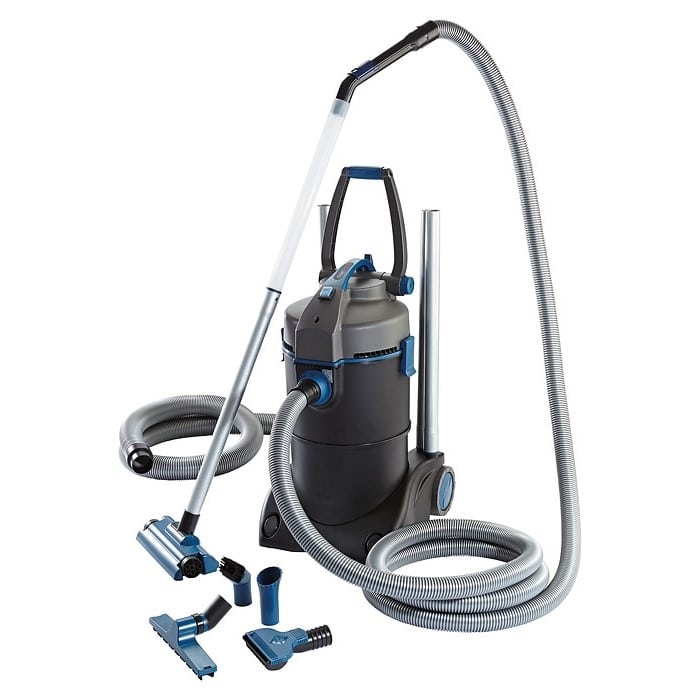
Rössle Fango 2000, Torpedo and Torpedo Ultra
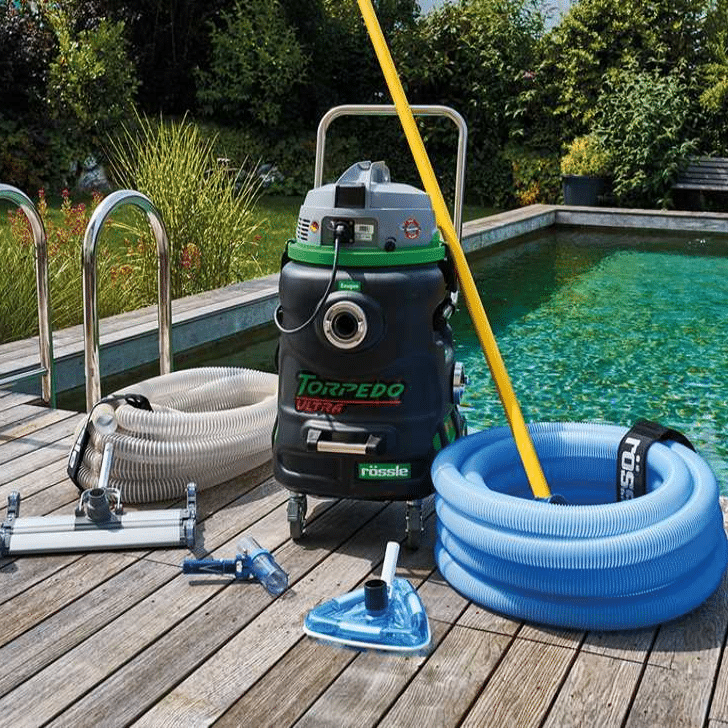
The Fango 2000, Torpedo and Torpedo Ultra all combine suction with pumped discharge. Rössle’s 2026 catalogue lists maximum suction capacities of 8,000, 15,000 and 20,000 litres an hour respectively. These are manufacturer figures, rather than a measured cleaning rate for your pond.
| Model | Suction and discharge hoses in the manufacturer’s standard package | Machine weight without accessories |
|---|---|---|
| Fango 2000 | 10 metres each; 38 mm diameter | 18 kg |
| Torpedo | 12 metres each; 50 mm diameter | 30 kg |
| Torpedo Ultra | 12 metres each; 50 mm diameter | 33 kg |
The Fango is the lighter option. The Torpedo models have larger hose connections and adjustable suction. Full specifications and accessories are in Rössle’s manufacturer catalogue; check the particular UK package before ordering.
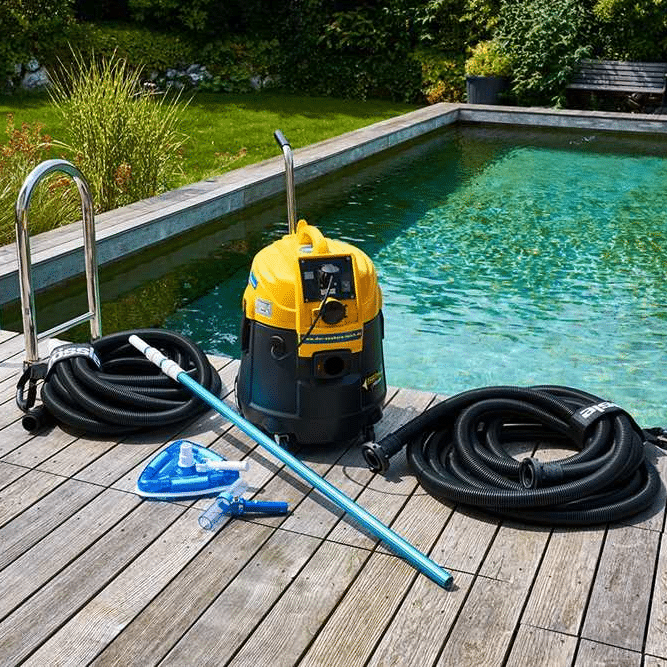

Those handling differences deserve some thought. Wheels help on a level path, but steps, a narrow gate and a muddy bank can still make moving a machine awkward. Include the hoses and attachments when planning storage. Buying a machine that is difficult to get out of the shed is not much help if that means putting off maintenance.
We would also look at how long each cleaning session is likely to be. Occasional removal of a few pockets of sediment is a different job from regularly working across a broad swimming pond floor. Ask about the whole package, including the right head and reach, before deciding that the highest quoted flow is the one you need.
Why wattage does not tell the whole story
Electrical consumption is one specification. It does not tell you, by itself, how well the machine will remove sediment from your pond. The suction arrangement, nozzle, lift, hose and emptying method all play a part.
Be especially careful when comparing a suction motor figure with the rating of a whole machine that also has a discharge pump. Use the correct model’s current technical data and rating plate when checking the supply requirements. Do not assume a larger wattage number means proportionately faster cleaning.
Check reach, depth and the way you will stand
Hose length and suction depth describe different things. A long hose may reach the far end of a pond, but it does not increase the machine’s permitted suction lift. Equally, a vacuum rated for the pond’s depth can still be awkward if its supplied pole is too short to clean the far wall from a secure position.
Measure from the place the machine will actually stand. A raised pond can put the vacuum below the water surface, while a high bank can increase the lift. Follow the model’s siting instructions; do not assume that any position within hose reach is acceptable. Rössle, for example, tells users to keep the Fango above the water level and as close to that level as practicable.
Make a simple sketch showing the pond, working position, power connection and discharge point. Include steps and narrow passages. If reaching a particular corner means standing on loose coping or leaning across the water, change the equipment or cleaning plan. A longer compatible pole may help, but it is still a tool to control from a safe position.
Which nozzle or cleaning head do you need?
A broad floor head is useful on an open surface. A smaller nozzle is easier to control around a corner, step or fitting. Neither is automatically right for gravel, a delicate liner fold or a planted shelf. Match the head to the surface and use only attachments approved for the particular machine.
Compare the pole connection, suction-hose diameter and intended use before adding an accessory. Our Rössle 50 mm round suction nozzle is one example of a model-specific accessory; it is not a universal fitting for every pond hoover. Check the compatible machine on the product page.
Do not force a head across stones or exposed fixings. Where a liner is loose or damaged, assess that first. The aim is to lift unwanted material with a controlled pass, not scrub every surface back to a new-looking finish. Established surfaces and planted margins need different treatment from a bare floor.
How to use a pond vacuum without making more work
Choose stable, dry ground for the machine, route the hoses without tight kinks and arrange a suitable waste outlet before switching it on. Fit the appropriate nozzle and check the manufacturer’s start-up instructions.
Work methodically across a limited area, keeping the nozzle under control. Stirring a large amount of sediment into suspension can make it harder to see the bottom and decide where to work next. Slow, steady passes are usually easier to manage than repeatedly plunging the nozzle through everything.
Keep watching the fish and the water level. Vacuuming removes water as well as dirt, and a shallow shelf can become exposed while your attention is on a deeper area. Stop before the water level creates a problem for the fish, pump intake or filter operation.
Where fish depend on aeration, keep a suitable air supply available throughout the work. Our aeration guide covers temporary and permanent air arrangements. If you cannot work safely from the edge, rethink the setup rather than leaning further out over the pond.
Plan the replacement water before starting
A machine advertised with a high water flow can remove a meaningful amount of pond water while you are concentrating on the floor. Keep a visible level reference and stop periodically to check what has changed. Do not use the nominal suction figure as an accurate meter of how much has left the pond.
For example, removing 300 litres from a 3,000-litre pond is a 10% water change. The same amount from a 15,000-litre pond is 2%. Those are illustrations of the arithmetic, not suggested cleaning targets. The safe plan depends on the fish, source water, temperature and system layout.
Arrange suitable dechlorination for mains replacement water, including chloramine where present, and avoid a sudden large temperature change. Never leave a filling hose unattended. If there has already been a water-quality problem, take readings before cleaning so you have something useful to compare afterwards.
Can you return the vacuumed water to the pond?
A coarse debris bag can retain some larger particles, but it does not turn dirty waste water into newly treated pond water. Oase specifically describes the PondoVac 4 bag as unsuitable for pond sludge. Do not assume a bag removes dissolved waste or every fine particle.
Decide whether a partial water change is part of the job and arrange properly treated replacement water where needed. Our pond-volume guide will help when checking quantities, and the water-quality guide covers the wider checks.
There are finer water-return accessories, including the Rössle fine filter bag. Check the actual bag, coupling and compatible machine rather than assuming it works like the coarse bag supplied with another vacuum. Fine filtration still does not remove every dissolved substance or turn waste water into disinfected water.
If the pond contains a recent treatment, salt or other added product, that also affects where the discharge should go. Keep it away from other ponds and natural watercourses and check the product’s disposal instructions. Do not send dirty water onto a neighbour’s property or assume any nearby drain is an appropriate outlet.
If suction becomes weak
Safely switch off and isolate the machine before checking it. Look for a blocked nozzle, obstruction, kink, poor connection or an unsuitable discharge arrangement. Follow the troubleshooting instructions for the model, including any chamber, float or filter checks it requires.
Do not keep running a struggling machine while pulling on hoses or opening the motor unit. Replace damaged seals and compatible service parts properly. HSE’s electrical guidance explains why safe isolation still matters even when an RCD is fitted.
Cleaning and storing the vacuum
Once it is safely isolated, empty and clean the parts identified in the instructions. Leaving a chamber, bag or hose full of sediment makes the next job less pleasant and can obstruct the machine. Check seals, clips and hoses while everything is accessible, rather than discovering a split halfway through the next clean.
Use the correct replacement part. The PondoVac 5 debris bag with strap, for instance, is listed for that machine. Similar-looking bags, foams and connectors are not necessarily interchangeable across the PondoVac range.
Drain the machine and hoses as the manual requires and store them protected from frost. Keep the electrical head and connections dry. Do not put a vacuum away with trapped water and assume an unheated shed will protect it through a freeze. If a cable or electrical component is damaged, arrange an appropriate repair rather than continuing to use it.
Would a skimmer, bottom drain or net do the job instead?
A net is often the quickest way to collect a few leaves before they sink. A floating surface skimmer can deal with suitable floating material on an ongoing basis. A vacuum works on accessible material that has already settled. These tools deal with different stages of the same waste problem.
On a purpose-built koi pond, a correctly designed bottom-drain and filtration system should help move waste out routinely. A vacuum can still be useful for a local pocket, but repeatedly finding the same heavy accumulation deserves investigation. Check circulation, collection points and feeding rather than accepting a large weekly cleaning job as unavoidable.
For a drum-filter system, remember that the drum can only remove waste that reaches it. A cleaner floor is as much about how the pond moves water and collects solids as the type of mechanical filter in the filter room.
Vacuuming a swimming pond
A broad swimming area and a planted regeneration zone should not be treated as identical surfaces. Establish what can be cleaned mechanically, which areas should be left alone and which head is appropriate for the floor. Do not assume that a more aggressive brush or greater suction will improve a planted bed.
Keep people out of the water while the equipment is operating, in line with the manufacturer’s instructions. A vacuum removes accessible debris; it does not test whether water is suitable for swimming. Water treatment, circulation and any required water-quality checks remain separate responsibilities.
Can you use a normal wet-and-dry vacuum or make a DIY one?
We would choose equipment specifically intended for the job. A workshop vacuum accepting liquids does not by itself establish that it is suitable for pond suction, continuous dirty-water discharge or the electrical conditions beside a pond. Check its actual instructions rather than relying on the words “wet and dry”.
Do not modify a household vacuum, improvise a mains-powered pump arrangement or bypass a float or safety cut-out. If budget is the issue, compare occasional hire, a suitable smaller pond vacuum and a professional clean. The cheapest purchase is poor value if it cannot empty properly or cannot be used safely where you need it.
How often should you vacuum a pond?
Look at what is accumulating and why. A fish pond with poor waste collection may benefit more from an improvement to the filtration than from buying a bigger vacuum to use every weekend. A vacuum removes accessible material; it does not replace routine filter maintenance.
For a pond with extensive neglected waste, plan whether selective vacuuming is enough or whether a more substantial clean is justified. See our maintenance guide and common pond problems for the wider picture.
A wildlife pond needs a different approach. Repeatedly vacuuming through its habitat may be unnecessary and disruptive. Read our wildlife-pond maintenance advice before deciding that a visibly natural bottom needs cleaning.
Compare the cost of the complete setup
Check what comes with the machine before comparing prices. An apparently cheaper package may need an extra discharge hose, a different nozzle or a suitable pole for your pond. Conversely, there is no value in buying every attachment before you know which surfaces you will actually clean.
Allow space to rinse and dry the equipment afterwards, and think about who will lift it. If two models both meet the depth and discharge requirements, ease of handling may be the more useful difference. We would rather help you choose a manageable setup than sell you extra capacity that does not solve the awkward part of the job.
What to send us if you are choosing a vacuum
Send the pond’s depth and approximate dimensions, a photograph of the access and bank, the type of waste you want to remove and where the discharge hose needs to end. Tell us whether this is occasional upkeep or a substantial clean. Those details make it much easier to choose a model that will be useful in your garden.
