





Pond Treatments
Targeted water-care, algae, filter, sludge and fish-health products for properly diagnosed pond problems
Pond treatments can help solve specific water-quality, algae, maintenance and fish-health problems, but the best result starts with identifying the cause. Cloudy water, blanket weed, low alkalinity, chlorine exposure, filter disruption and visible fish symptoms require different responses. A product should be chosen for the verified problem rather than added as a general cure-all.
Before treating, calculate the pond volume, test the relevant water parameters and read the complete product label. Check compatibility with fish species, plants, wildlife, filtration, ultraviolet clarifiers and any treatment already in the water. Accurate dosing, good circulation and strong aeration are especially important whenever water chemistry or fish health may be affected.
Choose the right pond treatment for the problem
Use the categories below to narrow the range by purpose. Water conditioners address incoming tap water, bacterial products support filters and waste processing, algae or nutrient products target specific clarity problems, and fish-health treatments should only be selected after water quality and symptoms have been assessed.
- Test first: check ammonia, nitrite, pH and other relevant parameters before assuming a treatment is needed.
- Measure accurately: dose from the verified pond volume, not a visual estimate.
- Read compatibility instructions: filters, UV units, carbon, zeolite, plants and sensitive species may need special consideration.
- Treat the cause: improve filtration, aeration, maintenance and nutrient control where these are contributing to the problem.
Our practical view: We prefer to identify the problem before reaching for a treatment. Check pond volume and water results, read the exact label and avoid combining products unless compatibility is expressly confirmed.
Price range: £179.99 through £749.99 (inc VAT)
Price range: £109.99 through £1,799.99 (inc VAT)
Price range: £279.99 through £599.99 (inc VAT)
Price range: £13.59 through £21.89 (inc VAT)
Price range: £8.99 through £23.99 (inc VAT)
Original price was: £409.99.£389.49Current price is: £389.49. (inc VAT)
5% Off
Price range: £569.99 through £1,039.99 (inc VAT)
Price range: £199.99 through £659.99 (inc VAT)
Price range: £12.99 through £45.00 (inc VAT)





Pond Treatments Buying and Care Guide
Start with water quality, not the bottle
Many apparent treatment problems begin with poor or unstable water quality. Ammonia, nitrite, pH, alkalinity, temperature and oxygen conditions can affect fish behaviour and treatment performance. Correcting an underlying water-quality fault may be more important than adding another product.
Protect filtration and oxygen levels
Some treatments interact with ultraviolet clarifiers, activated carbon, zeolite or biological filtration. Others increase the oxygen demand as algae or organic waste breaks down. Follow the label rather than applying one rule to every product, and add aeration whenever the instructions recommend it or fish appear stressed.
Plan follow-up care
A treatment is one part of pond management. Remove dead algae or loosened waste, monitor water parameters, clean mechanical filtration as required and avoid repeating a dose early. If fish remain unwell or the cause is uncertain, seek advice from an aquatic specialist or veterinary professional.
Useful pages alongside Pond Treatments: Pond water testing · Pond filters · Pond pumps · Pond cleaning equipment
Pond Treatments Frequently Asked Questions
These Pond Treatments answers cover recurring pond-care questions. Always follow the label supplied with the exact product.
What is a pond treatment?
A pond treatment is a product intended for a defined water-care, maintenance, algae, filter, mineral or fish-health purpose. Products work in different ways, so the label and the diagnosed problem should determine which one is suitable.
What should I do before adding a pond treatment?
Test the relevant water parameters, calculate the pond volume, check fish and wildlife compatibility and read the entire label. Confirm whether filtration, UV, carbon or zeolite needs to be altered during use.
How do I calculate the correct treatment dose?
Use accurate pond dimensions or a reliable measured volume, then follow the manufacturer dose for that product. Allow for shelves and displacement where possible, and never assume that two products use the same dose rate.
Can I mix two pond treatments?
Do not mix or overlap products unless both labels or the manufacturers explicitly confirm compatibility. Active ingredients can interact, and an unknown combination may affect fish, oxygen levels or filtration.
Should I test pond water before treating fish?
Yes. Poor water quality can cause or worsen symptoms that resemble disease. Ammonia, nitrite, pH, temperature and oxygen conditions are important checks before selecting a fish-health product.
Do I switch off my pond UV during treatment?
It depends on the product. Some labels instruct users to switch off ultraviolet equipment, while others do not. Follow the instructions for the exact treatment rather than applying a universal rule.
Should activated carbon or zeolite be removed?
Only where the product instructions require it. Adsorbent media can remove some active ingredients, while zeolite may also be unsuitable with particular treatments. Check the label before dosing.
Why is extra aeration recommended during some treatments?
Treatments, warm water, stressed fish and the breakdown of algae or organic waste can all increase oxygen demand. Additional aeration helps protect dissolved oxygen, but it does not replace correct dosing or water-quality checks.
Are pond treatments safe for koi and goldfish?
Use only products labelled for the intended pond and fish, at the stated dose. Check warnings for sensitive species and do not assume that a product suitable for goldfish is automatically suitable for sturgeon, sterlets or invertebrates.
Are pond treatments safe for plants and wildlife?
Compatibility varies. Read the label for restrictions concerning plants, amphibians, snails, mussels, crustaceans and other wildlife. Avoid allowing treated water or unused product to enter natural waterways.
What is the difference between blanket weed and green water?
Blanket weed forms attached or floating strands, while green water is caused by suspended single-celled algae. They may require different equipment, maintenance or treatment approaches.
Can a UV clarifier solve every algae problem?
No. A correctly sized UV clarifier can help with suspended green-water algae, but it does not directly remove attached blanket weed and it does not correct excess nutrients or sludge.
What do beneficial bacteria products do?
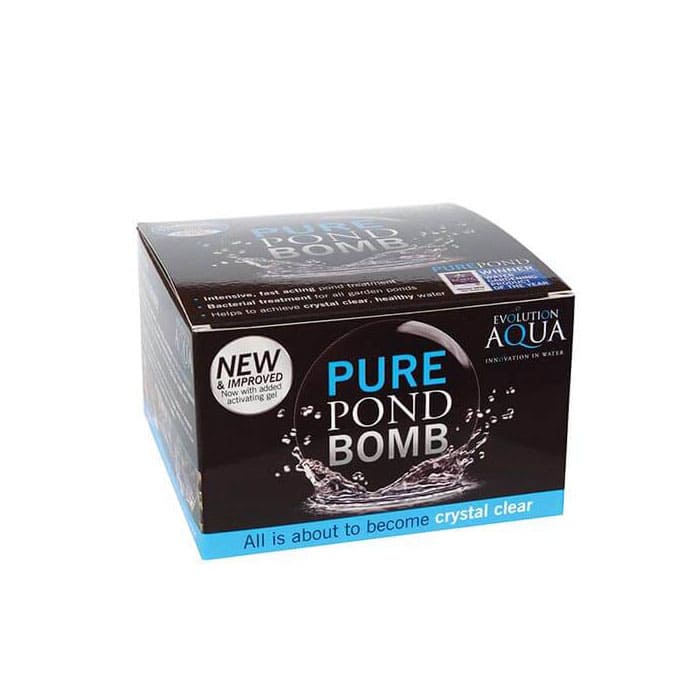
They introduce or support selected microorganisms used in biological filtration and organic-waste processing. They are not an instant substitute for a mature, correctly sized filter or safe ammonia and nitrite levels.
When should I use a tap-water conditioner?
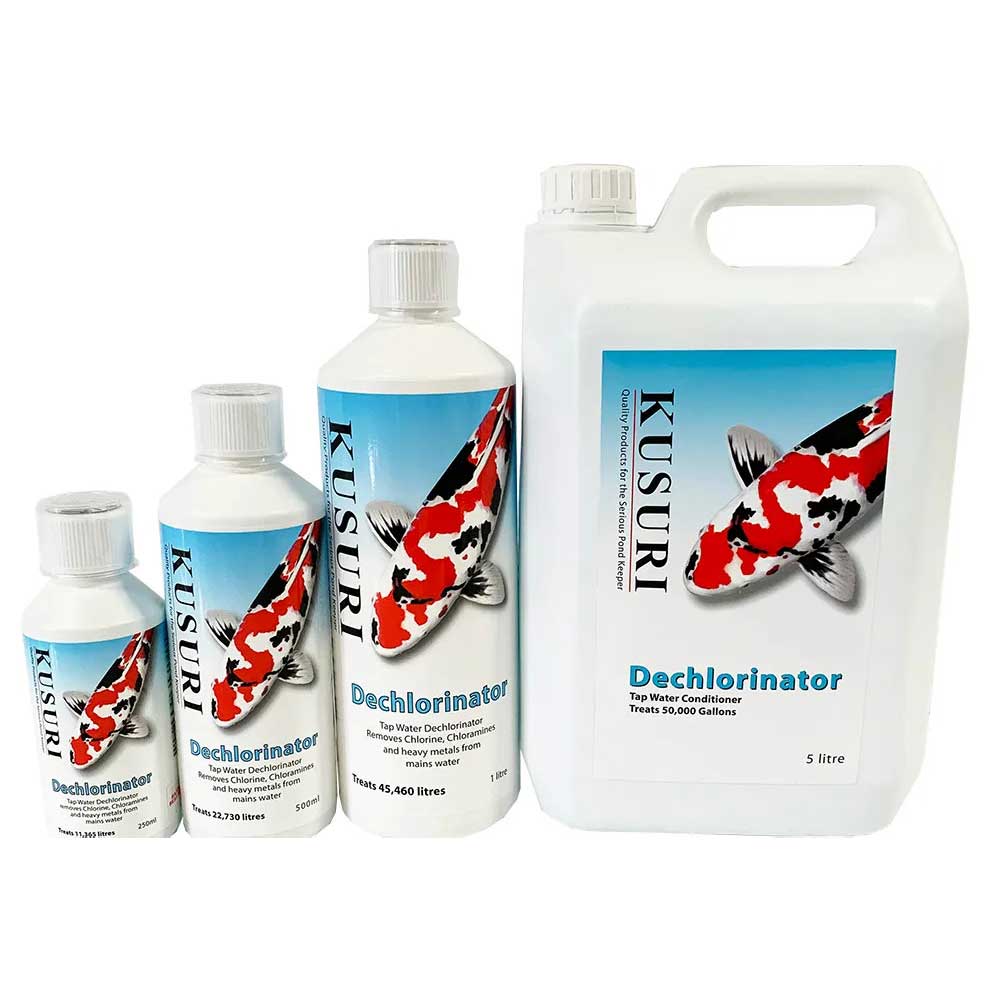
Use a suitable conditioner when the product label and your water supply require chlorine or chloramine to be neutralised during filling, top-ups or water changes. Dose according to the volume of new water or the label instruction.
What are pH, KH and GH treatments for?
These products are used to address defined acidity, alkalinity or mineral conditions. Test first and make changes gradually because rapid shifts can stress fish and alter how other treatments behave.
Can sludge treatments replace pond vacuuming?
Not always. Biological sludge products can help break down some organic material, while accumulated leaves, silt and heavy deposits may still need physical removal.
How quickly should a pond treatment work?
Timescales vary by product, water temperature, circulation, diagnosis and the severity of the problem. Use the stated assessment period and do not redose early simply because the result is not immediate.
Should I carry out a water change before treatment?
Only when water quality, the product instructions or professional advice indicates it. Any replacement tap water must be made safe for the pond, and a large change can alter temperature and chemistry.
What if a pond treatment has not worked?
Recheck the diagnosis, water volume, dose, water quality, temperature and equipment instructions. Do not immediately combine products. Seek specialist advice where fish health is involved or the cause remains unclear.
Can I use pond treatments in cold weather?
Some biological and chemical products have minimum temperature guidance or work more slowly in cold water. Check the individual label and avoid treating merely according to the calendar.
How should pond treatments be stored?
Keep products in their original labelled containers, securely closed and away from children, pets, food and extremes of temperature. Follow any product-specific storage and expiry instructions.
How do I dispose of unused pond treatment?
Follow the label and local disposal guidance. Do not pour concentrated or unwanted product into drains, ponds, ditches or natural water, and never reuse an unlabelled container.
Can I prevent pond problems instead of repeatedly treating them?
Good filtration, sensible stocking and feeding, debris removal, stable water chemistry, adequate aeration and regular testing can reduce the conditions that lead to recurring problems.
When should I ask an aquatic specialist for help?
Ask for help when the diagnosis is uncertain, water values are unsafe, fish show persistent or severe symptoms, several products have already been used or the pond is too large to measure and treat confidently.
When should a veterinarian be consulted about pond fish?
Seek veterinary advice for serious, persistent or unexplained disease, repeated losses, suspected internal conditions or when a prescription medicine may be required. Take current water-test results and treatment history.
