






Equipment & Drum Screen Cleaners
Pond Equipment and Drum Screen Cleaners
Purpose-made products for limescale, biofilm and deposits on pumps, quartz sleeves, filters and drum screens
Pond equipment gradually collects limescale, biofilm and mineral deposits. On a pump, that restricts the rotor and cooling surfaces; on a quartz sleeve, it blocks UV-C; on a drum screen, it can increase cleaning cycles and water use. A purpose-made cleaner restores the surface without attacking it with an inappropriate household chemical.
This category contains two types of product. Drum-screen sprays are used on installed screens according to their label, while concentrated equipment cleaners are used to soak removable pumps, rotors, sieves or quartz components. Read the application method for the exact bottle.
Even products described as fish safe need correct dosing, contact time and rinsing. Isolate equipment before handling and never improvise mixtures.



Drum Screen Cleaners
Aqua Source Drum Screen Cleaner 500 ml is a ready-to-use, non-abrasive spray intended to remove biofilm and stains from a drum screen in situ. Aqua Source directs users to spray, wait around four to five minutes and wipe or gently agitate stubborn areas with a soft brush.
Burtons Drum Screen Cleaning Powder is a separate product with its own mixing and contact instructions. Do not copy the spray method onto the powder.
Pump and Equipment Descaling
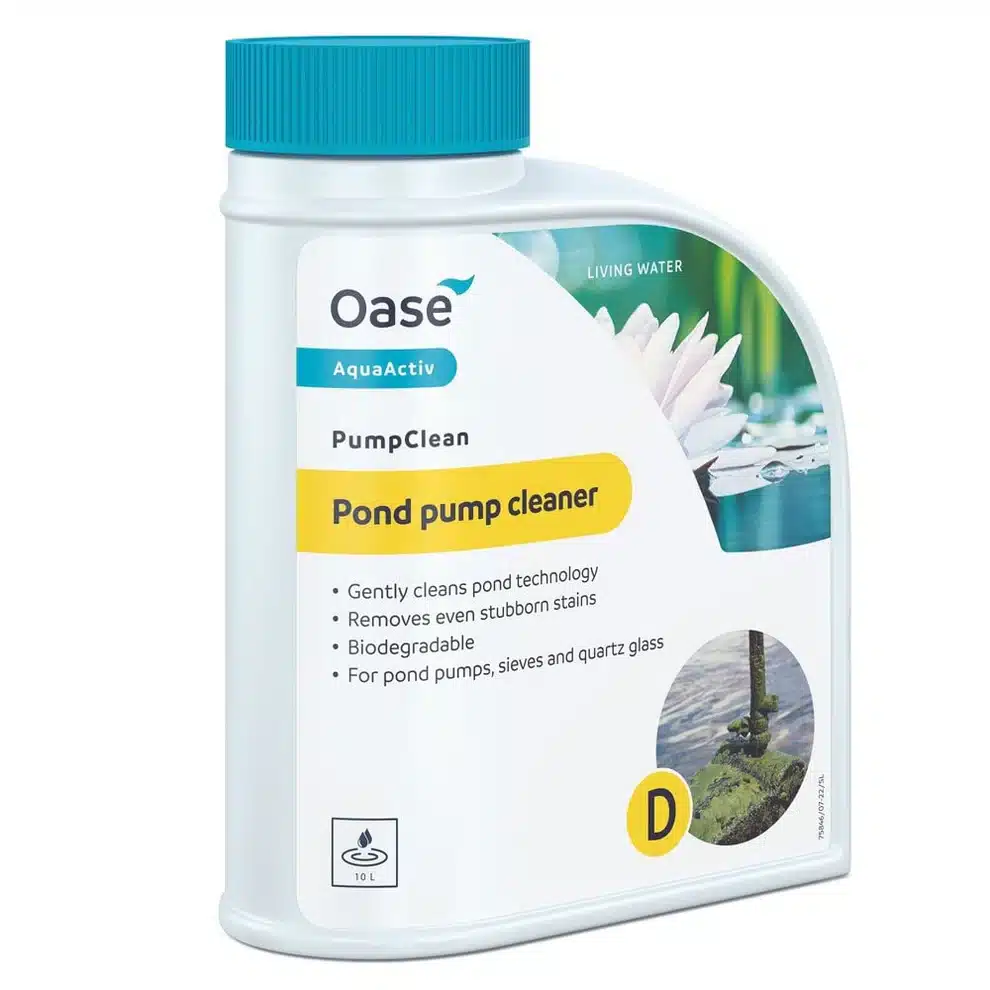
Oase AquaActiv PumpClean 500 ml is a concentrate for pumps, sieves and UV quartz. Oase states that 500 ml makes 10 litres of descaling solution and removes limescale and deposits within the stated treatment period.
Aqua Source Pond Equipment Cleaner is the alternative multi-purpose equipment product. Remove loose debris first so the cleaner reaches the mineral or biofilm layer.
A Safe Cleaning Routine
- Isolate electrical power and water flow.
- Photograph the assembly before dismantling.
- Remove loose sludge mechanically.
- Apply or soak exactly as the label directs.
- Rinse and inspect seals, screens and quartz.
- Reassemble, prime and leak-test before normal use.
Never mix cleaners, acids, chlorine products or pond treatments. Dispose of used solution according to the label.
Our advice: if cleaning frequency has suddenly increased, find the cause as well as cleaning the symptom – low spray pressure, a scaled nozzle or damaged screen may be involved.
Related Categories and Useful Next Steps
Pond-cleaning equipment · Drum filters · Filter spares · UV spares · Pond pumps
Frequently Asked Questions
What does drum screen cleaner remove?
It is used for biofilm, stains and mineral deposits that increase screen resistance.
Can Aqua Source Drum Screen Cleaner be used in situ?
The manufacturer describes it as a ready-to-use fish-safe spray for in-situ drum-screen cleaning when used as directed.
How long is the Aqua Source spray left on?
The published method says around four to five minutes before wiping or gentle brushing; follow the current label.
What can Oase PumpClean clean?
Oase lists pond pumps, sieves, quartz glass and similar pond technology.
How much solution does 500 ml of PumpClean make?
Oase states that the concentrate makes 10 litres of descaling solution.
Can I use household vinegar instead?
Use a product and method approved for the equipment materials and seals. Household products can have uncertain concentration and additives.
Can I mix two cleaners?
No. Never mix cleaning products unless the manufacturer explicitly instructs it.
Should the pump remain powered during cleaning?
No. Isolate electrical power before removing or handling equipment.
Can I scrub a drum screen with a hard brush?
No. Use only gentle tools allowed by the filter and cleaner instructions; damaging the mesh is expensive.
Why is my drum cleaning more often?
Biofilm, limescale, blocked nozzles, weak spray pressure, high waste load or screen damage can all contribute.
Can cleaner repair a damaged screen?
No. A torn, stretched or delaminated panel must be repaired or replaced.
Should quartz sleeves be rinsed after cleaning?
Yes, according to the product method, then inspect for cracks before refitting.
Is fish safe the same as harmless in any amount?
No. It means safe only when the current label and application instructions are followed.
Where should used cleaning solution go?
Follow the label and local disposal rules; do not pour concentrated cleaner into the pond or a natural watercourse.
Can you help choose the cleaner?
Yes. Tell us the equipment make, model, surface and whether the deposit is limescale, biofilm or something else.
