






Barbara Dobbins Waterlily (Nymphaea ‘Barbara Dobbins’)
| Size | 3 Ltr, 10 Ltr, 30 Ltr |
|---|---|
| Plant Type | Water Lily |
| Sun / Shade | Full Sun |
| Flower Colour | Pink, Yellow |
| Growth Rate | Medium |
| Native to UK | No |
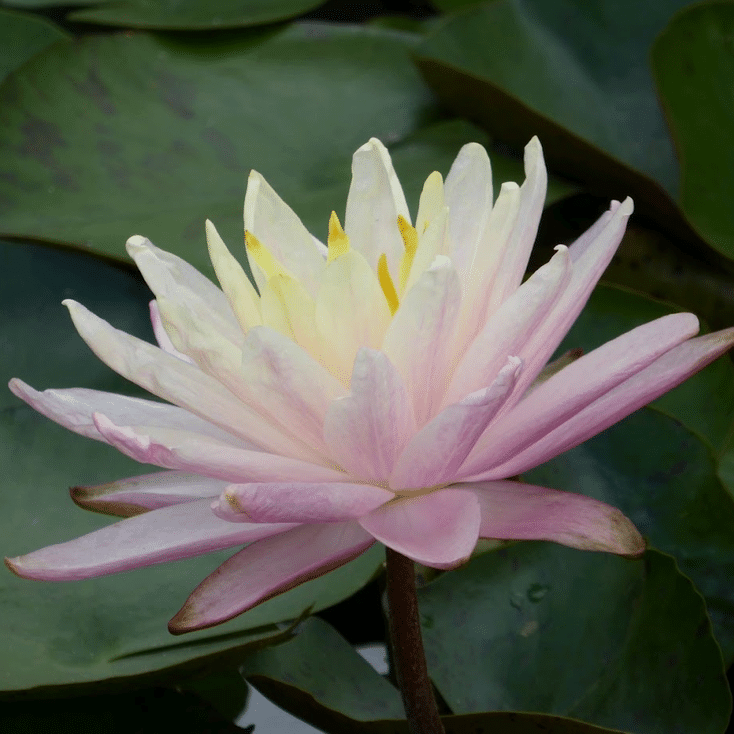
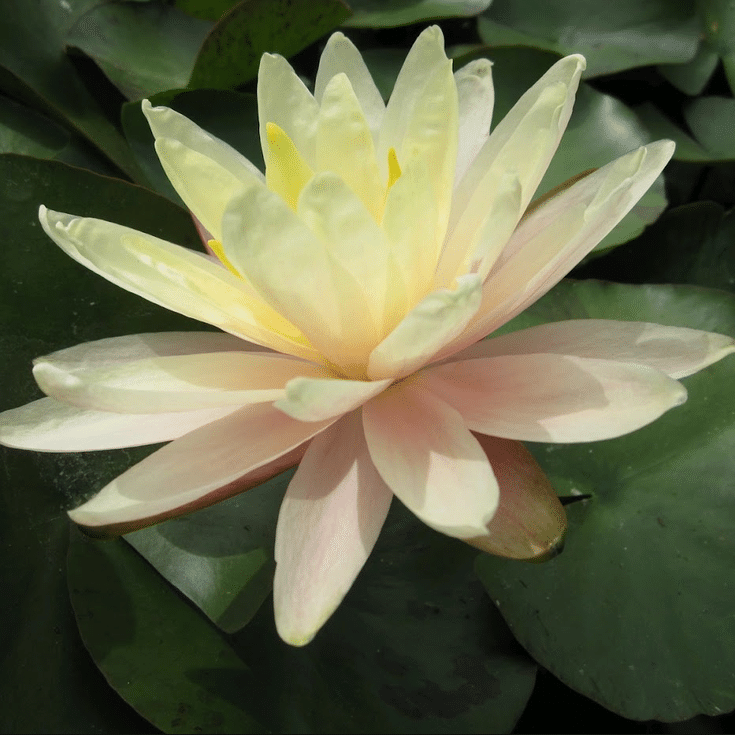
Barbara Dobbins has cup-shaped flowers in peach and yellow tones, often with a pink flush. The balance of colour can vary with the weather, giving a softer mixed display than a lily chosen for a uniform dark red or pure white flower.
Price range: £36.50 through £148.50 (inc VAT)
Barbara Dobbins Waterlily (Nymphaea ‘Barbara Dobbins’)
Peach and yellow flowers with a soft pink flush
Barbara Dobbins has cup-shaped flowers in peach and yellow tones, often with a pink flush. The balance of colour can vary with the weather, giving a softer mixed display than a lily chosen for a uniform dark red or pure white flower.
One bloom may look more yellow and another more peach-pink. That variation is useful to expect before choosing from a photograph, which records one flower in one set of conditions. Its appeal is the combination of shades rather than an exact colour that stays unchanged throughout the season.
The rounded dark green leaves can have purple blotches, adding pattern between the flowers. Let the pads open clear of neighbouring lilies so those markings remain visible. A crowded surface can hide both the foliage detail and the cupped flower shape.
Plan for a mature spread around 1–1.5 m. A compact description does not mean the plant will remain within its supplied basket, or that it belongs in every small bowl. Check the space available above the shelf and leave room for open water, other planting and access.
For a new basket, the establishment guidance begins with about 15–25 cm of water above it, increasing towards 50–60 cm as growth builds. Follow the supplied label and lower in stages, keeping young leaves able to reach the surface. A mature depth range should not be used as a reason to start a short new plant too deep.
Give it sun and a quiet patch of water, clear of constant spray or a forceful return. Summer is the main flowering period, while winter brings leaf loss and a resting rhizome below water. Clear soft old material when reachable, protect a shallow planting from freezing solid and feed with an aquatic fertiliser as directed during growth. As the basket fills, check whether the leaves or roots need more room rather than assuming a change in flower colour is automatically a feeding problem.
UK-grown plant. Grown at a dedicated aquatic plant nursery in the South of England.
What you receive
Your Barbara Dobbins Waterlily is supplied planted in the aquatic basket size you select. Choose from 3-litre basket, 10-litre basket and 30-litre basket, checking the selector for current availability. The basket size describes the container supplied; allow separately for the space its mature leaves will need.
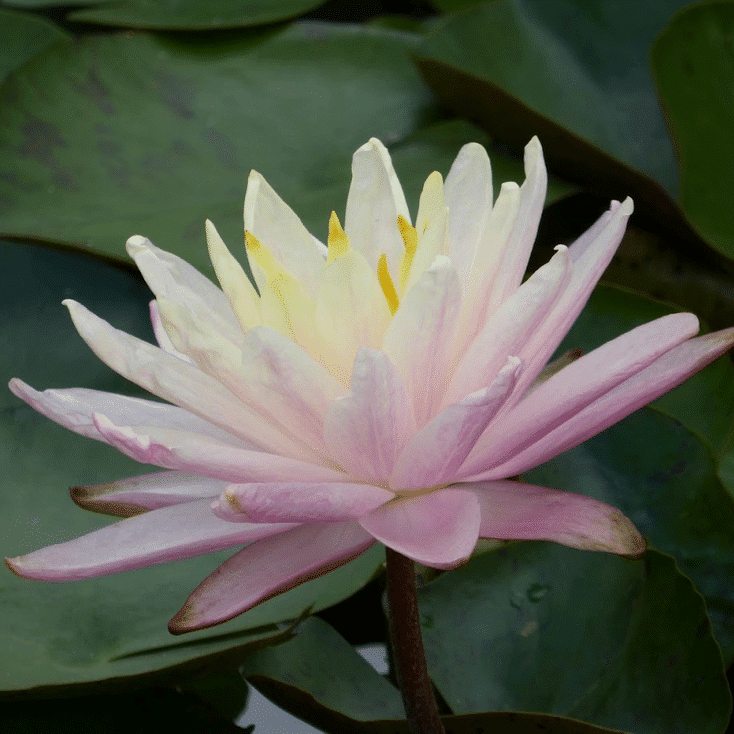
Unpack promptly and keep the planting wet while you prepare its position. A hardy waterlily may arrive with little visible foliage while dormant, or with leaves at different stages in the growing season. The photograph shows the cultivar in growth; flowers on arrival or in the first season depend on the plant and conditions.
Is Barbara Dobbins Waterlily right for your pond?
Barbara Dobbins brings peach-yellow cups with a pink flush above dark, purple-blotched leaves. Allow around 1–1.5 m for mature growth and leave a patch of open water around it. Its warm blend is a useful alternative to a pure yellow or strong pink lily, but the colour does not make it a miniature.
Choose a position with plenty of direct sun and quiet water. Keep pads and flowers clear of constant fountain spray or a strong waterfall return, and leave room to reach the basket. Plan the mature planting with open water around it rather than filling every visible gap on delivery day.
Planting depth and getting established
The RHS recommends starting a young basket with about 15–25 cm of water above it, then lowering the established plant gradually towards 50–60 cm. Lower progressively rather than putting short young shoots straight into deeper water. Check the basket-top measuring point after allowing for the container and its support, and follow the label supplied with your plant.
Keep a correctly planted, settled basket intact when putting it into the pond. If the plant needs more root space later, use an aquatic mesh basket with suitable aquatic compost or heavy loam. Position the rhizome with its growing point at the correct soil level and dress the surface with washed pea gravel without burying the active crown.
Lower the basket slowly so the soil stays in place. Check that its whole base is stable and supported, and inspect the young leaves after positioning. If they cannot reach the light, review the starting water cover before assuming that more feed is needed. A larger delivery basket does not need dismantling simply because you are planting a new pond.
Looking after your waterlily
- Feeding: Use a suitable aquatic fertiliser during active growth, following its dose and application instructions. Place tablets or capsules within the planting medium as directed so the feed reaches the roots rather than being scattered into the open pond. Check what has already been applied before adding more.
- Tidying: Remove yellowing leaves and faded flowers when you can reach them safely, cutting or taking off the spent growth without damaging new buds. Collect the material rather than letting it sink into the pond. Keep sound leaves to support the plant as it grows.
- What is normal for this cultivar: Purple blotches on sound leaves and a pink flush on yellow-peach flowers are part of the display. Keep healthy patterned growth, and remove soft or tired material according to its condition rather than its colour alone.
- Crowded plants: If leaves are pushed above the water instead of floating, or the clump is clearly congested, inspect the rhizome and container. Divide an established hardy lily when needed, usually in late spring or early summer, keeping growing shoots and healthy roots on the divisions. Replant in suitable aquatic medium and begin the divisions in shallower water.
- Poor flowering: Review sunlight, water cover, root space and establishment before changing the feeding routine. A shaded, crowded or newly settling plant may make leaves without producing the display seen in a photograph of an established plant. Extra fertiliser alone does not correct those conditions.
Autumn, winter and spring growth
As autumn cools, the leaves die back and the rhizome rests below the water. Remove soft, fading foliage where reachable so it does not collect in the pond, but keep the dormant growing parts wet. A lack of floating leaves in winter is normal for this hardy lily.
In a suitable pond the plant can remain outdoors. Pay particular attention to a shallow or exposed container, where the whole root zone could freeze solid; protect or move the planted container to a suitable frost-protected position if that risk cannot be avoided. Look for renewed growth as conditions warm and adjust the basket gradually rather than disturbing it repeatedly.
Size and growing conditions
- Botanical identity
- Nymphaea ‘Barbara Dobbins’
- Flowers
- Peach/yellow cup-shaped flowers flushed pink; generally June–September
- Foliage
- Rounded dark green leaves with purple blotches
- Established spread
- Around 1–1.5 m
- Planting depth
- Start around 15–25 cm, gradually towards 50–60 cm as established
- Depth measurement
- For the stated young-plant guidance, measure water above the top of the planted basket; follow the supplied label for the established position.
- Light
- Full sun preferred for flowering; keep foliage away from constant spray
- Winter
- Deciduous/seasonal hardy waterlily; dormant rhizome remains underwater, protected from freezing solid.
- Native status
- Cultivated waterlily; not native British wild stock.
- RHS information
- RHS plant profile: Nymphaea 'Barbara Dobbins'
Delivery and basket information
We do not deliver live plants to Northern Ireland.
Orders received by 11am Monday to Wednesday are normally dispatched on the following working day using a next working day courier service. During busy periods, dispatch may occasionally take an extra day.
To avoid plants being held in depots over a weekend, we do not usually dispatch on Fridays. Highlands and Islands orders using a two day service are not normally dispatched on Thursdays.
Please read our delivery information for delivery arrangements and contact us if you need to check the timing of a particular order.
Finofil baskets are made from 100% recycled polypropylene co-polymer. They are not suitable for ordinary kerbside recycling; reuse them where possible and check local specialist recycling options. Their fine mesh helps retain aquatic soil while allowing water to reach the roots.
Basket measurements for the offered sizes:
- 3 Litre Hexagonal Basket – 18 × 18 × 16cm
- 10 Litre Square Basket – 29 × 29 × 19cm
- 30 Litre Square Basket – approximately 40 × 40 × 28cm (nominal basket size)
Other waterlilies to compare
Colorado — For softer salmon-pink flowers and a specialist spread around 70 cm.
Paul Hariot — For creamy-apricot flowers that age towards pink, with speckled olive young leaves.
More planting help
waterlily planting and care guide — Worked depth examples, feeding, winter care and checks for a lily that is not flowering.



Reviews
There are no reviews yet.