





Common Reed (Phragmites australis)
| Size | 9cm Pack of 3 |
|---|---|
| Plant Type | Marginal |
| Sun / Shade | Full Sun to Part Shade |
| Flower Colour | Purple |
| Growth Rate | Fast |
| Native to UK | Yes |
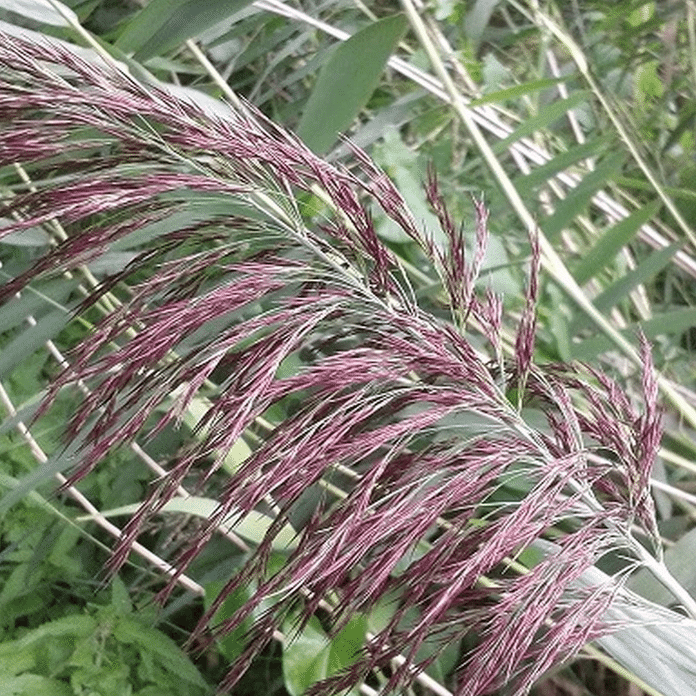
Common Reed is a tall grass for a genuinely spacious wetland setting. Strong upright stems carry long leaves, with feathery purple flower panicles appearing towards the end of summer. The changing colour of the foliage and plumes gives a large natural margin a different appearance as autumn develops.
£22.50 (inc VAT)
Common Reed (Phragmites australis)
Tall leafy stems and late-season feathery plumes
Common Reed is a tall grass for a genuinely spacious wetland setting. Strong upright stems carry long leaves, with feathery purple flower panicles appearing towards the end of summer. The changing colour of the foliage and plumes gives a large natural margin a different appearance as autumn develops.
Scale is the first decision. This is not a decorative tuft that stays within the outline of its delivery pot. Rhizomes can build an extensive colony, so a broad eventual footprint and the ability to manage it are essential parts of choosing a site.
It can suit large natural ponds, lake edges or deliberately designed reed planting. Where water treatment is the aim, the planting needs to form part of a properly designed and maintained system. Choose Common Reed for the space and management available, as well as its tall outline.
Choose full sun and deep, reliably moist soil. Large containers sunk into a suitable waterside position can help restrict growth. Inspect the container and rhizomes over time, since vigorous underground stems can still extend beyond the intended patch.
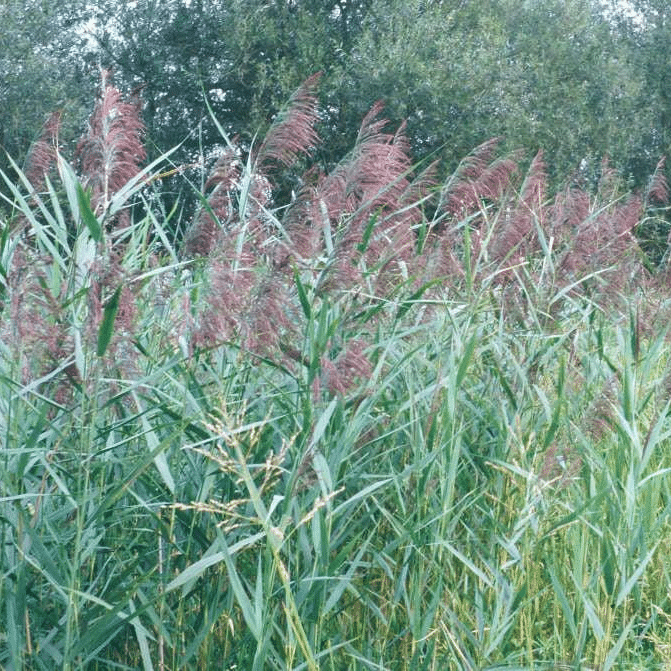
Common Reed can reach roughly 2.5–4 m high and form a wide, expanding colony. Brown seasonal stems and late flower plumes are part of its changing appearance. Choose it only where the scale, root management and access have been planned for a substantial native reedbed.
UK-grown plant. Grown at a dedicated aquatic plant nursery in the South of England.

What you receive
You receive three plants in 9 cm nursery pots.
Prepare a sufficiently large managed planting area before ordering. The supplied container does not turn Common Reed into a small permanent clump or a complete pond filtration system.
How it changes through the year
Feathery purple flower panicles appear in late summer and change with the season, while leaves and stems brown in autumn and winter. The plant is perennial below ground. A small starting pot will look very different from the mature reed stand.
Choosing a place for it
- For a large wetland setting: Allow for a tall colony and ongoing rhizome management.
- For sunny wet soil: Choose full sun and dependable moisture rather than an ordinary drying border.
- For planned containment: Large containers may help restrict growth but still need regular inspection.
Planting and getting it established
Choose full sun and deep fertile soil that remains reliably moist. This is planting for a large natural margin or a deliberately planned reed area, with an accessible boundary. A tight ornamental shelf is unlikely to provide enough long-term room.
Where a substantial container is sunk into water to restrict growth, use a planting depth appropriate to the actual supplied label. Measure water cover above the planted crown or medium separately from the depth of the shelf beneath it. Do not interpret a general habitat description as a reason to drop a newly supplied plant into deep water.
Set the roots at their existing level in the appropriate medium. Check how the container and rhizomes can be inspected later, as a vigorous plant can outgrow the space intended for it. The purpose is an accessible managed stand rather than a permanently fixed tuft defined by the delivery pot.
Looking after it
- Rhizome boundaries: Inspect the outside of the intended stand and remove escaping growth early. Cutting the visible stems does not remove the underground system that extends the colony.
- Thinning: Reduce or divide crowded planting as needed, retaining only the growth that fits the site. Suitable division periods include early spring into early summer, with the roots kept wet during work.
- Old stems: Cut old growth in late autumn or winter when appropriate to the planting. Work with care around the crown and retain access for inspecting new spring shoots.
- Moisture: Keep the root zone reliably wet, especially in a restricted container. A dry or undersized position cannot be made suitable simply by adding fertiliser.
- System expectations: A reed planting is not, by itself, a designed treatment system. Keep pond filtration and water-quality decisions based on the whole setup rather than expecting a few reeds to replace it.
- Disposal: Gather lifted roots and fragments and keep garden material out of natural waterways or unmanaged land.
Plant details
- Botanical name
- Phragmites australis
- Native status
- Native to Britain and Ireland
- Mature size
- RHS bands about 2.5–4 m high and wide; colonies can expand
- Flowers
- Feathery purple panicles in late summer into autumn
- Position
- Full sun; deep fertile, reliably moist soil
- Habit
- Vigorous rhizomatous perennial reed
- Management
- Large space, accessible boundaries and rhizome control
- RHS information
- RHS plant profile: Phragmites australis
Delivery and basket information
We do not deliver live plants to Northern Ireland.
Orders received by 11am Monday to Wednesday are normally dispatched on the following working day using a next working day courier service. During busy periods, dispatch may occasionally take an extra day.
To avoid plants being held in depots over a weekend, we do not usually dispatch on Fridays. Highlands and Islands orders using a two day service are not normally dispatched on Thursdays.
Please read our delivery information for delivery arrangements and contact us if you need to check the timing of a particular order.
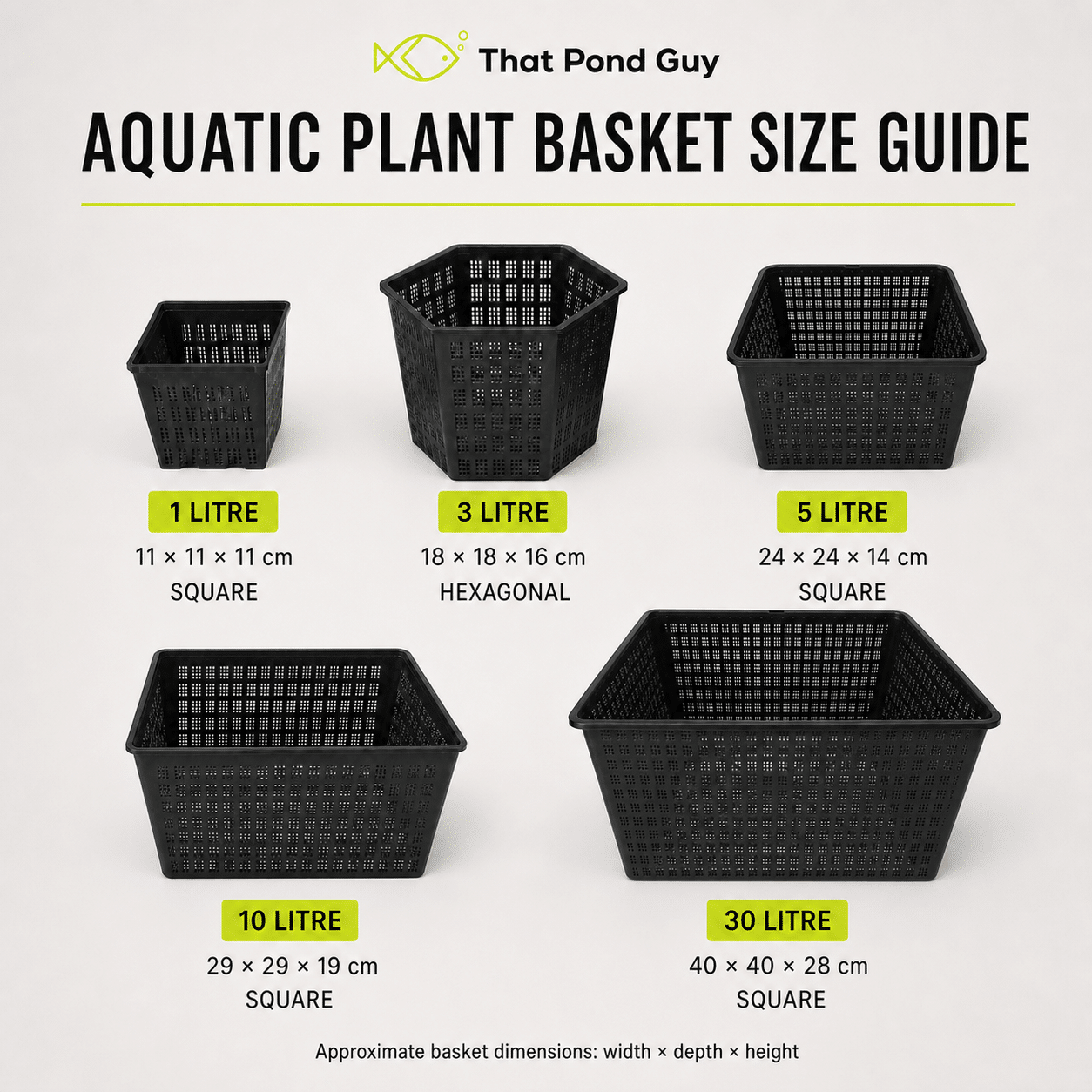
The 9cm option arrives in nursery pots. For pond planting, pot these plants into suitable aquatic baskets with aquatic planting soil before positioning them at the depth shown on their labels.
Finofil baskets are made from 100% recycled polypropylene co-polymer. They are not suitable for ordinary kerbside recycling; reuse them where possible and check local specialist recycling options. Their fine mesh helps retain aquatic soil while allowing water to reach the roots.
Other plants to compare
Club Rush — Compare round green stems instead of leafy reeds, with its liner-piercing root warning and substantial scale.
Branched Bur-reed — Its keeled leaves and burr-like fruit provide a different native margin, but vigorous spread still needs managing.
Choosing plants and planting supplies
Marginal pond plants — Compare pond-edge plants by their eventual size, light and water-depth needs before filling a shelf.
Pond plant baskets and planting supplies — Choose a suitable container and growing medium for the position described above.





Reviews
There are no reviews yet.