





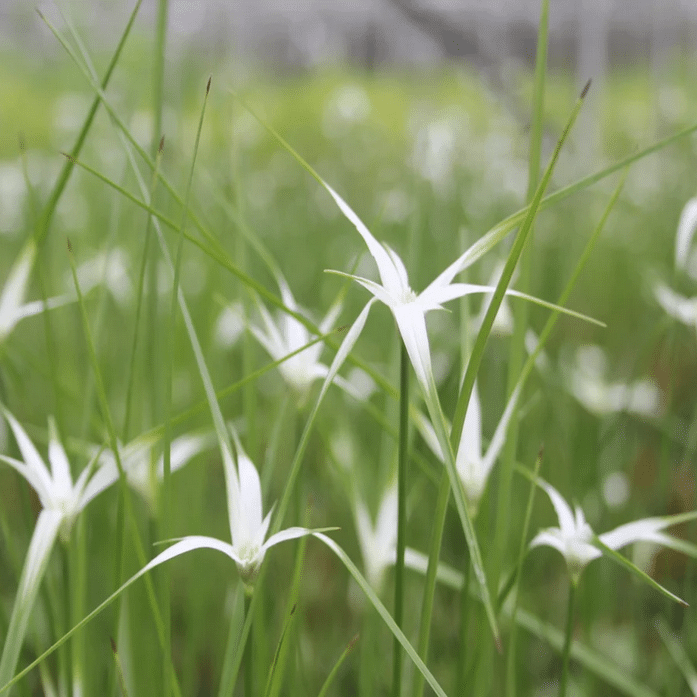

Star Grass (Rhynchospora colorata, syn. Dichromena colorata)
| Size | 1 Ltr, 1 Ltr – Pack of 3, 9cm – Pack of 3 |
|---|---|
| Plant Type | Marginal |
| Sun / Shade | Full Sun to Part Shade |
| Flower Colour | White |
| Growth Rate | Slow |
| Native to UK | No |
Star Grass has white, star-like bracts above grass-like foliage for wet ground or a shallow pond margin. Keep roots moist, leave protective winter foliage and tidy dead growth as new shoots return.
Price range: £14.00 through £34.50 (inc VAT)
Star Grass (Rhynchospora colorata, syn. Dichromena colorata)
White star-shaped bracts above fine foliage at a damp pond edge
Star Grass has a different kind of display from most flowering marginals. The white points around its small flower heads are bracts: modified leaves that form a star above the narrow green foliage. Rhynchospora colorata is also sold as Dichromena colorata, and this older name still appears in many UK pond plant lists.
The fine leaves and pale bracts are useful where you want detail without a broad screen of foliage. Position it where the tops of the stems can be seen, perhaps beside a path or near the front of a mixed pond margin. A small basket is easier to appreciate if taller rushes and irises are kept behind it.
Give the roots fertile wet or permanently moist ground in sun or partial shade. A UK water-plant nursery gives damp soil to about 5cm of shallow water as its guide. Follow the supplied plant label for the reference point, allowing for the basket height when choosing a shelf. Do not let a small patio container dry out in summer.
The display develops from summer onwards and can persist well into autumn in a suitable season. The white bracts and flower heads change with the season rather than remaining at one fresh flowering stage. Expect a plant around 50–60cm tall, with spreading rhizomes that may eventually need dividing or more room.
Leave useful foliage in place over winter, then trim dead stems just above the water surface in late spring as new growth appears. This protects emerging shoots while allowing weathered growth to be cleared at the appropriate stage. Divide a crowded clump during active spring or early summer growth.
This species comes from the Americas, so it is not a British native. UK sources describe its winter tolerance differently; an exposed container is also less buffered than a planted pond edge. Choose a sheltered position and protect vulnerable containers in severe weather rather than relying on a blanket claim of unchanged evergreen foliage throughout every UK winter.
UK-grown plant. Grown at a dedicated aquatic plant nursery in the South of England.

What you receive
Choose a single 1-litre plant, a pack of three 1-litre plants or a pack of three 9cm pots. This is a rooted wetland sedge with a white seasonal display, supplied in the selected container format rather than as cut flowers or a floating decoration.
The white star effect develops during the growing season and may persist after the first flowers. A new delivery can have green foliage without the full display, and winter appearance varies. Keep foliage in place through the colder season rather than assuming a plant without white tips needs an immediate hard cutback.
Is this right for your pond?
Star Grass provides a bright white, star-like effect above grass-like foliage. The showy parts are modified leaves called bracts, so it offers a different kind of display from a lily bloom or an iris flower.
- A wet root environment: Use fertile wet or permanently moist soil, a bog-garden edge or an appropriately shallow margin. Small containers need checking when warm weather lowers the water level.
- Light: Sun or partial shade suits it. Leave the white bracts visible rather than putting the plant behind larger leaves that hide the display.
- A moderate height: Allow around 50–60cm in height and room for a developing clump. It can provide detail near the front or middle of a pond edge without the size of a tall native reed.
- Seasonal expectations: The display can continue into autumn in favourable conditions, but it is not a promise of constant white bracts or unchanged winter foliage. Plan its care around the growth you actually see.
Planting position and getting established
Use moist soil that will not dry out, planting at the existing rootball level and watering around it. Leave room for a developing clump and keep the base accessible. If the bank is raised above the pond, check that its moisture comes from the soil itself rather than assuming nearby water will keep it wet.
For aquatic culture, use a suitable basket and aquatic growing medium. Specialist UK guidance is damp soil to about 5cm of shallow water. Follow the supplied plant label for the water cover and its stated measuring point, allowing separately for basket height when choosing a shelf. Keep the leafy stems above the surface.
Repot a 9cm nursery plant before pond use and support the basket upright. Keep larger marginals from leaning over it during establishment. Check the water level around a small container and give the plant time to develop its own seasonal white bracts rather than judging it only by the nursery photograph.
Looking after your plants
- Root moisture: Keep the root zone wet or permanently moist. Check a small basket during dry weather and adjust the position if falling water leaves the original rootball drier than intended.
- Winter foliage: Leave foliage in place through winter to protect new shoots. Weathered growth is not a reason to strip the whole plant prematurely; assess it as fresh growth returns.
- Late-spring tidy: Trim dead growth just above the water surface in late spring when new shoots appear, taking care around the emerging stems. For soil planting, make the equivalent careful tidy without burying or damaging the crown.
- Clump management: Divide when the clump becomes too large for its allotted space. Keep healthy rooted sections moist and replant into the correct wet position; remove unwanted pieces rather than allowing them to establish among smaller plants.
- Keeping the display visible: Thin or move encroaching neighbours as needed. The white bracts are most useful when you can see the individual stems, so leave access and light around the developing clump.
Size and growing conditions
- Botanical name
- Rhynchospora colorata
- Also known as
- Dichromena colorata; Star Grass
- Plant family
- Sedge family
- Showy feature
- White, star-like bracts around small flower heads
- Season
- Summer display that can persist into autumn
- Height
- Around 50–60cm in UK guidance
- Spread
- A developing rhizomatous clump; manage if crowded
- Light
- Sun or partial shade
- Soil
- Fertile wet or permanently moist soil
- Water cover
- Damp ground or shallow water up to about 5cm; use the supplied label for the actual cover and measuring point
- Tidying
- Retain winter foliage, then trim dead growth as shoots return in late spring
- Native status
- Not native to Britain; species from the Americas
- RHS information
- RHS plant profile: Rhynchospora colorata
Delivery and basket information
We do not deliver live plants to Northern Ireland.
Orders received by 11am Monday to Wednesday are normally dispatched on the following working day using a next working day courier service. During busy periods, dispatch may occasionally take an extra day.
To avoid plants being held in depots over a weekend, we do not usually dispatch on Fridays. Highlands and Islands orders using a two day service are not normally dispatched on Thursdays.
Please read our delivery information for delivery arrangements and contact us if you need to check the timing of a particular order.
The 9cm option arrives in nursery pots. For pond planting, pot these plants into suitable aquatic baskets with aquatic planting soil before positioning them at the depth shown on their labels.
Finofil baskets are made from 100% recycled polypropylene co-polymer. They are not suitable for ordinary kerbside recycling; reuse them where possible and check local specialist recycling options. Their fine mesh helps retain aquatic soil while allowing water to reach the roots.
Basket measurements for the offered sizes:
- 1 Litre Basket – usually 11 × 11 × 11cm square; some varieties may be supplied in a 14cm diameter × 10cm round basket
Other plants to compare
Fibre Optic Plant — Fibre Optic Plant gives much finer stems with tiny pale terminal heads rather than broad white bracts. It is a smaller-scale native species for a genuinely shallow or damp edge.
Orange Peel Plant — Orange Peel Plant gives a lower white display above aromatic green leaves. Its broad foliage and vigorous underground spread make a different planting, with regular containment work.






Reviews
There are no reviews yet.