





Branched Bur-reed (Sparganium erectum)
| Size | 3 Ltr, 9cm Pack of 3 |
|---|---|
| Plant Type | Marginal |
| Sun / Shade | Full Sun to Part Shade |
| Flower Colour | White |
| Growth Rate | Fast |
| Native to UK | Yes |
Branched Bur-reed is a substantial native marginal, best considered where there is space for a stand of upright growth. Its long keeled leaves make a strong vertical line at a broad pond or lake edge. It is not the right choice simply because there is one small gap left on a crowded shelf.
Price range: £22.50 through £26.50 (inc VAT)
Branched Bur-reed (Sparganium erectum)
Tall native foliage and distinctive burr-like fruit for larger ponds
Branched Bur-reed is a substantial native marginal, best considered where there is space for a stand of upright growth. Its long keeled leaves make a strong vertical line at a broad pond or lake edge. It is not the right choice simply because there is one small gap left on a crowded shelf.
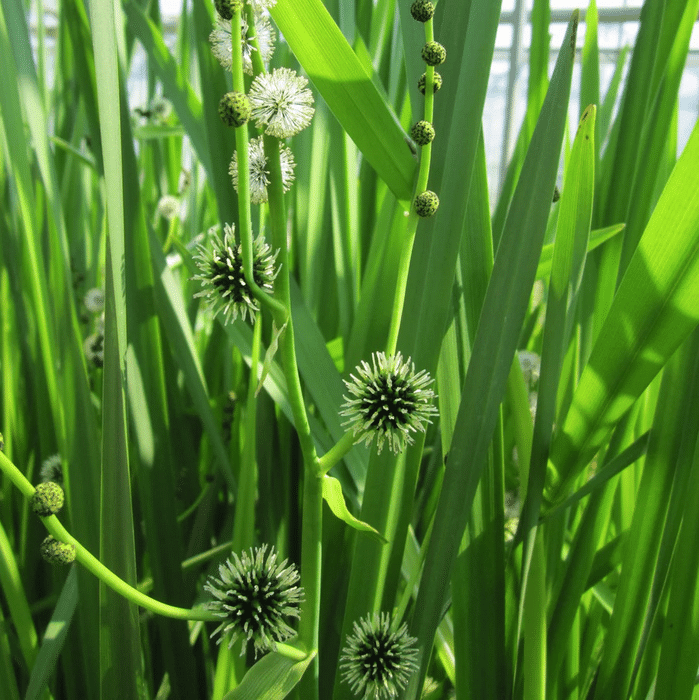
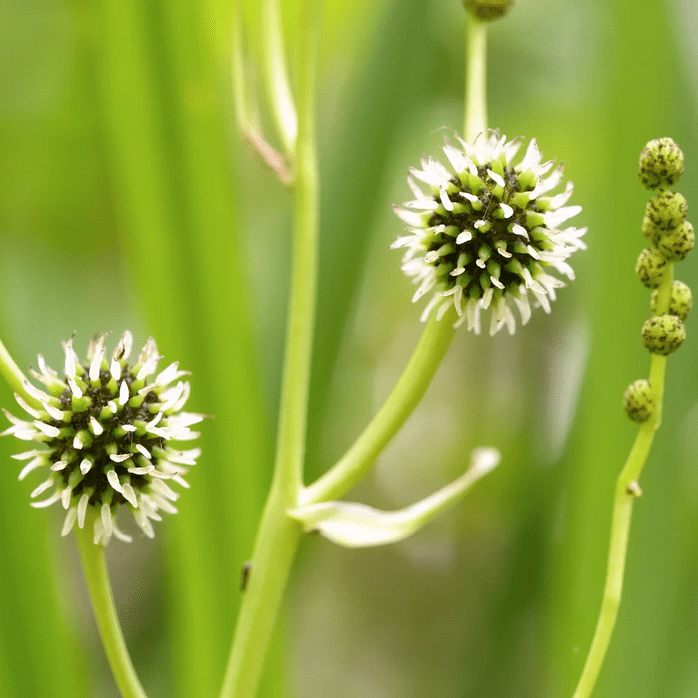
The flowering stems carry separate rounded clusters of male and female flowers. Later, the fruit develops the burr-like appearance that gives the plant its name. Those changing rounded shapes add detail among the leaves without producing the brightly coloured flower display of an iris or lobelia.
The plant grows vigorously and can make a patch several metres across, extending further if unchecked. Decide the eventual boundary and leave maintenance access before planting the first basket. That makes a broad, manageable margin more suitable than a tightly packed ornamental shelf.
Choose a shallow pool margin in full sun or partial shade, with consistently wet ground or suitable water cover. Take care with depth figures: the water above the planted crown is different from the total depth of a shelf that also holds the basket. The supplied label is the guide for the plant being established.
The upright leaves can reach around 1–1.5 m, with an established patch spreading several metres wide. Native status does not remove that need for space and management. Choose it for a broad, accessible wet margin where its long leaves and burr-like fruit can develop without crowding the rest of the planting.
UK-grown plant. Grown at a dedicated aquatic plant nursery in the South of England.
What you receive
Choose three plants in 9 cm nursery pots or one plant in a 3 litre container.
Nursery pots need suitable aquatic baskets before pond placement. Neither delivery format indicates a permanently small patch; plan for the mature spread from the outset.
How it changes through the year
Summer flowers develop into the burr-like fruit that gives this plant its common name. Foliage can be semi-evergreen, with its condition varying through winter. A small delivered plant will develop a much larger outline once established; the photograph is not a guide to a permanently fixed width.
Choosing a place for it
- For a large pond margin: The vigorous spread makes a spacious natural-style planting more appropriate than a small container pond.
- For upright structure: Long keeled leaves and changing burr-like fruit provide the main visual character.
- For planned maintenance: Choose a position where the rhizome boundary can be inspected and growth lifted.
Planting and getting it established
Choose a large shallow pool margin in sun or partial shade. Decide the outer boundary and how the planting can be reached before placing the first basket. A narrow shelf packed with delicate plants is unlikely to provide enough room for its eventual rhizome growth.
For an aquatic planting, use a suitable basket and aquatic medium. Transfer nursery-pot plants before pond placement, maintaining the existing crown level. The nursery growing guidance gives about 0–30 cm water cover; RHS guidance allows up to 45 cm. These are cover measurements above the planted crown or basket, not the total depth down to the pond floor. Establish according to the supplied label rather than starting automatically at the maximum.
Keep the basket separate from neighbouring rootballs so it can be lifted when needed. Container growing makes management more accessible, but roots and rhizomes can still extend outside a mesh basket. Allow physical working space for periodic inspection and division.
Looking after it
- Inspect the boundary: Check where new shoots are appearing beyond the intended stand. Deal with extensions while they are reachable rather than waiting for a patch several metres wide.
- Rhizome control: Lift and divide or remove excess rooted growth when necessary. Cutting leaves alone does not remove the underground growth that is expanding the planting.
- Open water: Thin where the stand is overtaking neighbouring plants or the intended open edge. Retain a manageable portion rather than trying to fit all lifted material back into the same basket.
- Seasonal tidying: Remove dead or deteriorating leaves and spent stems as required. It can retain some green growth, so selective tidying is preferable to assuming the whole plant must be cut down on a fixed date.
- Wet roots: Keep the crown in its appropriate wet position through low-water periods. Additional feed should not be a substitute for moisture, adequate light or sufficient space.
- Disposal: Collect detached rhizomes and unwanted divisions. Do not release garden material into natural waters, even when the species is native.
Plant details
- Botanical name
- Sparganium erectum
- Native status
- Native to Britain and Ireland
- Mature height
- About 1–1.5 m
- Mature spread
- About 2.5–4 m; can extend further unchecked
- Light
- Full sun or partial shade
- Root position
- Wet margin or shallow water, label-led
- Water cover
- RHS guidance allows up to about 45 cm above planted crown/root level
- Habit
- Vigorous rhizomatous, semi-evergreen perennial
- RHS information
- RHS plant profile: Sparganium erectum
Delivery and basket information
We do not deliver live plants to Northern Ireland.
Orders received by 11am Monday to Wednesday are normally dispatched on the following working day using a next working day courier service. During busy periods, dispatch may occasionally take an extra day.
To avoid plants being held in depots over a weekend, we do not usually dispatch on Fridays. Highlands and Islands orders using a two day service are not normally dispatched on Thursdays.
Please read our delivery information for delivery arrangements and contact us if you need to check the timing of a particular order.
The 9cm option arrives in nursery pots. For pond planting, pot these plants into suitable aquatic baskets with aquatic planting soil before positioning them at the depth shown on their labels.
Finofil baskets are made from 100% recycled polypropylene co-polymer. They are not suitable for ordinary kerbside recycling; reuse them where possible and check local specialist recycling options. Their fine mesh helps retain aquatic soil while allowing water to reach the roots.
Basket measurements for the offered sizes:
- 3 Litre Hexagonal Basket – 18 × 18 × 16cm
Other plants to compare
Club Rush — Compare round upright stems instead of keeled leaves, while paying particular attention to its liner-piercing root warning.
Lesser Bulrush — Its narrower leaves and cylindrical brown heads make a different substantial marginal; it still needs room and spread management.
Choosing plants and planting supplies
Marginal pond plants — Compare pond-edge plants by their eventual size, light and water-depth needs before filling a shelf.
Pond plant baskets and planting supplies — Choose a suitable container and growing medium for the position described above.








Reviews
There are no reviews yet.