





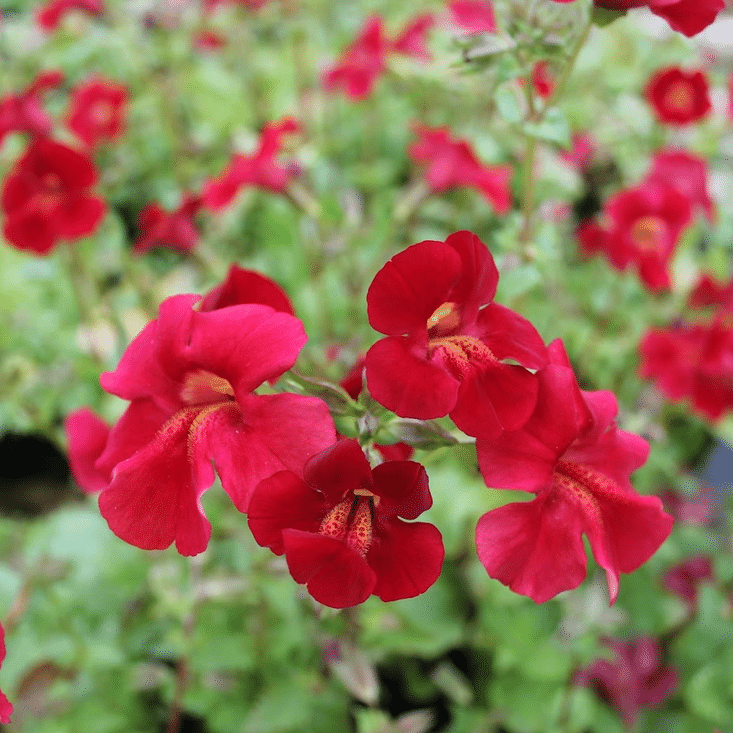
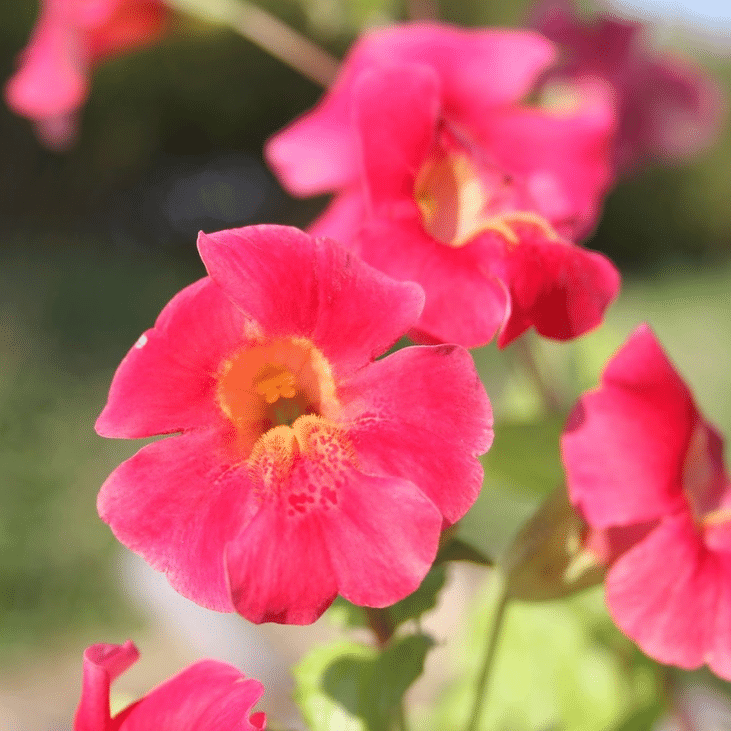

Red Emperor Monkey Flower (Mimulus cupreus ‘Red Emperor’)
| Size | 1 Ltr, 1 Ltr – Pack of 3, 3 Ltr, 9cm – Pack of 3 |
|---|---|
| Plant Type | Marginal |
| Sun / Shade | Full Sun |
| Flower Colour | Red |
| Growth Rate | Medium |
| Native to UK | No |
| Plant group |
Red Emperor is a low-growing monkeyflower with bright red summer trumpets and downy green leaves. Use moist soil or a suitably shallow pond-edge basket, keeping its leaves in good light and above the water.
Price range: £14.00 through £34.50 (inc VAT)
Red Emperor Monkey Flower (Mimulus cupreus ‘Red Emperor’)
Low-growing monkeyflower with bright red summer trumpets
Red Emperor is a small monkeyflower chosen for a clear splash of red close to the water. Its trumpet-shaped blooms sit above a low spreading plant, so the colour can be seen without needing the height of a flag iris or the space taken by a large stand of reeds.
The familiar sales name is still Mimulus cupreus Red Emperor. The RHS now connects that name with Erythranthe cuprea ‘Rote Kaiser’. Keeping both names together helps when comparing a nursery label with a plant guide, and avoids treating two labels for the same cultivated plant as different colour choices.
The flowers are the main attraction during summer. They work particularly well near the front of a damp planting area, where the individual trumpets are easy to see. A low green base gives a softer outline than upright rush stems, which makes this a useful contrast in a mixed pondside arrangement.
Choose moist ground and a sunny position. This is a small plant to establish carefully at the edge, not something to lower straight onto a deep shelf because it appears in a pond-plant category. Check the supplied planting label before using any water cover, and keep the leaves above the surface.
Plan Red Emperor as a low plant, with growth commonly around 20–40cm high depending on conditions. Leave room to inspect its base and remove nearby growth that might shade or smother it. Its smaller scale is useful at the front of a planting where the flowers can remain visible.
Its summer display should not be confused with an assurance of flowers at delivery or continuous winter foliage. Growth and flowering depend on the season and growing conditions. In a cold or exposed position, follow the care label for the actual plant rather than assuming that every monkeyflower has identical winter requirements.
UK-grown plant. Grown at a dedicated aquatic plant nursery in the South of England.
What you receive
The current choices are a 1-litre plant, a 3-litre plant, a pack of three 1-litre plants or a pack of three 9cm pots. Choose the number of planting positions you want to fill and leave space around each low plant so its flowers will not disappear beneath taller foliage.
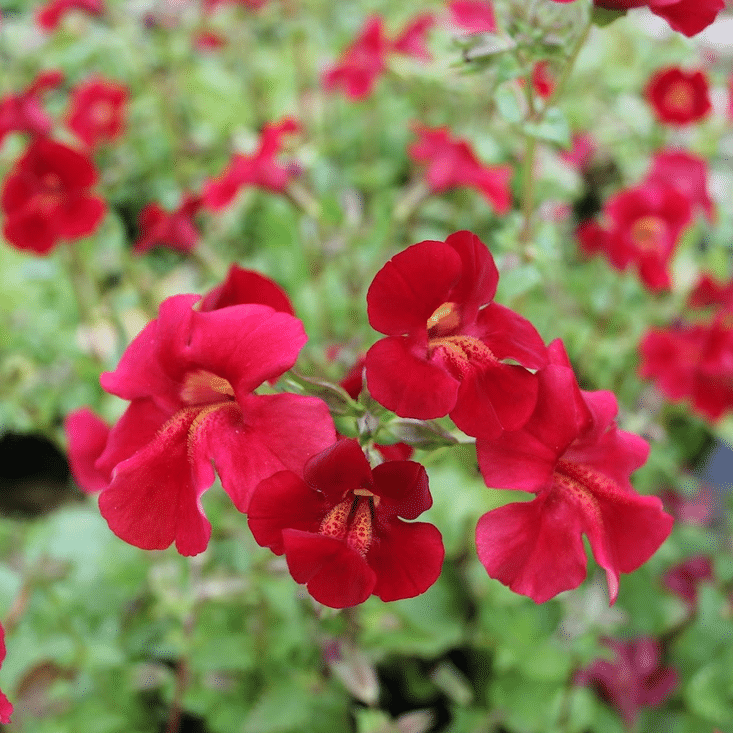
Red Emperor is grown for its summer display. A plant can arrive before flowering, after its main flowers have finished or with little visible top growth in the resting season. A photograph of a flowering plant shows the form and colour to expect in suitable growing conditions, not the exact stage of every delivery.
Is this right for your pond?
A low monkeyflower is useful close to a path or the front of the pond, where individual flowers can be seen. Red Emperor needs reliable moisture and light around its leaves; a low shelf hidden behind vigorous reeds is a poor place to show it off.
- A damp, sunny edge: Use moist, humus-rich ground or a suitable shallow marginal position. Full sun or light shade can work, provided the root area does not dry out.
- Low planting: Its usual nursery height of around 20–40cm makes it useful near the front of a scheme. Keep the leaves of neighbouring plants from shading the small flowering stems.
- Red flower colour: Choose it for bright red summer trumpets against green leaves. Pair it with plants that have a different flower colour or foliage shape rather than expecting all interest from one short plant.
- Shallow water only: Use the supplied label for water cover. A larger pond depth does not mean this small marginal should be planted deeper; keep foliage and flowers above the surface.
Planting position and getting established
For a damp-ground planting, water the rootball before planting and set it at its existing soil level in moist, humus-rich soil. Firm around it and water the surrounding area so that roots can grow beyond the original pot. In sunny weather, make sure the small rootball itself stays moist while it settles.
For an aquatic position, use a suitable planting basket and aquatic soil. Allow up to 10cm of water above the compost for aquatic-pot planting. Treat that as shallow-water guidance, and follow the label supplied with your plant when setting the final position. Measure water above the planted soil rather than using the total depth to the pond floor.
Start where the plant is stable, its leaves are clear of the water and you can reach it to tidy the flowers. Check the position after heavy rain or a change in pond level. A 9cm nursery pot needs a suitable aquatic basket before pond use; the same plant grown in a damp border can be planted into prepared soil instead.
Looking after your plants
- Maintaining moisture: Keep soil consistently moist, especially around a recently planted rootball. Before assuming a wilting small plant needs feed, check that the original potting medium has not dried while the nearby ground still looks wet.
- Keeping the display going: Remove finished flower or seed heads as they fade. This is a practical way to keep the low plant tidy and can encourage further flowers, although weather and establishment still affect the display.
- Tidying growing stems: Trim tired or overextended stems when necessary during the growing season. Work around healthy new growth so that tidying does not remove every remaining flower or leave the plant unnecessarily bare.
- Protecting new shoots: Check fresh growth for slugs and snails. Look among nearby leaves and around the container edge when damage first appears rather than waiting until most of the small shoots have gone.
- Resting-season care: Allow for seasonal dieback and remove brown, dead stems when they need tidying. Keep the root area in its suitable moist position and follow the supplied winter-care instructions for your particular site and plant.
Size and growing conditions
- Supplied name
- Mimulus cupreus ‘Red Emperor’
- Accepted synonym
- Erythranthe cuprea ‘Rote Kaiser’
- Flowers
- Bright red, trumpet-shaped summer flowers
- Leaves
- Light-green, downy and toothed
- Habit
- Low, spreading perennial
- Height
- Usually around 20–40cm in nursery guidance; growth varies
- Spread
- Allow room for a spreading patch, rather than the outline of the nursery pot
- Light
- Sun or light partial shade
- Soil
- Moist, humus-rich soil
- Water cover
- Shallow marginal culture; up to 10cm above compost in the RHS aquatic-pot guidance, subject to the supplied label
- Seasonal habit
- Top growth dies back in the resting season
- Native status
- Non-native cultivated selection
- RHS information
- RHS plant profile: Erythranthe cuprea 'Rote Kaiser'
Delivery and basket information
We do not deliver live plants to Northern Ireland.
Orders received by 11am Monday to Wednesday are normally dispatched on the following working day using a next working day courier service. During busy periods, dispatch may occasionally take an extra day.
To avoid plants being held in depots over a weekend, we do not usually dispatch on Fridays. Highlands and Islands orders using a two day service are not normally dispatched on Thursdays.
Please read our delivery information for delivery arrangements and contact us if you need to check the timing of a particular order.
The 9cm option arrives in nursery pots. For pond planting, pot these plants into suitable aquatic baskets with aquatic planting soil before positioning them at the depth shown on their labels.
Finofil baskets are made from 100% recycled polypropylene co-polymer. They are not suitable for ordinary kerbside recycling; reuse them where possible and check local specialist recycling options. Their fine mesh helps retain aquatic soil while allowing water to reach the roots.
Basket measurements for the offered sizes:
- 1 Litre Basket – usually 11 × 11 × 11cm square; some varieties may be supplied in a 14cm diameter × 10cm round basket
- 3 Litre Hexagonal Basket – 18 × 18 × 16cm
Other plants to compare
Queen’s Prize Monkey Flower — Queen’s Prize has yellow trumpets with reddish markings, giving a different colour in a similar damp or shallow marginal setting. Compare both the flower pattern and the space each developing patch needs.
Scarlet Monkey Flower — Scarlet Monkey Flower provides taller upright growth with scarlet flowers. It is worth comparing where you want the red colour higher in the planting, with its own winter requirements considered.







Reviews
There are no reviews yet.