





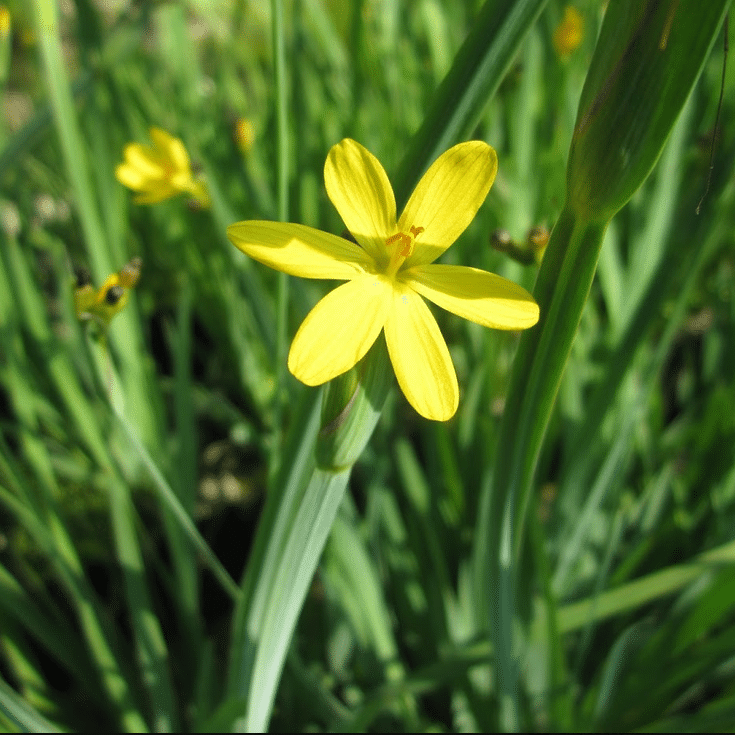

Yellow-eyed Grass (Sisyrinchium californicum)
| Size | 1 Ltr, 1 Ltr – Pack of 3, 9cm – Pack of 3 |
|---|---|
| Plant Type | Marginal |
| Sun / Shade | Full Sun |
| Flower Colour | Yellow |
| Growth Rate | Slow |
| Native to UK | No |
Yellow-eyed Grass is a flowering member of the iris family rather than a true grass. Sisyrinchium californicum makes a clump of narrow grey-green leaves, with yellow star-shaped flowers carried on flattened, winged stems. The small brown veins in the flowers add detail when seen close to the pond edge.
Price range: £14.00 through £34.00 (inc VAT)
Yellow-eyed Grass (Sisyrinchium californicum)
Small yellow stars above a clump of grey-green leaves
Yellow-eyed Grass is a flowering member of the iris family rather than a true grass. Sisyrinchium californicum makes a clump of narrow grey-green leaves, with yellow star-shaped flowers carried on flattened, winged stems. The small brown veins in the flowers add detail when seen close to the pond edge.
The narrow leaves remain relatively low, around 15 cm, while flowering stems can reach about 60 cm. Allow for both levels when arranging the planting: leave the flowers space to rise above low neighbours instead of hiding them behind larger leaves.
Choose full sun and a sheltered position with boggy soil. It can also be grown in an aquatic basket on a pond shelf using loam or specialist aquatic soil, as described by the RHS. Follow the supplied label for the water level, keeping the flowering stems above the surface and the root zone consistently moist.
The yellow flowers open in succession through summer. A clump will have a changing display rather than every bud opening together or every stem flowering all season. It is a useful smaller-flowered option near a path or container pond, where the shape and fine texture can be appreciated from nearby.
This is a short-lived perennial that can self-seed freely in suitable conditions. Leave a visible place for the low leaves and taller flower stems, and decide whether seedlings are welcome. The foliage can be semi-evergreen in a sheltered site, while winter weather changes its fullness.
UK-grown plant. Grown at a dedicated aquatic plant nursery in the South of England.

What you receive
Choose three plants in 9 cm nursery pots, one plant in a 1 litre container or three plants in 1 litre containers.
Nursery pots need suitable aquatic baskets for pond placement. Container size does not guarantee flowering stems, and a pack is not a promise that each short-lived plant persists indefinitely.
How it changes through the year
Yellow stars open in succession through summer above much lower leaves. A delivered plant can be leaf growth or resting stock rather than already flowering. Semi-evergreen foliage and winter persistence depend on the site and weather.
Choosing a place for it
- For small yellow stars: The fine summer flowers are best seen close to a path or container edge.
- For sun and shelter: Choose wet roots and adequate light rather than a dry border.
- For seasonal renewal: The short-lived self-seeding habit needs considering alongside its attractive flowers.
Planting and getting it established
Choose full sun and shelter with a wet root zone. A bog-garden position or an appropriate pond-shelf basket can suit it. Set the rootball at its current level, leaving the leaf bases clear rather than burying them under a heavy topping.
Use loam or suitable aquatic growing medium for a basket in the pond, following the supplied label for the actual water level. Measure any water cover above the planted crown or medium separately from shelf depth. The lower leaves and taller flower stems occupy different levels, so keep the growth in an appropriate shallow position.
Transfer 9 cm nursery-pot plants into suitable aquatic baskets before pond placement. Keep roots wet during the work and allow space for the flowers to rise above lower neighbours. A small container can dry rapidly in warm weather even when it is displayed close to water.
Looking after it
- Moisture: Keep the root area wet while establishing and during active growth. Check containers and exposed margins in drying weather.
- Seedlings: Remove spent heads before seed disperses if you want to limit new plants. Where some renewal is welcome, leave appropriate heads and inspect the surrounding planting for crowding.
- Short life: Allow for renewal rather than relying on every original clump remaining indefinitely. Divide established growth or raise replacement plants when needed.
- Tidying: Remove dead or damaged leaves selectively, retaining healthy semi-evergreen growth where it remains sound.
- Winter: The species is rated H4. Choose shelter and consider the exposure of small containers rather than assuming the same protection as a rooted bog border.
- Nutrition: Use suitable medium and conditions first. Any supplementary food should suit the actual soil or aquatic position and follow its labelled rate.
Plant details
Delivery and basket information
We do not deliver live plants to Northern Ireland.
Orders received by 11am Monday to Wednesday are normally dispatched on the following working day using a next working day courier service. During busy periods, dispatch may occasionally take an extra day.
To avoid plants being held in depots over a weekend, we do not usually dispatch on Fridays. Highlands and Islands orders using a two day service are not normally dispatched on Thursdays.
Please read our delivery information for delivery arrangements and contact us if you need to check the timing of a particular order.
The 9cm option arrives in nursery pots. For pond planting, pot these plants into suitable aquatic baskets with aquatic planting soil before positioning them at the depth shown on their labels.
Finofil baskets are made from 100% recycled polypropylene co-polymer. They are not suitable for ordinary kerbside recycling; reuse them where possible and check local specialist recycling options. Their fine mesh helps retain aquatic soil while allowing water to reach the roots.
Basket measurements for the offered sizes:
- 1 Litre Basket – usually 11 × 11 × 11cm square; some varieties may be supplied in a 14cm diameter × 10cm round basket
Other plants to compare
Golden Japanese Sweet Flag — Choose yellow foliage rather than yellow flowers if the low tuft is the main feature you want.
Lesser Water Plantain — Compare fine pale flowers and a small native clump for a sunny shallow-water edge.
Choosing plants and planting supplies
Marginal pond plants — Compare pond-edge plants by their eventual size, light and water-depth needs before filling a shelf.
Pond plant baskets and planting supplies — Choose a suitable container and growing medium for the position described above.




Reviews
There are no reviews yet.