





Lesser Bulrush (Typha angustifolia)
| Size | 1 Ltr, 1 Ltr – Pack of 3, 9cm – Pack of 3, 3 Ltr, 5 Ltr |
|---|---|
| Plant Type | Marginal |
| Sun / Shade | Full Sun |
| Flower Colour | Brown |
| Growth Rate | Fast |
| Native to UK | Yes |
| Plant group |
Lesser Bulrush has the familiar reedmace outline of upright brown cylindrical heads above long green leaves. The narrower foliage gives a different texture from Common Bulrush. It still forms a substantial stand, making a broad managed margin more suitable than a small ornamental pond.
Price range: £14.00 through £45.50 (inc VAT)
Lesser Bulrush (Typha angustifolia)
Narrow leaves and brown cylindrical heads for large natural margins
Lesser Bulrush has the familiar reedmace outline of upright brown cylindrical heads above long green leaves. The narrower foliage gives a different texture from Common Bulrush. It still forms a substantial stand, making a broad managed margin more suitable than a small ornamental pond.
Spreading underground growth can make a stand around 2.5–4 m wide. Plan the eventual area and leave access for inspection and reduction of the patch. Its small nursery container does not show how far the mature rhizomes may extend.
Pond construction is an important restriction. The RHS warns that the roots may puncture liners. An aquatic basket helps organise a planting but is not a guarantee that all strong rhizomes remain safely confined, so this is a deliberate choice for a suitably large managed wetland setting.
Choose full sun, deep mud and an appropriate shallow-water position. Check the actual plant label and measure cover above the planted crown or basket rather than simply measuring the total shelf depth. A deeper position should not be presented as a permanent substitute for managing spread.
The narrow leaves and cylindrical brown heads can make a clear outline at a broad pond edge. The species is native and deciduous, with old leaves declining seasonally. Plan root management from the start rather than trying to contain a mature stand after it has spread through neighbouring planting.
UK-grown plant. Grown at a dedicated aquatic plant nursery in the South of England.

What you receive
Choose one plant in a 1 litre container, three plants in 1 litre containers, three plants in 9 cm nursery pots, one plant in a 3 litre container or one plant in a 5 litre container.
Keep roots wet while planting. Neither a small basket nor a pack format guarantees permanent containment or suitability for a small lined pond.
How it changes through the year
Brown flower spikes appear in summer and can remain as seedheads later. Leaves die back seasonally. The delivered root container is the starting size of a native rhizomatous stand rather than its final footprint.
Choosing a place for it
- For a substantial stand: Allow for several metres of spread despite the word lesser in the common name.
- For suitable construction: Roots may puncture liners; choose an appropriate large managed wetland setting.
- For narrow leaves and heads: The finer leaf texture differs from Common Bulrush, while the brown cylindrical heads remain recognisable.
Planting and getting it established
Choose a suitably large managed margin in full sun, with deep mud and appropriate shallow water. The roots may puncture pond liners, so avoid vulnerable lined ornamental ponds. A small supply basket is not a permanent barrier to strong rhizomes.
The nursery growing guidance gives about 1–30 cm water cover, while RHS cultivation guidance allows up to 40 cm. Use the supplied label for the actual plant being established. Measure above the planted crown or top of the medium rather than from the shelf floor; basket height is a separate part of the total shelf depth.
Use an appropriate medium and substantial management arrangement for the site. Keep the crown at its existing level and leave access to the edges of the stand. An eventual spread around 2.5–4 m needs considerably more thought than whether a young basket fits a spare gap.
Looking after it
- Rhizome boundaries: Inspect new shoots and the area around the stand. Remove unwanted extensions before they become inaccessible or entangled with other plants.
- Liners: Keep the root-puncture warning in mind throughout growth. A basket assists placement and lifting but does not make vigorous rhizomes permanently safe for a liner.
- Thinning: Lift and divide or reduce congested growth when necessary, retaining only the amount that fits the managed area. Cutting leaves alone does not remove underground expansion.
- Spring tidying: Remove old dead leaves and stems in spring as appropriate, taking care around new shoots. Sound seasonal material can be managed according to the site rather than forcing all stems to one height.
- Water conditions: Maintain a suitable muddy or shallow-water root environment. Greater water depth should not be treated as a substitute for rhizome management.
- Disposal: Collect lifted roots and detached pieces and keep garden material out of natural waterways or unmanaged ground.
Plant details
- Botanical name
- Typha angustifolia
- Native status
- Native to Britain and Ireland
- Mature height
- About 1–1.5 m
- Mature spread
- About 2.5–4 m; can expand unchecked
- Position
- Full sun; deep mud and appropriate shallow water
- Water cover
- Label-led; RHS allows up to about 40 cm above planted crown/root level
- Important limitation
- Roots may puncture pond liners
- Habit
- Hardy deciduous reedmace
- RHS information
- RHS plant profile: Typha angustifolia
Delivery and basket information
We do not deliver live plants to Northern Ireland.
Orders received by 11am Monday to Wednesday are normally dispatched on the following working day using a next working day courier service. During busy periods, dispatch may occasionally take an extra day.
To avoid plants being held in depots over a weekend, we do not usually dispatch on Fridays. Highlands and Islands orders using a two day service are not normally dispatched on Thursdays.
Please read our delivery information for delivery arrangements and contact us if you need to check the timing of a particular order.
The 9cm option arrives in nursery pots. For pond planting, pot these plants into suitable aquatic baskets with aquatic planting soil before positioning them at the depth shown on their labels.
Finofil baskets are made from 100% recycled polypropylene co-polymer. They are not suitable for ordinary kerbside recycling; reuse them where possible and check local specialist recycling options. Their fine mesh helps retain aquatic soil while allowing water to reach the roots.
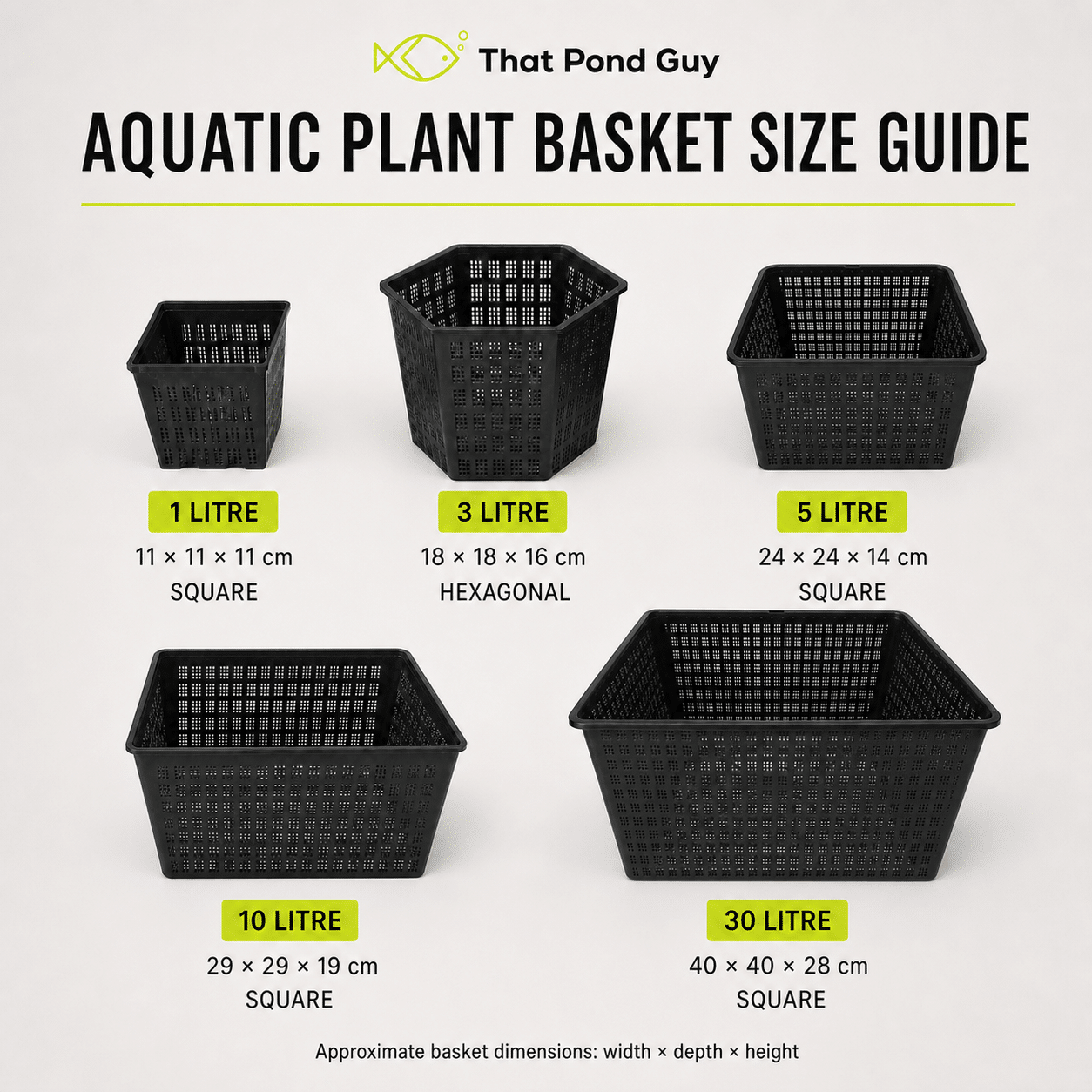
Basket measurements for the offered sizes:
- 1 Litre Basket – usually 11 × 11 × 11cm square; some varieties may be supplied in a 14cm diameter × 10cm round basket
- 3 Litre Hexagonal Basket – 18 × 18 × 16cm
- 5 Litre Square Basket – 24 × 24 × 14cm
Other plants to compare
Common Bulrush — Compare broader leaves and a potentially much wider colony, with the same need to assess liner risk.
Corkscrew Rush — A smaller curled-stem feature may suit a restricted planting better than a reedmace stand.
Choosing plants and planting supplies
Marginal pond plants — Compare pond-edge plants by their eventual size, light and water-depth needs before filling a shelf.
Pond plant baskets and planting supplies — Choose a suitable container and growing medium for the position described above.





Reviews
There are no reviews yet.