





Crowborough Arum Lily (Zantedeschia aethiopica ‘Crowborough’)
| Size | 1 Ltr, 1Ltr Pack of 3, 3 Ltr, 5 Ltr |
|---|---|
| Plant Type | Marginal |
| Sun / Shade | Full Sun |
| Flower Colour | White |
| Growth Rate | Slow |
| Native to UK | No |
Crowborough is a white arum lily with broad green leaves and a clear, upright outline. The large funnel-like white spathes surround prominent yellow central spikes. It can make an effective feature at the water’s edge without relying on several different flower colours in the same planting.
Price range: £14.00 through £42.50 (inc VAT)
Crowborough Arum Lily (Zantedeschia aethiopica ‘Crowborough’)
White arum spathes and strong green pond-edge foliage
Crowborough is a white arum lily with broad green leaves and a clear, upright outline. The large funnel-like white spathes surround prominent yellow central spikes. It can make an effective feature at the water's edge without relying on several different flower colours in the same planting.
The leaves are part of the attraction rather than simply a backdrop. Their arrow-shaped blades gather into a substantial clump, creating a different texture from rushes, grasses and finely divided foliage. Leave them room to open naturally instead of judging the eventual planting by the small size of a nursery container.
This cultivar is grown for its late-spring and summer display. A spathe is the showy outer structure, with the true flowers gathered on the central spadix. Thinking of the display that way also helps distinguish it from Bog Arum, a different plant that happens to share a similar common name.
Crowborough can grow in moisture-retentive soil or an appropriate shallow marginal position. Full sun or partial shade is suitable. If it is going into the pond, use the plant's own depth instructions and an appropriate aquatic basket; a damp border planting and a submerged shelf are two different arrangements.
A mature clump needs space for the leaves as well as the flowers, and an accessible position makes seasonal care easier. Crowborough is a cultivated form of a southern African species, not a British native wetland plant. It is harmful if eaten and can irritate skin and eyes, so handle it with gloves and keep trimmings away from children and pets.
UK-grown plant. Grown at a dedicated aquatic plant nursery in the South of England.

What you receive
Choose one plant in a 3 litre container, one plant in a 1 litre container, three plants in 1 litre containers or one plant in a 5 litre container.
The litre-format plants are supplied in planted aquatic baskets. Choose by the starting container you can accommodate and allow for future growth. Keep the rootball moist while you prepare the position.
How it changes through the year
White spathes are the main late-spring and summer display. In a mild garden Crowborough may retain leaves, while frost can blacken foliage or cause seasonal dieback. The delivered plant's appearance therefore depends on season, and basket volume does not guarantee a particular number of spathes.
Choosing a place for it
- For white flowers: The large white spathes and rich green leaves suit a clear, spacious pondside position.
- For a wet root zone: Choose moisture-retentive soil or an appropriate shallow-water planting, with depth checked from the planted crown.
- For seasonal structure: Foliage can remain in a mild winter but may die back in colder conditions; plan the rest of the border accordingly.
Planting and getting it established
Crowborough can grow in moisture-retentive ground or as a marginal plant in shallow water. Choose sun or partial shade and prepare the root area before planting. Keep the growing crown at its existing level rather than burying the leaf bases under a deep layer of soil.
For pond planting, use aquatic compost in a suitably deep basket. RHS guidance describes marginal water up to 30 cm deep and a basket about 30 cm deep. The plant label and the actual water cover above the planted basket are important: a shelf measurement includes the basket height, so it is different from the depth of water above the crown. Do not lower a young plant to the deepest permissible position simply because space is available there.
In a border or container above water, use a medium that retains moisture and check it regularly in dry weather. Allow room for the broad leaves without blocking a path or equipment access. Container volume describes the supplied format, not the eventual height or spread of the clump.
Looking after it
- Watering: Keep a ground- or container-grown plant moist while it is actively growing. Check a container during hot weather even when the border around it appears damp.
- Feeding: Use a feed appropriate to the growing position if additional nutrition is needed. A pond planting requires a suitable aquatic feed used at its labelled rate, rather than general liquid fertiliser poured into the water.
- Tidying: Remove faded spathes and damaged leaves neatly. Foliage blackened by frost can be tidied away, while healthy green leaves can remain in a mild winter.
- Division: Divide a congested clump in spring, retaining sound rooted sections and restoring the original planting level. Keep divisions moist as they start to grow again.
- Winter protection: Crowborough may be semi-evergreen in mild places, but it is not immune to severe cold. Plan protection for an exposed crown and avoid assuming that a small above-ground container offers the same shelter as a wet border.
- Safe handling: Wear gloves and protect eyes when handling or dividing. All removed growth is ornamental plant material; do not leave it where a child or pet may eat it.
Plant details
- Botanical name
- Zantedeschia aethiopica 'Crowborough'
- Flowers
- White spathes about 15–20 cm long around a yellow spadix
- Mature height
- About 50–100 cm
- Mature spread
- RHS band about 10–50 cm; allow space for broad leaves
- Light
- Sun or partial shade
- Root position
- Moisture-retentive ground or label-led shallow marginal water
- Winter
- RHS H4; deciduous to semi-evergreen depending on conditions
- Safety
- Harmful if eaten; skin and eye irritant
- RHS information
- RHS plant profile: Zantedeschia aethiopica 'Crowborough'
Delivery and basket information
We do not deliver live plants to Northern Ireland.
Orders received by 11am Monday to Wednesday are normally dispatched on the following working day using a next working day courier service. During busy periods, dispatch may occasionally take an extra day.
To avoid plants being held in depots over a weekend, we do not usually dispatch on Fridays. Highlands and Islands orders using a two day service are not normally dispatched on Thursdays.
Please read our delivery information for delivery arrangements and contact us if you need to check the timing of a particular order.
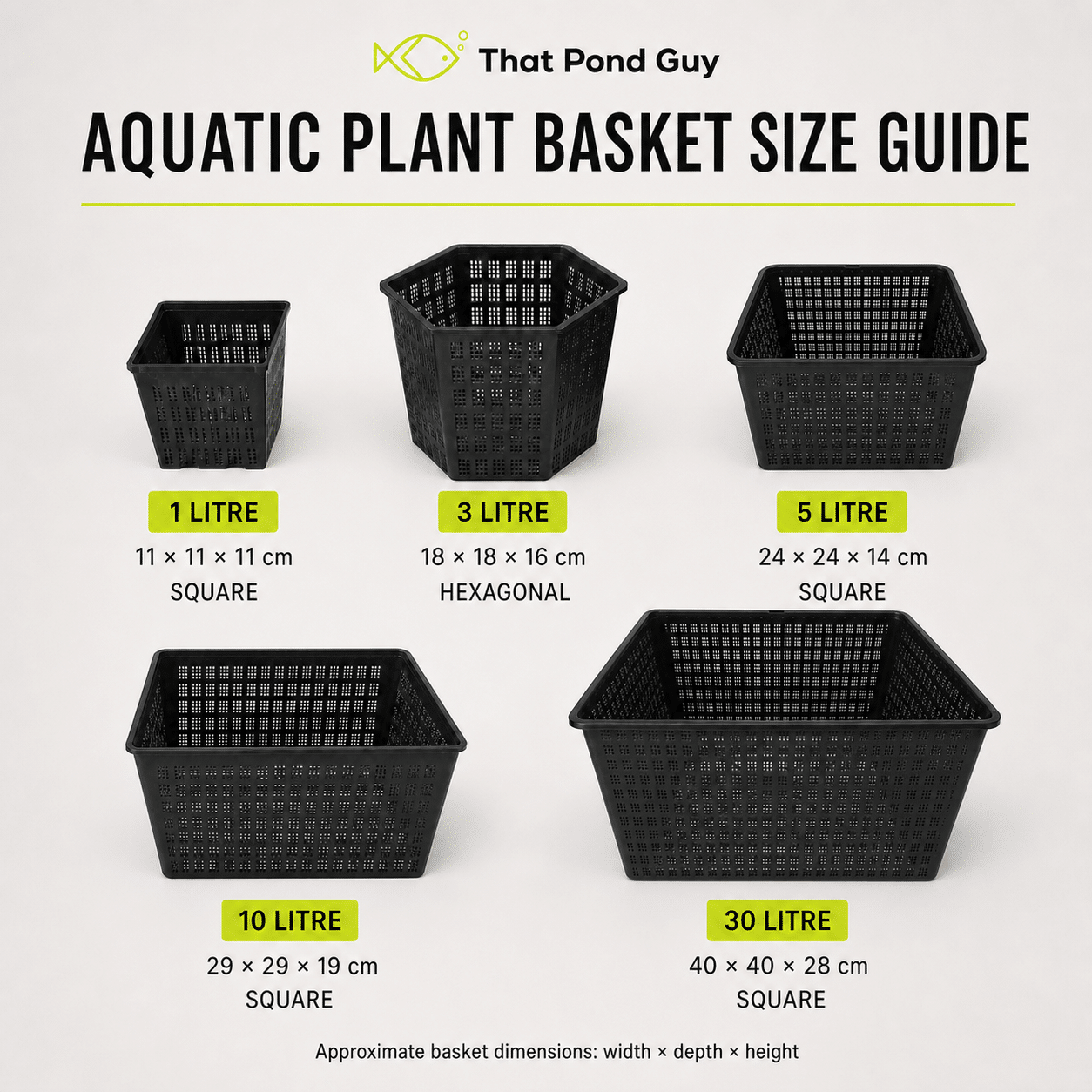
Finofil baskets are made from 100% recycled polypropylene co-polymer. They are not suitable for ordinary kerbside recycling; reuse them where possible and check local specialist recycling options. Their fine mesh helps retain aquatic soil while allowing water to reach the roots.
Basket measurements for the offered sizes:
- 1 Litre Basket – usually 11 × 11 × 11cm square; some varieties may be supplied in a 14cm diameter × 10cm round basket
- 3 Litre Hexagonal Basket – 18 × 18 × 16cm
- 5 Litre Square Basket – 24 × 24 × 14cm
Other plants to compare
Marshmallow Arum Lily — Compare pale pink spathes if you like the arum shape but want a different flower colour; check its soil and water-position guidance separately.
Bog Arum — Calla palustris is a smaller-scale white-spathed plant with heart-shaped leaves and different planting requirements.
Choosing plants and planting supplies
Marginal pond plants — Compare pond-edge plants by their eventual size, light and water-depth needs before filling a shelf.
Pond plant baskets and planting supplies — Choose a suitable container and growing medium for the position described above.







Reviews
There are no reviews yet.