






Orange Peel Plant (Houttuynia cordata ‘Plena’)
| Size | 9cm – Pack of 3, 1 Ltr, 1 Ltr – Pack of 3, 3 Ltr |
|---|---|
| Plant Type | Marginal |
| Sun / Shade | Full Sun to Part Shade |
| Flower Colour | White |
| Growth Rate | Slow |
| Native to UK | No |
| Plant group |
Orange Peel Plant has aromatic green leaves and a layered white seasonal display. Use damp soil or a suitable shallow margin, leaving the spreading root area accessible for regular control and division.
Price range: £14.00 through £34.50 (inc VAT)
Orange Peel Plant (Houttuynia cordata ‘Plena’)
Heart-shaped foliage and a double white floral display
Orange Peel Plant gives damp ground a low layer of heart-shaped leaves with a blue-green tone. The white floral display is the other main feature of this selection. It works as a contrast to upright leaves and flower spikes, particularly where the edge of a pond needs a softer outline.
The plant is familiar in the trade as Houttuynia cordata ‘Plena’, while it is also known as ‘Flore Pleno’. These names refer to the double-flowered selection being discussed here. It should not be confused with the strongly variegated Chameleon selection, which is chosen for a different foliage effect.
White bracts surround the small central flower structures, making the display more noticeable than the individual flowers alone. Flowering dates differ between sources and growing conditions, with the display appearing from late spring into summer. Enjoy it as a seasonal feature instead of expecting a fixed number of weeks of colour.
Give thought to the roots before planting. Houttuynia can spread widely by underground stems, especially in wet ground. A container can help define the planting area, but it still needs checking. It is not a plant to tuck casually between slow-growing neighbours if you want each clump to keep a precise boundary.
A damp border, bog garden or shallow marginal position can suit it in sun or partial shade. The specialist grower gives up to 10cm of water above the growing point. Keep a new plant shallow and follow its label, allowing for the height of the basket when judging a pond shelf.
The species is not British native, although the plant is hardy outdoors in suitable UK conditions. Its above-ground growth is seasonal. The common name refers to the strong scent of bruised foliage. It is an ornamental plant with spreading growth, so keep its boundary accessible for regular management.
UK-grown plant. Grown at a dedicated aquatic plant nursery in the South of England.

What you receive
Choose a single 1-litre or 3-litre plant, a pack of three 1-litre plants or a pack of three 9cm pots. Plan the number of planting positions with its spreading habit in mind; several small pots should not be crowded into the same narrow gap.
Orange Peel Plant is herbaceous, so a delivery outside the growing season may show little top growth. The white display and aromatic leaves develop with seasonal growth. Keep the planting position known while the plant is resting, particularly where other plants are being divided or moved nearby.
Is this right for your pond?
The double white display and green leaves make this a useful contrast to brighter variegated foliage. Its underground stems are the more important consideration when choosing where to plant it.
- A managed planting area: Choose a place where spreading growth is welcome or can be reached and reduced. Avoid threading it between small plants that would be difficult to separate from its underground stems later.
- Damp ground or a shallow margin: It can be used in moist soil or a suitable shallow pond-edge position. Keep the actual growing point and water level in mind rather than treating the whole pond margin as one depth.
- Sun or partial shade: Both are suitable. Place the low leaves and white display where they remain visible instead of allowing a taller neighbouring clump to grow across them.
- Container access: A container can help organise and inspect the root area. It still needs checking for growth beyond the intended boundary; spreading rhizomes can extend through or beyond a mesh basket.
Planting position and getting established
For a damp border, plant at the existing soil level in prepared ground and water around the rootball. Leave enough surrounding space to see where new shoots emerge. If spreading roots would be difficult to remove from the chosen bed, use a more clearly contained and accessible position instead.
For shallow aquatic planting, the specialist guidance is 0–10cm of water above the growing point. Measure from that point to the water surface, not from the shelf or pond floor. Follow the supplied label for the plant and keep a new planting at the shallow end while it establishes, with its foliage clear of the water.
Repot a 9cm nursery plant into a suitable aquatic basket before pond use, using appropriate aquatic planting soil. Set the basket securely and leave a route to lift it later. The ease of inspecting the container matters as much as hiding it: this is a plant whose boundary you will need to check as it grows.
Looking after your plants
- Checking the boundary: Look for shoots appearing outside the intended patch and inspect around the sides of a basket. Remove unwanted rooted growth while it is still separate, rather than waiting until it has spread through a neighbour’s rootball.
- Regular reduction: Reduce or divide a crowded clump to keep it within the space available. Cutting only the top growth makes the planting look smaller temporarily but does not remove the underground stems responsible for its spread.
- Spring division: Divide this plant in spring when needed. Retain healthy rooted sections for replanting, keep them moist while working and settle them back into a suitable damp or shallow-water position.
- Tidying the display: Remove dead or damaged stems when needed, keeping healthy foliage and the white seasonal display where you want them. Work from the edge of the patch so that tidying does not scatter unwanted rooted pieces around the planting.
- Winter dormancy: Expect top growth to die back seasonally. Keep track of the root area and avoid assuming that the plant has disappeared simply because its leaves are absent; inspect the boundary again as fresh shoots emerge.
Size and growing conditions
- Botanical name
- Houttuynia cordata ‘Flore Pleno’
- Also sold as
- Houttuynia cordata ‘Plena’
- Foliage
- Aromatic, heart-shaped green to blue-green leaves
- White display
- Layered white bracts around the small central flower spikes
- Season
- Late spring into summer, depending on conditions
- Height
- Usually within about 10–50cm
- Spread
- Allow around 50–100cm, with underground spread to manage
- Light
- Sun or partial shade
- Position
- Damp border, bog garden or suitable shallow margin
- Water cover
- 0–10cm above the growing point in specialist guidance; follow the supplied label
- Winter habit
- Herbaceous; top growth dies back seasonally
- Native status
- Non-native cultivated selection
- RHS information
- RHS plant profile: Houttuynia cordata 'Plena'
Delivery and basket information
We do not deliver live plants to Northern Ireland.
Orders received by 11am Monday to Wednesday are normally dispatched on the following working day using a next working day courier service. During busy periods, dispatch may occasionally take an extra day.
To avoid plants being held in depots over a weekend, we do not usually dispatch on Fridays. Highlands and Islands orders using a two day service are not normally dispatched on Thursdays.
Please read our delivery information for delivery arrangements and contact us if you need to check the timing of a particular order.
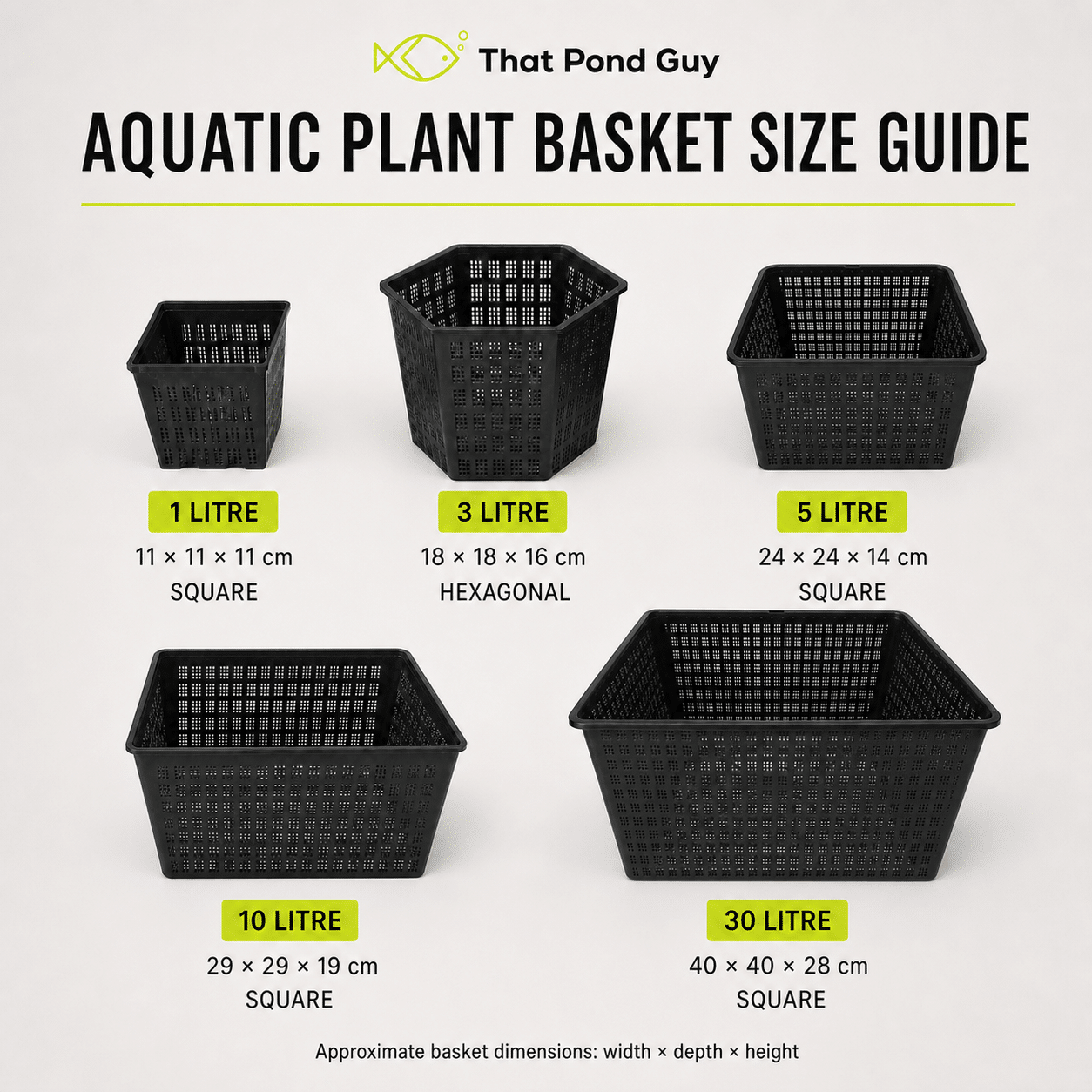
The 9cm option arrives in nursery pots. For pond planting, pot these plants into suitable aquatic baskets with aquatic planting soil before positioning them at the depth shown on their labels.
Finofil baskets are made from 100% recycled polypropylene co-polymer. They are not suitable for ordinary kerbside recycling; reuse them where possible and check local specialist recycling options. Their fine mesh helps retain aquatic soil while allowing water to reach the roots.
Basket measurements for the offered sizes:
- 1 Litre Basket – usually 11 × 11 × 11cm square; some varieties may be supplied in a 14cm diameter × 10cm round basket
- 3 Litre Hexagonal Basket – 18 × 18 × 16cm
Other plants to compare
Chameleon Plant — Chameleon Plant gives multicoloured foliage rather than the mainly green leaves of this form. Both need careful management of their spreading underground growth.
Houttuynia 'Boo Boo' — Boo Boo is another foliage choice within Houttuynia, with variegated leaves. Compare the leaf effect and choose around the same practical need for an accessible, managed root area.




Reviews
There are no reviews yet.