





Bog Arum (Calla palustris)
| Size | 1 Ltr, 1Ltr Pack of 3, 3 Ltr |
|---|---|
| Plant Type | Marginal |
| Sun / Shade | Full Sun to Part Shade |
| Flower Colour | White |
| Growth Rate | Medium |
| Native to UK | No |
Bog Arum is a small-scale arum for a wet margin, with glossy heart-shaped leaves and white summer spathes. The foliage sits relatively low beside the water, offering a different outline from the tall leaves of the larger Zantedeschia arum lilies. The shared common name should not obscure that these are different plants.
Price range: £14.00 through £34.50 (inc VAT)
Bog Arum (Calla palustris)
Glossy heart-shaped leaves and white summer spathes
Bog Arum is a small-scale arum for a wet margin, with glossy heart-shaped leaves and white summer spathes. The foliage sits relatively low beside the water, offering a different outline from the tall leaves of the larger Zantedeschia arum lilies. The shared common name should not obscure that these are different plants.
The white outer spathe surrounds a central spike of tiny flowers. That simple structure gives the display its character. It is not a mass of white petals, and a plant supplied outside its flowering period should not be expected to resemble a photograph of a fully established summer clump.
The leaves can spread into a patch as the rhizomes develop. Their rounded shape is useful against fine-textured rushes or the upright blades of suitable wetland irises. Leave enough space to see the leaves and to reach the basket later, rather than filling every gap while the plants are still small.
Choose humus-rich, lime-free growing medium and a position in mud or still to slowly moving shallow water. The shallow planting guidance is explained below. Keep a young plant at a depth suited to its label and current growth rather than automatically using the maximum water cover.
A sunny wet margin with suitable growing medium is the starting point. Bog Arum is a hardy deciduous perennial, so its low carpet of leaves is seasonal. It is harmful if eaten and can irritate skin and eyes; wear gloves and keep fruit, foliage and removed pieces away from children and animals.
UK-grown plant. Grown at a dedicated aquatic plant nursery in the South of England.

What you receive
Choose one plant in a 1 litre container, three plants in 1 litre containers or one plant in a 3 litre container.
Keep roots wet while preparing the site. The white-flowered photograph shows the seasonal character of the plant rather than its appearance at every dispatch date.
How it changes through the year
White spathes appear in summer above glossy heart-shaped leaves. The plant dies back seasonally, so a dormant delivery can look quite different from a mature summer patch. The selected container format is a starting size rather than a guaranteed spread or flower count.
Choosing a place for it
- For a lower outline: The glossy heart-shaped leaves offer a lower-scale alternative to the broad upright foliage of larger arum lilies.
- For a sunny shallow margin: Choose mud or shallow still/slow water and an appropriate lime-free medium.
- For an accessible patch: Rhizomes can spread and eventually need division, so leave room to reach the basket.
Planting and getting it established
Use humus-rich, lime-free growing medium in mud or still to slowly moving shallow water. Choose a sunny position and keep the rhizome at its existing growing level when settling it into an aquatic basket. The medium should support the roots without burying the growing point under a heavy topping.
Nursery growing guidance gives about 3–15 cm of water cover for a shallow position. RHS guidance allows water no deeper than 25 cm. Measure cover above the planted crown or top of the basket, rather than measuring from the shelf floor; allow for the basket height separately when deciding whether the shelf is suitable.
Keep the plant in a depth suited to its current growth and supplied label. Its heart-shaped leaves should develop naturally above the wet root area, rather than being forced under water by excessively deep placement. Leave access to lift the basket later if the rhizomes become congested.
Looking after it
- Growing medium: Retain a humus-rich, lime-free root environment when repotting. Use a medium suited to aquatic planting rather than ordinary loose multipurpose compost that can wash into the pond.
- Water and light: Keep the planting wet in full sun. In a margin where water levels fall, check that the roots have not been left in drying soil.
- Tidying: Remove deteriorating leaves and spent growth when necessary, leaving healthy foliage in place. Wear gloves and avoid contact with sap and eyes while working.
- Division: Divide congested rhizomes in spring. Retain sound rooted sections and replant at their original level, allowing room for the new patch to develop.
- Feeding: Do not add fertiliser automatically to every pond plant. If a basket-grown specimen needs extra nutrition, use a suitable aquatic product at its stated dose.
- Winter and safety: Seasonal leaf loss is normal in this hardy deciduous plant. Remove loose decaying material where practical, and keep all plant parts out of food use because it is harmful if eaten.
Plant details
- Botanical name
- Calla palustris
- Flowers
- White summer spathes surrounding a central flower spike
- Mature size
- RHS height and spread bands of 10–50 cm
- Position
- Full sun; mud or still/slow-moving shallow water
- Water cover
- Label-led shallow placement; RHS maximum about 25 cm
- Medium
- Humus-rich and lime-free
- Winter
- Hardy deciduous perennial; RHS H7
- Safety
- Harmful if eaten; skin and eye irritant
- RHS information
- RHS plant profile: Calla palustris
Delivery and basket information
We do not deliver live plants to Northern Ireland.
Orders received by 11am Monday to Wednesday are normally dispatched on the following working day using a next working day courier service. During busy periods, dispatch may occasionally take an extra day.
To avoid plants being held in depots over a weekend, we do not usually dispatch on Fridays. Highlands and Islands orders using a two day service are not normally dispatched on Thursdays.
Please read our delivery information for delivery arrangements and contact us if you need to check the timing of a particular order.
Finofil baskets are made from 100% recycled polypropylene co-polymer. They are not suitable for ordinary kerbside recycling; reuse them where possible and check local specialist recycling options. Their fine mesh helps retain aquatic soil while allowing water to reach the roots.
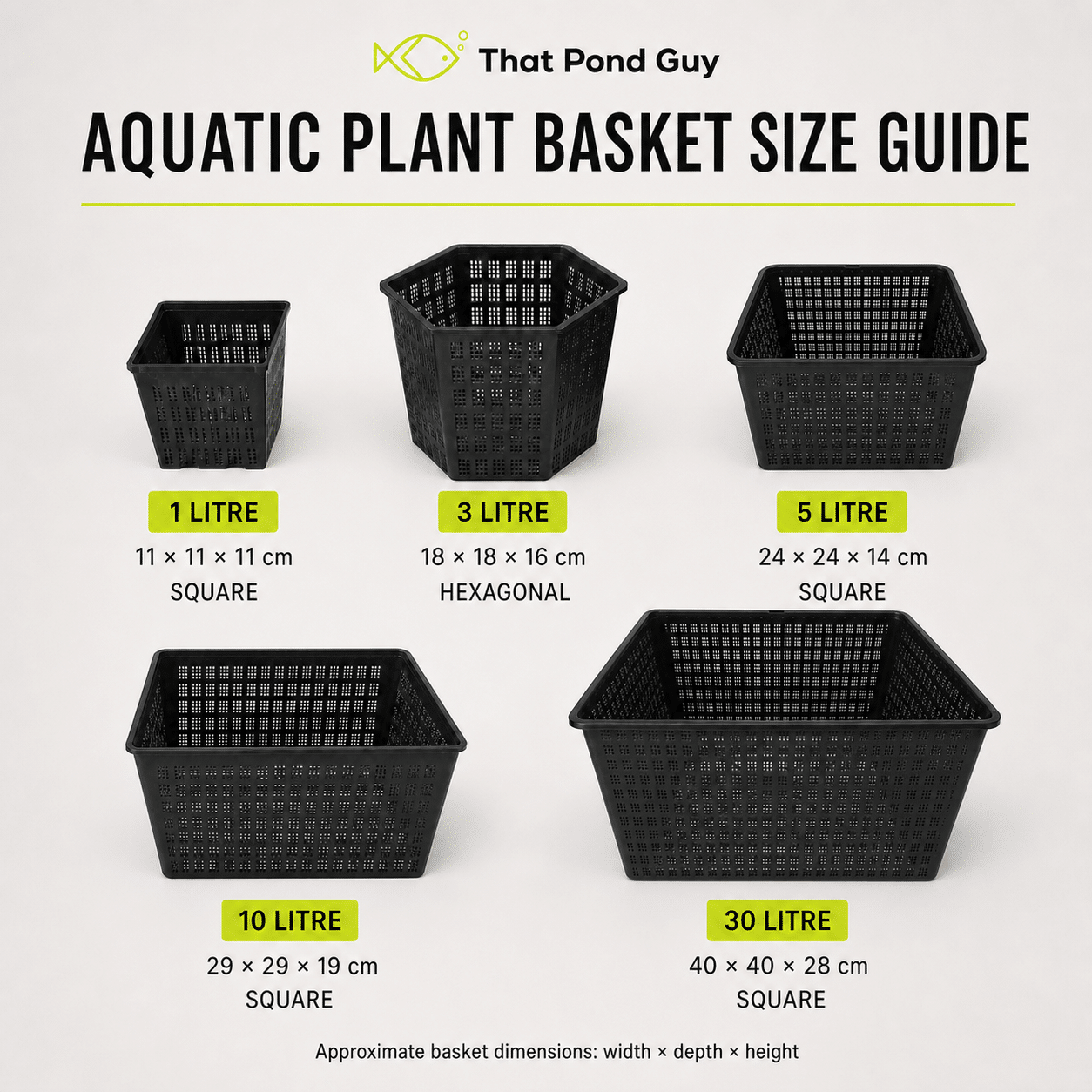
Basket measurements for the offered sizes:
- 1 Litre Basket – usually 11 × 11 × 11cm square; some varieties may be supplied in a 14cm diameter × 10cm round basket
- 3 Litre Hexagonal Basket – 18 × 18 × 16cm
Other plants to compare
Crowborough Arum Lily — Its white spathes sit among larger arrow-shaped leaves, giving a more upright outline and different growing requirements.
Bog Bean — Compare its three-part leaves and fringed pale spring flowers for a different low wet-margin plant.
Choosing plants and planting supplies
Marginal pond plants — Compare pond-edge plants by their eventual size, light and water-depth needs before filling a shelf.
Pond plant baskets and planting supplies — Choose a suitable container and growing medium for the position described above.







Reviews
There are no reviews yet.