





Variegated Reed Sweet Grass (Glyceria maxima ‘Variegata’)
| Size | 1 Ltr, 1 Ltr – Pack of 3, 9cm – Pack of 3, 3 Ltr |
|---|---|
| Plant Type | Marginal |
| Sun / Shade | Full Sun to Part Shade |
| Growth Rate | Fast |
| Native to UK | No |
Variegated Reed Sweet Grass gives bright striped leaves for a sunny wet edge. It spreads vigorously by rhizomes, so allow a generous managed footprint and access for division and late-winter tidying.
Price range: £14.00 through £34.50 (inc VAT)
Variegated Reed Sweet Grass (Glyceria maxima ‘Variegata’)
Striped foliage for larger wet margins, with spread to manage
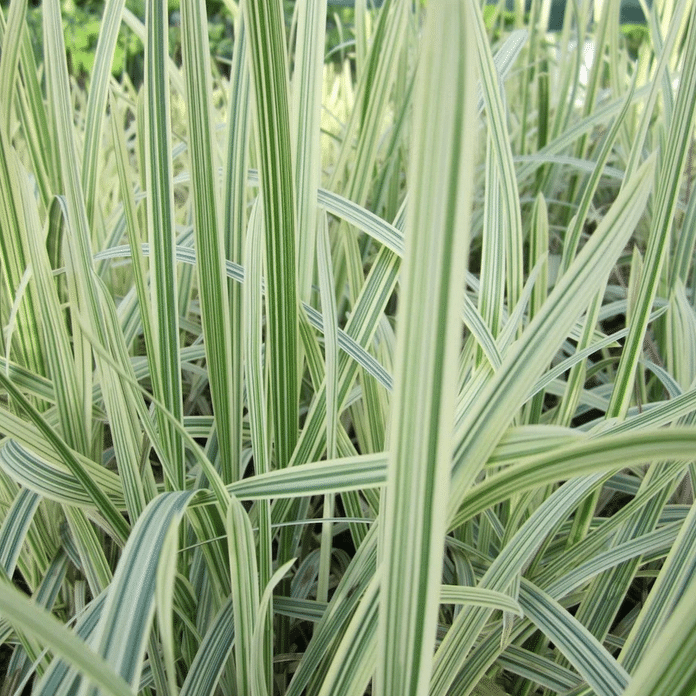
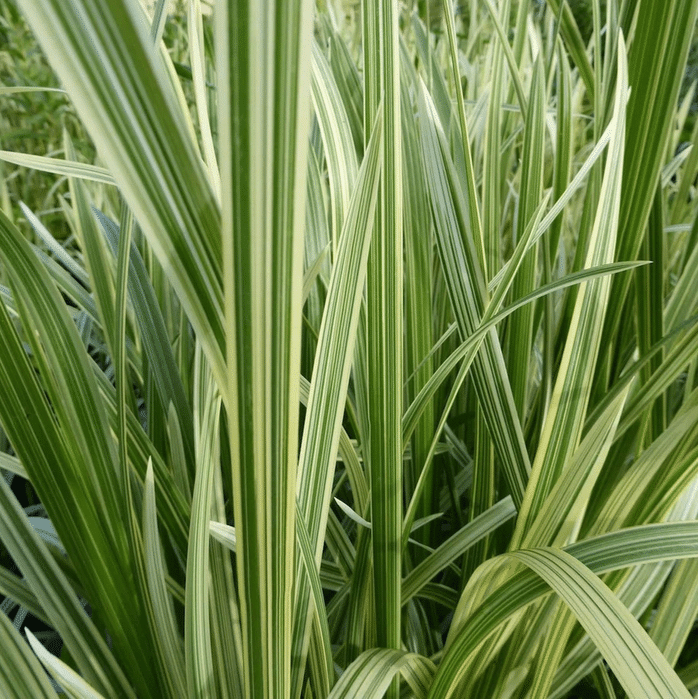
Variegated Reed Sweet Grass is a foliage plant for a roomy wet setting. Its long leaves have green and creamy pale stripes, sometimes showing a pink flush in fresh growth. The foliage brightens a pond edge before the open clusters of green and purple-tinged spikelets rise in summer.
The plant is commonly sold as Glyceria maxima ‘Variegata’; RHS advice also uses Glyceria maxima var. variegata. The variegated form is a garden selection of a species native to Britain and Ireland. That distinction is more useful than simply labelling the striped plant a wild British native or saying the species has no native connection.
Its speed and spread need to be part of the decision. Underground rhizomes can quickly produce a broad colony, and RHS advice warns that it can become too invasive for a small pool. A large basket helps with management, but it must still be lifted, inspected and divided rather than assumed to contain the roots indefinitely.
Choose full sun and soil that remains reliably moist or boggy. Use a shallow marginal position, with around 5–15cm of water cover. Measure that cover above the planted soil surface, then allow for the basket height when choosing a shelf. Follow the supplied label for the young plant rather than treating a general depth group as an instruction to start every basket at the deepest point.
Allow space above and beside the water. Growth is often around 60–100cm high, while spreading rhizomes can take the patch towards 2.5m across in favourable conditions. Position and containment affect the eventual size, so plan for a substantial planting and retain a way to lift and reduce it.
Foliage may remain partly green in mild weather or die back more fully in an exposed winter. In late winter, wear gloves and comb out dead material, then divide crowded clumps as needed. Choose it for the striped leaves and a position where its spreading growth can be reached and managed.
UK-grown plant. Grown at a dedicated aquatic plant nursery in the South of England.

What you receive
Choose a single 1-litre or 3-litre plant, a pack of three 1-litre plants or a pack of three 9cm pots. This is a vigorous spreading grass, so choose the quantity around a generous area that can be inspected and divided, not simply the number of pots that fit today.
The striped foliage can emerge with pink colouring in spring. Some leaves may remain through winter, while exposed or cold conditions can cause fuller dieback. A young delivery will not have the density of a large established patch, and seasonal leaf colour changes are part of its appearance.
Is this right for your pond?
Variegated Reed Sweet Grass provides quick cover and a bright striped leaf effect for a larger wet edge. Its rhizomes are vigorous, so a small pond with delicate neighbours is not the place to leave it unchecked.
- A generous footprint: Although often around 60–100cm high, it can spread much farther through rhizomes. A developing patch can approach around 2.5m across, so make the growth-management plan before planting it.
- Sun and moisture: Choose full sun with wet or reliably moist ground. Check raised beds and small containers in dry weather instead of assuming every pondside position stays damp.
- A shallow margin: It can be used in the shallow marginal-water group, with the actual label setting the basket position. It is not a plant to hide at depth because the roots are vigorous.
- Containment and access: Use a suitable substantial basket if managing spread, and leave a way to lift it. Inspect roots and shoots beyond the container rather than assuming a basket permanently stops the rhizomes.
Planting position and getting established
Choose a broad wet area or accessible marginal container position in sun. Plant at the existing level of the rootball and keep the growing base clear. In a basket, use aquatic planting soil and stable support; in the ground, water the rootball and surrounding soil after planting.
The RHS pond-plant guide places this variegated form in the 5–15cm shallow-water group. Use the supplied label to position the actual basket and measure cover over the planted level, not from the pond floor. Keep new foliage above the surface and check the position after changes in water level.
Leave room around the entire container for inspection and later lifting. Do not weave small, slow-growing plants tightly among the new shoots: the rhizomes can extend into them before the planting looks crowded above ground. A generous but manageable patch is a more useful goal than instant dense cover in a confined space.
Looking after your plants
- Checking spread: Inspect the basket sides and nearby soil for extending shoots and rhizomes. Lift unwanted rooted growth before it becomes mixed through another plant’s rootball.
- Division: Lift and divide when the patch is crowded or spreading beyond its allotted area. Retain manageable healthy sections and replant promptly into suitable wet conditions.
- Late-winter tidy: Wear tough gloves and comb through the plant in late winter to remove dead foliage. Retain healthy leaves where they remain useful, taking care around fresh shoots.
- Moisture: Keep a new rootball moist during establishment and check shallow containers when pond levels fall. Vigorous top growth does not remove the need for a suitable root environment.
- Reviewing the site: If the plant requires more containment than the pond can accommodate, reduce it or choose a slower, smaller alternative. Regular access is part of caring for this grass, not an optional extra after the patch has expanded.
Size and growing conditions
- Botanical name
- Glyceria maxima var. variegata
- Plant type
- Vigorous rhizomatous grass
- Foliage
- Striped pale and green leaves, often pink-flushed on emergence
- Flowers
- Open purple-flushed green spikelets in summer
- Height
- Around 60–100cm in UK guidance
- Spread
- Can approach about 2.5m; rhizomes require management
- Light
- Full sun
- Soil
- Wet or reliably moist ground
- Aquatic position
- Shallow 5–15cm water group; set the actual basket according to its label
- Winter foliage
- Semi-evergreen, with fuller dieback possible in exposed cold
- Tidying
- Comb out dead foliage in late winter wearing gloves
- Native status
- Variegated garden form of a species native to Britain and Ireland
- RHS information
- RHS guide: aquatic plants: planting (general guidance)
Delivery and basket information
We do not deliver live plants to Northern Ireland.
Orders received by 11am Monday to Wednesday are normally dispatched on the following working day using a next working day courier service. During busy periods, dispatch may occasionally take an extra day.
To avoid plants being held in depots over a weekend, we do not usually dispatch on Fridays. Highlands and Islands orders using a two day service are not normally dispatched on Thursdays.
Please read our delivery information for delivery arrangements and contact us if you need to check the timing of a particular order.
The 9cm option arrives in nursery pots. For pond planting, pot these plants into suitable aquatic baskets with aquatic planting soil before positioning them at the depth shown on their labels.
Finofil baskets are made from 100% recycled polypropylene co-polymer. They are not suitable for ordinary kerbside recycling; reuse them where possible and check local specialist recycling options. Their fine mesh helps retain aquatic soil while allowing water to reach the roots.
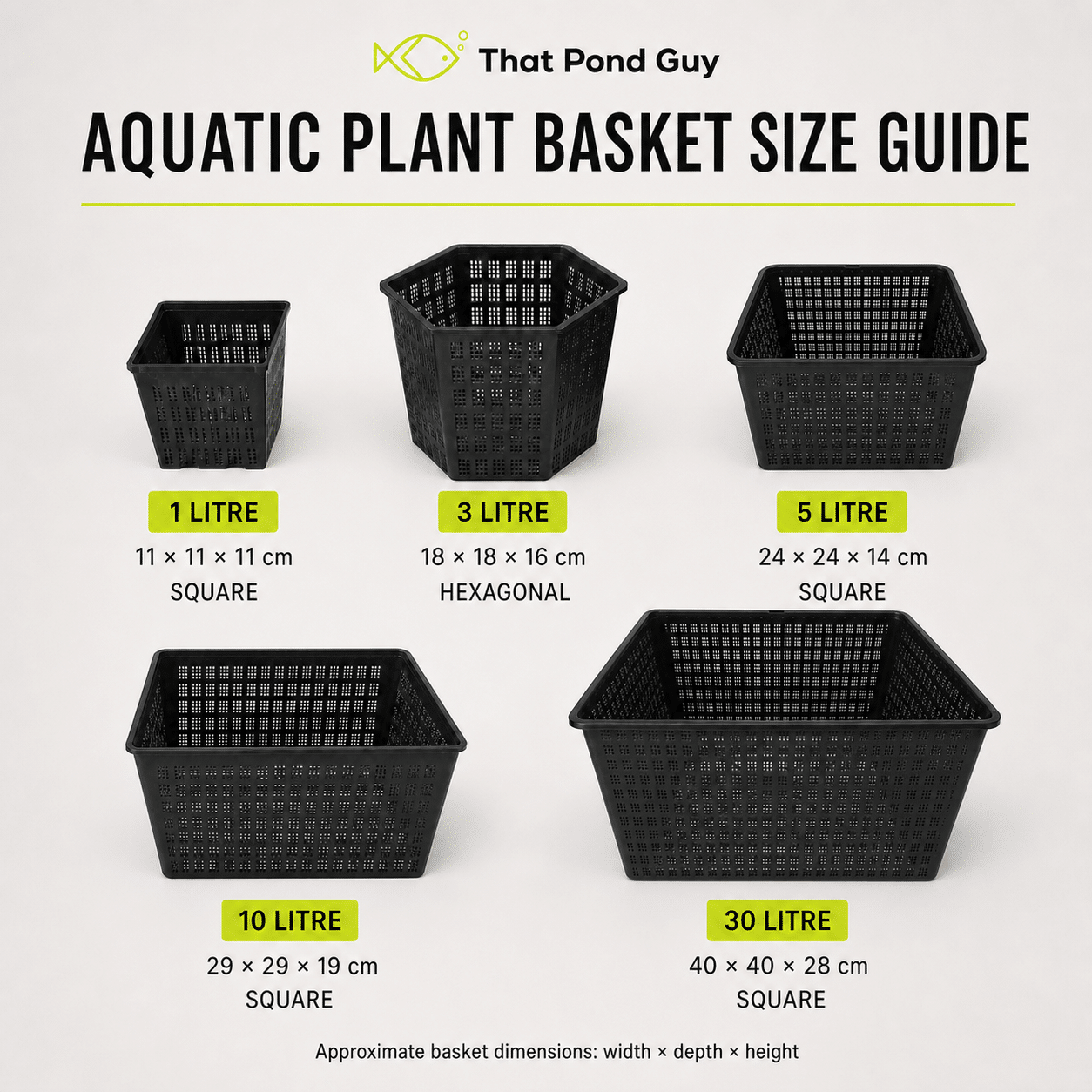
Basket measurements for the offered sizes:
- 1 Litre Basket – usually 11 × 11 × 11cm square; some varieties may be supplied in a 14cm diameter × 10cm round basket
- 3 Litre Hexagonal Basket – 18 × 18 × 16cm
Other plants to compare
Variegated Yellow Flag Iris — Variegated Yellow Flag Iris gives striped upright iris leaves and yellow flowers, with a different mature outline. It also needs careful growing room and its own water-position guidance.
Variegated Japanese Sweet Flag — Variegated Japanese Sweet Flag gives a much lower, smaller cream-edged foliage tuft. Compare it where a large, vigorously spreading grass would overwhelm the pond.





Reviews
There are no reviews yet.