





Pendulous Sedge (Carex pendula)
| Size | 1 Ltr, 1 Ltr – Pack of 3, 3 Ltr, 9cm – Pack of 3 |
|---|---|
| Plant Type | Marginal |
| Sun / Shade | Full Sun to Part Shade |
| Flower Colour | Brown |
| Growth Rate | Fast |
| Native to UK | Yes |
| Plant group |
Pendulous Sedge is a large native evergreen sedge with arching green leaves and drooping flower stems. Choose a roomy damp pond bank and plan for selective tidying, division and seedling control.
Price range: £14.00 through £34.50 (inc VAT)
Pendulous Sedge (Carex pendula)
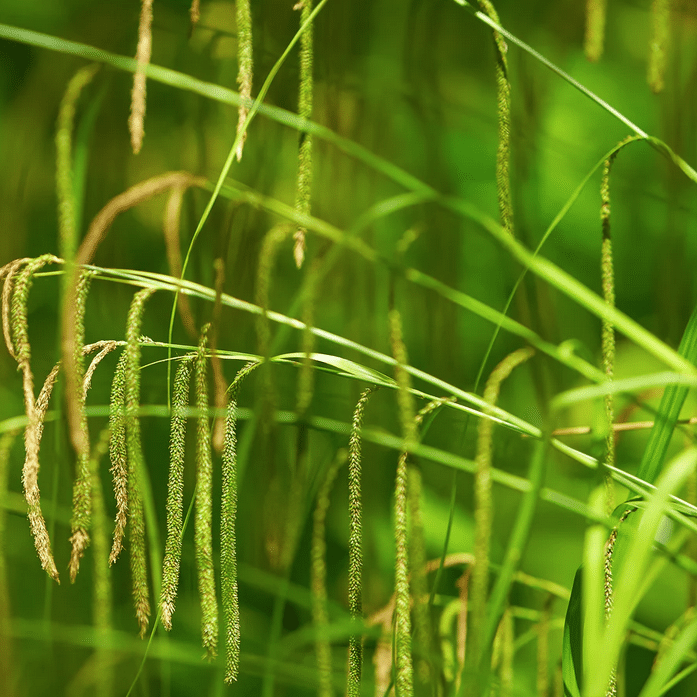
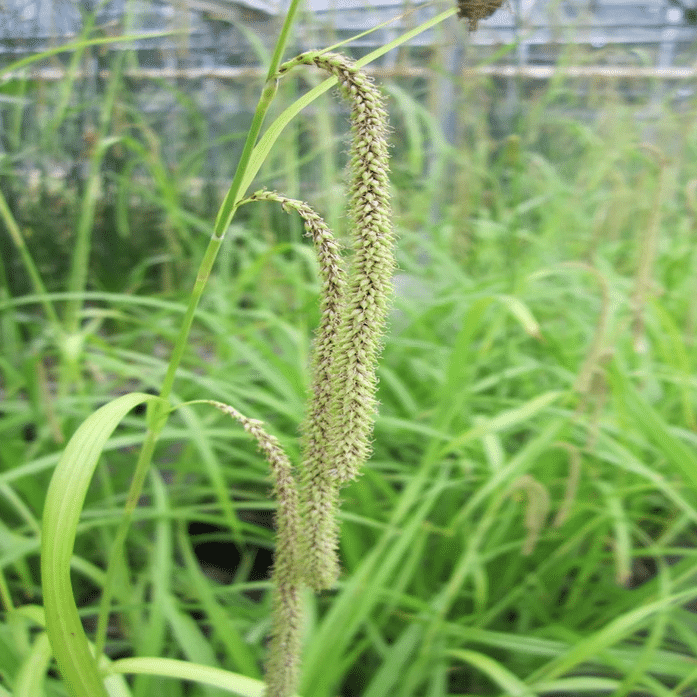
Large arching clumps with drooping flower spikes
Pendulous Sedge is a substantial foliage plant for a roomy pondside setting. Long, pleated green leaves arch away from the centre, while the drooping flower spikes add a looser line above them. It has a different outline from upright reeds, making it useful where a natural edge needs texture as well as height.
Its size is part of the appeal and part of the planning. The RHS describes clumps reaching roughly one to one and a half metres tall, with a spread approaching a metre. Leave space for the leaves to arch without covering a path, hiding low flowers or obstructing access to a filter or pond edge.
This is a British native sedge that can look at home around a larger wildlife pond, streamside planting or damp garden border. Native status describes the species; it is not a statement that a nursery plant has been collected locally or will establish without management. A small ornamental pond can be overwhelmed by the wrong large clump.
Moist or wet soil in sun or partial shade is a sensible position. The roots need access to moisture, but a damp bank can give a good display without deep standing water. Where a plant label specifies shallow-water culture, account for the basket height and keep the growing crown in the recommended position.
Be prepared to manage new growth. Pendulous Sedge is vigorous, and seedling plants as well as an enlarging original clump can need attention. Keeping the planting area accessible makes it easier to remove unwanted seedlings and tired leaves before the display becomes mixed with surrounding smaller plants.
The foliage can provide structure beyond the flowering season, but weather and leaf age affect how neat it looks. Tidy selectively and divide when the plant outgrows its allotted area. Choose it because you want a large, arching sedge in a suitable space, rather than as a maintenance-free way to fill every gap.
UK-grown plant. Grown at a dedicated aquatic plant nursery in the South of England.

What you receive
The choices are a 1-litre or 3-litre plant, a pack of three 1-litre plants or a pack of three 9cm pots. Plan the quantity around the size of the established clump and its arching leaves; the delivered nursery container is only a starting size.
Pendulous Sedge is evergreen, although leaf quality changes with weather, handling and routine tidying. A young delivery can have shorter or fewer leaves than a mature photograph, and an old clump may carry some tired foliage alongside sound green growth. The developing shape matters more than expecting instant full size.
Is this right for your pond?
This is a substantial native sedge for a roomy pond bank or damp border. It is especially effective where the arching leaves and hanging flower stems can be seen, but it needs more space and seed management than its small nursery pot suggests.
- Room beside the pond: Allow around 1–1.5m in height and up to about 1m for a dense clump. Keep the long leaves away from narrow paths and equipment that must remain easy to reach.
- Damp soil: Fertile moist or wet ground in sun or partial shade is suitable. It can tolerate drier soil with less height, but a young rootball still needs watering while it establishes.
- An evergreen outline: Use its dark-green arching leaves to give structure when deciduous plants have died back. Keep healthy foliage rather than treating it as a grass that must all be cut down every spring.
- Seedling control: It can produce many seedlings where conditions suit. Choose it where you are willing to remove flower stems before seed is shed, or regularly lift unwanted young plants.
Planting position and getting established
Use a roomy pondside border, damp bank or stream-edge position where the ground can support the whole developing clump. Plant the rootball at its existing soil level, firm gently and water thoroughly. Position it far enough from the path and liner edge that the mature leaves will not obscure a safe route to the pond.
Moist garden soil is sufficient; there is no need to turn this into a deep aquatic planting. If the supplied label permits a shallow marginal position, use that specific guidance rather than lowering it according to a generic bulrush depth. The crown should not be pushed deeper merely to hide the nursery container.
Leave access to the base from at least one side. Dividing a large established clump is easier when it has not been trapped between rocks or mixed tightly with smaller plants. During the first season, check the original rootball as well as the surrounding soil and water during dry spells until roots are established.
Looking after your plants
- Managing seedlings: Remove flower stems before seed is shed if you want to limit new plants. Check nearby bare soil and lift unwanted seedlings while their roots are still small, rather than letting several become large clumps.
- Tidying evergreen leaves: Cut out dead foliage as it appears, leaving healthy green leaves in place. Selective work preserves the evergreen outline and avoids unnecessarily stripping a sound clump to the ground.
- Safe handling: Wear gloves when handling the sharp-edged leaves. Work from a stable position and keep cut material clear of the path so that reaching the pond is still straightforward after the tidy.
- Division timing: Divide when needed from mid-spring to early summer. Reduce a clump before it becomes unmanageable, keep healthy rooted sections and water them after replanting into suitable moist soil.
- Space over time: Review the width of the arching foliage, not only the base. Move or reduce the plant if it is blocking access or shading smaller neighbours; a dense mature clump occupies much more space than its nursery pot.
Size and growing conditions
- Botanical name
- Carex pendula
- Common name
- Pendulous Sedge
- Habit
- Vigorous, dense clump-forming sedge
- Leaves
- Long, dark-green, pleated and arching; sharp-edged
- Flowers
- Slender drooping flower spikes
- Mature height
- Around 1–1.5m
- Mature spread
- Allow around 50–100cm for the clump and its leaves
- Light
- Sun or partial shade
- Soil
- Fertile moist or wet soil
- Winter foliage
- Evergreen; remove dead leaves selectively
- Division
- Mid-spring to early summer when required
- Native status
- Native to Britain and Ireland
- RHS information
- RHS plant profile: Carex pendula
Delivery and basket information
We do not deliver live plants to Northern Ireland.
Orders received by 11am Monday to Wednesday are normally dispatched on the following working day using a next working day courier service. During busy periods, dispatch may occasionally take an extra day.
To avoid plants being held in depots over a weekend, we do not usually dispatch on Fridays. Highlands and Islands orders using a two day service are not normally dispatched on Thursdays.
Please read our delivery information for delivery arrangements and contact us if you need to check the timing of a particular order.
The 9cm option arrives in nursery pots. For pond planting, pot these plants into suitable aquatic baskets with aquatic planting soil before positioning them at the depth shown on their labels.
Finofil baskets are made from 100% recycled polypropylene co-polymer. They are not suitable for ordinary kerbside recycling; reuse them where possible and check local specialist recycling options. Their fine mesh helps retain aquatic soil while allowing water to reach the roots.
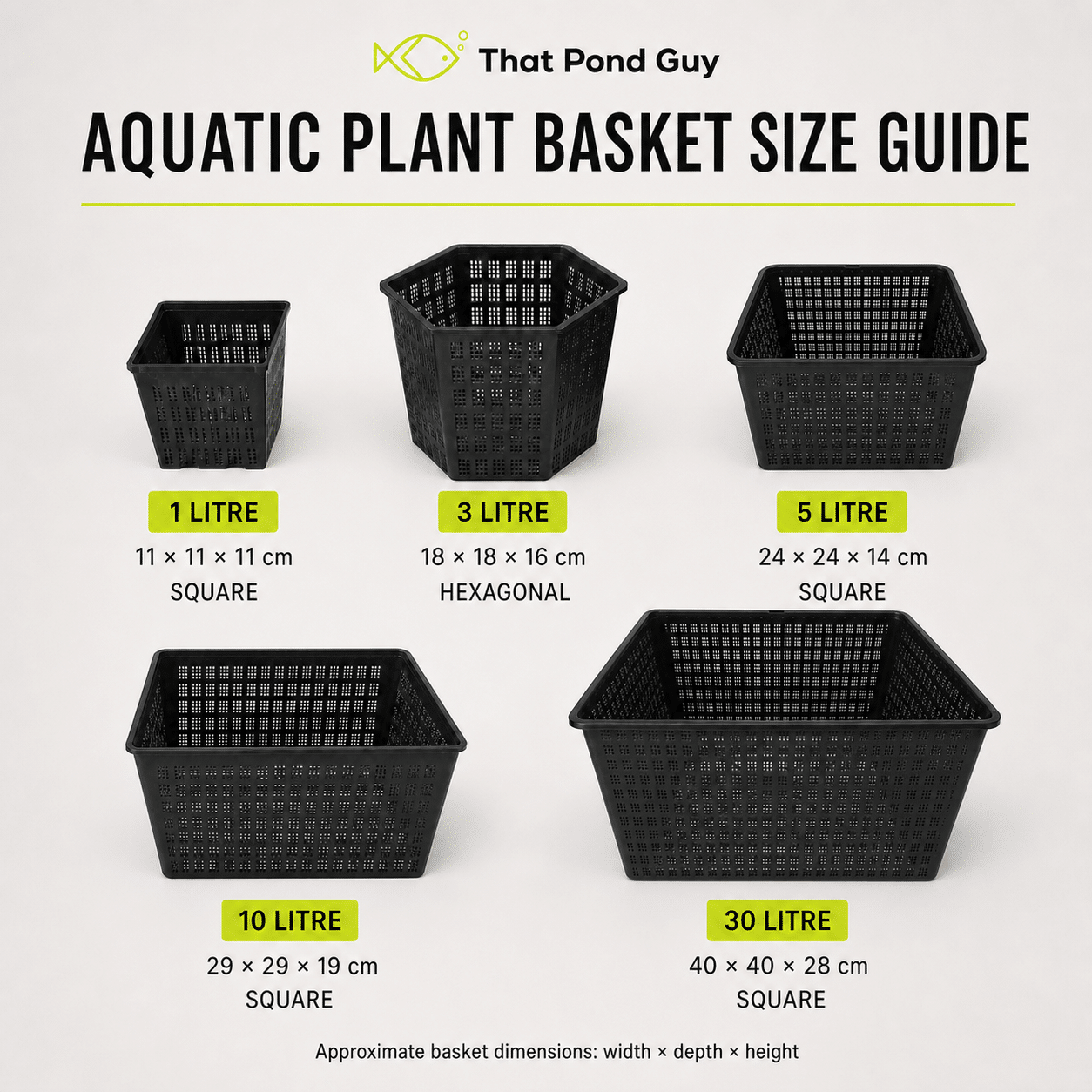
Basket measurements for the offered sizes:
- 1 Litre Basket – usually 11 × 11 × 11cm square; some varieties may be supplied in a 14cm diameter × 10cm round basket
- 3 Litre Hexagonal Basket – 18 × 18 × 16cm
Other plants to compare
Palm Sedge — Palm Sedge has finer light-green leaves arranged in fan-like sprays and is usually a smaller foliage feature. It is a non-native choice for reliably moist ground, with partial shade particularly suitable.
Miniature Bulrush — Miniature Bulrush is deciduous and more upright, with narrow blades and small brown heads in a sunny shallow margin. It provides a different seasonal outline and is easier to fit into smaller-scale aquatic planting.








Reviews
There are no reviews yet.