







Variegated Society Garlic (Tulbaghia violacea variegata)
| Size | 1 Ltr, 1 Ltr – Pack of 3 |
|---|---|
| Plant Type | Marginal |
| Sun / Shade | Full Sun |
| Growth Rate | Medium |
| Native to UK | No |
Variegated Society Garlic has narrow grey-green leaves with a pale cream edge, followed by lilac flower clusters above the clump. It is commonly sold as Tulbaghia violacea ‘Variegata’; you may also find the accepted name ‘Silver Lace’ on plant references and labels.
Price range: £11.99 through £28.00 (inc VAT)
Variegated Society Garlic (Tulbaghia violacea variegata)
Pale-edged leaves and lilac flowers for sunny, well-drained pondside planting
Variegated Society Garlic has narrow grey-green leaves with a pale cream edge, followed by lilac flower clusters above the clump. It is commonly sold as Tulbaghia violacea 'Variegata'; you may also find the accepted name 'Silver Lace' on plant references and labels.
The striped leaves give interest before the flowers open, making the plant useful beside a patio pond or along a sunny border. It needs a garden position with drainage, outside the water itself. A pot on the terrace can be seen beside aquatic plants without sharing their submerged root conditions.
Choose full sun, shelter and moderately fertile, well-drained loam. Water a new plant as it settles, then keep excess water able to drain away. This is particularly important in a container, where a blocked drainage hole or a permanently full saucer can turn a suitable pondside position into a waterlogged one.
The fragrant pale-lilac flowers develop from midsummer into early autumn. The RHS description reaches about 60 cm in flower, with a compact leaf clump beneath it. Allow room for those stems when placing the plant near seating or alongside lower foliage, so the seasonal display remains visible rather than squeezed into a dense border.
Plan winter care before cold weather arrives. This H3 cultivar needs protection outside the mildest locations, with a deep dry mulch or a suitable greenhouse position for a movable pot. Keep it in the drained part of the pondside planting rather than applying a wet-root aquatic routine.
What you receive
Choose one plant in a 1 litre container or three plants in 1 litre containers.
These are starting container formats, not aquatic immersion instructions. Keep the rootballs appropriately moist until planting and prepare a sunny drained position.
How it changes through the year
Fragrant pale-lilac flowers appear from midsummer into early autumn. Foliage can reduce outside active growth and winter protection may be needed. A resting or newly delivered plant may have fewer leaves and no open flowers.
Choosing a place for it
- For pale-edged leaves: Cream margins give interest before the lilac flower clusters develop.
- For drained sunny ground: Choose full sun and shelter above water, with well-drained soil.
- For a planned winter move: A manageable pot can help where greenhouse protection is needed.
Planting and getting it established
Choose a sunny sheltered border or container above the pond waterline, using moderately fertile well-drained loam. Set the rootball at its current level, firm gently and water in. Keep drainage clear rather than leaving the pot in a permanently full saucer.
This is a plant to enjoy beside a pond, not beneath its water. Do not lower the crown or root zone onto a submerged shelf because the product sits within a pondside range. A suitably drained patio pot can display the striped leaves close to aquatics while maintaining different root conditions.
Allow for an overall flowering height of around 60 cm, with the stems rising above the leaf clump. A movable container helps if winter protection is needed, so choose a size and position you can manage safely. Make sure its future protected space has adequate light and remains suitable through cold weather.
Looking after it
- Watering: Water new plants as they establish, while allowing excess water to drain. Check containers through dry weather without turning a well-drained root environment into permanent waterlogging.
- Drainage: Keep holes and the base of the container clear. A blocked outlet can make an otherwise suitable sunny position too wet.
- Flowers and foliage: Remove spent stems and damaged or dying leaves selectively. Healthy pale-edged leaves remain useful between the seasonal flower clusters.
- Division: Divide a crowded established clump in spring, retaining healthy rooted sections. Replant at their original level and water in.
- Winter: Outside the mildest areas, use the recommended deep dry mulch or move a container to a suitable unheated greenhouse. Its H3 rating means exposure and local winter conditions matter.
- Feeding: Use an appropriate moderately fertile medium and follow any chosen feed label. Pond water is not a route for feeding this above-water border plant.
Plant details
- Botanical name
- Tulbaghia violacea 'Silver Lace'; Variegata is a synonym
- Main features
- Grey-green leaves edged cream; pale-lilac flowers
- Flowering height
- Around 60 cm in the cultivar description
- Spread
- RHS band about 10–50 cm
- Position
- Full sun and shelter; moderately fertile well-drained loam
- Water position
- Above pond water; do not submerge
- Winter
- H3; dry mulch or suitable greenhouse protection
- Native status
- Non-native cultivar
- RHS information
- RHS plant profile: Tulbaghia violacea 'Silver Lace'
Delivery and basket information
We do not deliver live plants to Northern Ireland.
Please read our delivery information for delivery arrangements and contact us if you need to check the timing of a particular order.
Unpack promptly and check that the planting medium is moist. Keep the rootball moist if planting is delayed, and keep the plant in a sheltered position. Follow the planting depth and position described above, together with the supplied plant label.
Other plants to compare
Chives — Compare fine leaves and purple heads in another above-water plant, with different soil moisture and hardiness.
Snow Queen Iris — Its white flowers offer a different drained-soil pondside display and a much hardier perennial option.
Choosing plants and planting supplies
Marginal pond plants — Compare pond-edge plants by their eventual size, light and water-depth needs before filling a shelf.
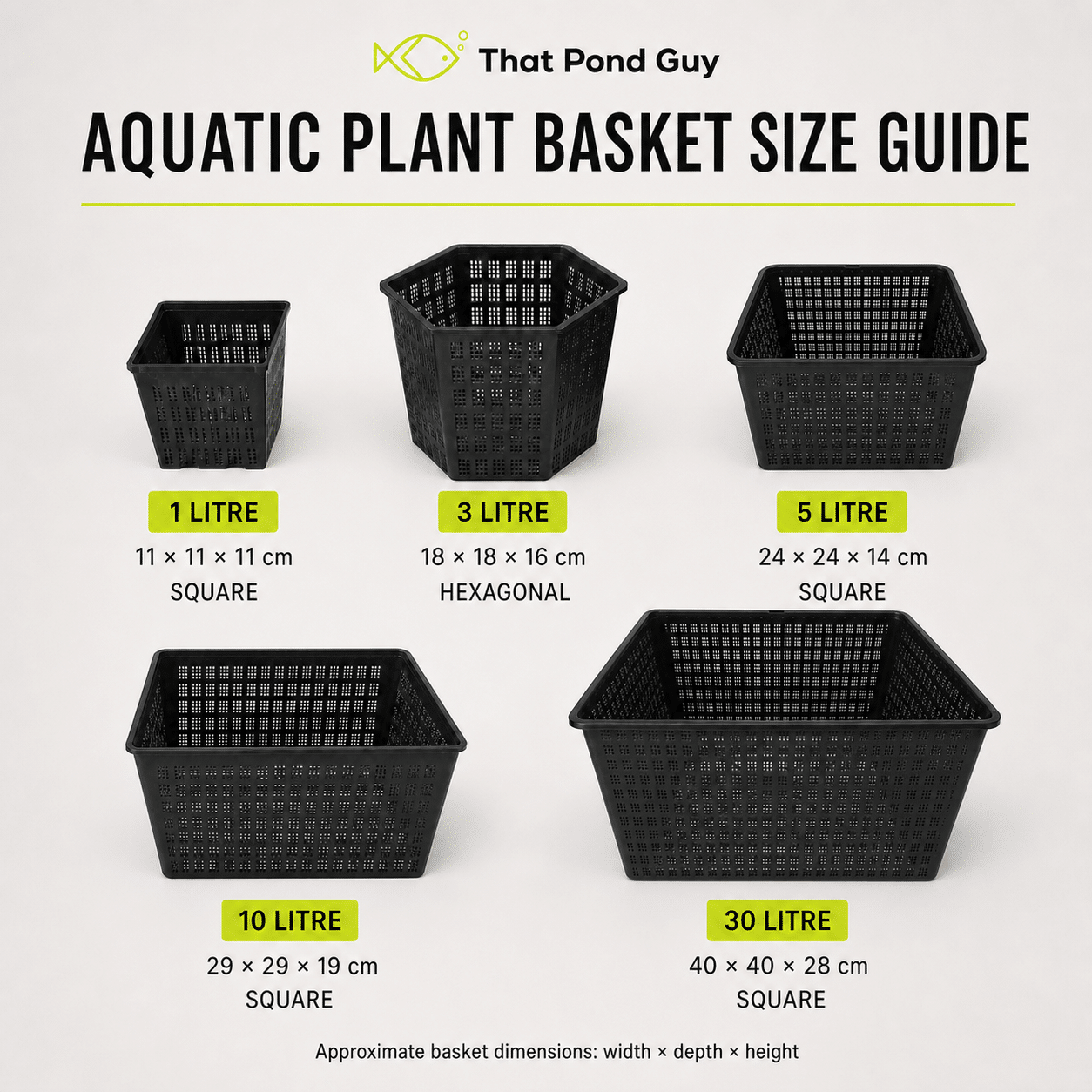
Pond plant baskets and planting supplies — Choose a suitable container and growing medium for the position described above.



Reviews
There are no reviews yet.