





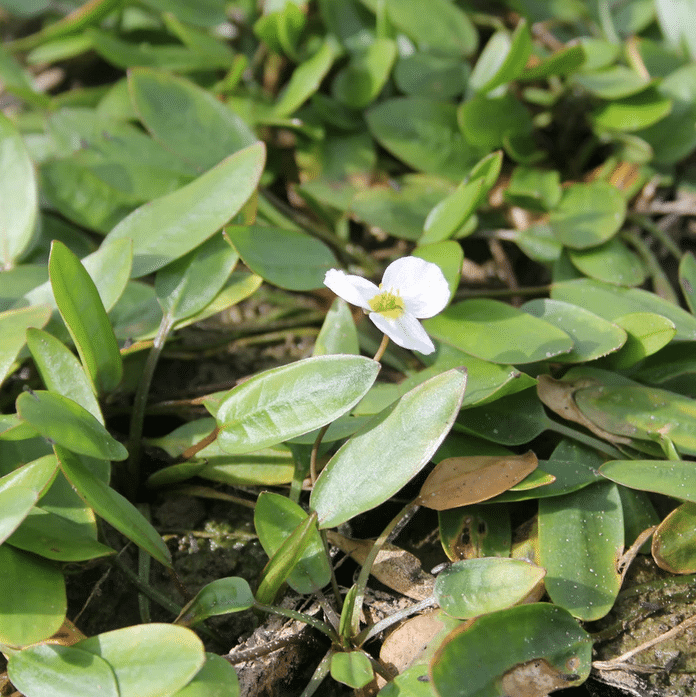

Floating Water Plantain (Luronium natans)
| Size | 1 Ltr, 1 Ltr Pack of 3 |
|---|---|
| Plant Type | Marginal |
| Sun / Shade | Full Sun |
| Flower Colour | White |
| Growth Rate | Medium |
| Native to UK | Yes |
Floating Water Plantain has a quiet appearance compared with many colourful marginals. Small oval leaves can float on shallow water, with delicate white flowers showing yellow centres. It is a plant for the detail of an open area rather than a tall feature that screens the far side of the pond.
Price range: £14.00 through £34.50 (inc VAT)
Floating Water Plantain (Luronium natans)
Small floating leaves and white flowers for clean, open water
Floating Water Plantain has a quiet appearance compared with many colourful marginals. Small oval leaves can float on shallow water, with delicate white flowers showing yellow centres. It is a plant for the detail of an open area rather than a tall feature that screens the far side of the pond.
Leaf shape varies with the growing conditions, and deeper water can produce narrower, longer submerged leaves. Establish young plants in a shallow position following the supplied label, rather than placing them straight into deep water.
Establish with only a small amount of water over the crown, as explained in the planting section. A shelf also has to hold the basket below the crown, so its total depth is a different measurement. Keep algae and neighbouring leaves from covering the young growth.
Clean water and an open area free of competing blanketweed are important. Keep the small leaves visible rather than allowing a dense algal mat or larger floating leaves to cover them. Choose the planting site for those growing conditions as well as for the appearance you want to achieve.
Luronium natans is a rare native aquatic in Britain and Ireland. Nursery-grown garden planting should remain within the managed pond rather than being released into wild sites. Keep the small leaves visible in clean, open water so the plant is not smothered by vigorous neighbours.
UK-grown plant. Grown at a dedicated aquatic plant nursery in the South of England.

What you receive
Choose one plant in a 1 litre container or three plants in 1 litre containers.
Keep the rootball wet while preparing the site. Container volume does not guarantee leaf coverage or a number of flowers. Check water conditions and competing growth before adding the plant.
How it changes through the year
White three-petalled flowers with yellow centres are described in May–July, with season affecting the timing. Leaf shape varies with growing conditions and top growth reduces in winter. Newly delivered or dormant plants can have much less top growth than an established plant in leaf or flower.
Choosing a place for it
- For a quiet close-up feature: Small oval floating leaves and white flowers suit open water where they remain visible.
- For clear shallow establishment: Use label-led 5–10 cm crown cover rather than the pond bottom.
- For a maintained planting: Keep algae and larger competing leaves from smothering the plant.
Planting and getting it established
Choose clean still or gently moving water with adequate light and space free of smothering algae. Establish with about 5–10 cm of water over the crown, as recommended in the exact RHS profile, following the supplied label for the actual plant.
Measure from the planted crown to the surface, not from the bottom of the pond. The basket occupies part of the shelf depth. A young plant should not be lowered into the deepest position simply because established wild plants can produce long submerged leaves.
Use a suitable aquatic basket and growing medium, keeping the crown at its original level and lowering gently to avoid washing out the medium. Check that emerging leaves can reach light. Leave access to remove blanketweed by hand and keep neighbouring leaves from covering the small planting.
Looking after it
- Algae: Check around the crown and leaves for blanketweed or other smothering growth. Remove it carefully without pulling out the small plant; this species needs competition kept clear.
- Water cover: Recheck crown-to-surface depth after changes in water level. The long submerged leaves seen in some conditions are not a reason to start a young plant unnecessarily deep.
- Neighbouring growth: Keep vigorous floating or marginal leaves from covering the planting. Light reaching the small leaves matters more than repeatedly adding feed to a shaded plant.
- Tidying: Remove dead or damaged material selectively while retaining healthy leaves. Keep roots wet whenever the basket is lifted.
- Division: Separate healthy established growth when needed to relieve crowding, replanting at the appropriate shallow crown-cover depth.
- Winter and disposal: Reduced seasonal growth is normal in this hardy deciduous aquatic. Retain it in the managed pond and keep surplus nursery material out of natural waterways.
Plant details
- Botanical name
- Luronium natans
- Native status
- Native to Britain and Ireland; rare in the wild
- Flowers
- White with yellow centres; generally May–July
- Leaves
- Oval floating leaves or narrower submerged leaves depending on conditions
- Spread
- About 10–50 cm
- Starting water cover
- About 5–10 cm above the crown
- Position
- Clean still or gently moving water; good light
- Winter
- Hardy deciduous aquatic; RHS H6
- RHS information
- RHS plant profile: Luronium natans
Delivery and basket information
We do not deliver live plants to Northern Ireland.
Orders received by 11am Monday to Wednesday are normally dispatched on the following working day using a next working day courier service. During busy periods, dispatch may occasionally take an extra day.
To avoid plants being held in depots over a weekend, we do not usually dispatch on Fridays. Highlands and Islands orders using a two day service are not normally dispatched on Thursdays.
Please read our delivery information for delivery arrangements and contact us if you need to check the timing of a particular order.
Finofil baskets are made from 100% recycled polypropylene co-polymer. They are not suitable for ordinary kerbside recycling; reuse them where possible and check local specialist recycling options. Their fine mesh helps retain aquatic soil while allowing water to reach the roots.
Basket measurements for the offered sizes:
- 1 Litre Basket – usually 11 × 11 × 11cm square; some varieties may be supplied in a 14cm diameter × 10cm round basket
Other plants to compare
American Water Plantain — Compare a North American marginal with a rosette of broader emergent leaves and airy flowering stems.
Arrowhead — Its larger pointed emergent leaves create a stronger upright outline, with more room needed for spread.
Choosing plants and planting supplies
Marginal pond plants — Compare pond-edge plants by their eventual size, light and water-depth needs before filling a shelf.
Pond plant baskets and planting supplies — Choose a suitable container and growing medium for the position described above.



Reviews
There are no reviews yet.