






Chameleon Plant (Houttuynia cordata ‘Chameleon’)
| Size | 1 Ltr, 1Ltr Pack of 3, 3 Ltr, 9cm Pack of 3, 5 Ltr |
|---|---|
| Plant Type | Marginal |
| Sun / Shade | Full Sun to Part Shade |
| Flower Colour | White |
| Growth Rate | Medium |
| Native to UK | No |
| Plant group |
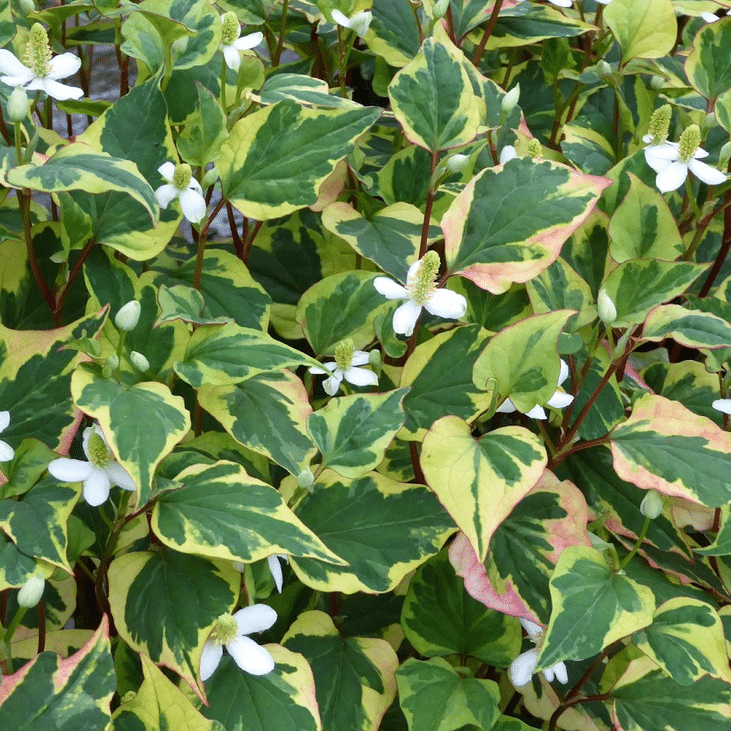
Chameleon Plant is grown mainly for its foliage. Heart-shaped leaves carry a mixture of green, cream and pink to red colouring, so the edge of the pond can look colourful even when there are no flowers. It is a good plant to consider when leaf pattern matters more than a brief, large bloom.
Price range: £14.00 through £42.00 (inc VAT)
Chameleon Plant (Houttuynia cordata ‘Chameleon’)
Colourful heart-shaped leaves with a spread to manage
Chameleon Plant is grown mainly for its foliage. Heart-shaped leaves carry a mixture of green, cream and pink to red colouring, so the edge of the pond can look colourful even when there are no flowers. It is a good plant to consider when leaf pattern matters more than a brief, large bloom.
The flowers provide a smaller secondary detail. Tiny flowers gather on a short central spike surrounded by conspicuous white bracts. The patterned foliage remains the most useful way to recognise this cultivar within a mixed planting.
The important practical point is its underground spread. Chameleon Plant can extend strongly through rhizomes, particularly in wet ground. A colourful patch may be welcome in one area and a problem in another, so decide where it can grow before planting rather than expecting a small pot to remain a small clump.
It tolerates a range of moisture conditions and can grow in sun or shade. For pondside use choose a position that suits the actual plant label, with access to inspect escaping growth. A container can help restrict it, but a mesh basket is not a guarantee that rhizomes can never reach surrounding planting.
The foliage dies back seasonally, so the colour is a growing-season feature rather than permanent evergreen cover. Plan the edge around a plant that can spread underground, and keep a clear way to reach it. The patterns on individual leaves and the small white-bracted flowers are best appreciated where the patch is visible rather than hidden among taller plants.
UK-grown plant. Grown at a dedicated aquatic plant nursery in the South of England.
What you receive
Choose one plant in a 1 litre container, three plants in 1 litre containers, three plants in 9 cm nursery pots, one plant in a 3 litre container or one plant in a 5 litre container.
Keep the roots moist while preparing the site. The supplied container is a starting format, not a guarantee against later rhizome spread.
How it changes through the year
Variegated leaves provide growing-season colour, with small flower spikes and white bracts as a secondary feature. This is a hardy deciduous perennial; winter top growth may disappear. Container size describes the delivery format rather than the final boundary of its rhizomes.
Choosing a place for it
- For patterned leaves: Green, cream and pink-to-red colouring is the main feature, with small flowers secondary.
- For a controlled patch: Its extensive rhizomes need inspection; allow access even if you use a basket.
- For flexible light: Sun and shade are tolerated, but the exact soil or shallow-water position must suit the plant label.
Planting and getting it established
Decide how you will manage the rhizomes before planting. A container can help restrict the plant and makes it easier to lift, but mesh sides do not guarantee permanent containment. Avoid a position where escaping roots would run into inaccessible stonework or through several neighbouring rootballs.
The plant tolerates sun or shade and a range of soils. For a pondside scheme, choose a position appropriate to the supplied label, maintaining the original planting level. Use shallow water only where that label specifically allows it, and keep the root area accessible while the plant establishes.
Plant with space to show the variegated leaves and room to inspect around the container. If placing a label-approved aquatic basket into water, measure water cover above the planted crown or medium, separately from the shelf depth that includes the basket. Keep access for checking spread once the patch is established.
Looking after it
- Rhizomes: Inspect around the chosen boundary during growth. Lift unwanted rhizome extensions and rooted shoots rather than only removing the colourful leaves above them.
- Container checks: Check the sides and base when lifting a container. Repot or divide if congested, keeping only the amount of healthy growth you can manage in the available space.
- Seasonal tidying: Remove damaged or dead material as necessary. Let sound leaves contribute through the growing season before tidying the seasonal dieback.
- Moisture and feeding: Care for the actual planting position rather than applying an aquatic routine automatically. Additional feed should only be used if needed, with a product suitable for the medium and location.
- Division and disposal: Divide in spring when required, replanting healthy sections at their former level. Collect fragments and keep unwanted rhizomes out of natural waters and neighbouring unmanaged ground.
Plant details
- Botanical name
- Houttuynia cordata 'Chameleon'
- Main feature
- Variegated green, cream and pink/red foliage
- Height
- Around 30 cm; RHS band 10–50 cm
- Spread
- About 50–100 cm initially; can extend beyond a chosen patch
- Light
- Sun to shade
- Habit
- Deciduous rhizomatous perennial
- Native status
- Cultivar of a non-British species
- RHS information
- RHS plant profile: Houttuynia cordata 'Chameleon'
Delivery and basket information
We do not deliver live plants to Northern Ireland.
Orders received by 11am Monday to Wednesday are normally dispatched on the following working day using a next working day courier service. During busy periods, dispatch may occasionally take an extra day.
To avoid plants being held in depots over a weekend, we do not usually dispatch on Fridays. Highlands and Islands orders using a two day service are not normally dispatched on Thursdays.
Please read our delivery information for delivery arrangements and contact us if you need to check the timing of a particular order.
The 9cm option arrives in nursery pots. For pond planting, pot these plants into suitable aquatic baskets with aquatic planting soil before positioning them at the depth shown on their labels.
Finofil baskets are made from 100% recycled polypropylene co-polymer. They are not suitable for ordinary kerbside recycling; reuse them where possible and check local specialist recycling options. Their fine mesh helps retain aquatic soil while allowing water to reach the roots.
Basket measurements for the offered sizes:
- 1 Litre Basket – usually 11 × 11 × 11cm square; some varieties may be supplied in a 14cm diameter × 10cm round basket
- 3 Litre Hexagonal Basket – 18 × 18 × 16cm
- 5 Litre Square Basket – 24 × 24 × 14cm
Other plants to compare
Apache Beads — Compare broad, plainer leaves and larger white-bracted flower cones for a wet margin; its runners also need room.
Chinese Marshflower — Its lower creeping green leaves and small spring-to-summer flowers provide a finer-textured alternative.
Choosing plants and planting supplies
Marginal pond plants — Compare pond-edge plants by their eventual size, light and water-depth needs before filling a shelf.
Pond plant baskets and planting supplies — Choose a suitable container and growing medium for the position described above.





Reviews
There are no reviews yet.