





Common Bulrush (Typha latifolia)
| Size | 1 Ltr, 1 Ltr Pack of 3, 3 Ltr |
|---|---|
| Plant Type | Marginal |
| Sun / Shade | Full Sun |
| Flower Colour | Brown |
| Growth Rate | Fast |
| Native to UK | Yes |
| Plant group |
Common Bulrush is one of the most recognisable wetland plants, with long strap-like leaves and brown cylindrical flowerheads. Its upright stems can make a strong outline beside a large natural pond. That familiar appearance should not obscure the practical fact that it is a very vigorous, spreading plant.
Price range: £14.00 through £34.50 (inc VAT)
Common Bulrush (Typha latifolia)
Broad green leaves and brown heads for very large wetland spaces
Common Bulrush is one of the most recognisable wetland plants, with long strap-like leaves and brown cylindrical flowerheads. Its upright stems can make a strong outline beside a large natural pond. That familiar appearance should not obscure the practical fact that it is a very vigorous, spreading plant.
Underground rhizomes can colonise a substantial area, with eventual spread exceeding eight metres. Plan for a large space and regular management rather than the outline of the nursery container. A crowded ornamental shelf is unlikely to give this species enough room.
The root system may puncture pond liners. An aquatic basket helps with placement and lifting but is not a permanent barrier to strong rhizomes. Consider the construction of the pond and how the roots can be inspected before choosing the site.
Choose a sunny position in fertile boggy soil or an appropriate shallow margin. The amount of water above the planted crown is the relevant depth, not the overall depth down to the bottom of a shelf. Follow the actual plant label within that setting and do not assume deeper water will permanently stop all spread.
Its familiar brown heads are a seasonal feature above long green leaves, followed by winter dieback. This is a native perennial for a genuinely large managed margin. Allow safe access to inspect the rhizomes and remove excess growth before it becomes a much larger stand.
UK-grown plant. Grown at a dedicated aquatic plant nursery in the South of England.

What you receive
Choose one plant in a 1 litre container, three plants in 1 litre containers or one plant in a 3 litre container.
Use the selected current format as the starting root container only. Prepare a suitably large managed site first. Neither a pack nor a basket should be interpreted as permanent containment of this vigorous native species.
How it changes through the year
Brown cylindrical flowerheads develop in summer and can remain as seedheads later in the season. The leaves die back in winter. The delivery format is a starting size, not a reliable indication of the width a mature colony can occupy.
Choosing a place for it
- For large margins: A substantial eventual colony requires ample space and a management plan.
- For suitable pond construction: Roots may puncture liners; avoid small lined ornamental ponds.
- For strong structure: Long leaves and brown cylindrical heads suit a broad wetland setting.
Planting and getting it established
Decide whether the site can accommodate Common Bulrush before planting. Its roots may puncture liners and its eventual spread can exceed eight metres. A small lined pond or a narrow shelf among delicate plants is not a suitable place simply because a new basket fits there.
Use full sun and fertile boggy soil or a suitable natural shallow-water margin. RHS guidance allows up to about 30 cm of water cover; follow the actual supplied label and measure above the planted crown or medium. Shelf depth also includes basket height, so it is a different measurement.
For a deliberately restricted planting, choose a substantial method of containment that can be inspected and maintained. Keep the crown at its current growing level in an appropriate medium. A mesh supply basket does not make this vigorous root system permanently safe for pond liners.
Looking after it
- Boundaries: Inspect new shoots and underground extensions regularly during growth. Remove excess rhizomes before the stand reaches inaccessible parts of the bank or other plants.
- Division: Divide or reduce the stand in spring when necessary, retaining healthy rooted sections only where there is suitable room. Cutting leaves alone will not control the rhizome system.
- Dead growth: Remove dead leaves and old stems before new spring growth where required. This makes it easier to work around the base without cutting through fresh shoots.
- Wet roots: Maintain the appropriate boggy or shallow-water position. Deeper placement and extra feed should not be treated as ways to compensate for a space that is too small.
- Liner checks: Keep the root warning in mind after planting as well as at purchase. A basket is not a permanent barrier to a vigorous rhizome system.
- Disposal: Collect divided roots and detached pieces. Do not move garden surplus into rivers, ditches or natural ponds.
Plant details
- Botanical name
- Typha latifolia
- Native status
- Native to Britain and Ireland
- Mature height
- About 1.5–2.5 m
- Mature spread
- Can exceed 8 m
- Position
- Full sun; fertile boggy soil or shallow water
- Water cover
- Up to about 30 cm above planted crown/root level in RHS guidance
- Important limitation
- Vigorous roots may puncture liners
- Habit
- Hardy deciduous rhizomatous perennial
- RHS information
- RHS plant profile: Typha latifolia
Delivery and basket information
We do not deliver live plants to Northern Ireland.
Orders received by 11am Monday to Wednesday are normally dispatched on the following working day using a next working day courier service. During busy periods, dispatch may occasionally take an extra day.
To avoid plants being held in depots over a weekend, we do not usually dispatch on Fridays. Highlands and Islands orders using a two day service are not normally dispatched on Thursdays.
Please read our delivery information for delivery arrangements and contact us if you need to check the timing of a particular order.
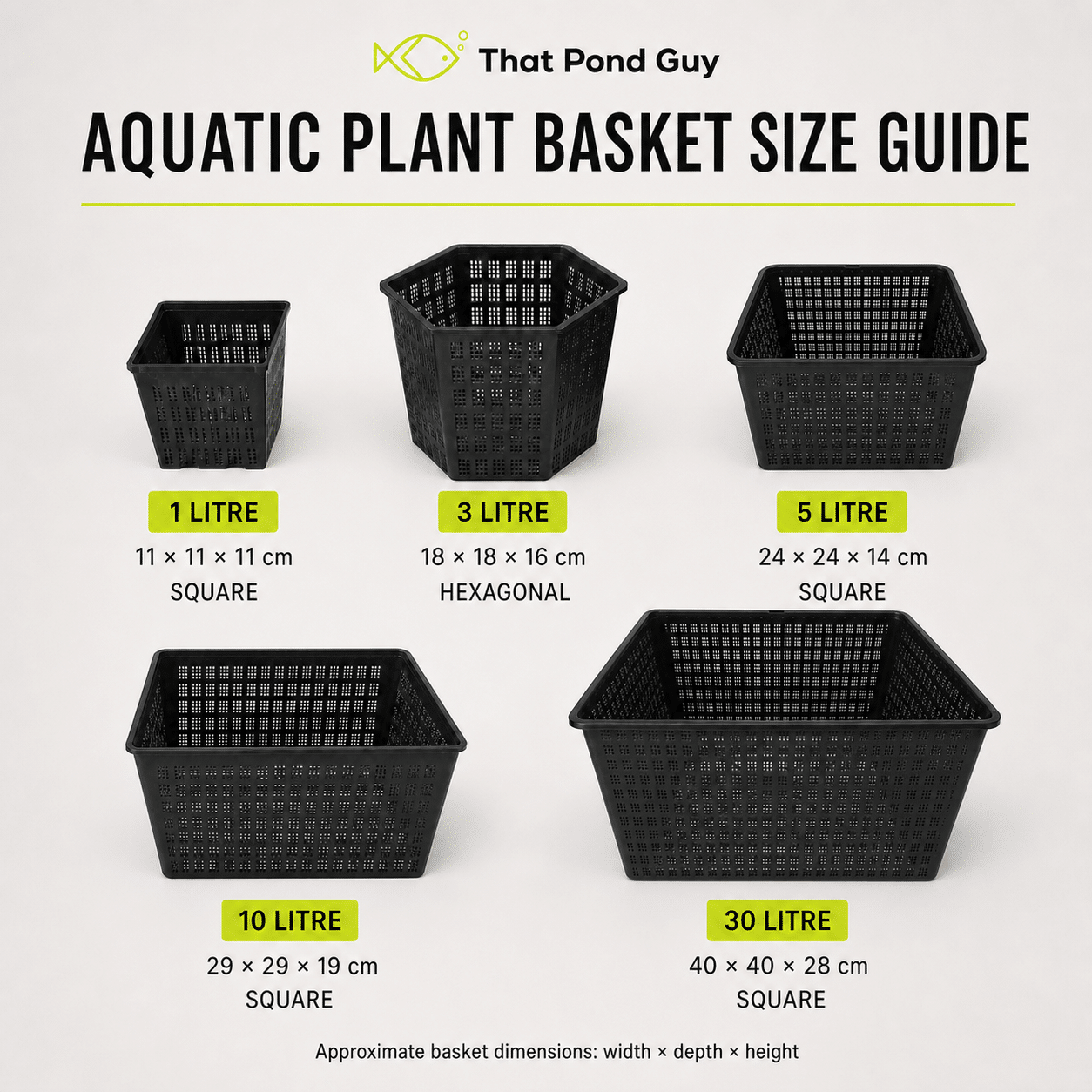
Finofil baskets are made from 100% recycled polypropylene co-polymer. They are not suitable for ordinary kerbside recycling; reuse them where possible and check local specialist recycling options. Their fine mesh helps retain aquatic soil while allowing water to reach the roots.
Basket measurements for the offered sizes:
- 1 Litre Basket – usually 11 × 11 × 11cm square; some varieties may be supplied in a 14cm diameter × 10cm round basket
- 3 Litre Hexagonal Basket – 18 × 18 × 16cm
Other plants to compare
Lesser Bulrush — Compare narrower leaves in another spreading Typha; its smaller name does not remove the need for space and root management.
Corkscrew Rush — Consider its smaller curled-stem clump if the intended feature is much too restricted for a bulrush colony.
Choosing plants and planting supplies
Marginal pond plants — Compare pond-edge plants by their eventual size, light and water-depth needs before filling a shelf.
Pond plant baskets and planting supplies — Choose a suitable container and growing medium for the position described above.



Reviews
There are no reviews yet.