







Swordleaf Rush (Juncus ensifolius)
| Size | 1 Ltr, 1 Ltr – Pack of 3, 9cm – Pack of 3 |
|---|---|
| Plant Type | Marginal |
| Sun / Shade | Full Sun to Part Shade |
| Flower Colour | Brown |
| Growth Rate | Slow |
| Native to UK | No |
| Plant group |
Swordleaf Rush has flat green leaves and small dark summer heads for permanently moist acidic soil. Allow for its spreading clump, with light around the leaves and access for spring-to-early-summer division.
Price range: £14.00 through £34.50 (inc VAT)
Swordleaf Rush (Juncus ensifolius)
Flat green leaves and small dark seed heads for a moist pond edge
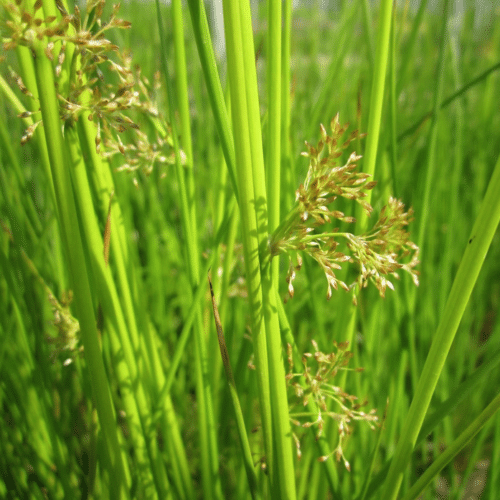
Swordleaf Rush gives a pond edge fine upright foliage and small rounded flower heads. Unlike the cylindrical stems of Soft Rush, Juncus ensifolius has flattened, sword-like leaves. Green to reddish-brown summer heads darken as they mature, giving the planting a second texture after the freshest flowers have passed.
The unusual heads are sometimes described as flying hedgehogs, but their appeal is on a small scale: the seed heads are only a few millimetres across. Put the plant where they can be noticed from a path or seating area. It is a detail plant for the margin, rather than a large flowering feature to view across a lake.
Use permanently moist soil in sun or partial shade. It favours an acid root zone, so check the growing medium as well as the amount of light. Keep a shallow marginal position if planting in a pond, and follow the supplied label rather than assuming a deep shelf suits every rush.
Allow room for a plant around 45cm tall and a clump that can reach roughly half a metre to a metre across. A clump can therefore need dividing even though it looks compact when first bought. A basket helps with access but does not remove that future job.
Foliage can be evergreen or semi-evergreen depending on conditions. Tidy dead material after flowering when needed, leaving healthy growth in place. If the clump becomes crowded, divide it from mid-spring to early summer and settle the divisions into suitably moist soil before allowing the root zone to dry.
This is a non-native ornamental rush. Its leaves and seed heads add structure among flowering marginals, with a modest height that can remain visible without dominating the whole edge. Choose a position where its moisture needs can be met through the growing season and leave room to inspect the developing clump.
UK-grown plant. Grown at a dedicated aquatic plant nursery in the South of England.

What you receive
Choose a single 1-litre plant, a pack of three 1-litre plants or a pack of three 9cm pots. Leave room for the mature spread as well as the relatively modest height: the small supplied container does not fix the eventual width of a clump.
Swordleaf Rush can retain some green growth through winter, with its appearance affected by exposure and routine tidying. A young or recently tidied plant may have fewer stems than an established photograph. The small summer heads become darker with age and should be distinguished from an entirely dead stem.
Is this right for your pond?
The flat leaves and dark heads give Swordleaf Rush a different outline from the round stems of Soft Rush. It is useful for a permanently moist edge where a shorter plant is wanted but there is still room for it to spread.
- Permanent moisture: Use acid soil that stays moist, such as a suitable pondside bed or bog-garden area. A dry strip of soil beside a liner will need preparation and watering before it offers the same conditions.
- Light: Sun or partial shade is suitable. Leave light around the flat green leaves and small flowering stems so the detail remains visible among broader marginals.
- Width as well as height: The plant is often around 45cm tall but can form a clump approaching 50–100cm across. Keep low neighbours clear of the developing edge and leave access to divide it if needed.
- An appropriate shallow edge: Use an aquatic position only as directed by the supplied label. The short stature is not a reason to sink it below its leaves, and a deep shelf is not equivalent to wet soil.
Planting position and getting established
Prepare permanently moist, suitable acidic soil and plant the rootball at its existing level. Firm it gently and water the surrounding area, ensuring the original potting medium stays moist while roots spread into the ground. Leave space around the base rather than burying it beneath neighbouring foliage.
If growing in an aquatic basket, use the supplied label for a shallow marginal position and keep the leaves above the surface. Measure any water cover from the reference on that label, allowing separately for the basket height when choosing a shelf. Keep the growing base in a suitable shallow position rather than lowering it into deep water.
Repot solid 9cm nursery pots before pond use into appropriate aquatic baskets. Keep the container stable and accessible, with room for roots and shoots to extend. A border planting needs the same attention to moisture during establishment even though no centimetres-of-water measurement is involved.
Looking after your plants
- Moisture checks: Keep the root area permanently moist. Check recently planted specimens during dry weather or low pond levels rather than relying on the appearance of the exposed leaves to judge moisture.
- Tidying after flowering: Tidy dead or damaged material after flowering if needed. No regular hard pruning is required, so retain healthy foliage and work around new shoots rather than cutting the entire clump down automatically.
- Assessing older heads: The small heads darken as they age. Remove finished material where it looks untidy or obstructs access, while distinguishing an old head on a useful stem from a stem that has died completely.
- Division timing: Divide crowded clumps from mid-spring to early summer when required. Keep healthy rooted sections moist and replant them promptly into suitable conditions.
- Long-term spread: Review the clump’s outer edge as it develops. Reduce it before it becomes interwoven with smaller plants; the ability to reach the base makes later division and selective tidying much easier.
Size and growing conditions
- Botanical name
- Juncus ensifolius
- Common name
- Swordleaf Rush
- Foliage
- Flat green sword-like leaves
- Flower heads
- Small green to reddish-brown summer heads, darkening with age
- Height
- Around 45cm
- Spread
- Allow around 50–100cm
- Light
- Sun or partial shade
- Soil
- Permanently moist acid soil
- Water position
- A label-directed shallow margin, with foliage above the surface
- Winter foliage
- Evergreen to semi-evergreen appearance, depending on conditions
- Division
- Mid-spring to early summer
- Native status
- Not native to Britain or Ireland
- RHS information
- RHS plant profile: Juncus ensifolius
Delivery and basket information
We do not deliver live plants to Northern Ireland.
Orders received by 11am Monday to Wednesday are normally dispatched on the following working day using a next working day courier service. During busy periods, dispatch may occasionally take an extra day.
To avoid plants being held in depots over a weekend, we do not usually dispatch on Fridays. Highlands and Islands orders using a two day service are not normally dispatched on Thursdays.
Please read our delivery information for delivery arrangements and contact us if you need to check the timing of a particular order.
The 9cm option arrives in nursery pots. For pond planting, pot these plants into suitable aquatic baskets with aquatic planting soil before positioning them at the depth shown on their labels.
Finofil baskets are made from 100% recycled polypropylene co-polymer. They are not suitable for ordinary kerbside recycling; reuse them where possible and check local specialist recycling options. Their fine mesh helps retain aquatic soil while allowing water to reach the roots.
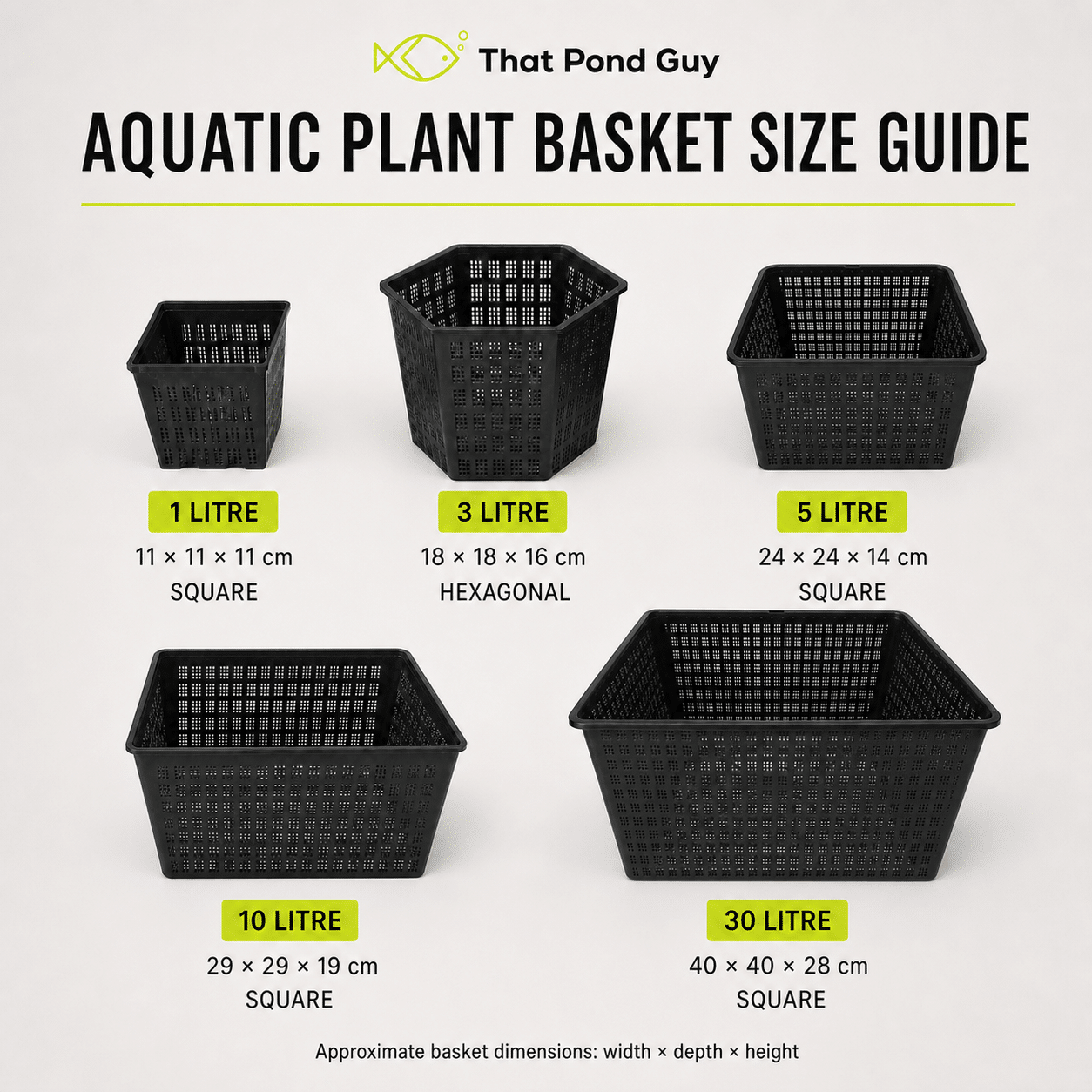
Basket measurements for the offered sizes:
- 1 Litre Basket – usually 11 × 11 × 11cm square; some varieties may be supplied in a 14cm diameter × 10cm round basket
Other plants to compare
Soft Rush — Soft Rush gives a much taller clump of rounded green stems. Compare its mature size and very shallow-water requirements if a larger upright structure is wanted.
Fibre Optic Plant — Fibre Optic Plant gives finer, smaller tufts with pale terminal heads. It is a different scale for the front of a damp or shallow marginal planting.






Reviews
There are no reviews yet.