





Dutch Rush (Equisetum hyemale)
| Size | 1 Ltr, 1 Ltr Pack of 3, 9cm Pack of 3, 3 Ltr, 5 Ltr |
|---|---|
| Plant Type | Marginal |
| Sun / Shade | Full Sun to Part Shade |
| Growth Rate | Medium |
| Native to UK | Yes |
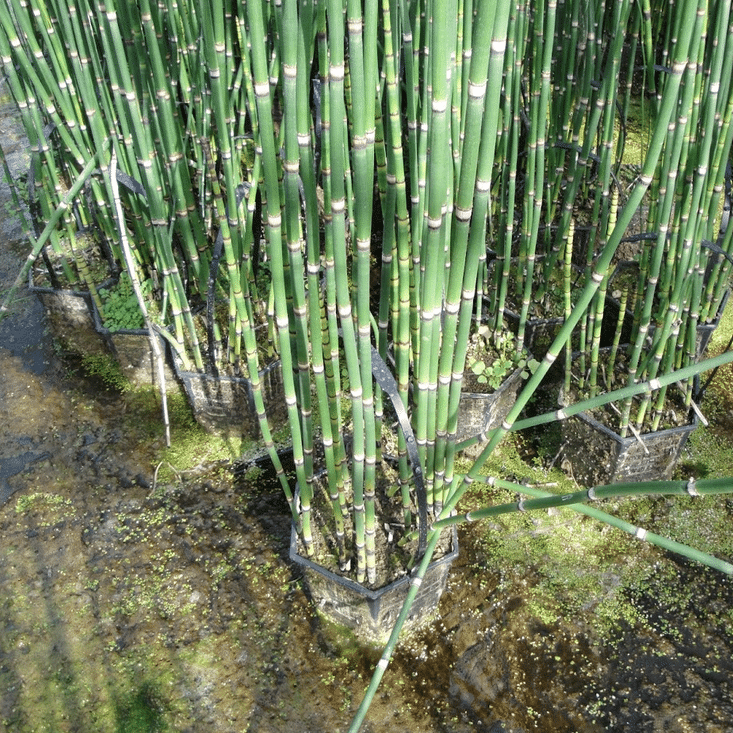
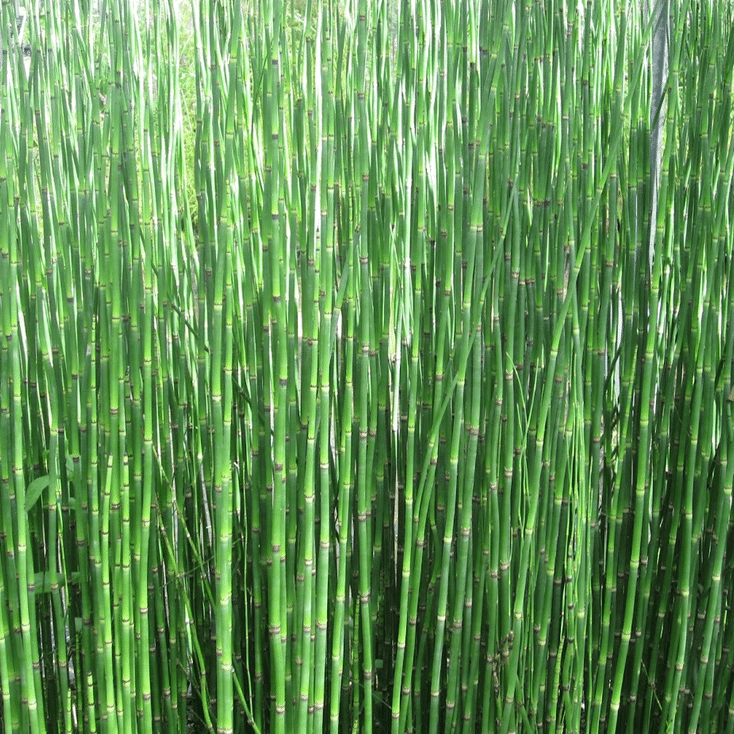
Dutch Rush is a horsetail with a strong outline of upright green stems. Dark bands mark the joints, giving the plant a pattern that can be seen even without flowers. It can look effective against still water or plain stone, where the repeated vertical lines are not hidden by busy neighbouring foliage.
Price range: £14.00 through £45.50 (inc VAT)
Dutch Rush (Equisetum hyemale)
Jointed evergreen stems with dark bands and spore cones
Dutch Rush is a horsetail with a strong outline of upright green stems. Dark bands mark the joints, giving the plant a pattern that can be seen even without flowers. It can look effective against still water or plain stone, where the repeated vertical lines are not hidden by busy neighbouring foliage.
It is a non-flowering plant. The small cones carried by fertile stems produce spores rather than seeds, so a flowering-month chart would be misleading. Its main ornamental feature is the structure of the jointed stems and the way they stand together in a developing patch.
Allow for a tall mature plant. Stems can reach around 1.8 m, and rhizomes can extend beyond the initial clump. Leave space for the vertical outline and plan how to inspect the roots as the planting develops.
Choose fertile permanently moist soil or a suitable shallow-water margin in sun or partial shade. Water cover up to about 10 cm is described in the cultivation guidance. Measure above the planted crown or medium separately from overall shelf depth, and follow the label for a young specimen.
This is an evergreen horsetail with vigorous underground rhizomes. Keep an accessible boundary around it, particularly in a contained ornamental planting. The stems can provide structure outside the flowering seasons of nearby plants, while individual dead or damaged stems can be removed selectively.
UK-grown plant. Grown at a dedicated aquatic plant nursery in the South of England.
What you receive
Choose one plant in a 3 litre container, one plant in a 1 litre container, three plants in 1 litre containers, three plants in 9 cm nursery pots or one plant in a 5 litre container.
Keep the roots moist while preparing the site. The nursery container does not set the eventual stem height or contain every rhizome indefinitely. Prepare a suitable, inspectable wet position before planting.
How it changes through the year
Dutch Rush does not produce flowers. Fertile stems can carry small spore cones, while the green jointed stems form the main evergreen outline. Individual stems age and die, and the young delivery may be much shorter than a mature stand.
Choosing a place for it
- For jointed stems: The dark bands and upright green stems provide the main display; it is a non-flowering plant.
- For a tall feature: Allow for stems approaching 1.8 m and an eventual taller RHS height band.
- For managed spread: Use a position where rhizomes can be inspected and unwanted growth removed.
Planting and getting it established
Choose fertile permanently moist soil or a shallow-water position in sun or partial shade. RHS guidance allows up to about 10 cm of water cover. Follow the plant label and measure from the planted crown or medium to the water surface, not from the bottom of the shelf.
A substantial container can help restrict the rhizomes and make inspection easier. Choose one you can lift or inspect, with appropriate medium for its soil or aquatic position. A mesh supply basket is not a permanent guarantee against escaping growth. Keep the plant away from inaccessible gaps where rooted extensions would be difficult to remove.
Set the roots at their existing level and leave the jointed stems clear. If using nursery-pot plants in the pond, transfer them into suitable aquatic baskets first. Allow space around the mature height and repeated vertical stems rather than judging the whole plant by the small delivered rootball.
Looking after it
- Moisture: Maintain permanently moist roots. Check containers and exposed pond margins during dry or low-water periods rather than assuming the stems tolerate a dry rootball.
- Rhizome boundary: Inspect the sides and base of a container and the surrounding soil for escaping growth. Remove unwanted rhizomes early; shortening stems alone does not stop underground spread.
- Tidying: Remove individual dead or damaged stems neatly at the base. Healthy evergreen stems can remain rather than being cut down as a group on a fixed autumn date.
- Congestion: Lift and divide or reduce a crowded planting when required, retaining healthy rooted growth and returning it to the appropriate wet position.
- Nutrition: Use an appropriate fertile medium. Extra food is only relevant if needed and should suit the actual growing position; it does not control rhizomes or correct an undersized site.
- Disposal: Collect removed rhizomes and fragments and keep garden material out of natural waterways and unmanaged neighbouring ground.
Plant details
- Botanical name
- Equisetum hyemale
- Plant type
- Non-flowering horsetail; reproduces by spores
- Mature height
- Description around 1.8 m; RHS ultimate band 1.5–2.5 m
- Spread
- About 50–100 cm initially; inspect rhizome expansion
- Position
- Sun or partial shade; fertile permanently moist soil
- Water cover
- Up to about 10 cm above planted crown/medium
- Winter
- Hardy evergreen perennial; RHS H7
- Native status
- Native species to Britain and Ireland
- RHS information
- RHS plant profile: Equisetum hyemale
Delivery and basket information
We do not deliver live plants to Northern Ireland.
Orders received by 11am Monday to Wednesday are normally dispatched on the following working day using a next working day courier service. During busy periods, dispatch may occasionally take an extra day.
To avoid plants being held in depots over a weekend, we do not usually dispatch on Fridays. Highlands and Islands orders using a two day service are not normally dispatched on Thursdays.
Please read our delivery information for delivery arrangements and contact us if you need to check the timing of a particular order.
The 9cm option arrives in nursery pots. For pond planting, pot these plants into suitable aquatic baskets with aquatic planting soil before positioning them at the depth shown on their labels.
Finofil baskets are made from 100% recycled polypropylene co-polymer. They are not suitable for ordinary kerbside recycling; reuse them where possible and check local specialist recycling options. Their fine mesh helps retain aquatic soil while allowing water to reach the roots.
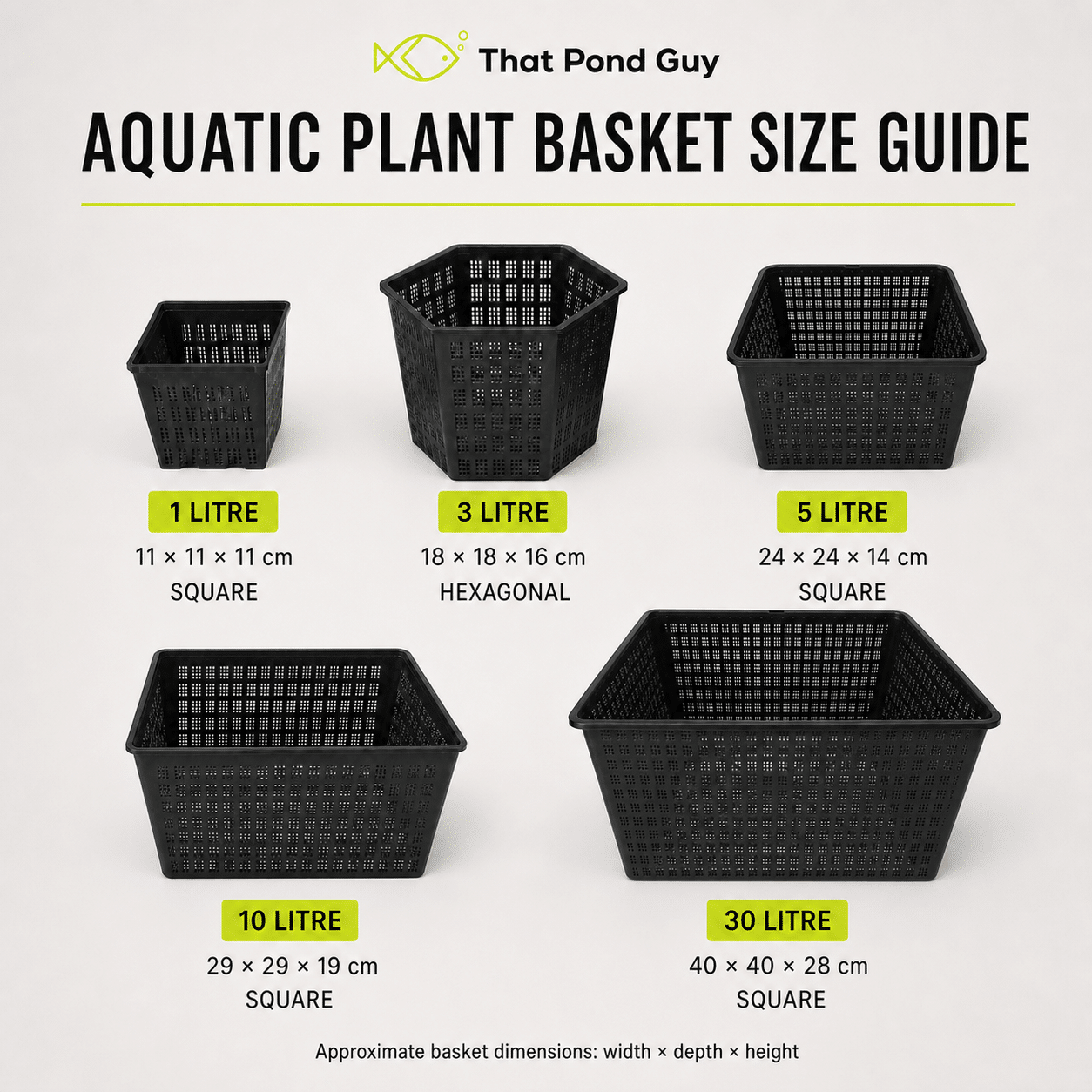
Basket measurements for the offered sizes:
- 1 Litre Basket – usually 11 × 11 × 11cm square; some varieties may be supplied in a 14cm diameter × 10cm round basket
- 3 Litre Hexagonal Basket – 18 × 18 × 16cm
- 5 Litre Square Basket – 24 × 24 × 14cm
Other plants to compare
Club Rush — Its smooth round stems give a different vertical outline, with a separate warning about roots piercing pond liners.
Corkscrew Rush — Compare curled stems in a smaller clump if you want a lower, close-up feature.
Choosing plants and planting supplies
Marginal pond plants — Compare pond-edge plants by their eventual size, light and water-depth needs before filling a shelf.
Pond plant baskets and planting supplies — Choose a suitable container and growing medium for the position described above.







Reviews
There are no reviews yet.