





Cardinal Flower ‘Queen Victoria’ (Lobelia cardinalis ‘Queen Victoria’)
| Size | 1 Ltr, 1Ltr Pack of 3, 3 Ltr, 9cm Pack of 3 |
|---|---|
| Plant Type | Marginal |
| Sun / Shade | Full Sun to Part Shade |
| Flower Colour | Red |
| Growth Rate | Slow |
| Native to UK | No |
| Plant group |
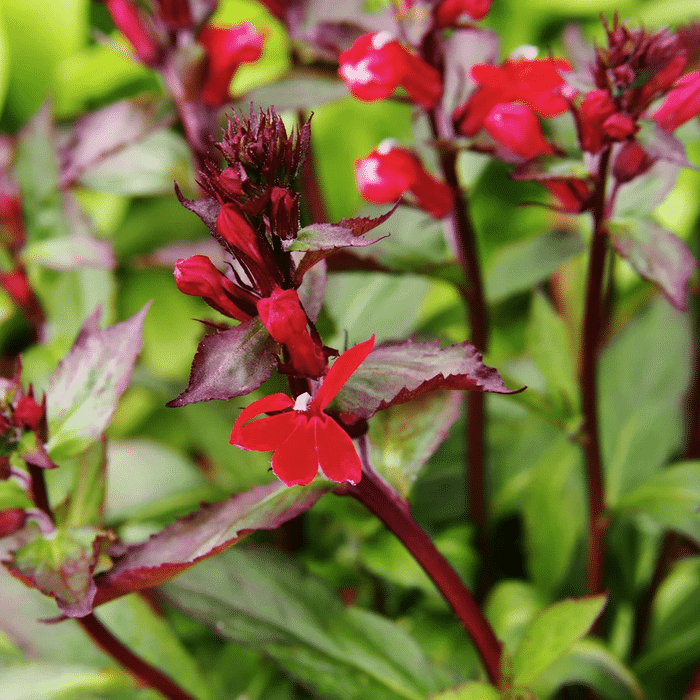
Queen Victoria is chosen as much for its dark foliage as for its scarlet flowers. The beetroot-coloured leaves and stems make a strong contrast with the greens of a pondside border. Even before the flowering spikes develop, the clump introduces a different colour to the planting.
Price range: £14.00 through £34.50 (inc VAT)
Cardinal Flower ‘Queen Victoria’ (Lobelia cardinalis ‘Queen Victoria’)
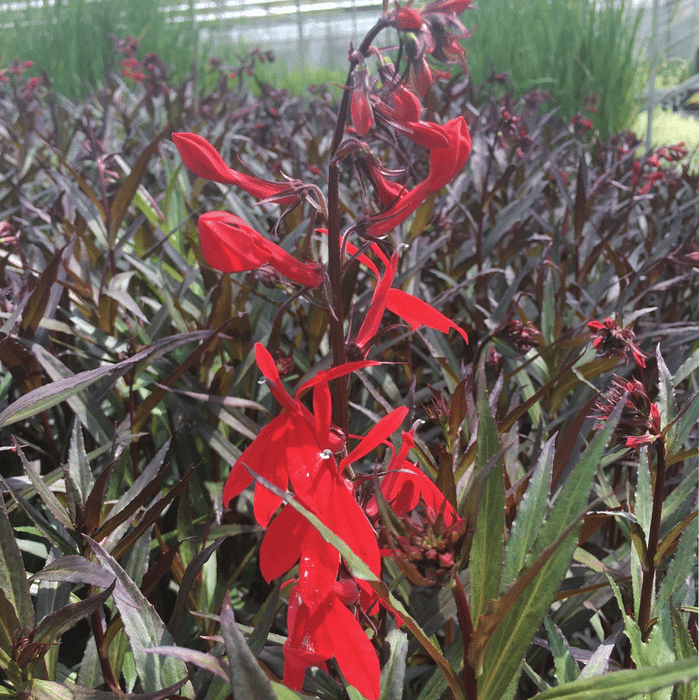
Scarlet flower spikes against deep burgundy foliage
Queen Victoria is chosen as much for its dark foliage as for its scarlet flowers. The beetroot-coloured leaves and stems make a strong contrast with the greens of a pondside border. Even before the flowering spikes develop, the clump introduces a different colour to the planting.
The flowers are carried in upright terminal spikes, with the two-lipped shape typical of these lobelias. They add a clear vertical accent rather than a broad mass of petals. Place the plant where the whole spike can be seen, with enough room around the leaves for the dark colour to remain distinct.
The exact cultivar name identifies Queen Victoria's dark foliage. You may find it labelled as Lobelia cardinalis 'Queen Victoria' or simply Lobelia 'Queen Victoria'. The green-leaved Cardinal Flower is a separate choice and will give a different leaf-colour effect.
Give it deep, fertile soil that stays reliably moist in sun or partial shade. A wet pondside border is different from dropping the entire crown under water. Keep the planting position appropriate to this lobelia rather than applying a universal marginal-plant depth to everything sold in the category.
Queen Victoria's dark foliage and late-season scarlet flowers are a strong combination, but cold-site suitability needs thought. It is rated H3 and can be short-lived. Allow for dry winter protection and choose a position where the roots can stay moist during growth without leaving the crown unprotected in harsh winter conditions.
UK-grown plant. Grown at a dedicated aquatic plant nursery in the South of England.

What you receive
Choose one plant in a 1 litre container, three plants in 1 litre containers, three plants in 9 cm nursery pots or one plant in a 3 litre container.
The current single-basket and pack options describe the supplied containers. The 9 cm pack is three nursery-pot plants. Plant all formats into a suitable moist-soil position, keeping the crown at its existing level; the aquatic-style supply container is not a submergence instruction.
How it changes through the year
The dark leaves develop before the main late-summer flower spikes. The amount of growth visible on arrival depends on the season. Queen Victoria may be short-lived and needs winter care suited to its H3 rating; a photograph of a flowering clump does not indicate permanent evergreen growth.
Choosing a place for it
- For dark foliage: Beetroot-coloured leaves distinguish this cultivar even before the scarlet spikes appear.
- For a damp border: Deep fertile soil that stays moist is appropriate; crown submergence is not a general requirement.
- For a considered winter site: Its H3 rating makes shelter and winter protection relevant buying decisions.
Planting and getting it established
Choose deep, fertile, reliably moist soil in sun or partial shade. Work the planting area so the rootball can settle at its existing level, with the crown clear rather than buried under a thick topping. Water in well and check the moisture of the actual rootball, especially if the surrounding soil has become dry.
This is a damp-ground planting beside the pond. Do not apply a generic marginal-water depth to the crown simply because the plant is supplied in a basket. A container should support the appropriate moist-soil position, rather than turn it into a deep-water aquatic.
Leave room for the dark leaves and the full height of the flower spikes. Taller neighbours can hide the foliage that distinguishes Queen Victoria from the green-leaved species. Choose an accessible position so that you can remove finished spikes and add appropriate winter protection without disturbing other pond plants.
Looking after it
- Summer moisture: Keep the soil reliably moist through active growth and dry spells. A small container may need more frequent checks than an established border, even when both are beside water.
- Feeding: Start with fertile soil and judge the plant before adding nutrition. Use a product suited to the soil or container and follow its rate; do not pour general liquid feed into the pond.
- After flowering: Cut down faded flower spikes in autumn, keeping any sound basal growth intact. Remove damaged material rather than repeatedly cutting healthy leaves during the growing season.
- Division: Divide a congested clump in spring when necessary, retaining healthy rooted pieces and replanting at the same crown level. Keep divisions moist as they establish.
- Winter: Provide the dry winter mulch recommended for this H3 cultivar and assess whether the local site is too cold or exposed for dependable outdoor persistence. It can be short-lived, so return should not be assumed in every garden.
- Handling: The plant is harmful if eaten and can irritate skin. Wear gloves when cutting or dividing and keep trimmings out of reach of children and animals.
Plant details
- Botanical name
- Lobelia 'Queen Victoria', commonly sold as Lobelia cardinalis 'Queen Victoria'
- Foliage
- Dark beetroot-coloured leaves and stems
- Flowers
- Scarlet upright spikes, principally late summer
- Mature height
- Around 90 cm; RHS band 50–100 cm
- Mature spread
- About 10–50 cm
- Position
- Sun or partial shade; deep fertile, reliably moist soil
- Winter
- H3; dry winter mulch and suitable protection
- Safety
- Harmful if eaten; skin irritant
- RHS information
- RHS plant profile: Lobelia 'Queen Victoria'
Delivery and basket information
We do not deliver live plants to Northern Ireland.
Orders received by 11am Monday to Wednesday are normally dispatched on the following working day using a next working day courier service. During busy periods, dispatch may occasionally take an extra day.
To avoid plants being held in depots over a weekend, we do not usually dispatch on Fridays. Highlands and Islands orders using a two day service are not normally dispatched on Thursdays.
Please read our delivery information for delivery arrangements and contact us if you need to check the timing of a particular order.
Finofil baskets are made from 100% recycled polypropylene co-polymer. They are not suitable for ordinary kerbside recycling; reuse them where possible and check local specialist recycling options. Their fine mesh helps retain aquatic soil while allowing water to reach the roots.
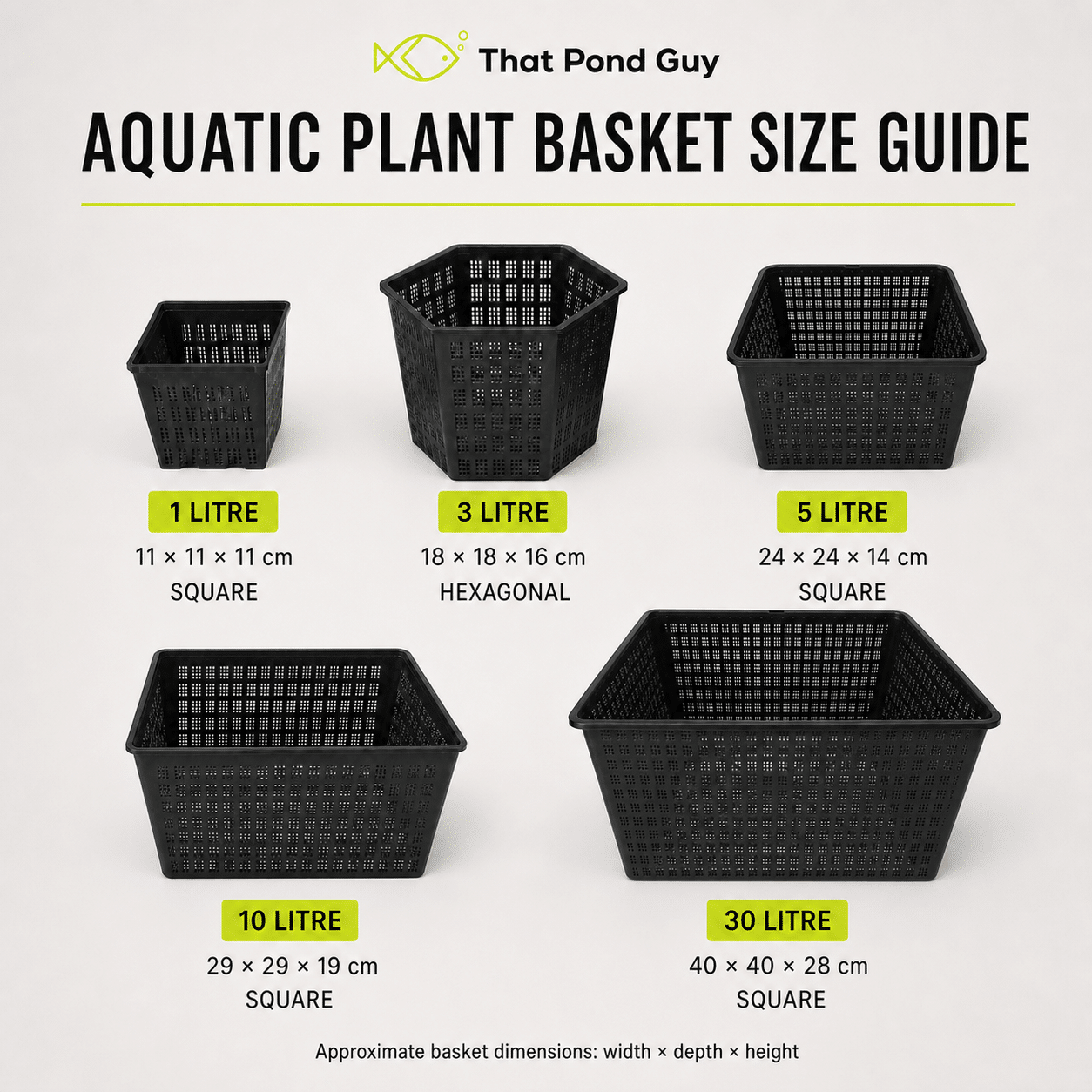
Basket measurements for the offered sizes:
- 1 Litre Basket – usually 11 × 11 × 11cm square; some varieties may be supplied in a 14cm diameter × 10cm round basket
- 3 Litre Hexagonal Basket – 18 × 18 × 16cm
Other plants to compare
Cardinal Flower — Choose the green-leaved species if you want scarlet flowers without Queen Victoria’s dark foliage; check its winter requirements too.
Great Blue Lobelia — Compare blue flower spikes for a different colour in a moist-soil lobelia planting.
Choosing plants and planting supplies
Marginal pond plants — Compare pond-edge plants by their eventual size, light and water-depth needs before filling a shelf.
Pond plant baskets and planting supplies — Choose a suitable container and growing medium for the position described above.





Reviews
There are no reviews yet.