





Marsh Cinquefoil (Potentilla palustris)
| Size | 1 Ltr, 1 Ltr – Pack of 3 |
|---|---|
| Plant Type | Marginal |
| Sun / Shade | Full Sun to Part Shade |
| Flower Colour | Red |
| Growth Rate | Medium |
| Native to UK | Yes |
Marsh Cinquefoil offers a much darker flower colour than the yellows often associated with wetland plants. Loose clusters of deep red flowers appear above divided grey-green leaves. The reddish flower parts make a useful contrast with plainer foliage, particularly where the detail can be seen from the edge.
Price range: £14.00 through £34.50 (inc VAT)
Marsh Cinquefoil (Potentilla palustris)
Deep red flowers with broad sepals above divided grey-green leaves
Marsh Cinquefoil offers a much darker flower colour than the yellows often associated with wetland plants. Loose clusters of deep red flowers appear above divided grey-green leaves. The reddish flower parts make a useful contrast with plainer foliage, particularly where the detail can be seen from the edge.
Large red-flushed sepals surround the smaller central petals, contributing to the flower’s dark red display. The leaves are divided into several leaflets, adding texture beneath the seasonal colour.
Comarum palustre is also sold under its familiar nursery name Potentilla palustris. Both names identify this native wetland perennial. Give the roots permanently wet conditions rather than the drier border position suited to many shrubby cinquefoils.
Choose permanently wet soil and an open sunny position. RHS guidance gives neutral to alkaline soil for cultivation. It is important not to let the root environment dry out simply because the plant is growing beside rather than within the pond. The actual supplied label should govern any shallow water placement.
The rhizomes can build a patch around 50–100 cm wide, with seasonal leafy growth above them. Keep the planting within reach for thinning and tidying. Its darker flowers and divided leaves bring a different texture from the glossy yellow flowers of many familiar wetland plants.
UK-grown plant. Grown at a dedicated aquatic plant nursery in the South of England.

What you receive
Choose one plant in a 1 litre container or three plants in 1 litre containers.
Keep the roots wet while preparing the site. Follow the supplied label for any aquatic placement. Container volume is not a count of rhizomes or a promise of a full flowering patch at arrival.
How it changes through the year
Deep red flowers and red-flushed sepals appear in early summer, with divided leaves beneath. Seasonal top growth changes through the year. The name Comarum palustre may appear on botanical references or labels for the same plant sold here as Potentilla palustris.
Choosing a place for it
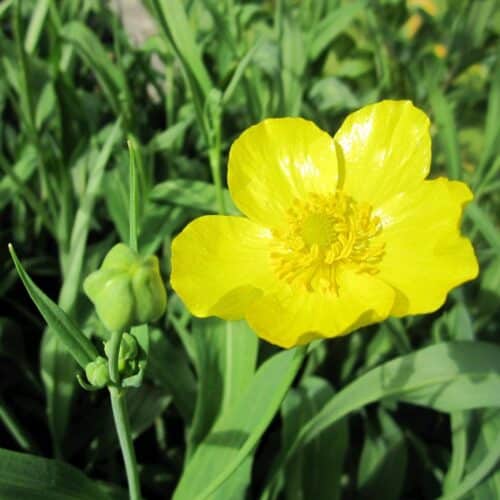
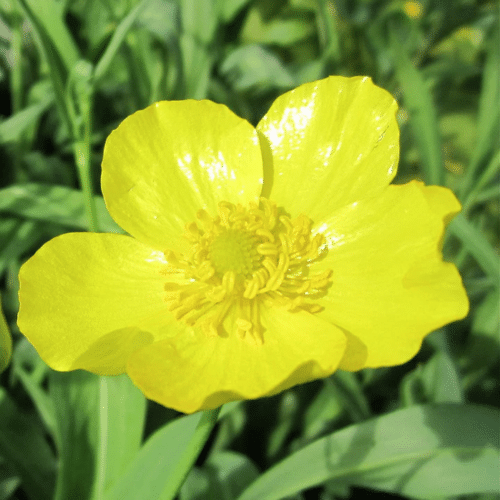
- For darker flowers: Deep red flower parts give a different colour from yellow wetland buttercups.
- For divided foliage: Grey-green leaflets provide texture below the seasonal flowers.
- For a sunny wet patch: Choose permanently wet ground with room to manage spreading rhizomes.
Planting and getting it established
Choose permanently wet soil in an open sunny position. Neutral to alkaline soil is listed in the cultivation guidance, so do not automatically give this plant the acidic-root routine used for Cotton Grass. Prepare the wet planting area and set the rooted plant at its original level.
For any position with water above the crown, follow the actual supplied label. A wetland habitat and a basket format do not establish a universal depth for every plant. Measure cover above the planted crown or medium rather than from the base of the shelf.
Use medium appropriate to the actual soil or approved aquatic position. Leave access around the developing rhizomes and enough light for the divided leaves to remain visible. Check roots during low-water periods; a pond beside the plant is not a guarantee of wet soil.
Looking after it
- Wet roots: Keep the root environment permanently wet. Check the crown and surrounding soil during dry weather or when the pond level falls.
- Rhizomes: Inspect the patch as it extends and remove unwanted rooted growth before it crowds neighbouring plants. A delivery container does not define the final boundary.
- Congestion: Divide or reduce crowded planting when needed, retaining healthy rooted sections and restoring the original planting level. Keep the roots wet during the work.
- Tidying: Remove decaying or damaged material selectively, retaining healthy grey-green leaves after the main flower display.
- Feeding: Correct moisture and position first. If a basket-grown plant needs supplementary nutrition, use an appropriate aquatic feed according to its label rather than adding fertiliser routinely.
- Winter: Seasonal growth can decline while the perennial root system persists. Keep it wet and avoid burying the crown under an accumulation of dead material.
- Handling: Wear gloves when handling. The fruit is ornamental and is not intended for eating.
Plant details
- Botanical name
- Comarum palustre; synonym Potentilla palustris
- Native status
- Native to Britain and Ireland
- Flowers
- Deep red flowers with larger red-flushed sepals; early summer
- Leaves
- Divided grey-green leaves with several leaflets
- Height
- Up to around 50 cm
- Spread
- About 50–100 cm by rhizomes
- Position
- Full sun; permanently wet soil
- Soil guide
- Neutral to alkaline in RHS cultivation guidance
- RHS information
- RHS plant profile: Potentilla palustris
Delivery and basket information
We do not deliver live plants to Northern Ireland.
Orders received by 11am Monday to Wednesday are normally dispatched on the following working day using a next working day courier service. During busy periods, dispatch may occasionally take an extra day.
To avoid plants being held in depots over a weekend, we do not usually dispatch on Fridays. Highlands and Islands orders using a two day service are not normally dispatched on Thursdays.
Please read our delivery information for delivery arrangements and contact us if you need to check the timing of a particular order.
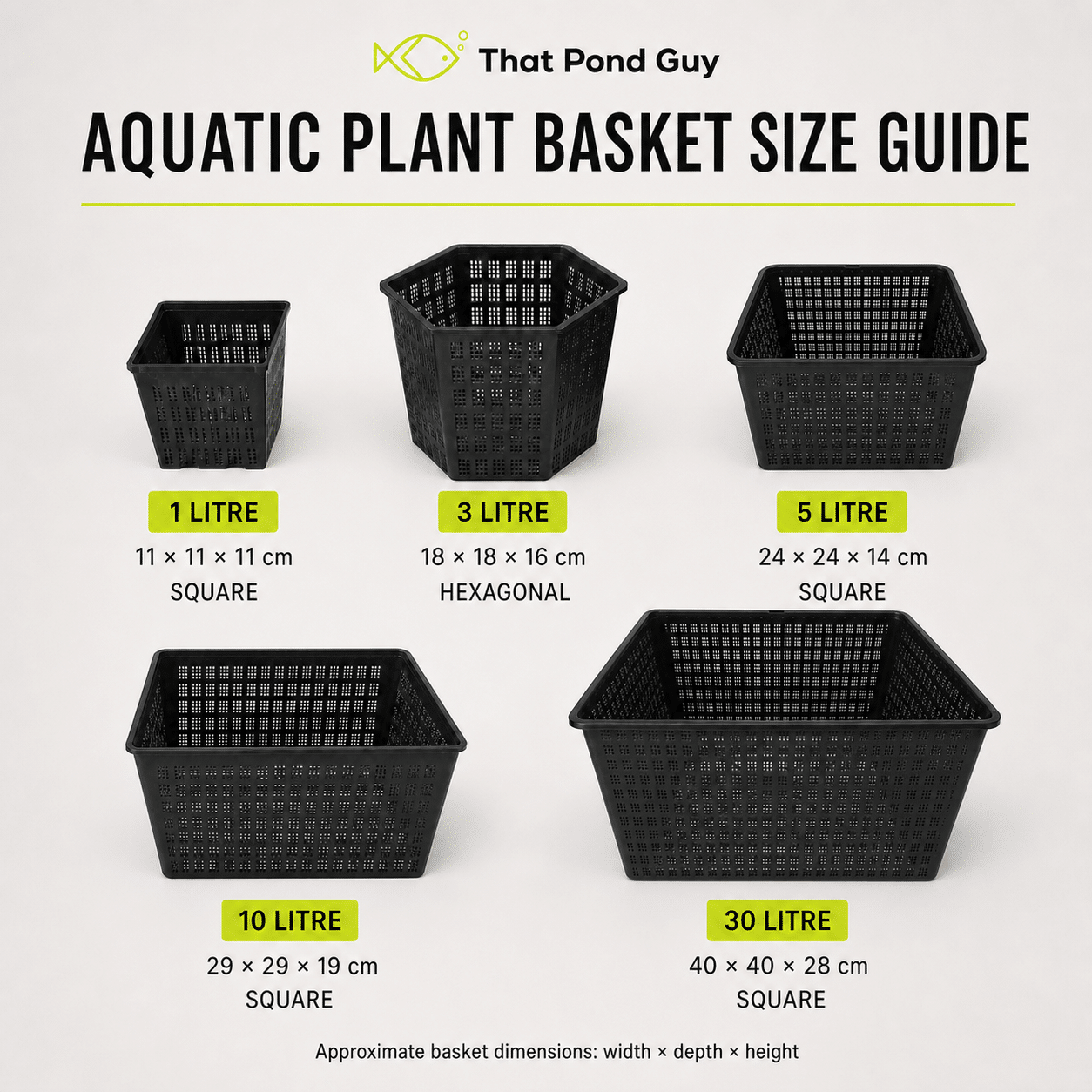
Finofil baskets are made from 100% recycled polypropylene co-polymer. They are not suitable for ordinary kerbside recycling; reuse them where possible and check local specialist recycling options. Their fine mesh helps retain aquatic soil while allowing water to reach the roots.
Basket measurements for the offered sizes:
- 1 Litre Basket – usually 11 × 11 × 11cm square; some varieties may be supplied in a 14cm diameter × 10cm round basket
Other plants to compare
Marsh Marigold — Choose rounded leaves and golden spring flowers for an earlier, brighter wet-margin display.
Bog Bean — Its three-part leaves and fringed pale flowers make a different spreading native wet edge.
Choosing plants and planting supplies
Marginal pond plants — Compare pond-edge plants by their eventual size, light and water-depth needs before filling a shelf.
Pond plant baskets and planting supplies — Choose a suitable container and growing medium for the position described above.








Reviews
There are no reviews yet.